The image of a human being reduced to the status of a horse: bridled, harnessed, made to pull or carry, has a long and layered history. Long before it became a recognizable motif in fetish art and BDSM practice, it functioned primarily as a symbol of humiliation, domination, or moral inversion. Only in the twentieth century did it crystallize into a fully articulated erotic fantasy, complete with its own visual language of bit, reins, tail, and training.


The Motif as Allegory and Humiliation
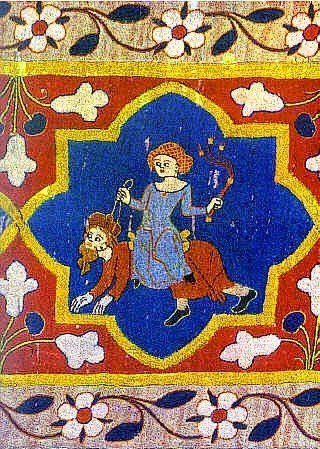
The most famous early example is the medieval legend of Aristotle and Phyllis. In the thirteenth-century Lai d’Aristote, the philosopher, overcome by desire for the court beauty Phyllis, agrees to let her ride him like a horse: saddle on his back, bit in his mouth, he crawls on all fours while she sits astride and urges him forward.
One anonymous Latin version records her precise demand:
This I will certainly not do, unless I see a sign of love, lest you be testing me. Therefore, come to my chamber crawling on hand and foot, in order to carry me like a horse. Then I’ll know that you aren’t deluding me.
Anonymous
The story is not historical; it first appears more than a thousand years after Aristotle’s death and belongs to a wider medieval tradition of cautionary tales about the power of women over learned men. Yet the image proved irresistible. From the late Middle Ages through the Renaissance it was endlessly repeated in woodcuts, ivory carvings, tapestries, and paintings, often with both figures nude or semi-nude, turning philosophical humiliation into a striking visual emblem of sensual conquest. Artists such as Hans Baldung Grien, Lucas Cranach, and many anonymous craftsmen fixed the scene in the European imagination.
Earlier and parallel traditions exist. Assyrian reliefs from around 2000 BCE show captive humans yoked to chariots. In the early medieval Russian Primary Chronicle, the Avars are described as harnessing Duleb women to their carts in place of horses or oxen as an act of conquest and humiliation. In Apuleius’s Metamorphoses (second century CE) the protagonist is transformed into a donkey and subjected to a series of sexual and laborious adventures. Seventeenth-century English drama occasionally stages similar scenes for comic or witch-related effect. In the colonial era the motif resurfaced in accounts of non-consensual forced labor. These instances remain firmly in the realm of punishment, spectacle, or moral allegory rather than mutual erotic play.
They even did violence to the Dulebian women. When an Avar made a journey, he did not cause either a horse or a steer to be harnessed, but gave command instead that three or four or five women should be yoked to his cart and be made to draw him.
Dulebes – Wikipedia
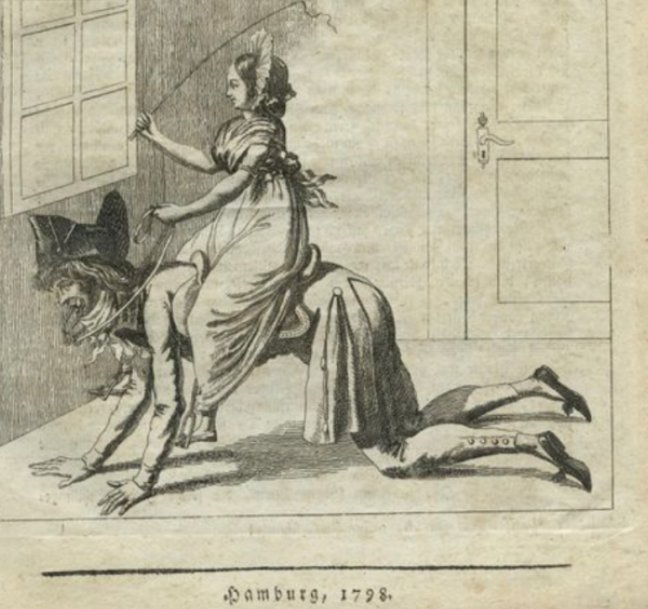
Throughout this long tradition the dominant pattern is consistent: the woman rides the man. The image serves as a public demonstration of inverted hierarchy.
The Emergence of Consensual Erotic Fantasy
The shift toward a deliberately erotic, consensual (or at least fantasy-consensual) treatment begins to appear in the late nineteenth and early twentieth centuries, when the imagery moves from moralizing prints into the underground world of flagellation literature, specialty photography, and mail-order fetish goods.
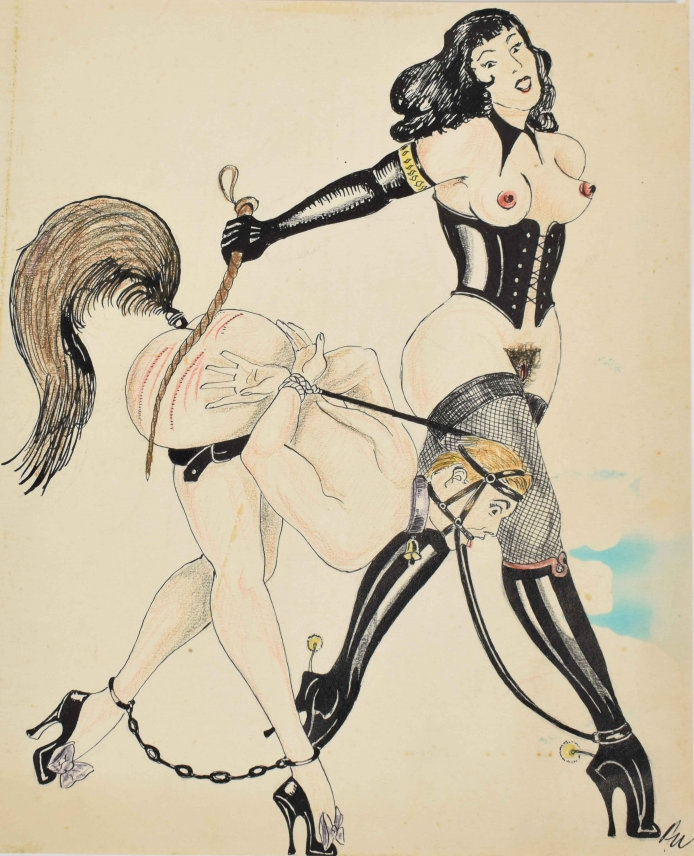
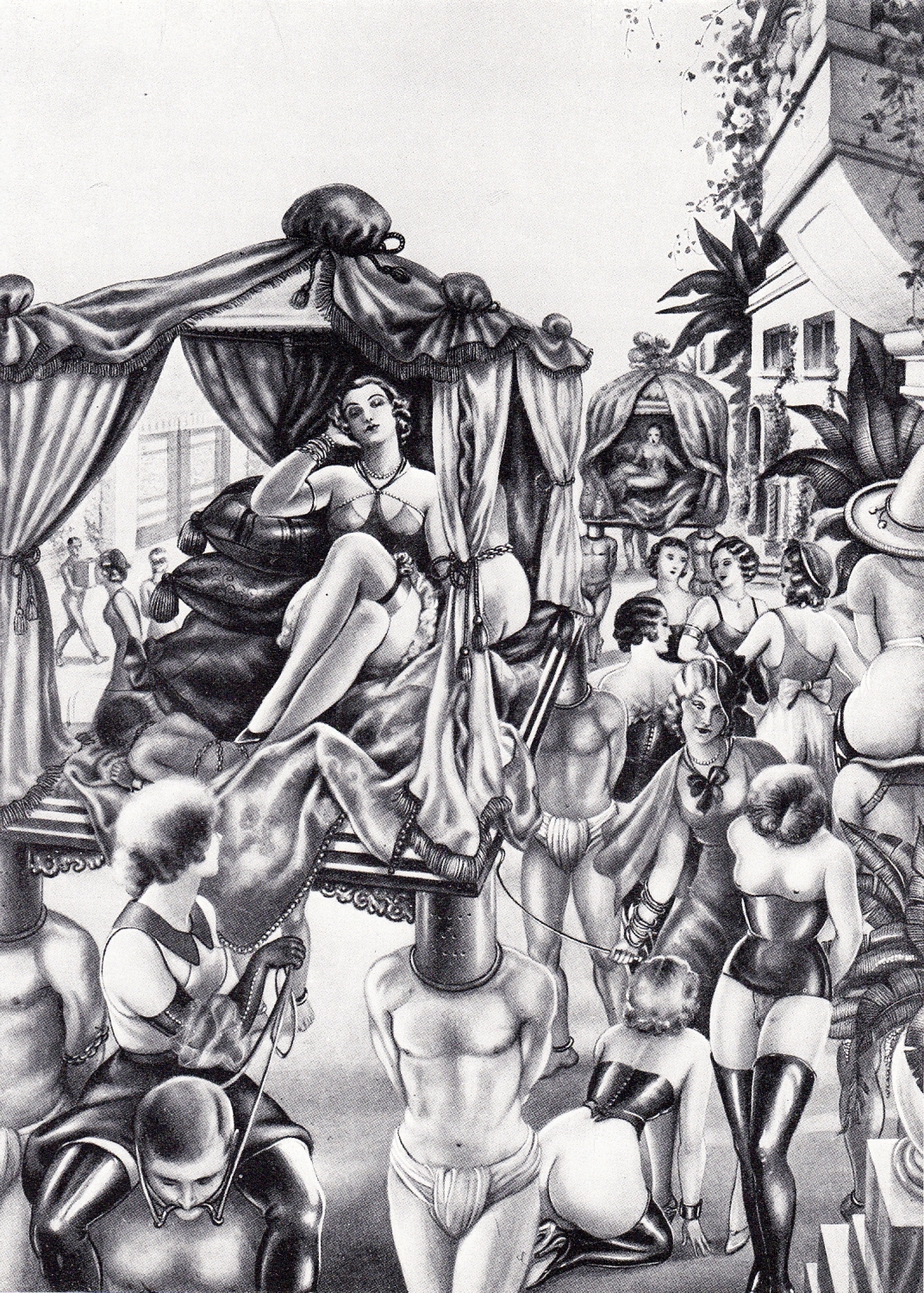
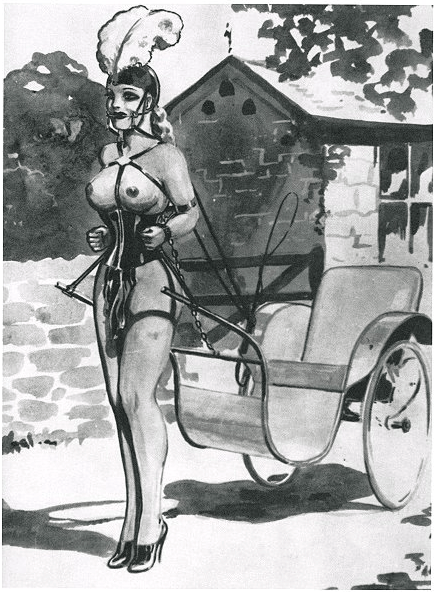
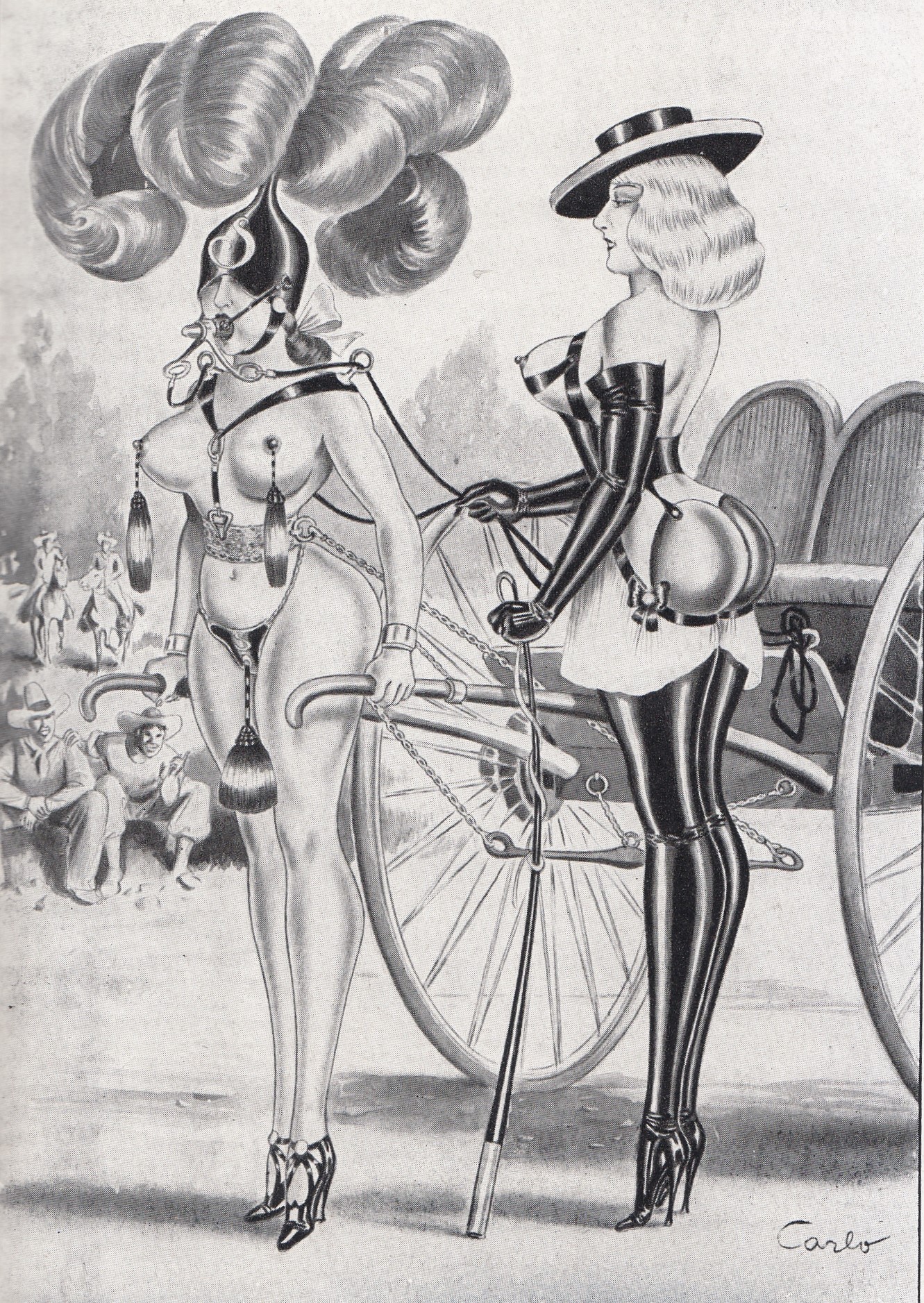
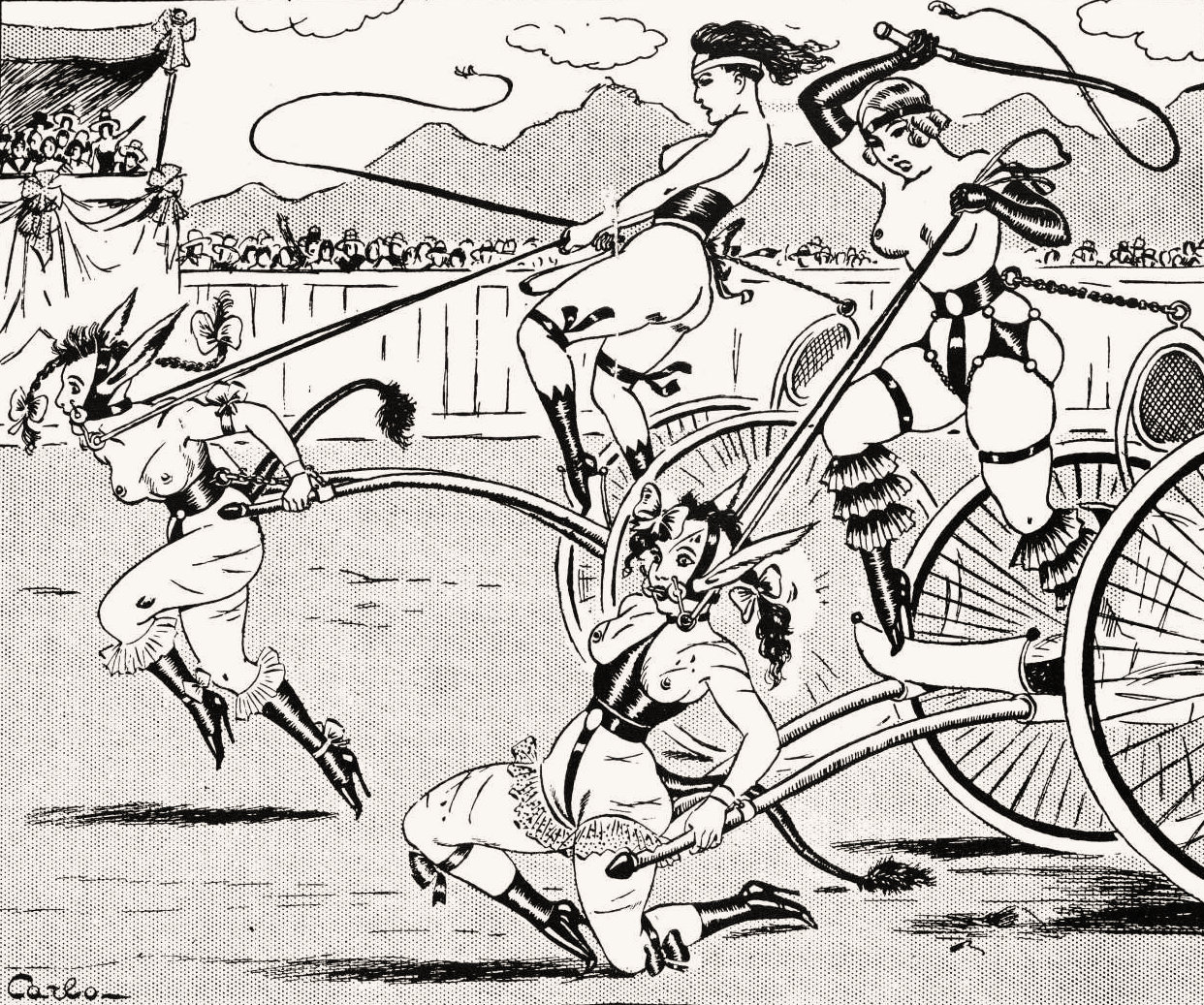
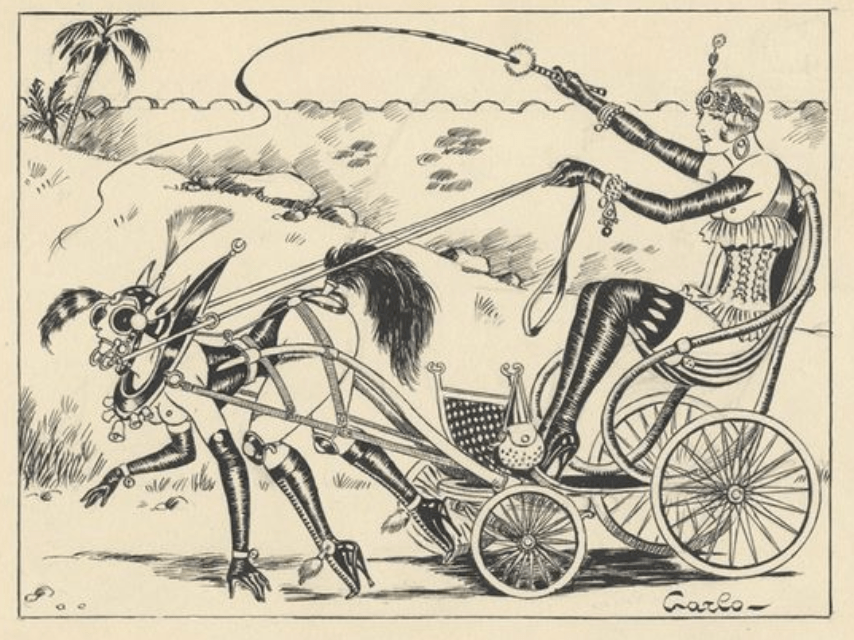
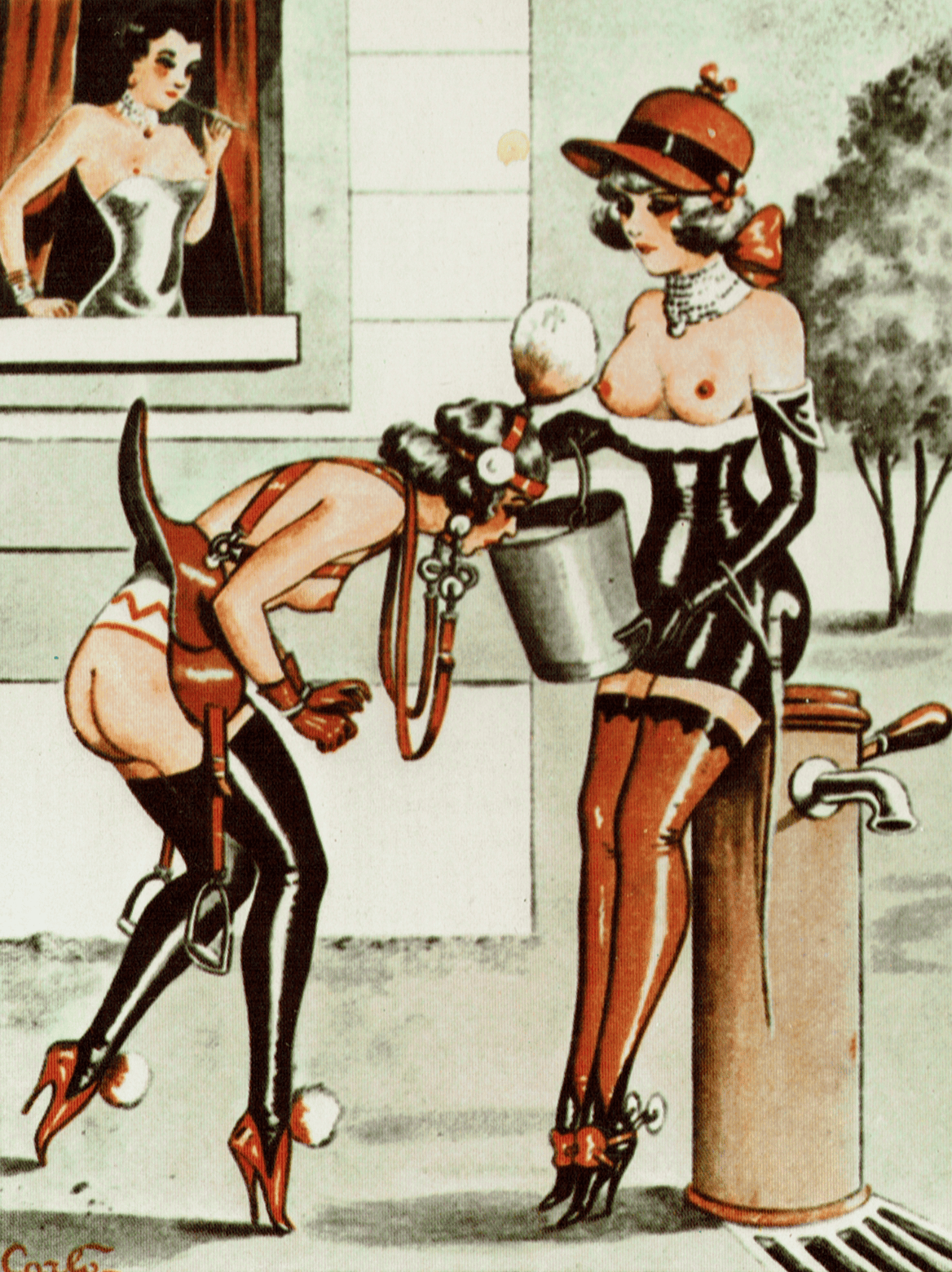
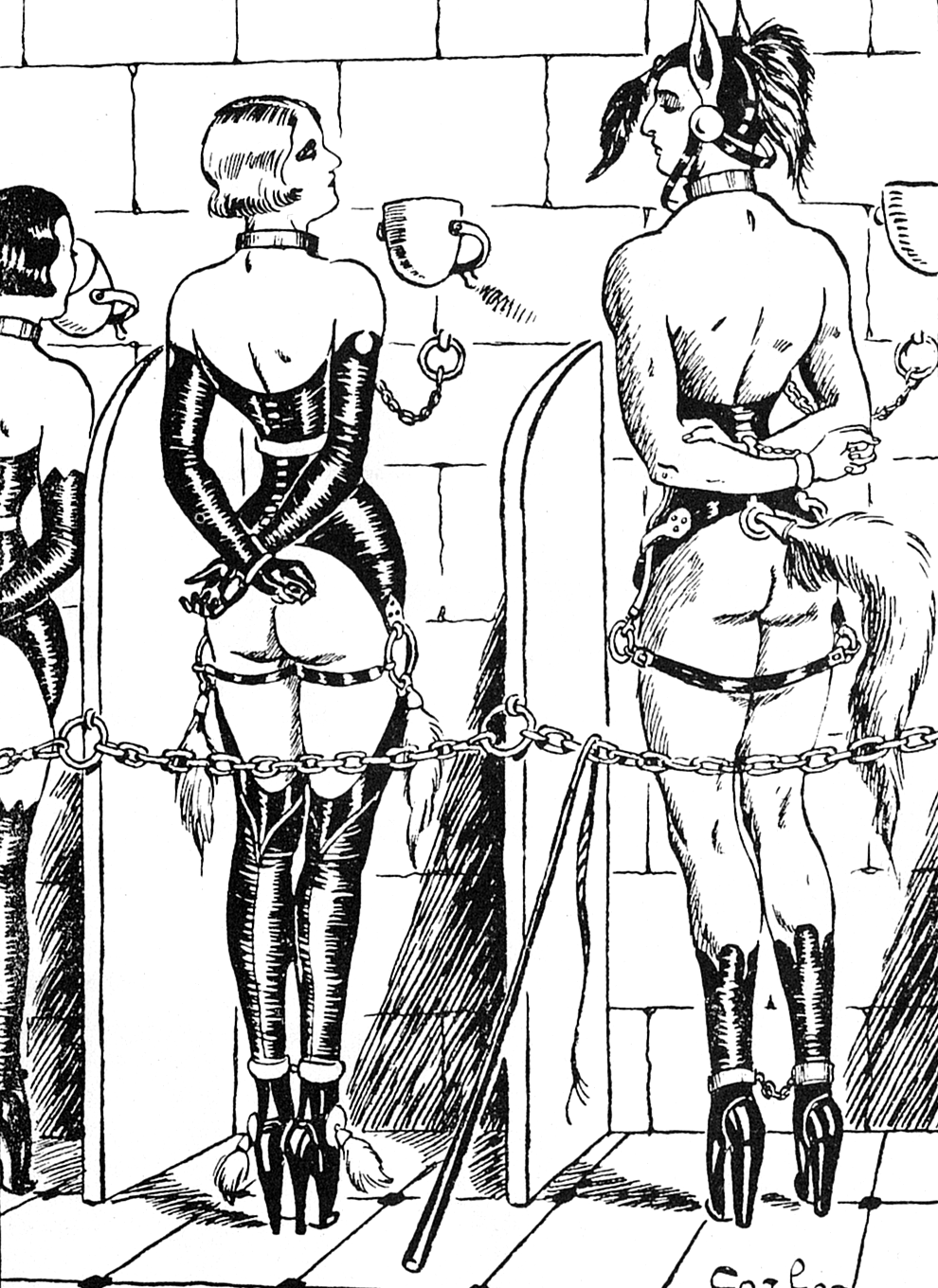
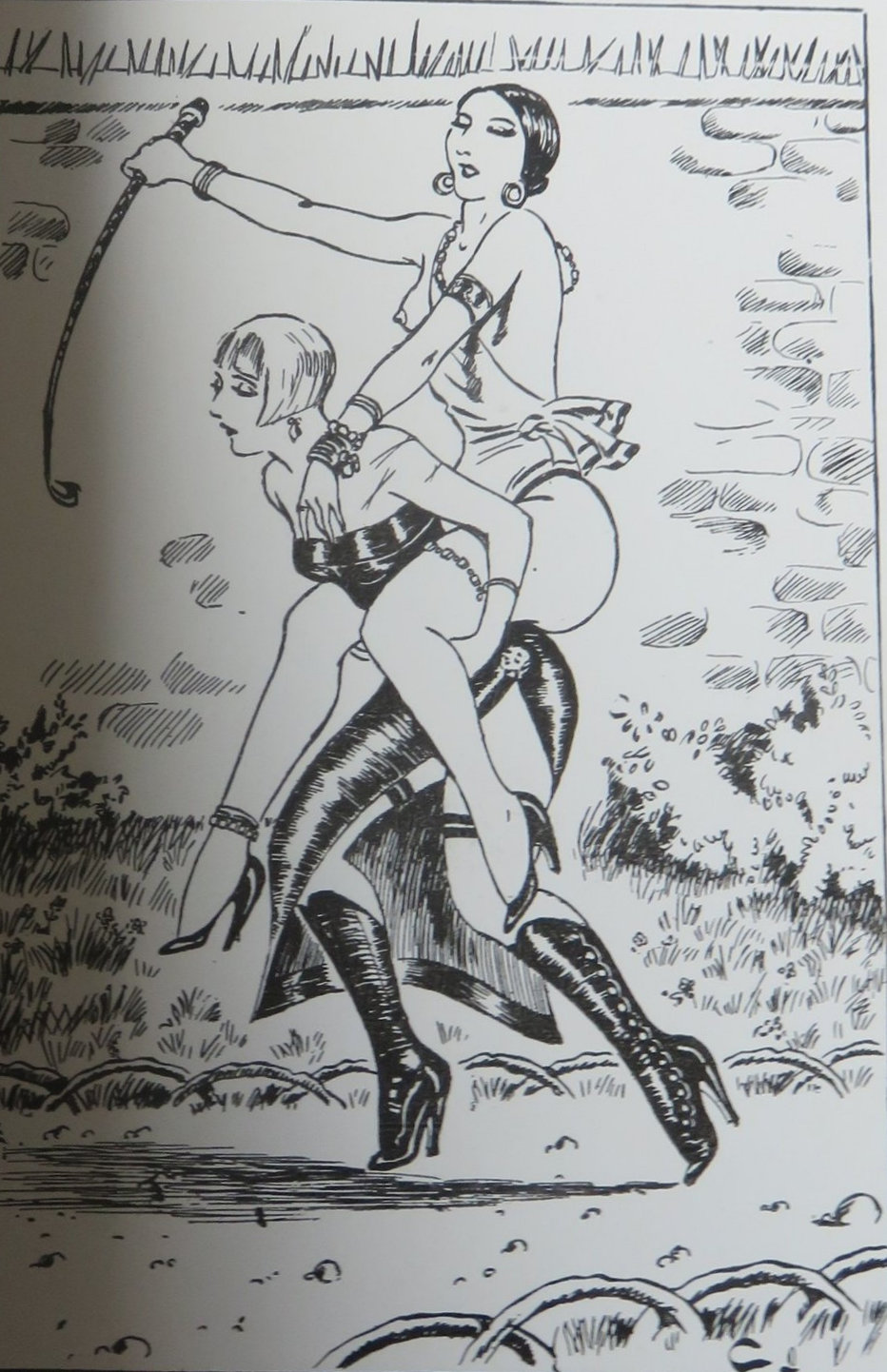
In the French clandestine publishing scene of the 1920s and 1930s the motif received its first sustained visual development. Artists working for houses such as the Librairie Artistique produced scenes of “dressage” in which elegantly corseted women are transformed into human mares. The illustrator known as Carlo (active mainly 1930–1937) repeatedly returned to the theme: high-heeled figures in elaborate leather harnesses, bits between their lips, horsehair tails, and the theatrical postures of the dressage ring. Titles such as Dressage, La Reine Cravache, and Le Cuir Triomphant treat the transformation not merely as degradation but as an aesthetic and erotic ritual, controlled movement, polished gear, the beauty of the disciplined body.
Photography followed a similar trajectory, though surviving examples are rarer. The Biederer Studio in Paris (active in the interwar years, roughly 1910s–1930s) produced a small but important series of carefully staged pony-play studies. These photographs, restrained and elegantly lit, show both male and female models in harness and appear to have been made as deliberate erotic role-play rather than crude satire. They rank among the earliest known photographic records of the motif treated as fetish theatre.
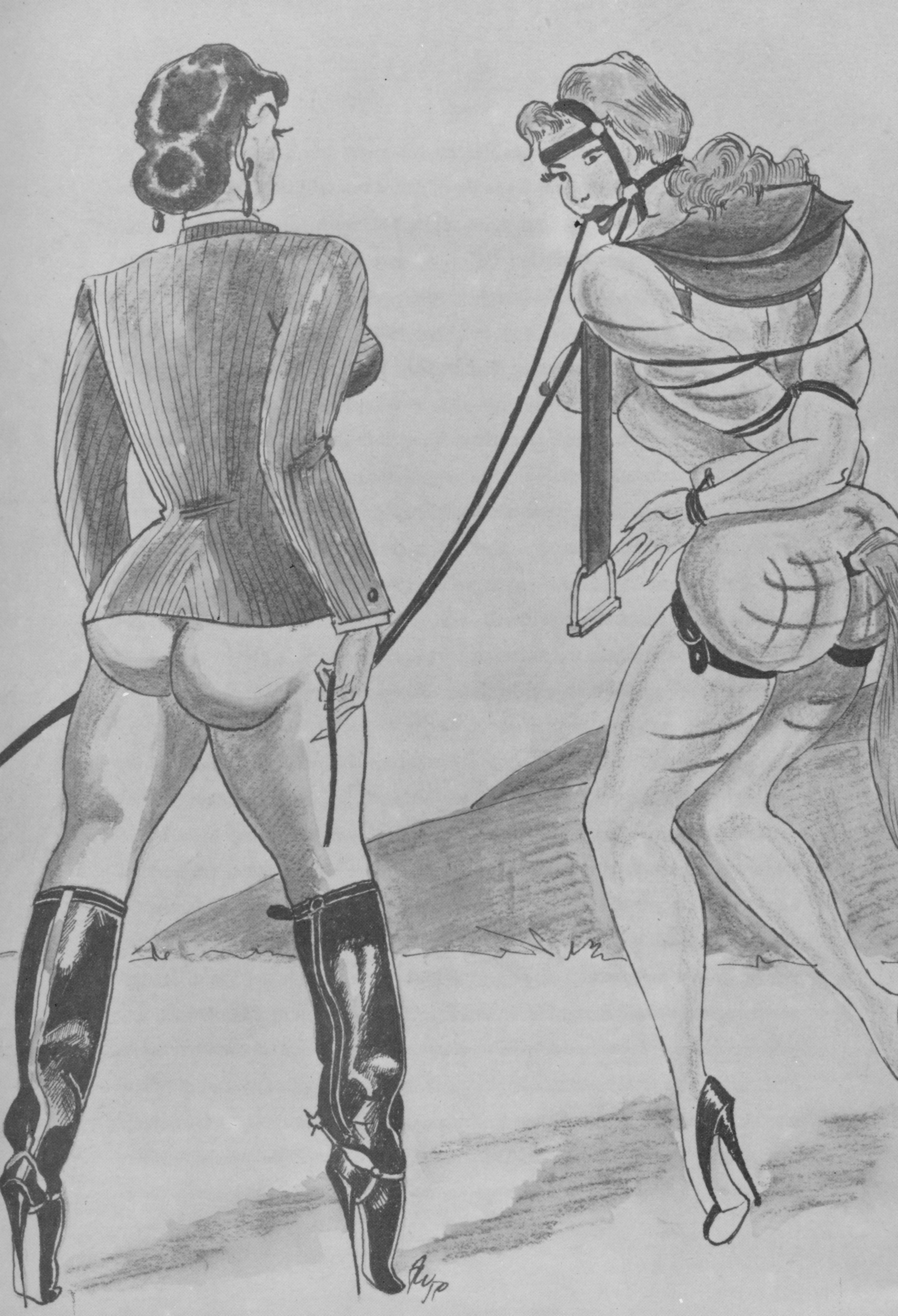
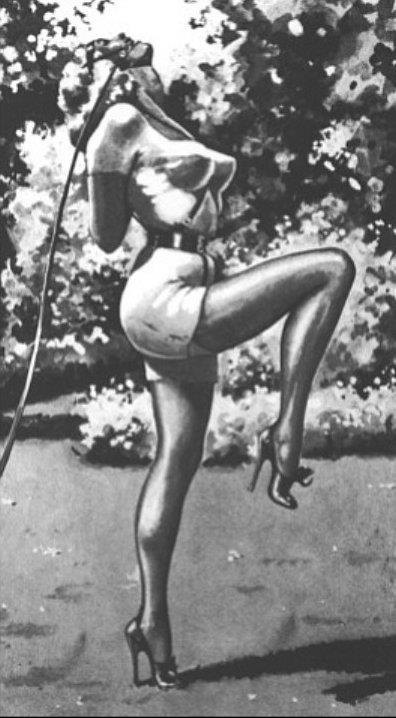
A clear visual turning point becomes visible in this period. While images of dominant women riding or driving men continue, a new and increasingly prominent figure appears: the woman herself as the pony. The elegant, harnessed, high-heeled ponygirl begins to replace the humiliated male philosopher as the central object of desire. By the time Charles Guyette commercialized the aesthetic through American mail-order catalogues in the 1930s, and John Willie refined it further in the pages of Bizarre, the transformation was complete. The bit no longer simply silenced; it completed an elegant silhouette. The harness no longer only restrained; it sculpted the body into an idealized equine form.
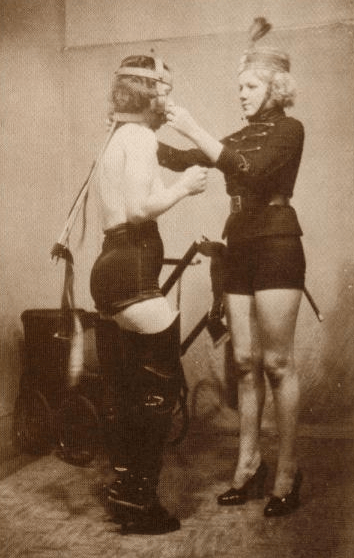
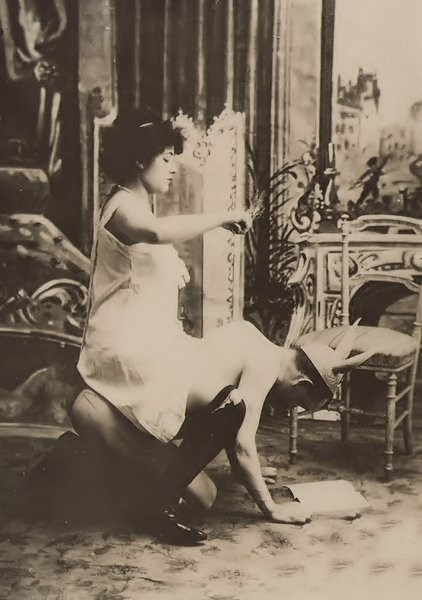

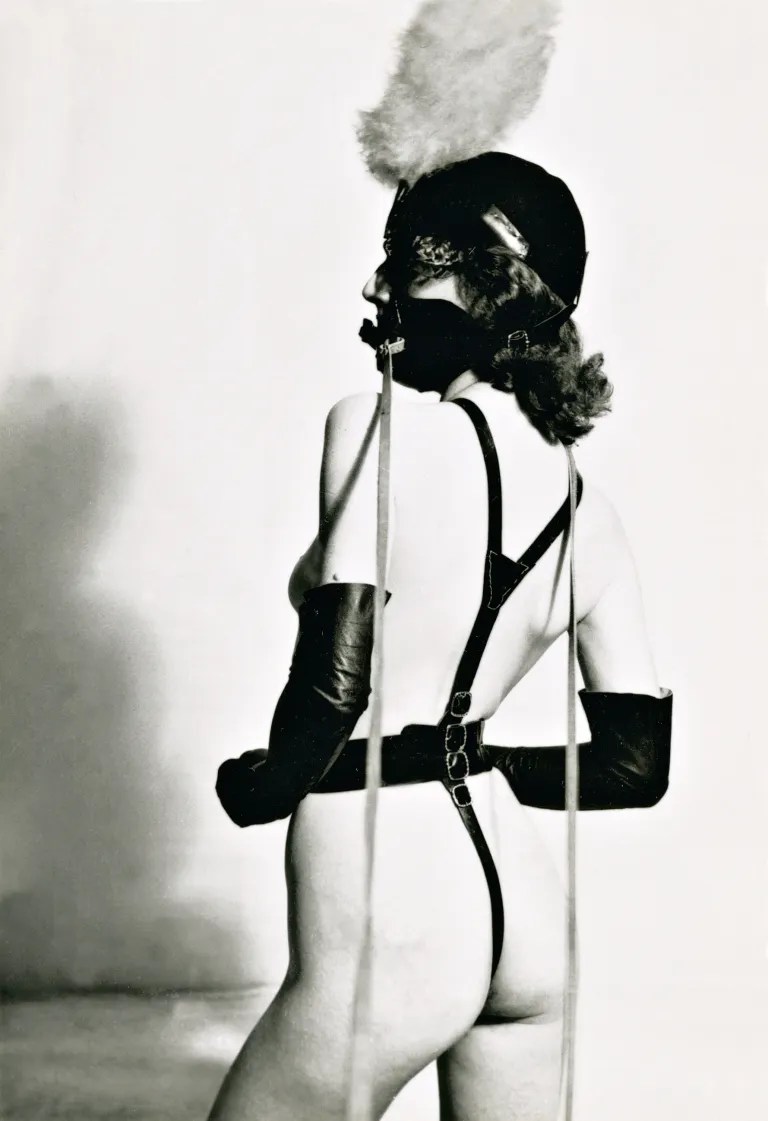
Irving Klaw carried the motif into moving images. In the short fetish films he produced in the 1950s, pony-play sequences (riding the Human Ponygirl) appear alongside bondage and spanking scenes, translating the already established visual vocabulary, bridles, harnesses, high-heeled “hooves,” and formal training postures, onto the screen for a new audience.
What had begun as an allegory of the wise man brought low had, by the 1930s, become a sophisticated erotic fantasy. In the hands of illustrators, photographers, and early fetish entrepreneurs, pony play emerged as a distinct visual language of desire, one that continues to evolve, yet still carries the long shadow of its older, darker meanings.
Ponyplay
←

 Art by Joseph Kuhn‑Régnier
 Art by Joseph Kuhn‑Régnier
 Art by Joseph Kuhn‑Régnier
 Art by Joseph Kuhn‑Régnier
 Art by Joseph Kuhn‑Régnier


 Art by Margit Gaal
 Art by Alexander Sandor Szekely
 Art by Martin van Maele
 Art by A.W
 Art by A.W
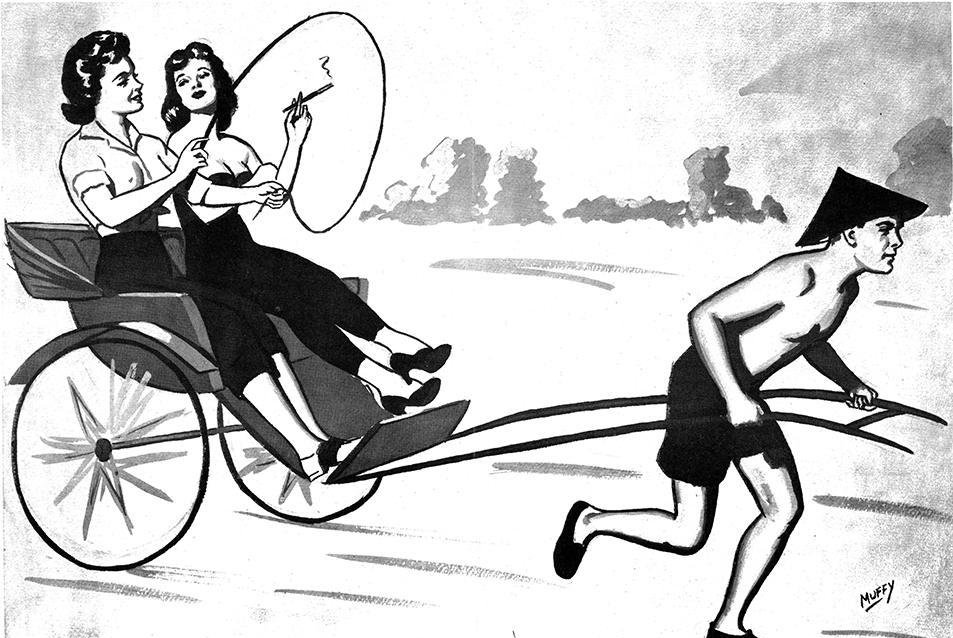
 Art by Muffy
 Art by Roger Testu
 Art by Jaroslav Štika
 Art by Joop Moesman
 Art by Almery Lobel Riche
 Art by Paul Klamm
 Art by Paul Klamm
 Art by Paul Prött




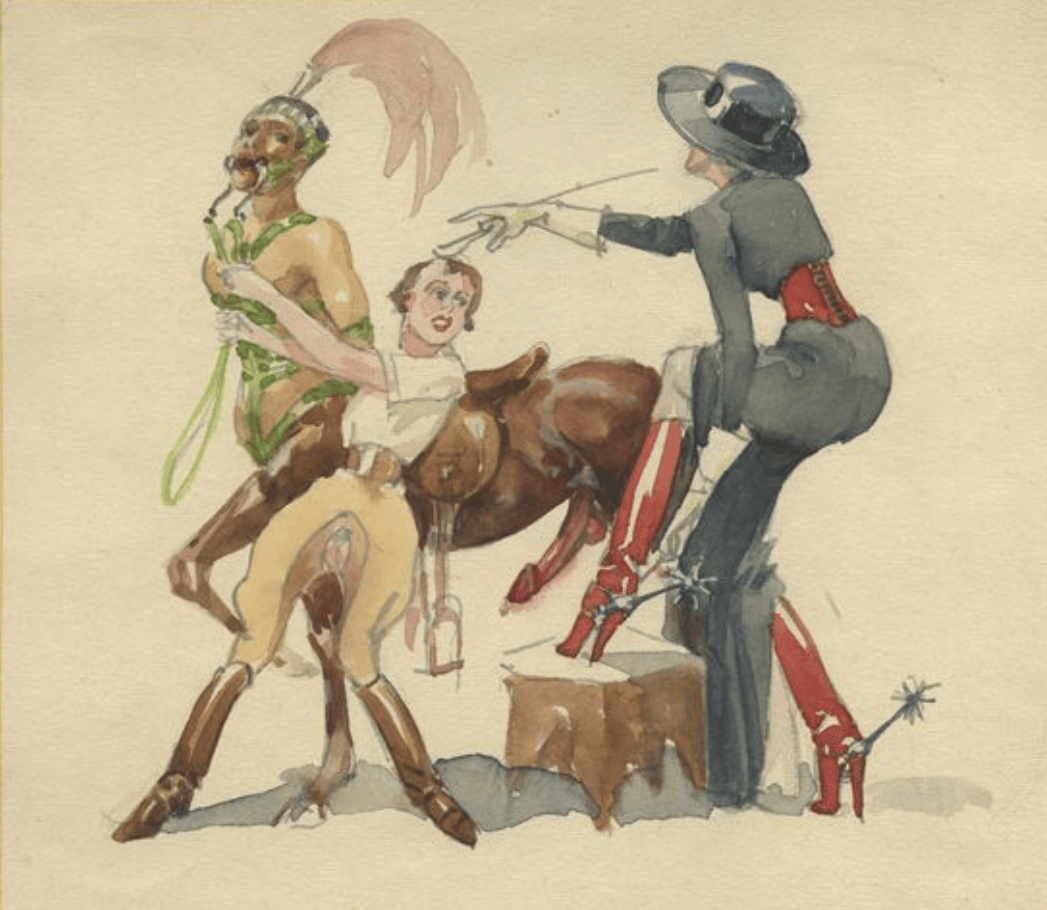
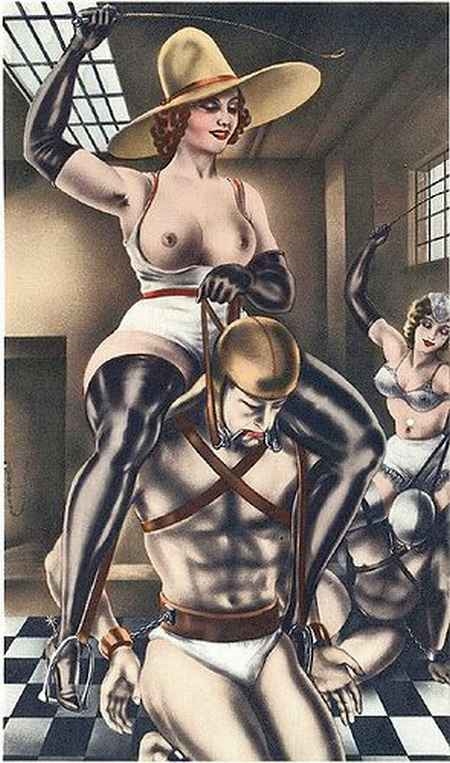
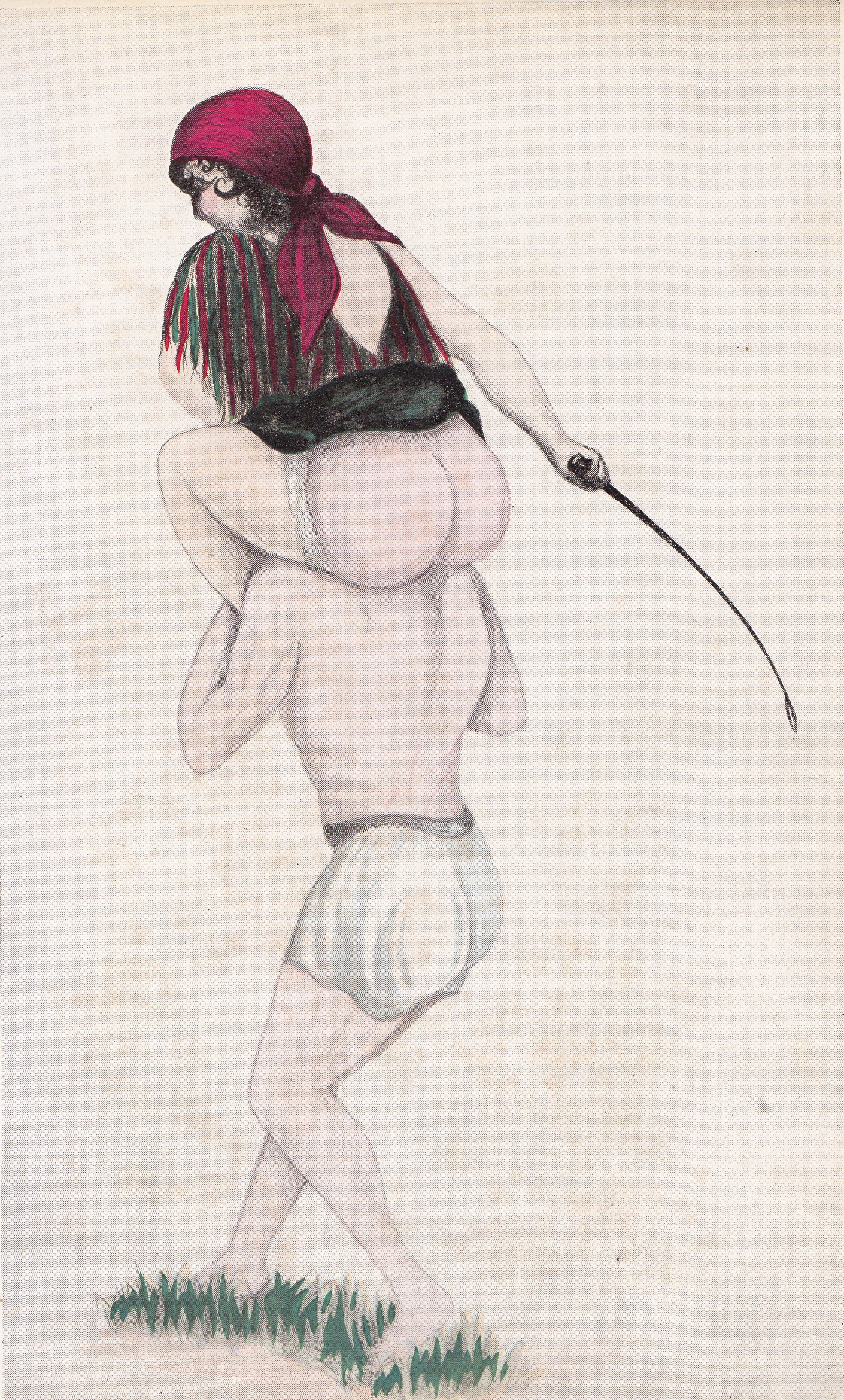
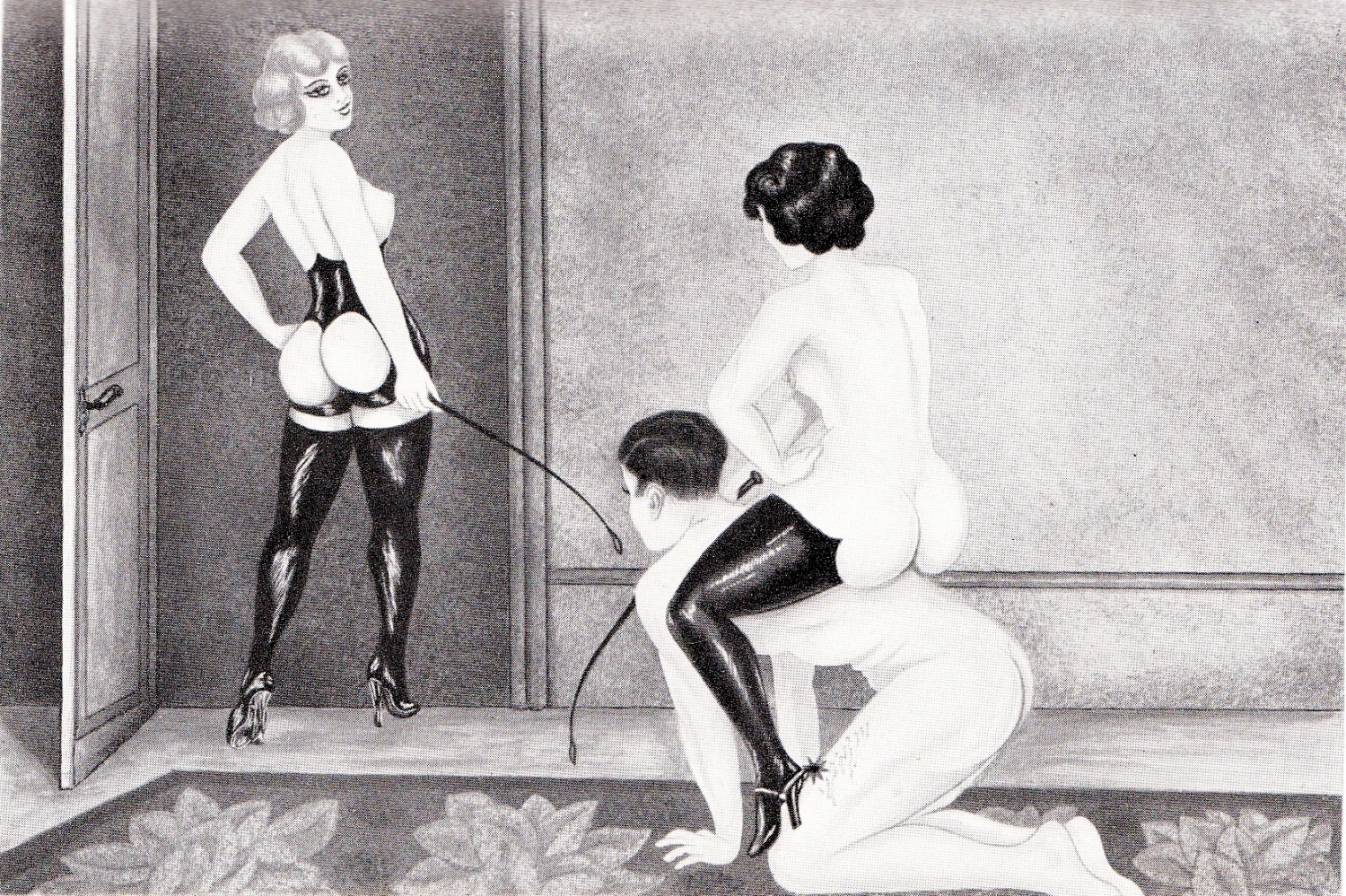
 Herrschaft & Zofe by Hartmut von Altrock, 1923
 Herrschaft & Zofe by Hartmut von Altrock, 1923
 Herrschaft & Zofe by Hartmut von Altrock, 1923


 Anonymous Artist
 Art by Ehony, 1896
 Art by von R. Remton, 1796
 Anonymous Artist
 Art by U. Dariou. 1869
 Anonymous artist, 1830
 Art by U. Guillaume, 1894
 Art by F. Kurth
 Anonymous Artist
 Art by W. Schertel, 1910
 Art by Hans Baldung, 1513
 Art by Joseph Kuhn Regnier, 1910
 Art by M. Gray, 1885
 Anonymous Artist, 1819
 Anonymous Artist




Recommended Sites & Sources
- Biederer Studio – https://studiobiederer.wordpress.com/
Extensive galleries of interwar fetish photography, including the ponyplay series. - Vintage FemDom Art – https://vintagefemdomart.wordpress.com/
Large collection of historical images of female dominance, including Aristotle and Phyllis. - Vintage BDSM Art – https://vintagebdsmart.com/
Broad index of vintage BDSM artists and thematic galleries (including material from Die Weiberherrschaft). - Bdsm Art Archive – https://bdsmartarchive.com/
Articles and galleries on Biederer Studio, Die Weiberherrschaft, John Willie, and related themes. - Internet Archive – Die Weiberherrschaft in der Geschichte der Menschheit
Digitized volumes of the original work by Eduard Fuchs & Alfred Kind (1913–1914). - Charles Guyette: Godfather of American Fetish Art (Richard Pérez Seves)
Available via Internet Archive and various booksellers; key source on the American mail-order tradition.