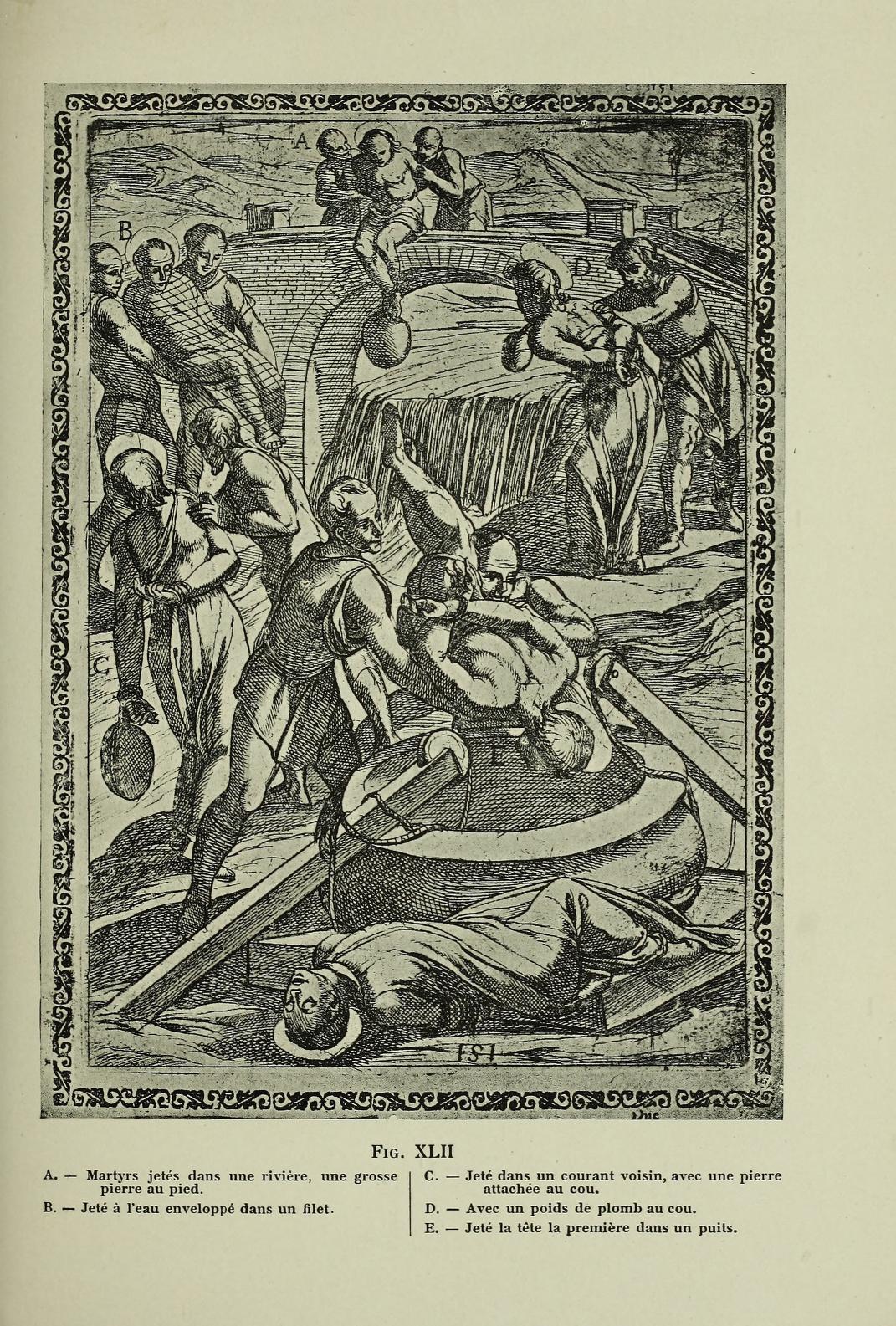
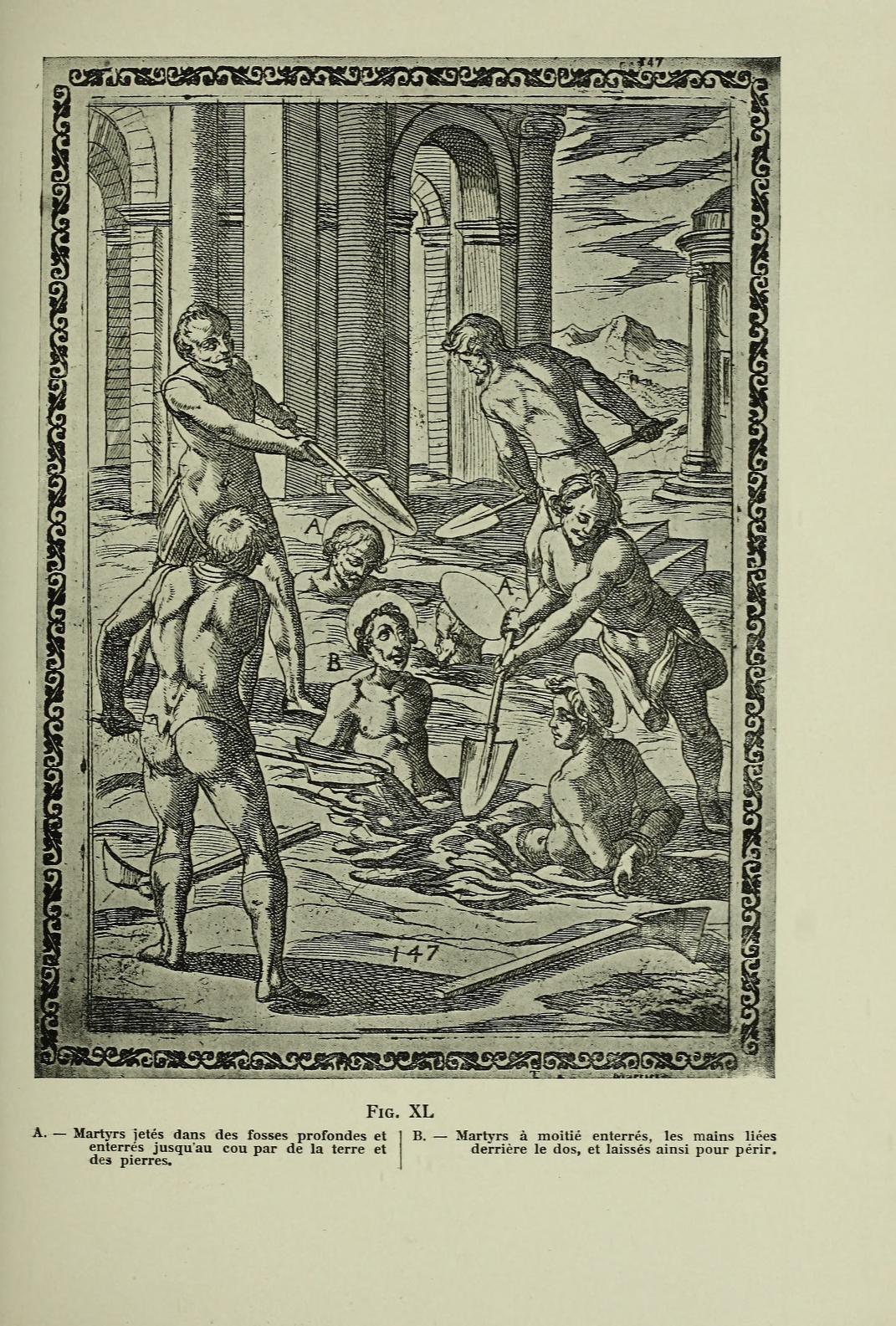
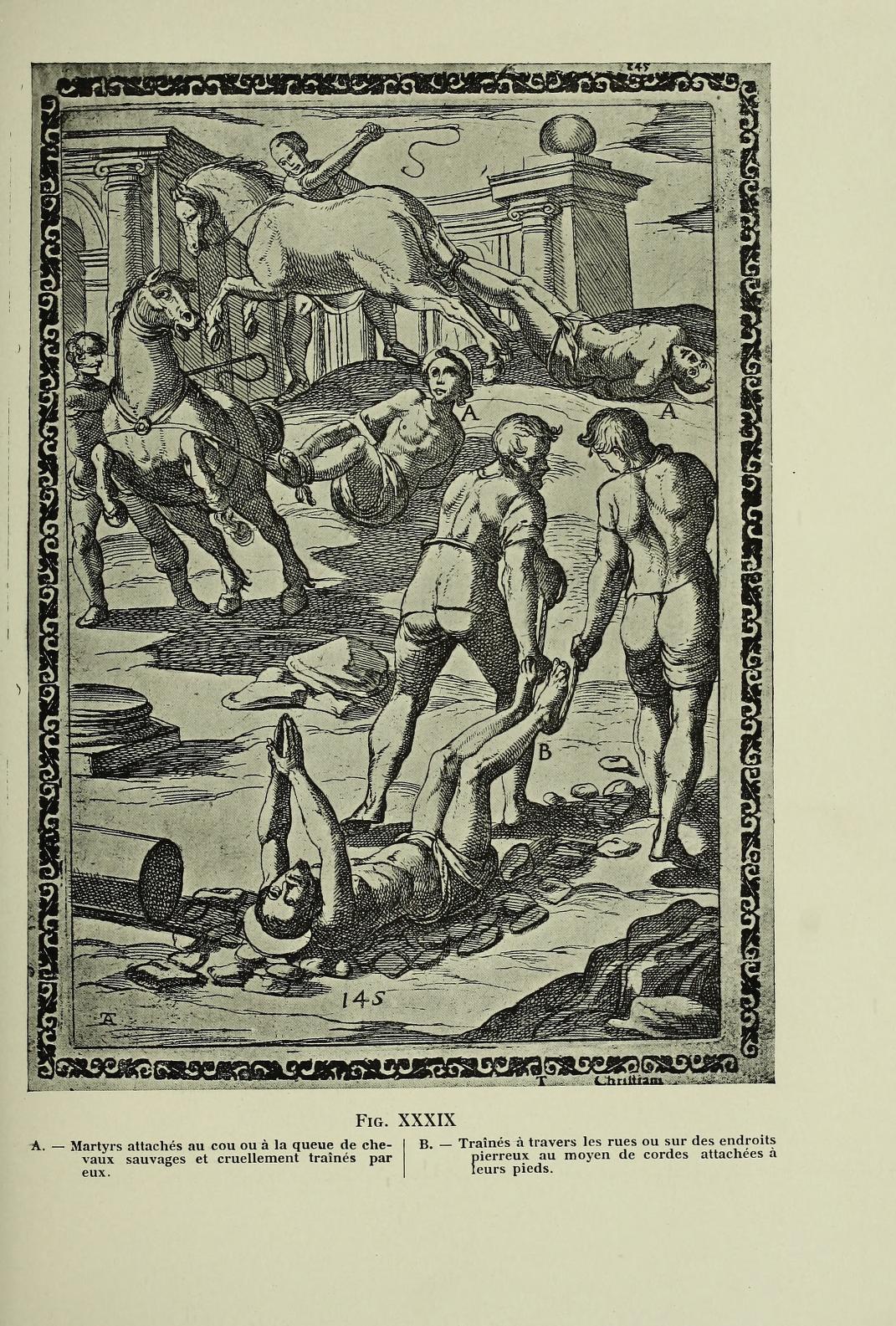
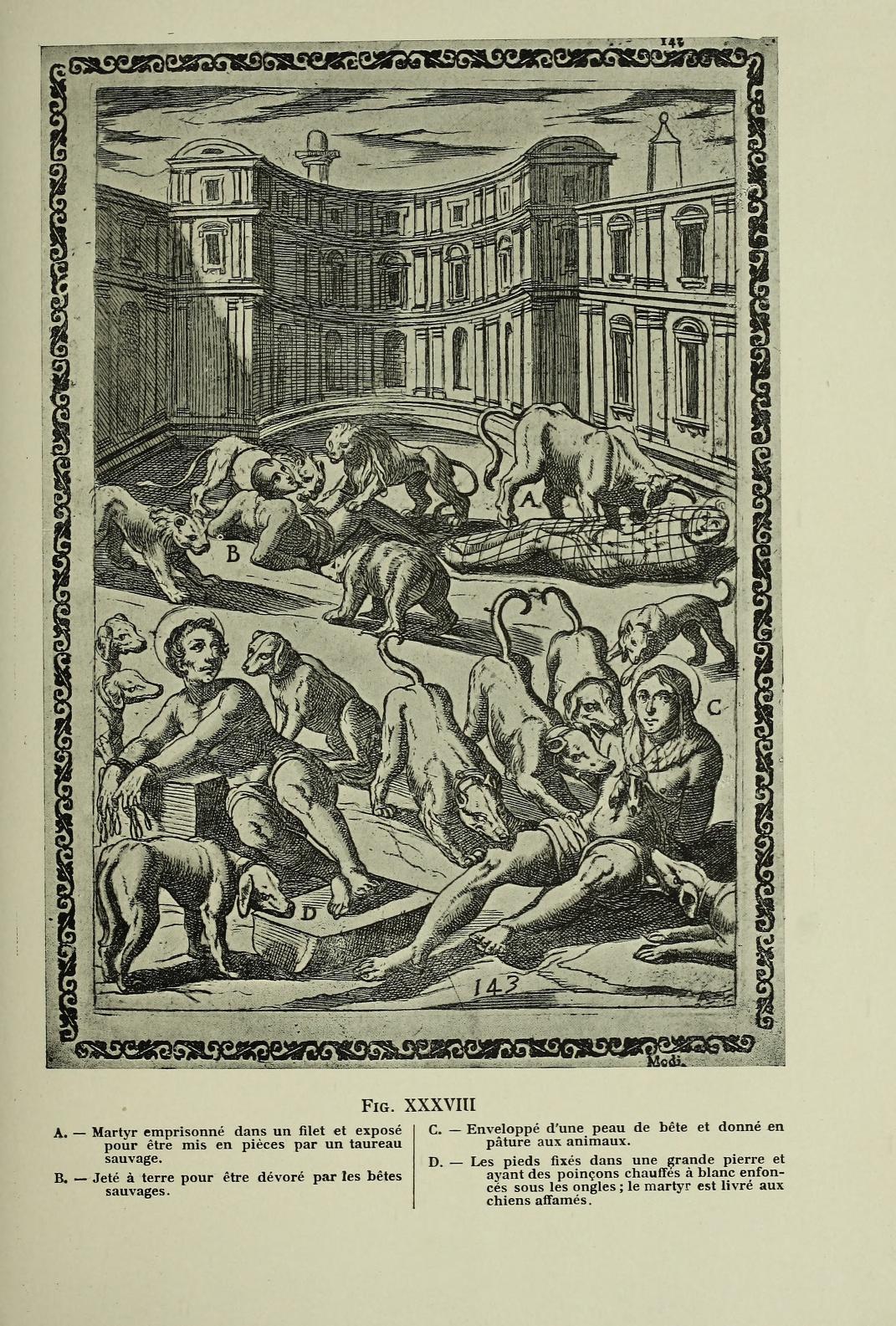
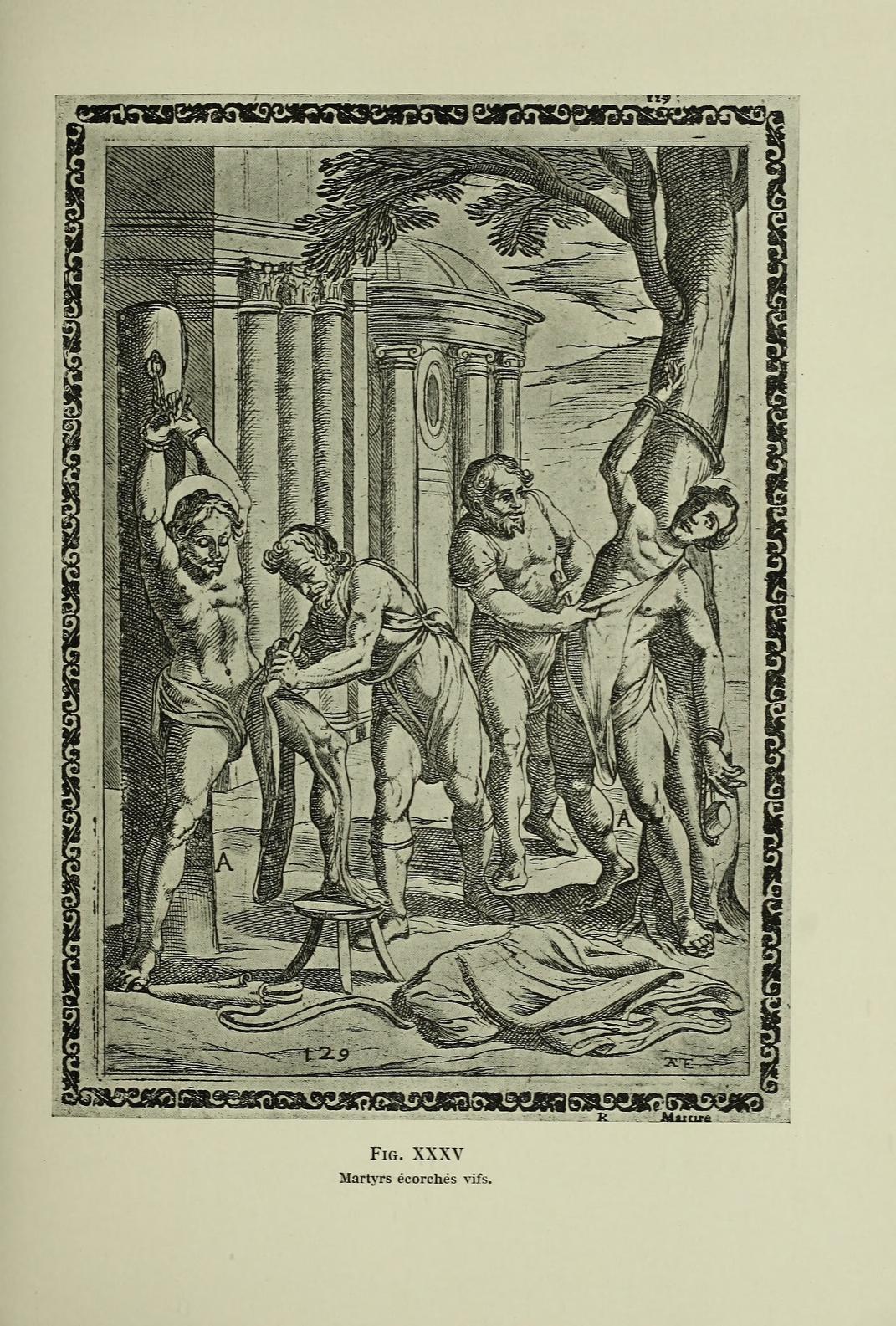
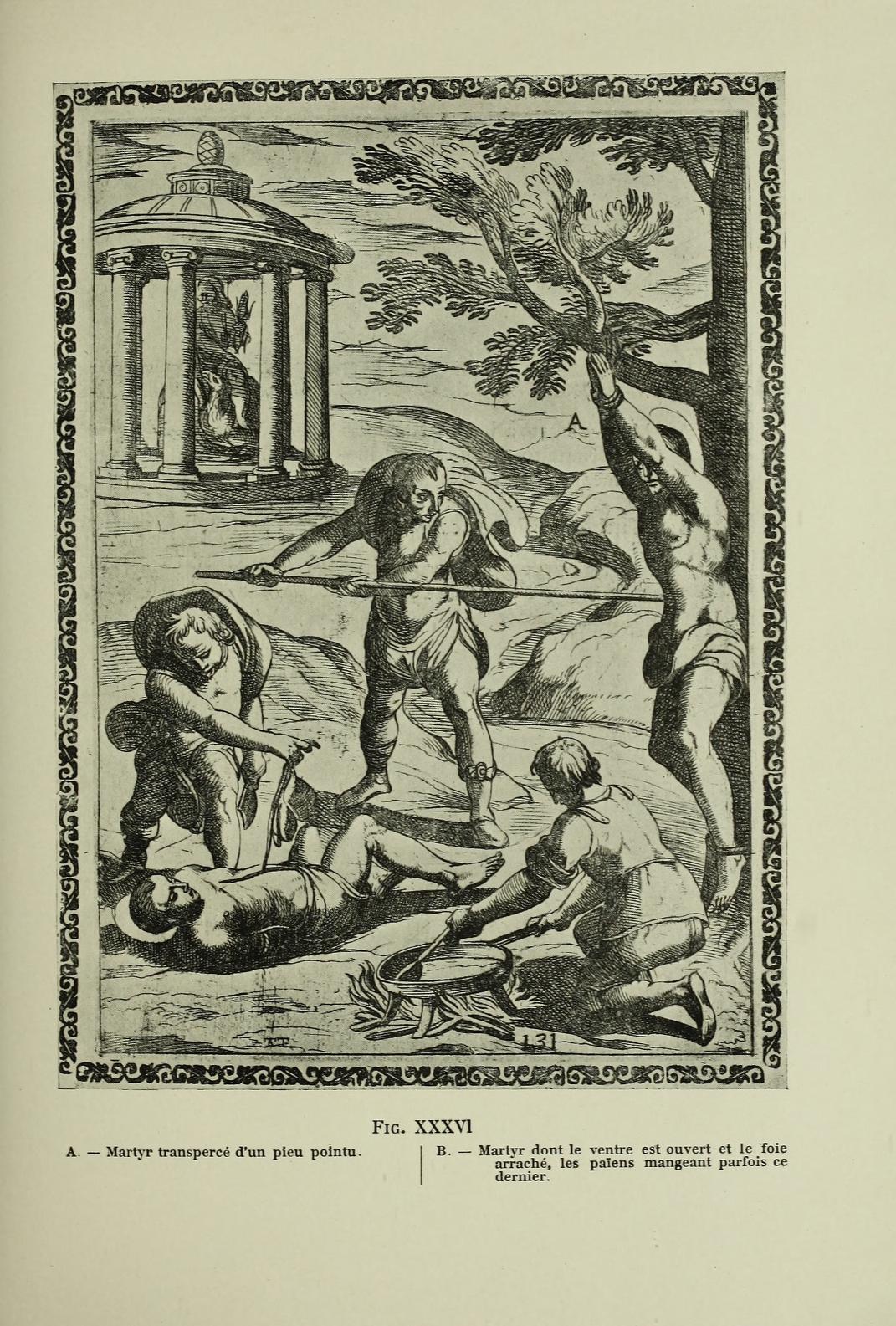
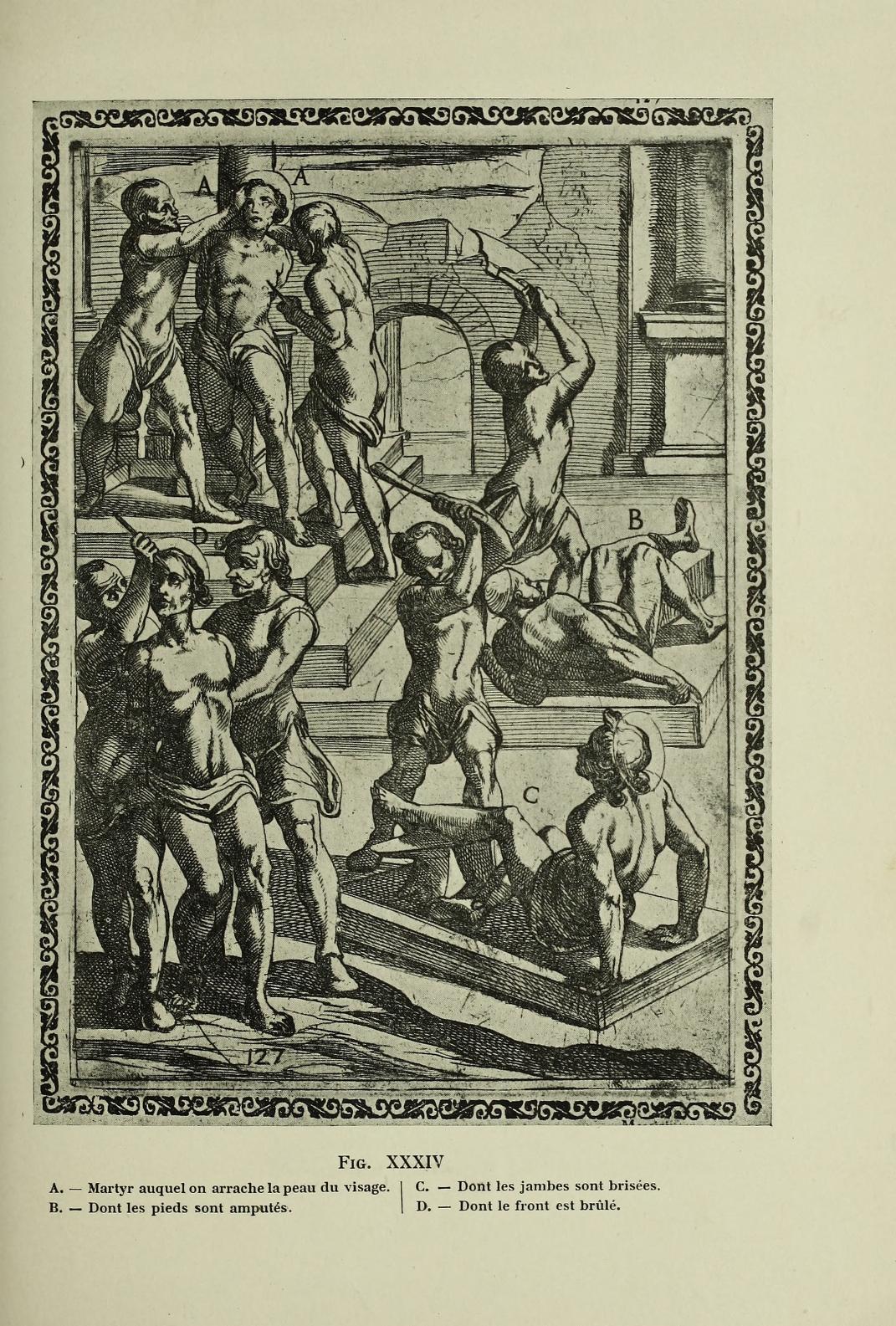
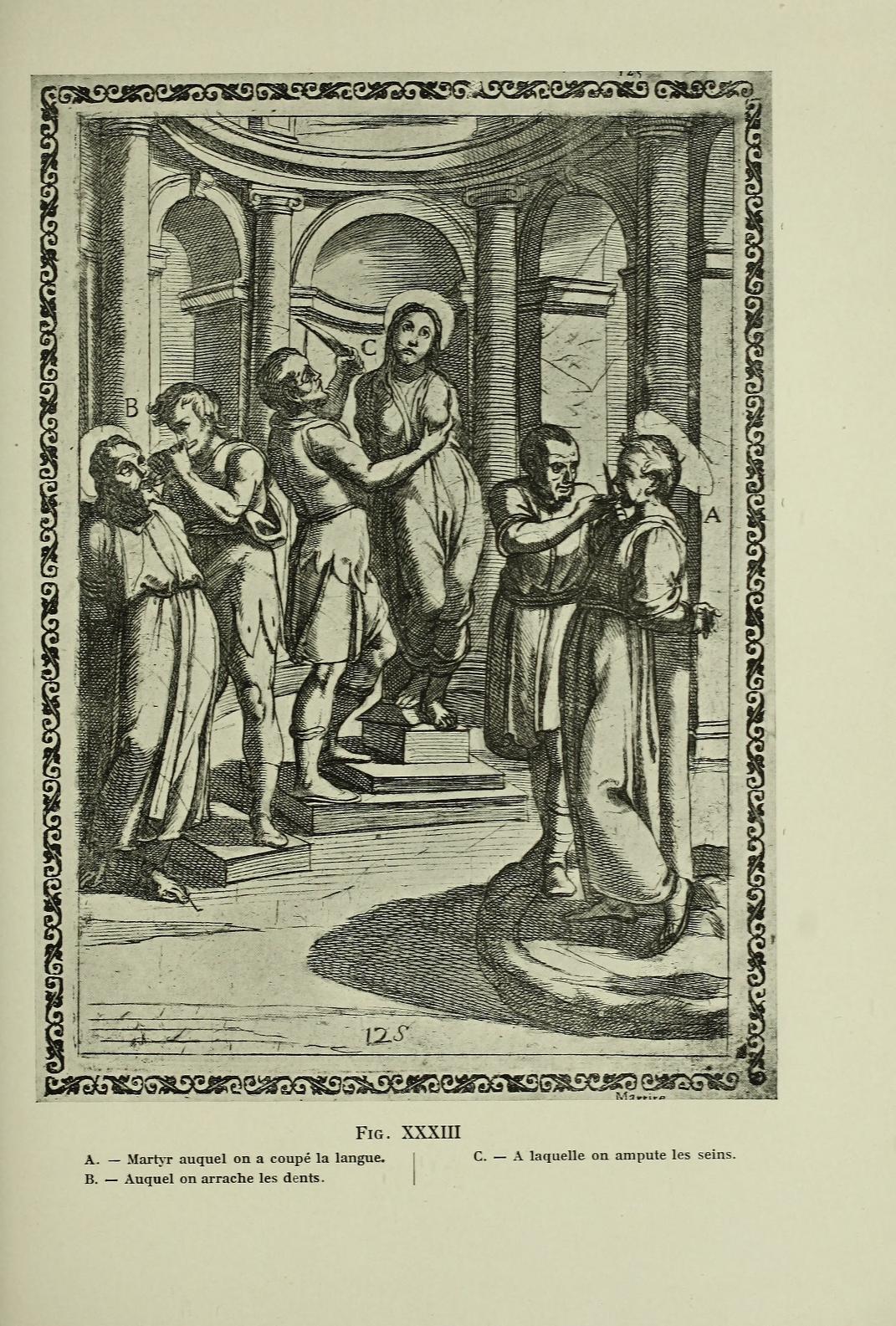
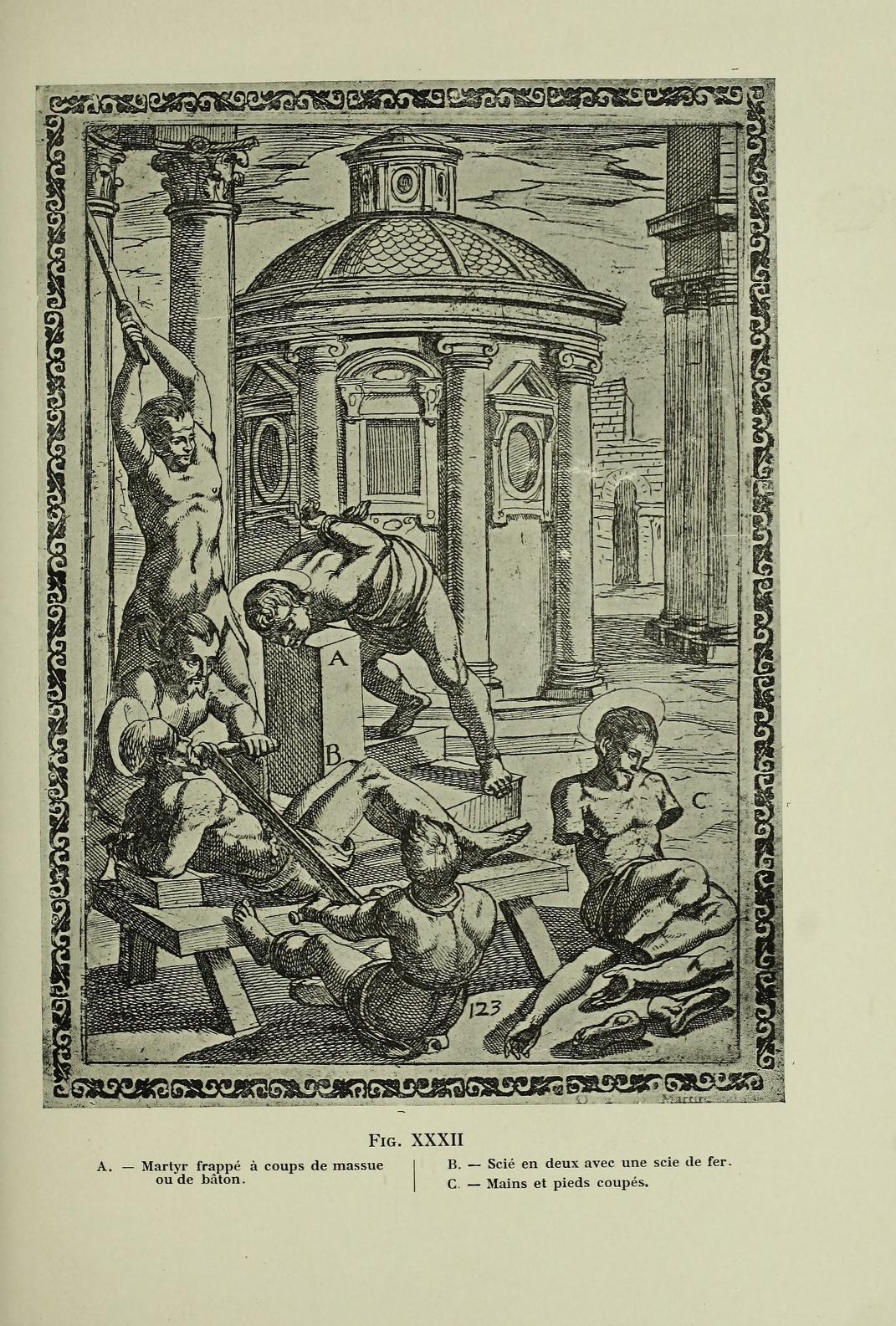
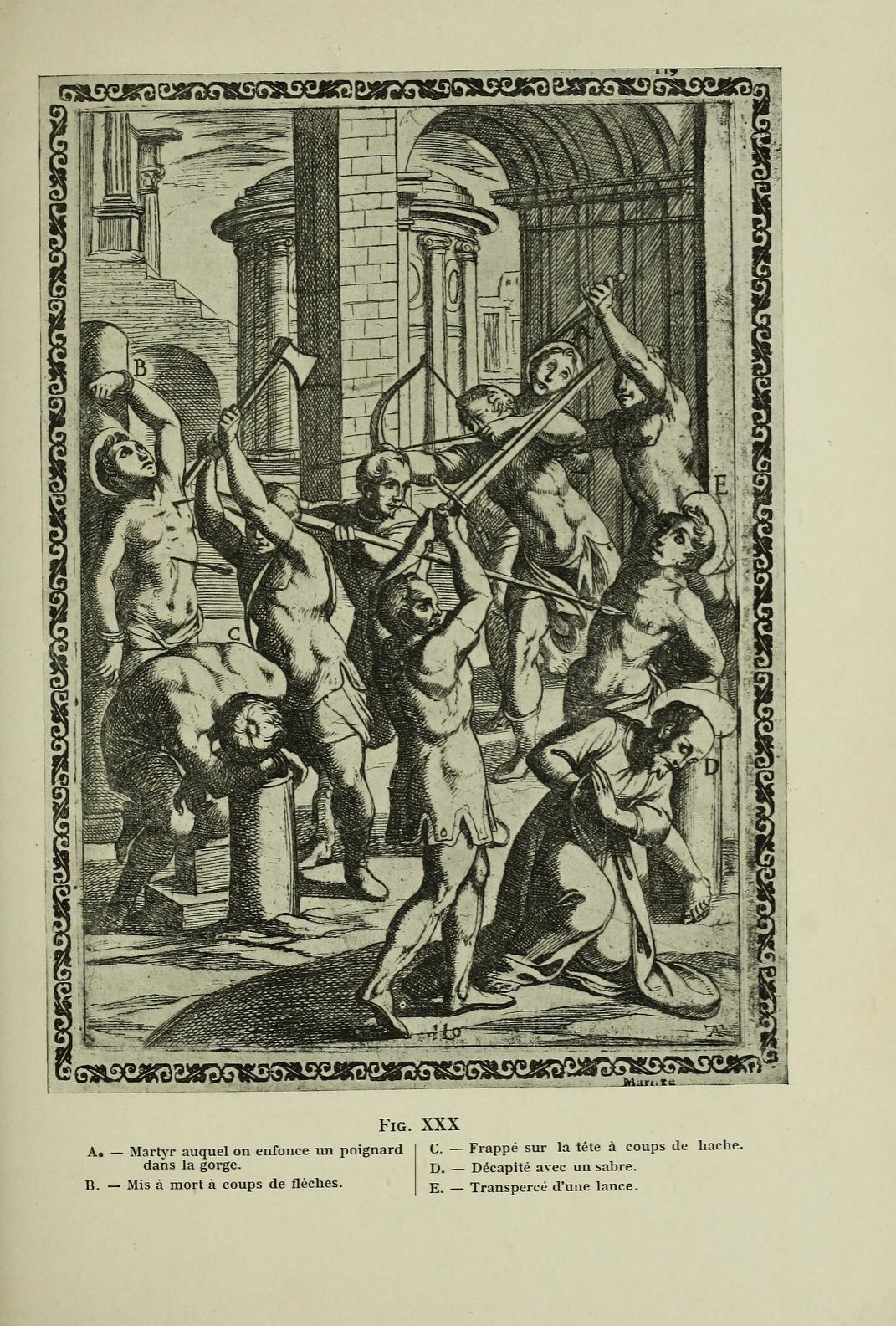
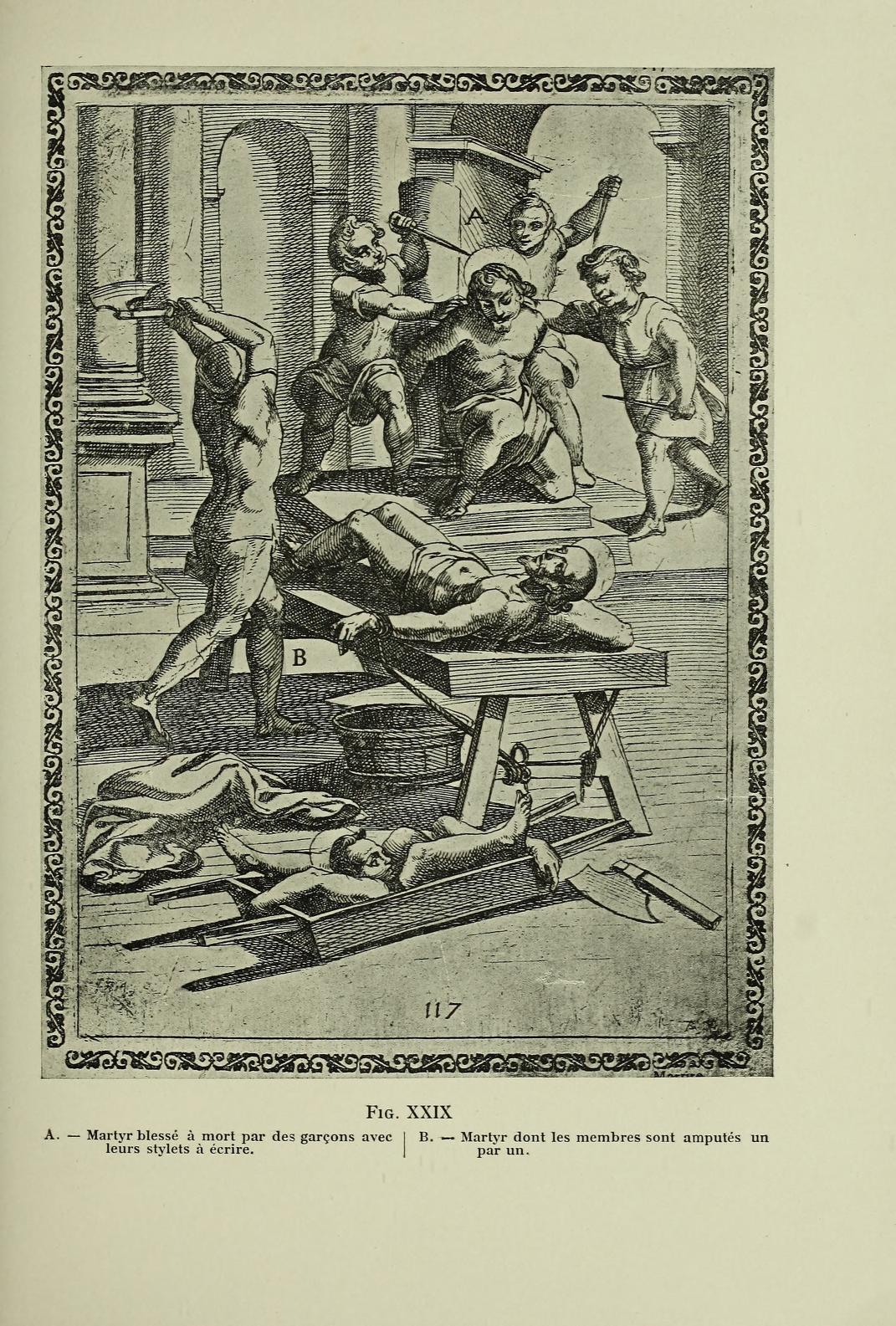
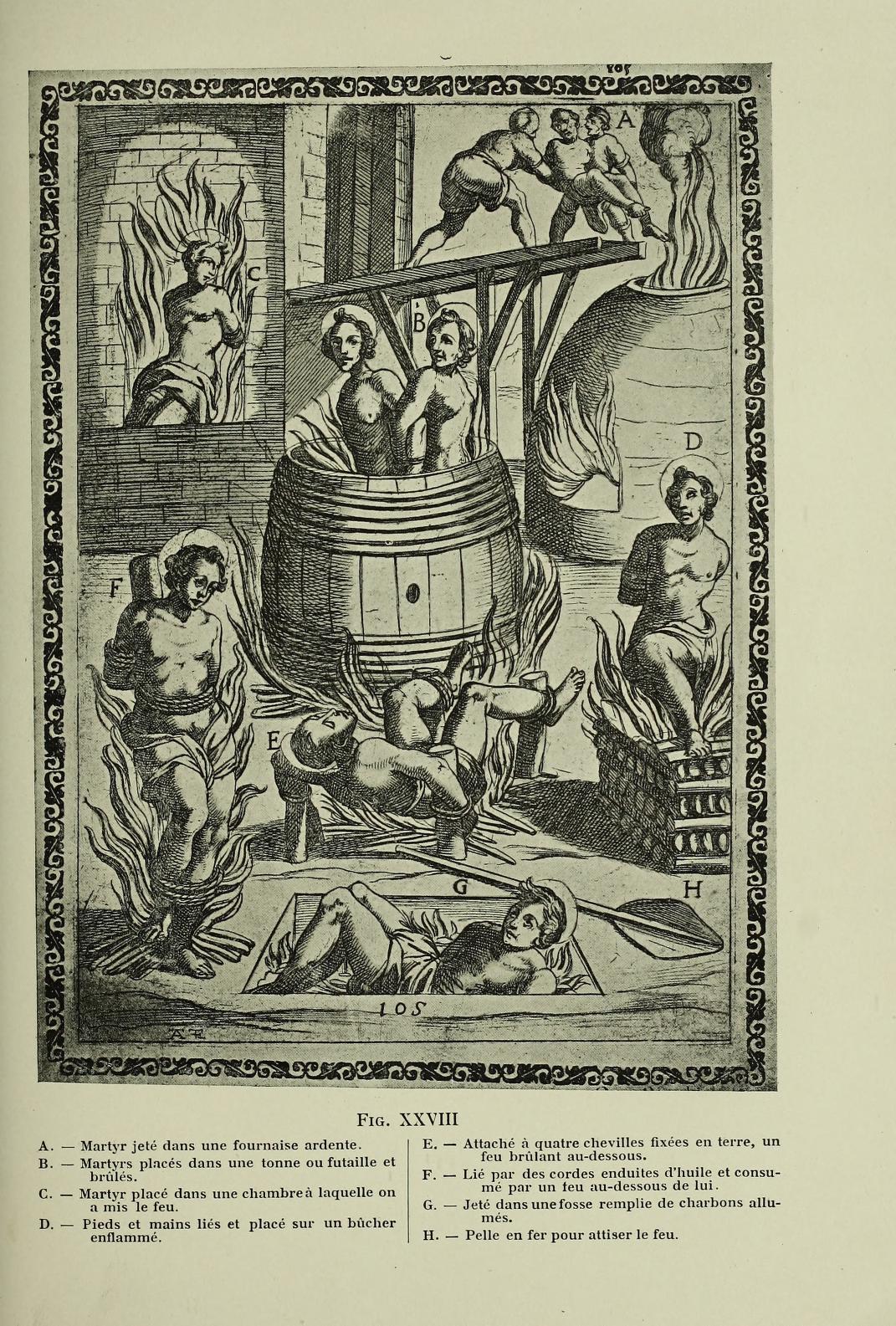
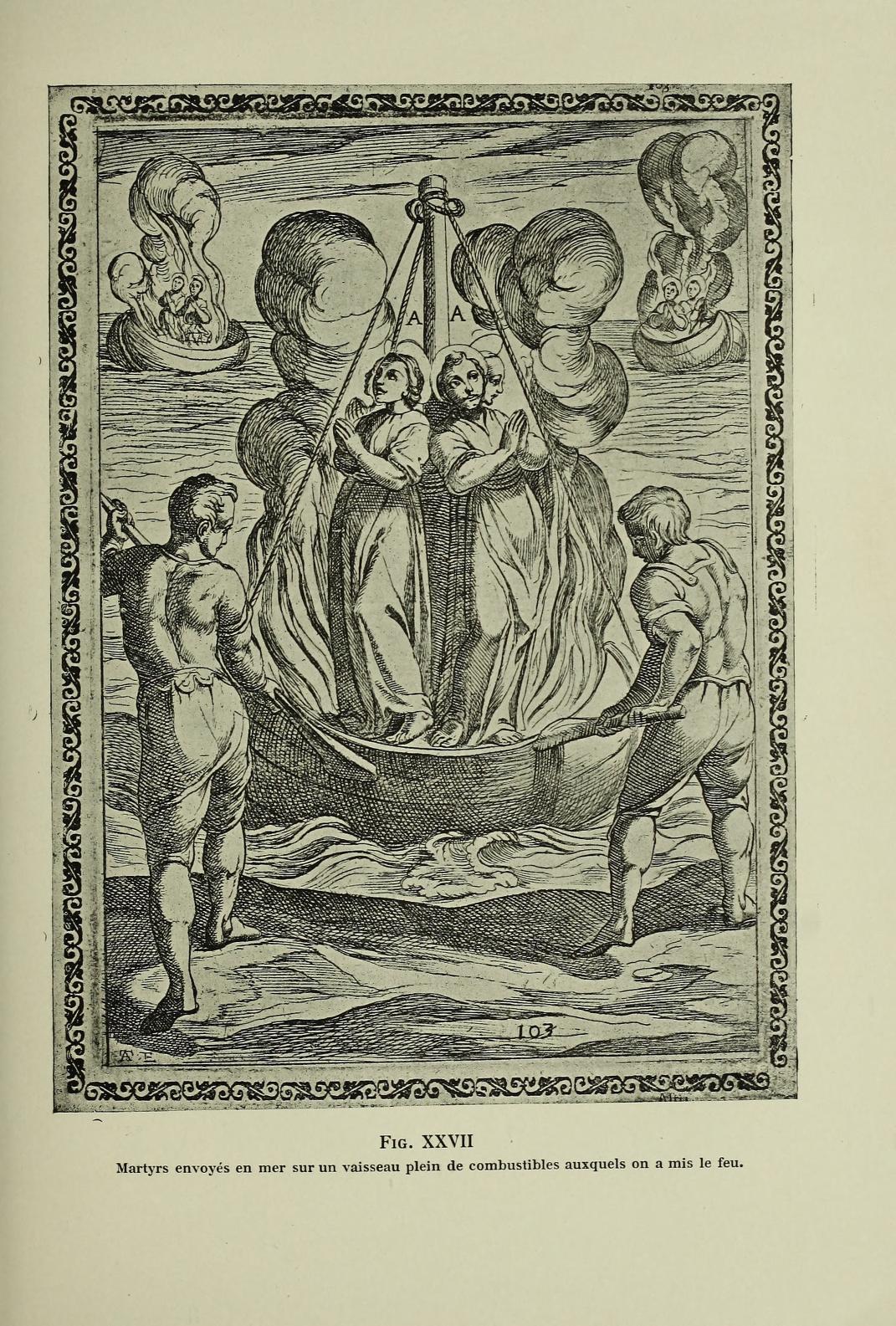
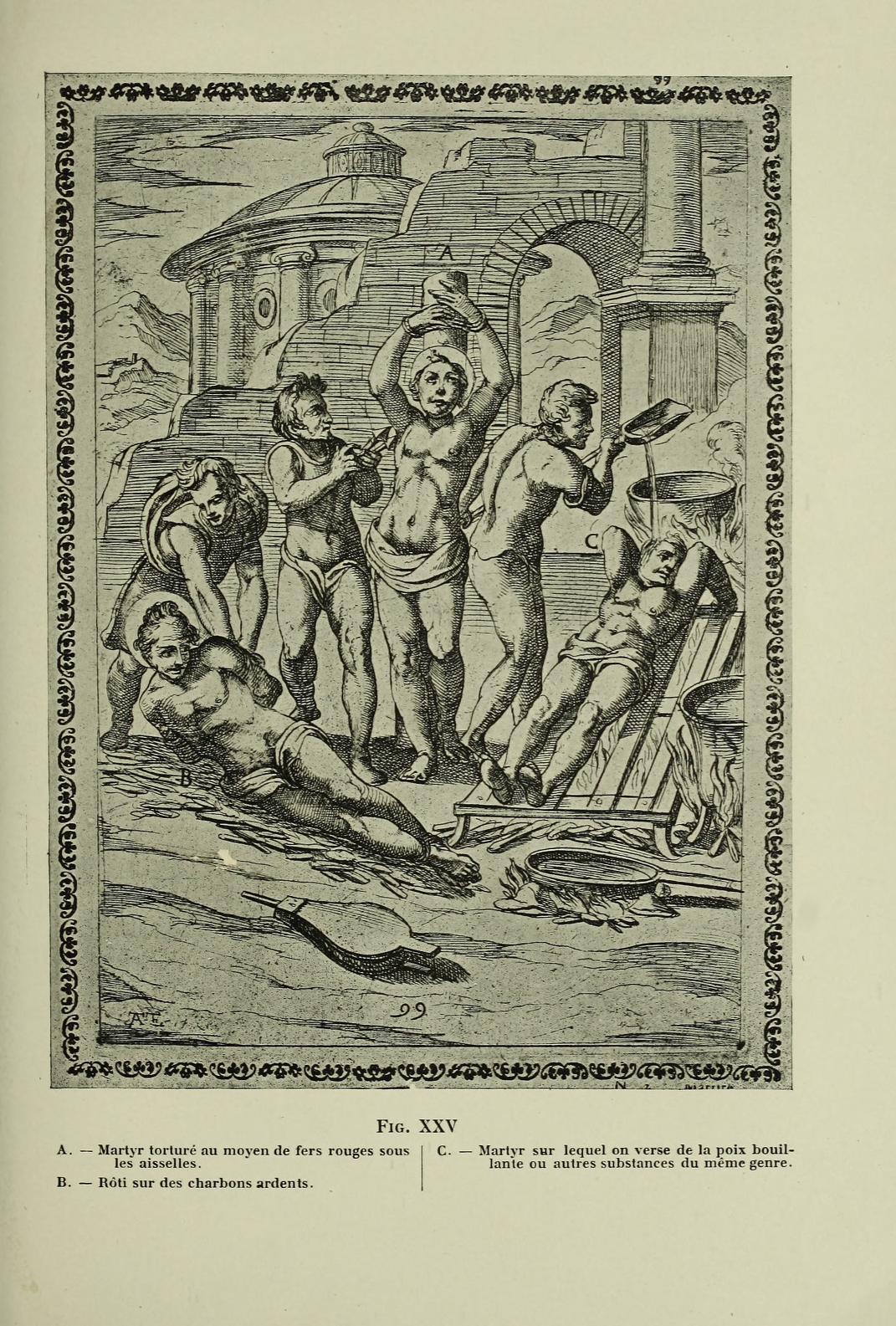
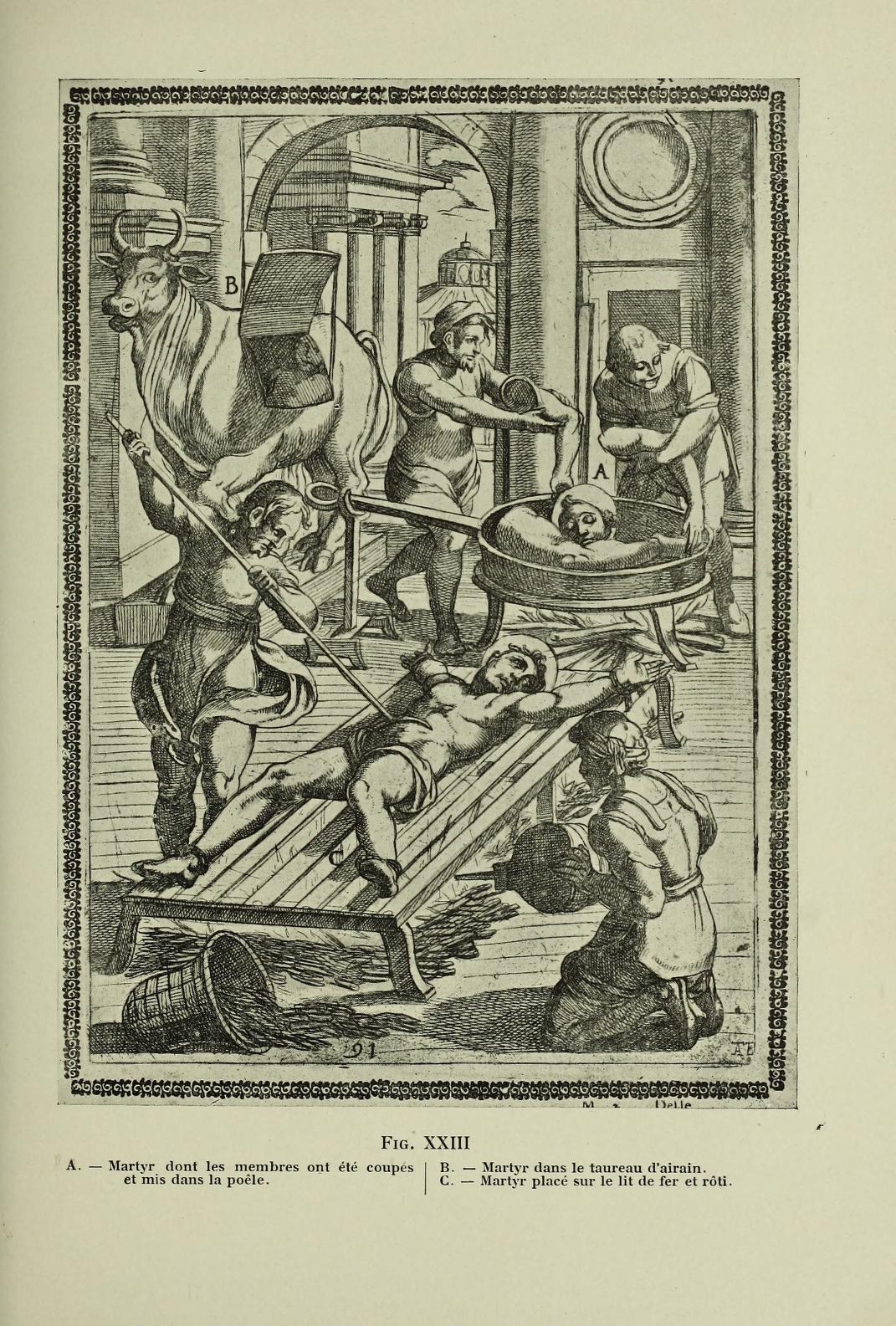
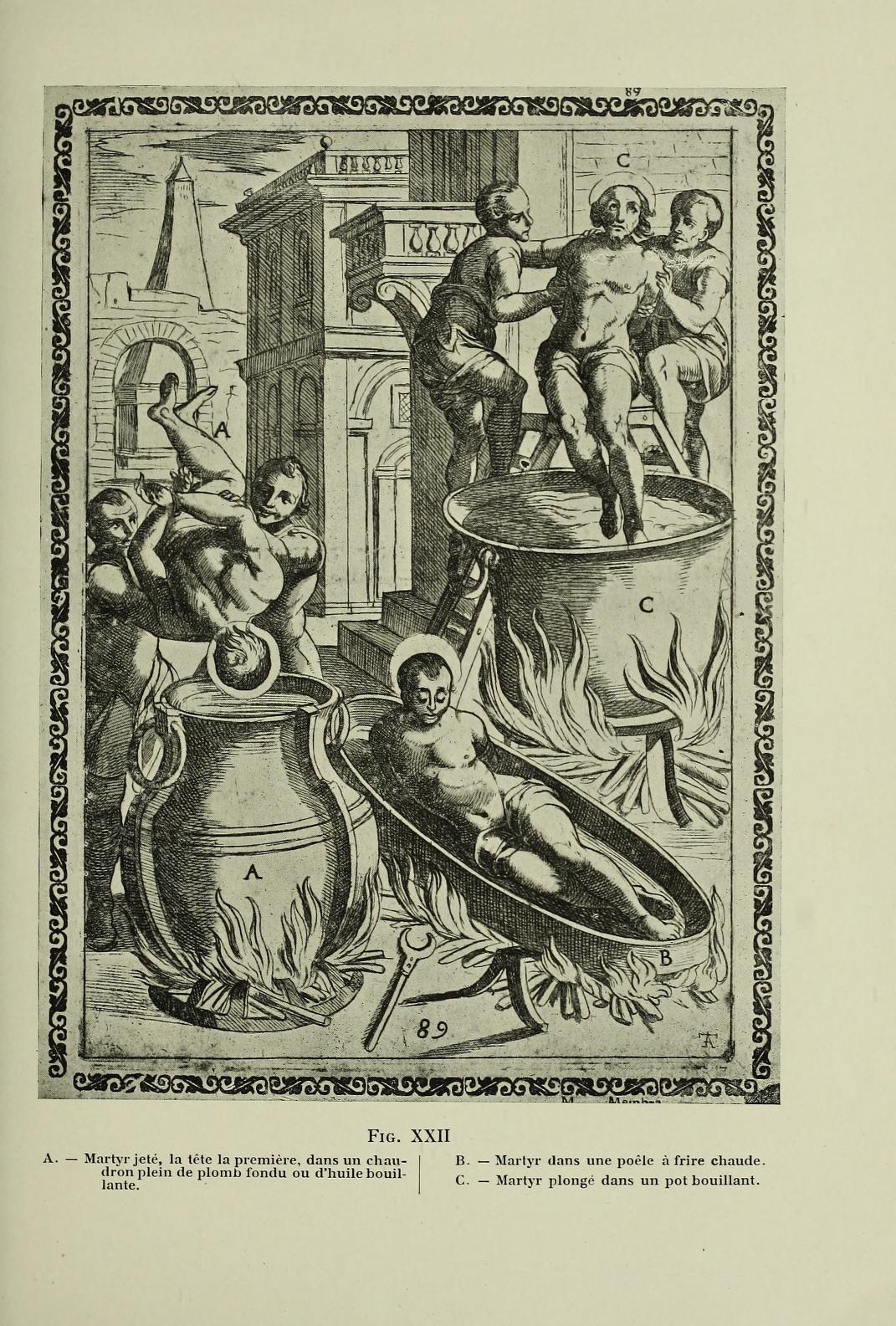
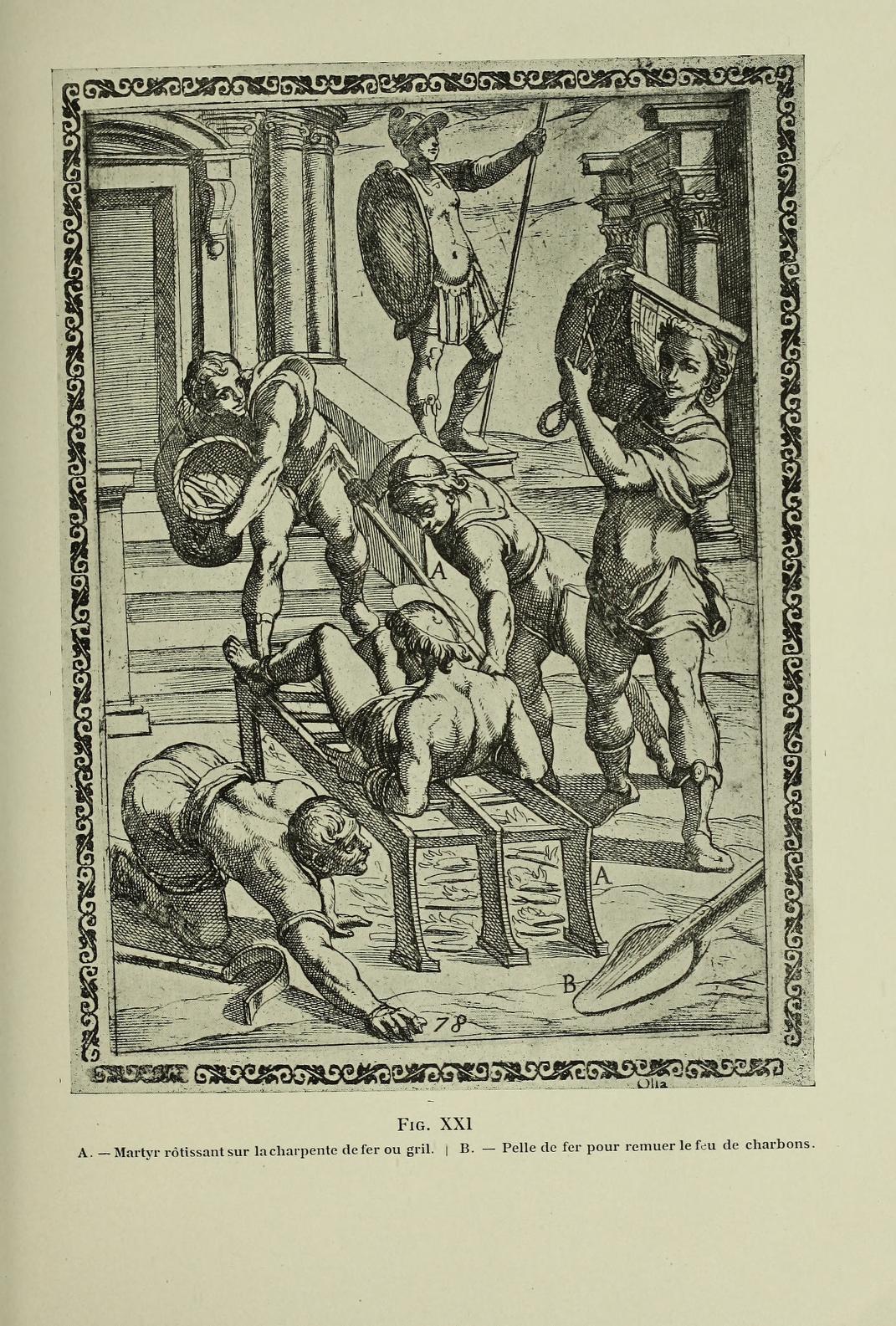
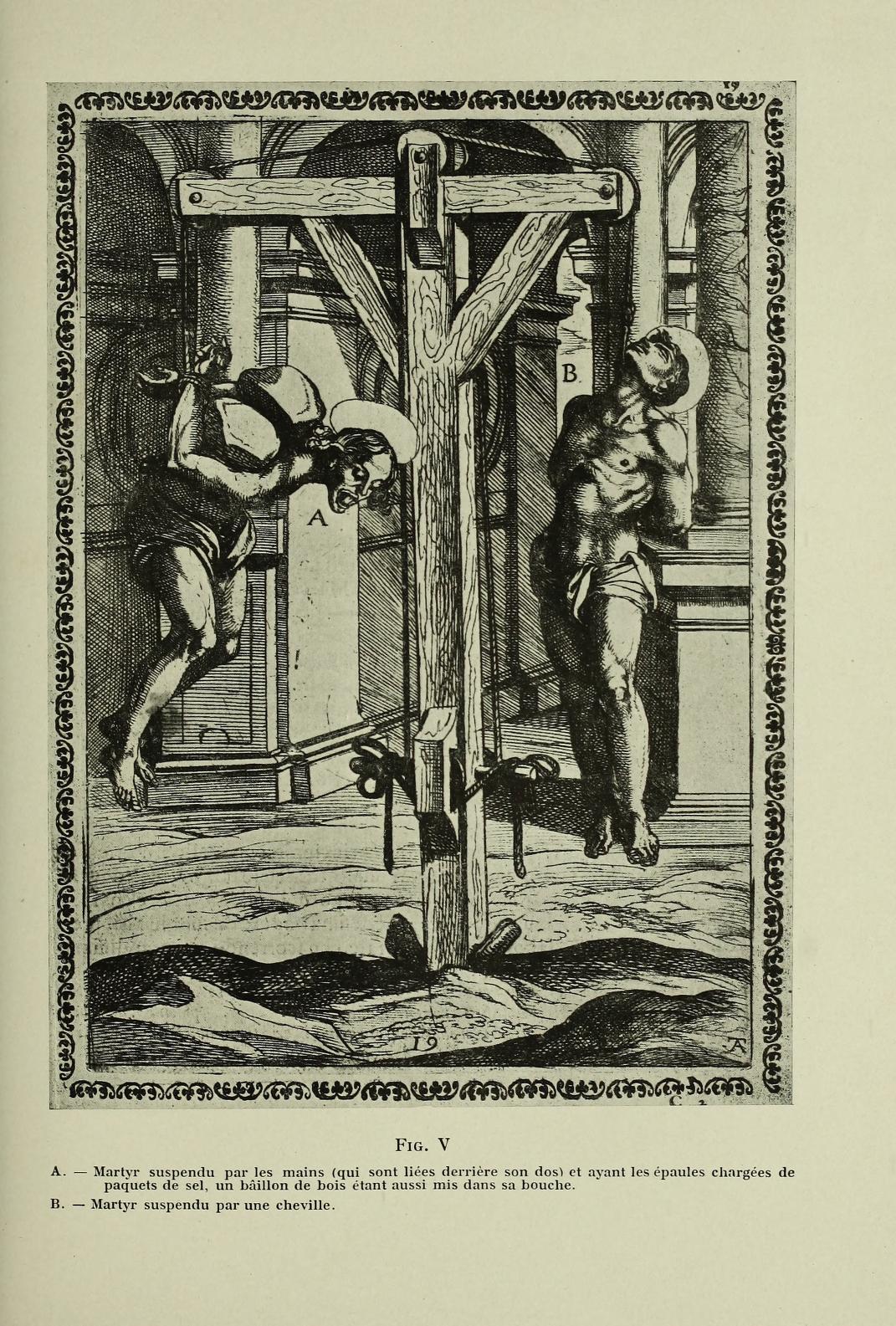
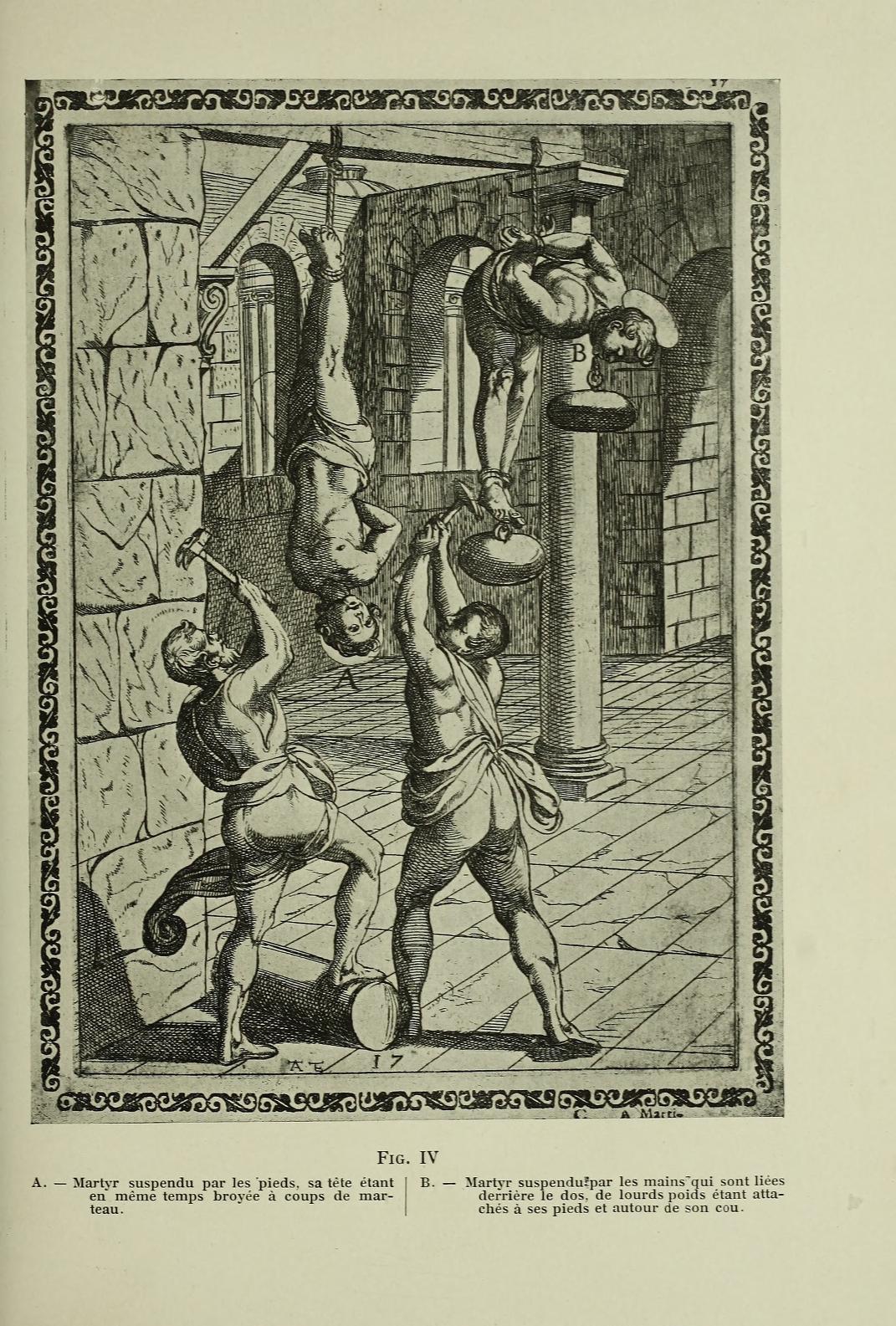
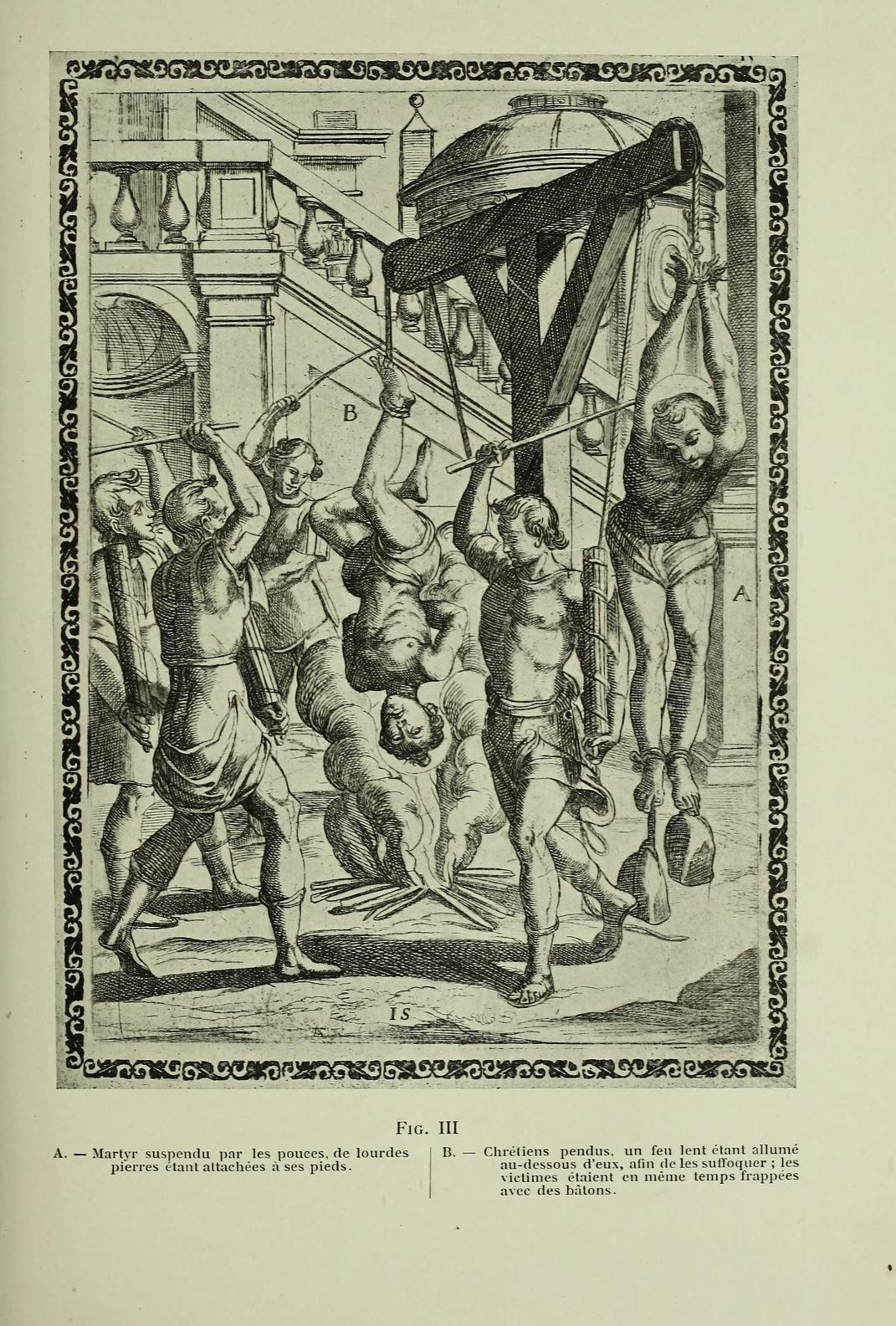
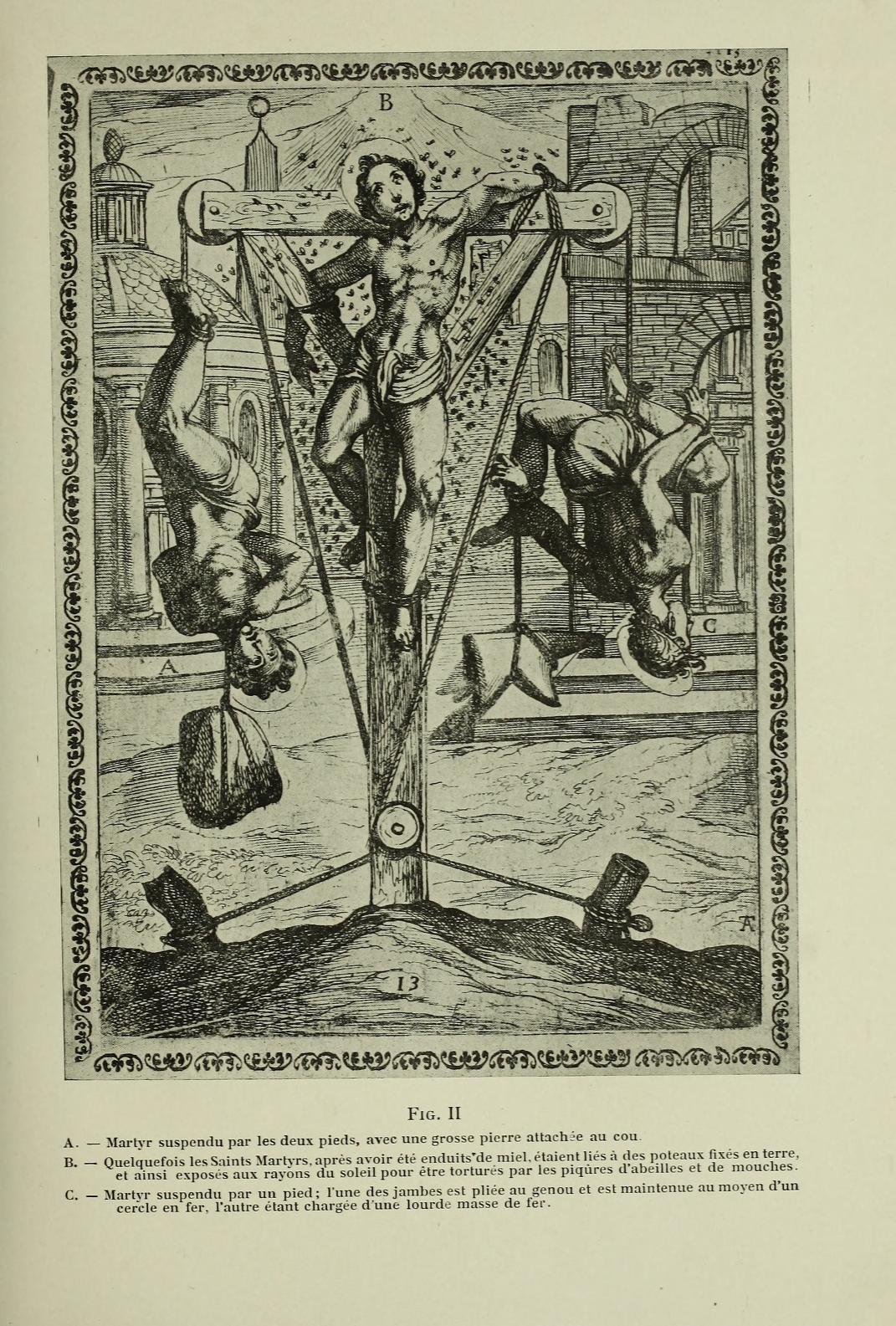
Antonio Gallonio’s Traité des instruments de martyre et des divers modes de supplice employés par les païens contre les chrétiens is one of those rare historical works that sits at an uncomfortable but fascinating crossroads. Originally published in Italian in 1591 by the Oratorian priest Antonio Gallonio, the book systematically catalogues the instruments and methods used against early Christian martyrs. Its lasting power, however, comes less from the pious text and more from the remarkable series of copper engravings by Antonio Tempesta (after designs by Giovanni Guerra).
We felt it our duty to bring this curious work back from the shadows. It will be a revelation for many.
Editor’s Note, Charles Carrington edition, 1904
Gallonio’s original approach: devotion and the inverted “machine theatre”
In the cultural context of the late sixteenth century — the Counter-Reformation, renewed interest in the early Church, and the circle around Filippo Neri — Gallonio’s book also functioned as a kind of inverted “machine theatre.” Machine theatres were popular illustrated books that celebrated human inventiveness: ingenious engines, military devices, and mechanical wonders designed to impress aristocratic readers. Gallonio borrowed the format and visual language of these works, but reversed their message. Instead of glorifying human technological prowess, he assembled a catalogue of sophisticated torture machines that, for all their cruel ingenuity, ultimately failed to break the martyrs’ faith. The instruments are treated as mechanical phenomena; the martyrs remain impassive. The victory belongs not to engineering, but to unshakeable belief.
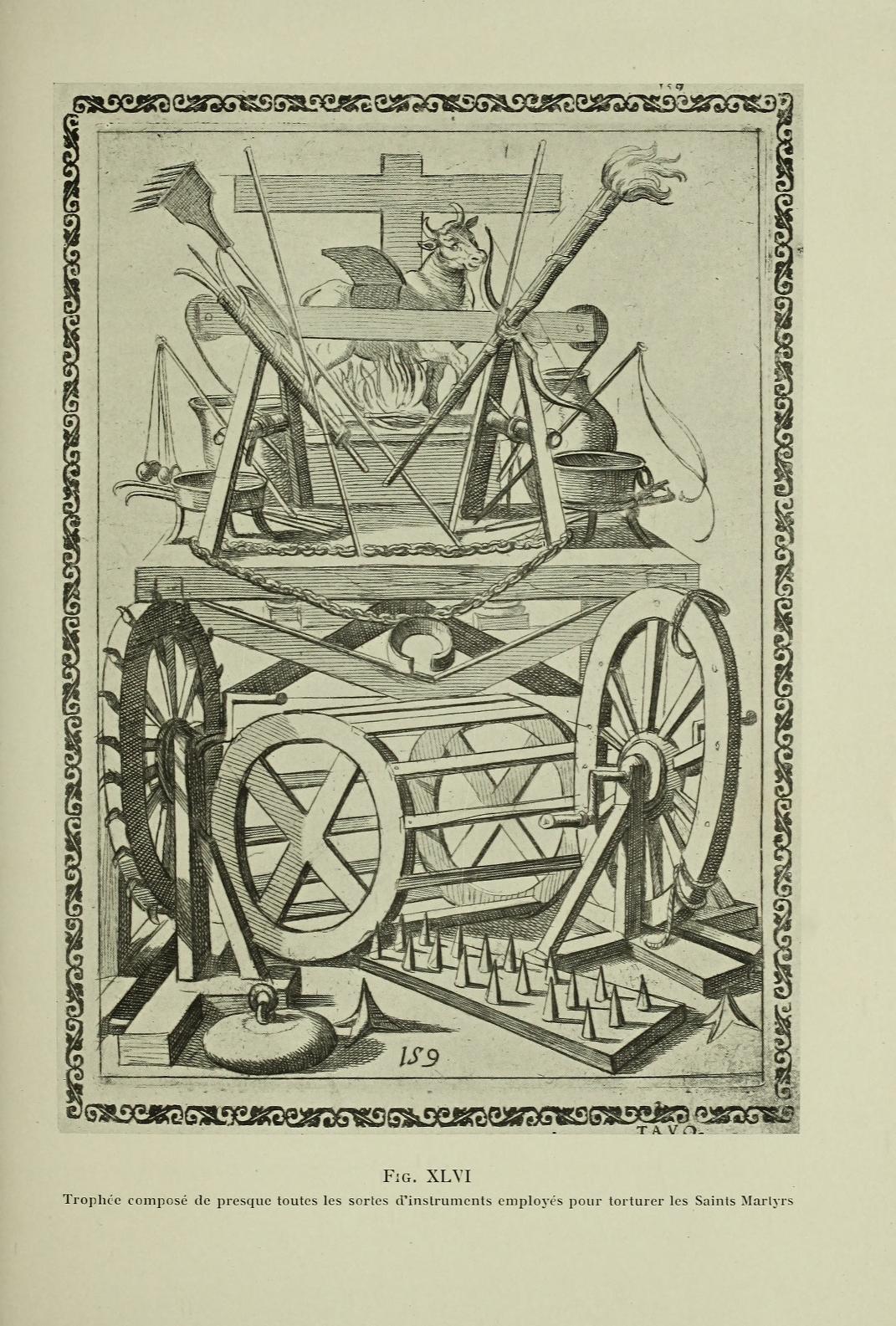
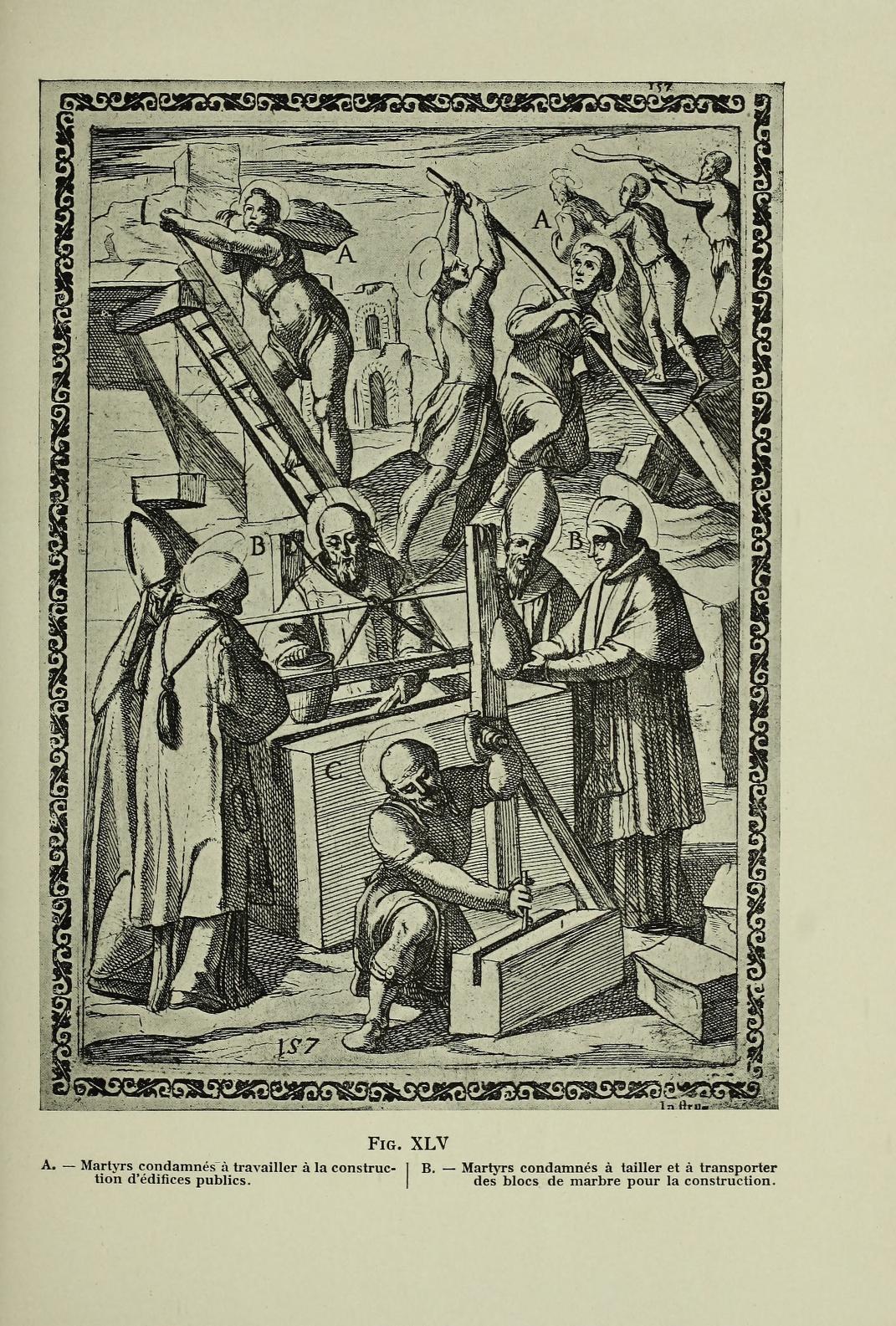
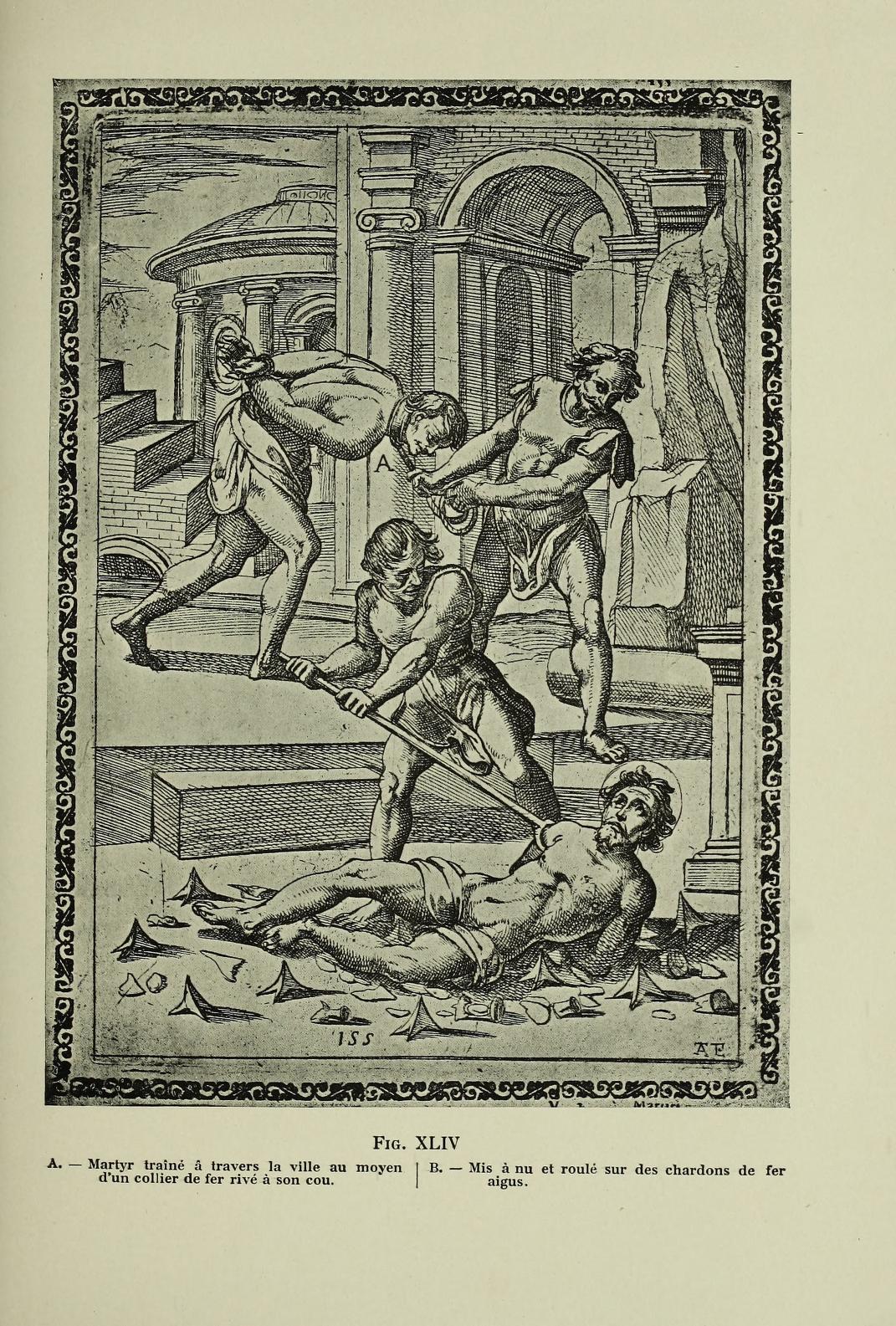
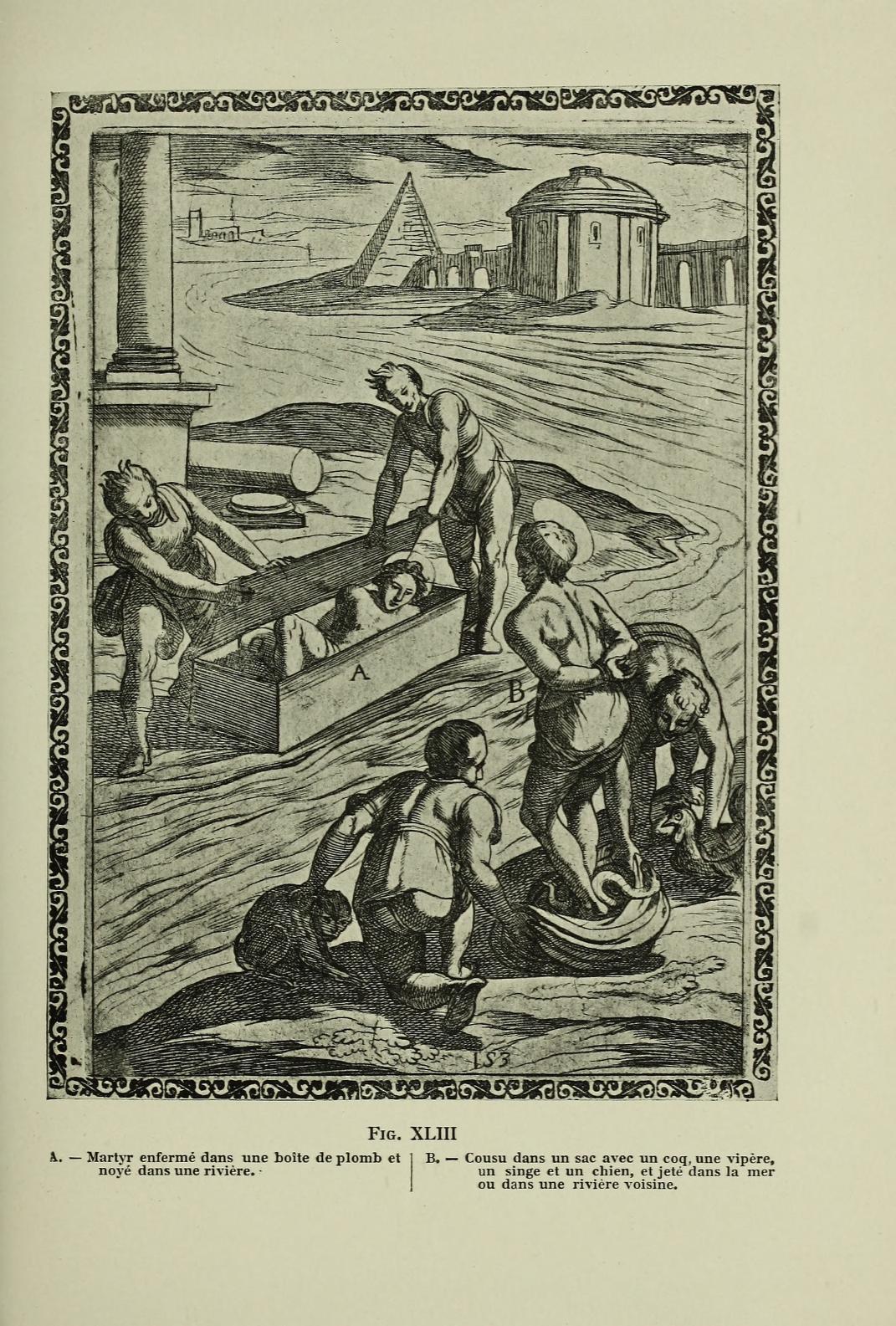
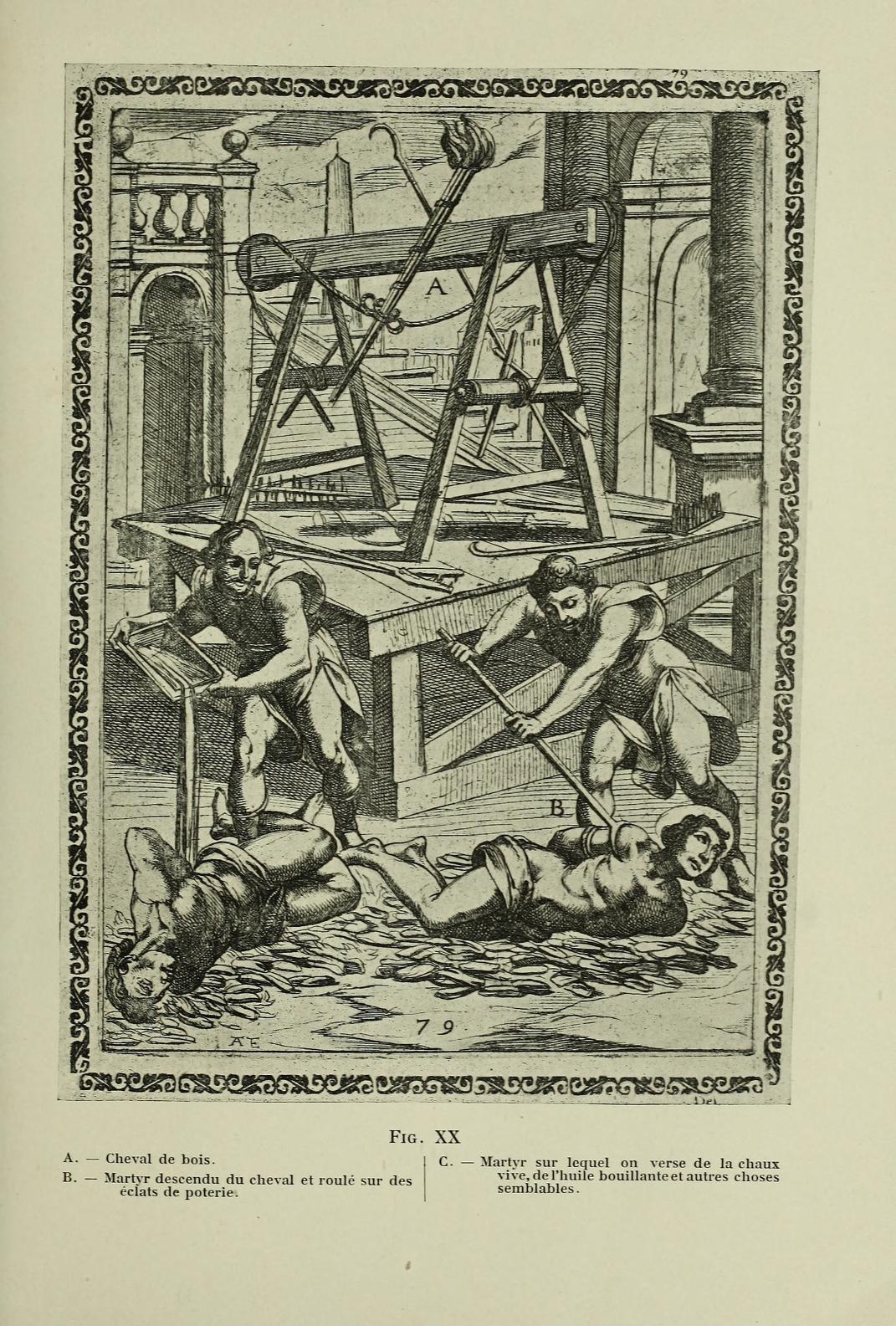
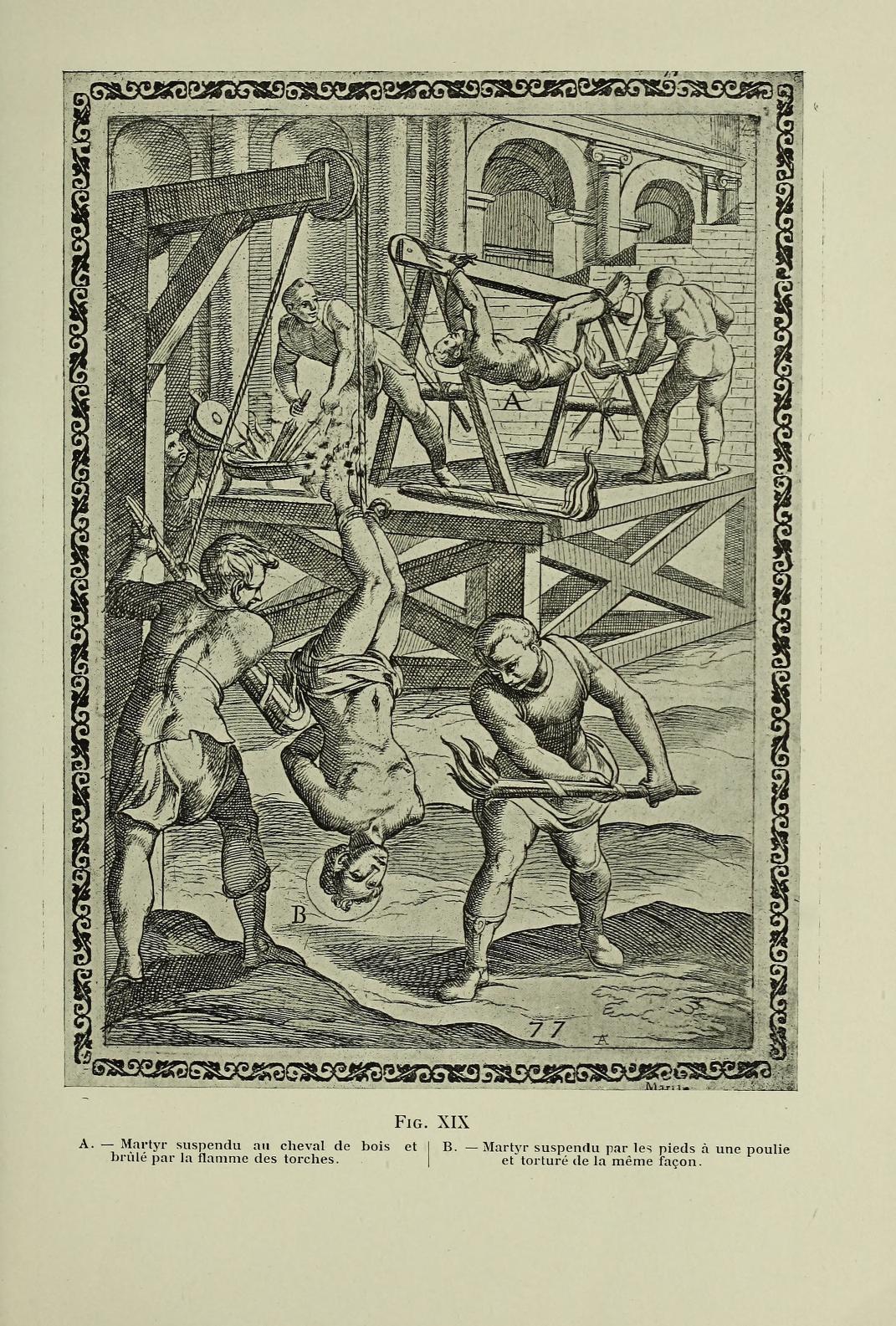
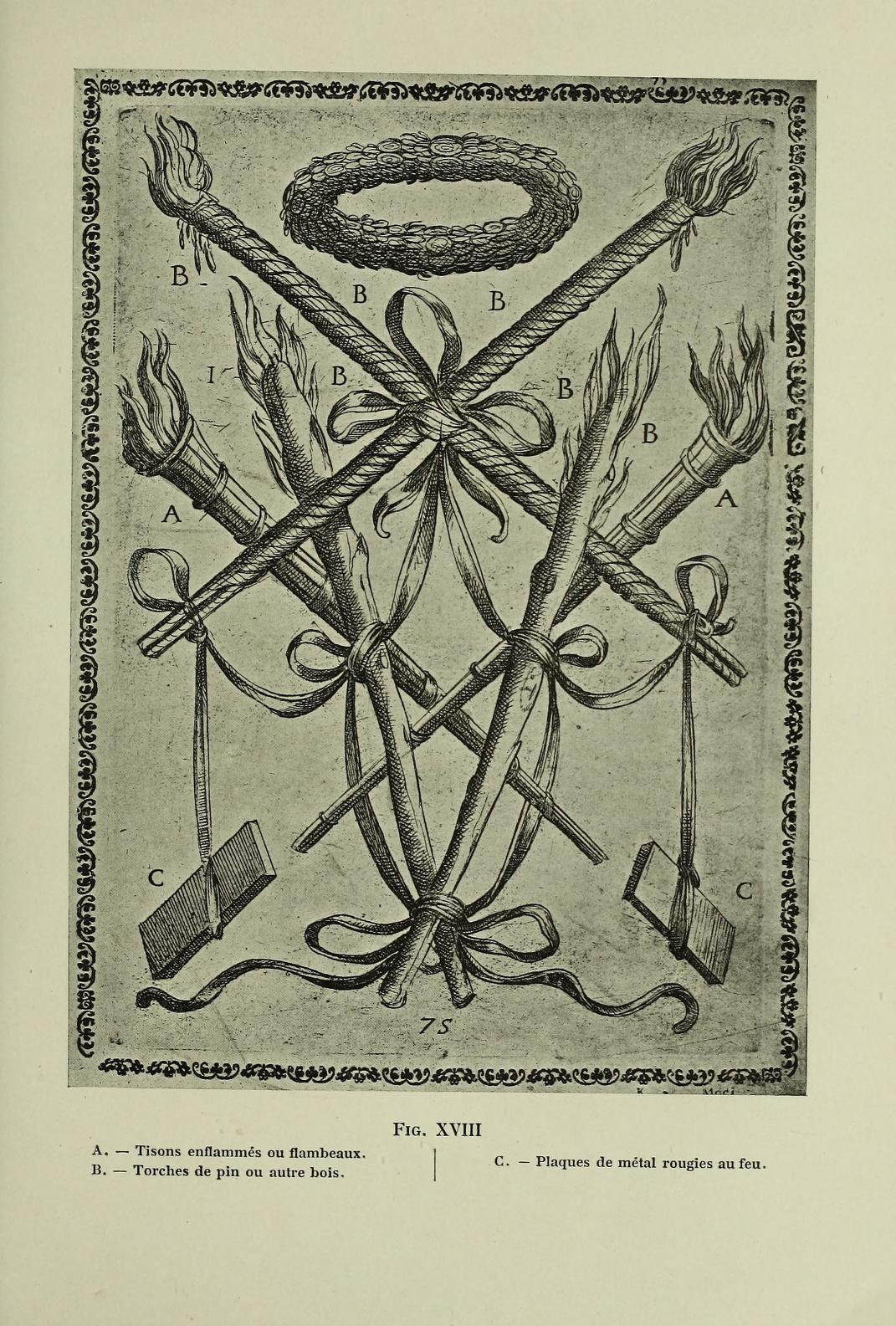
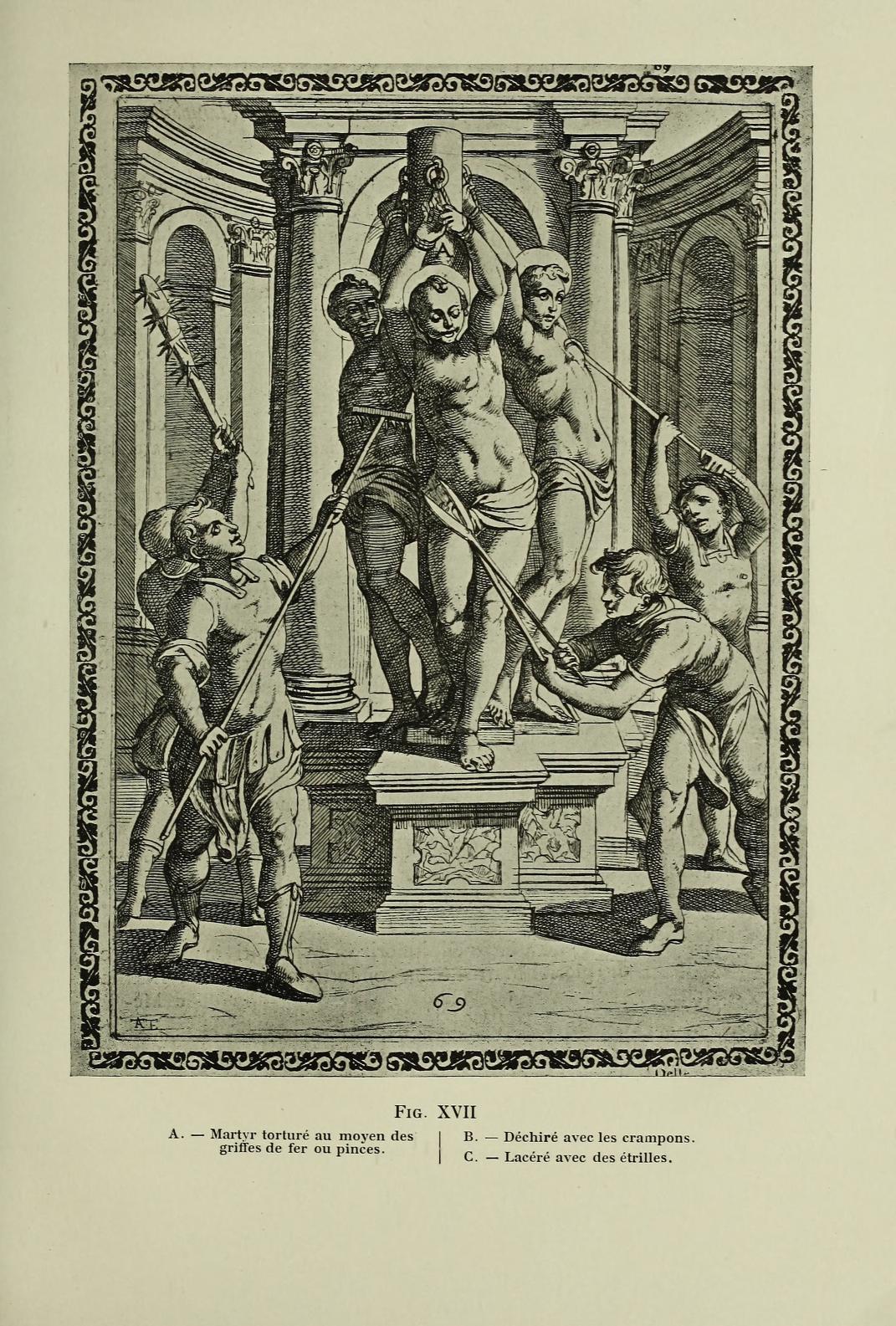
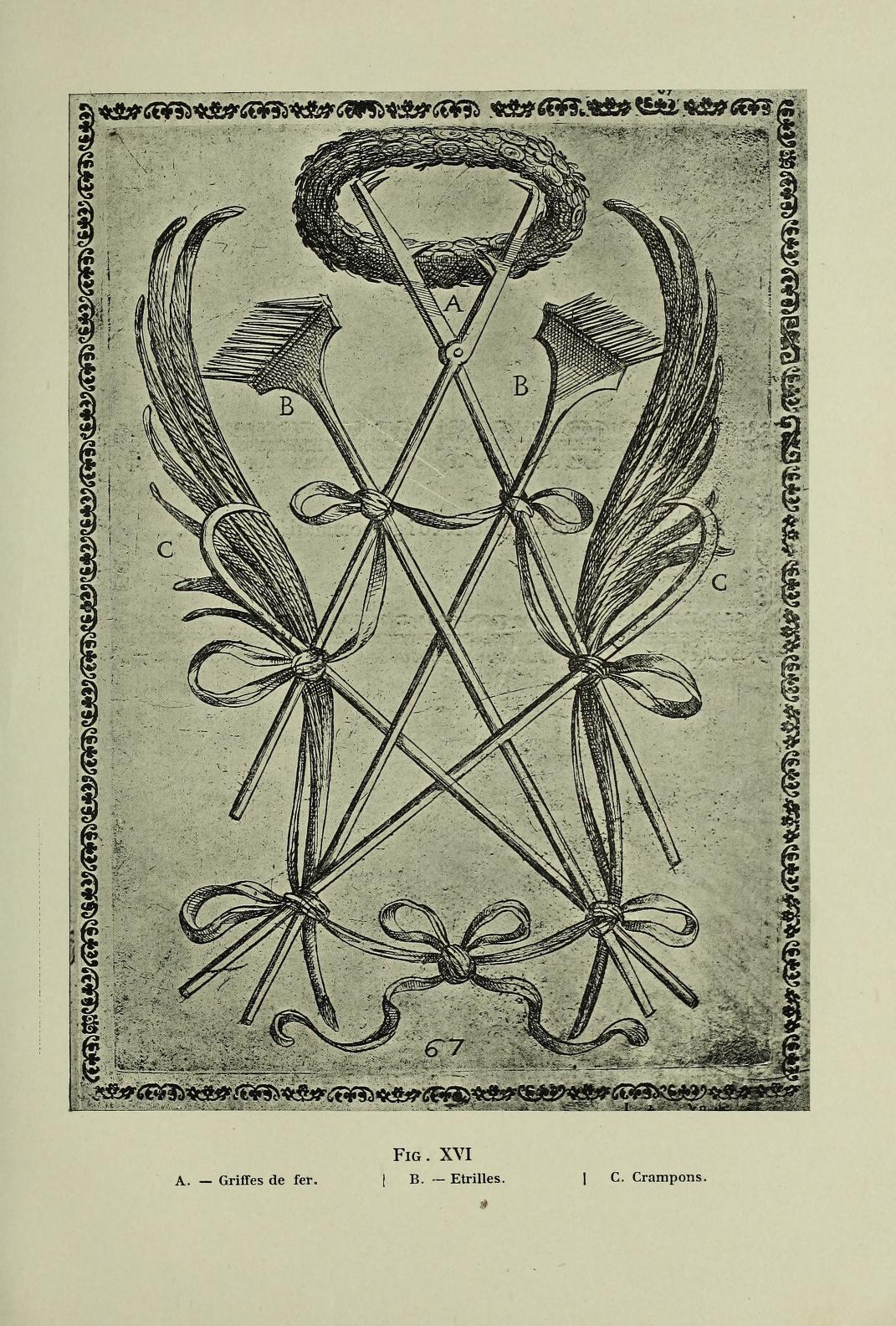
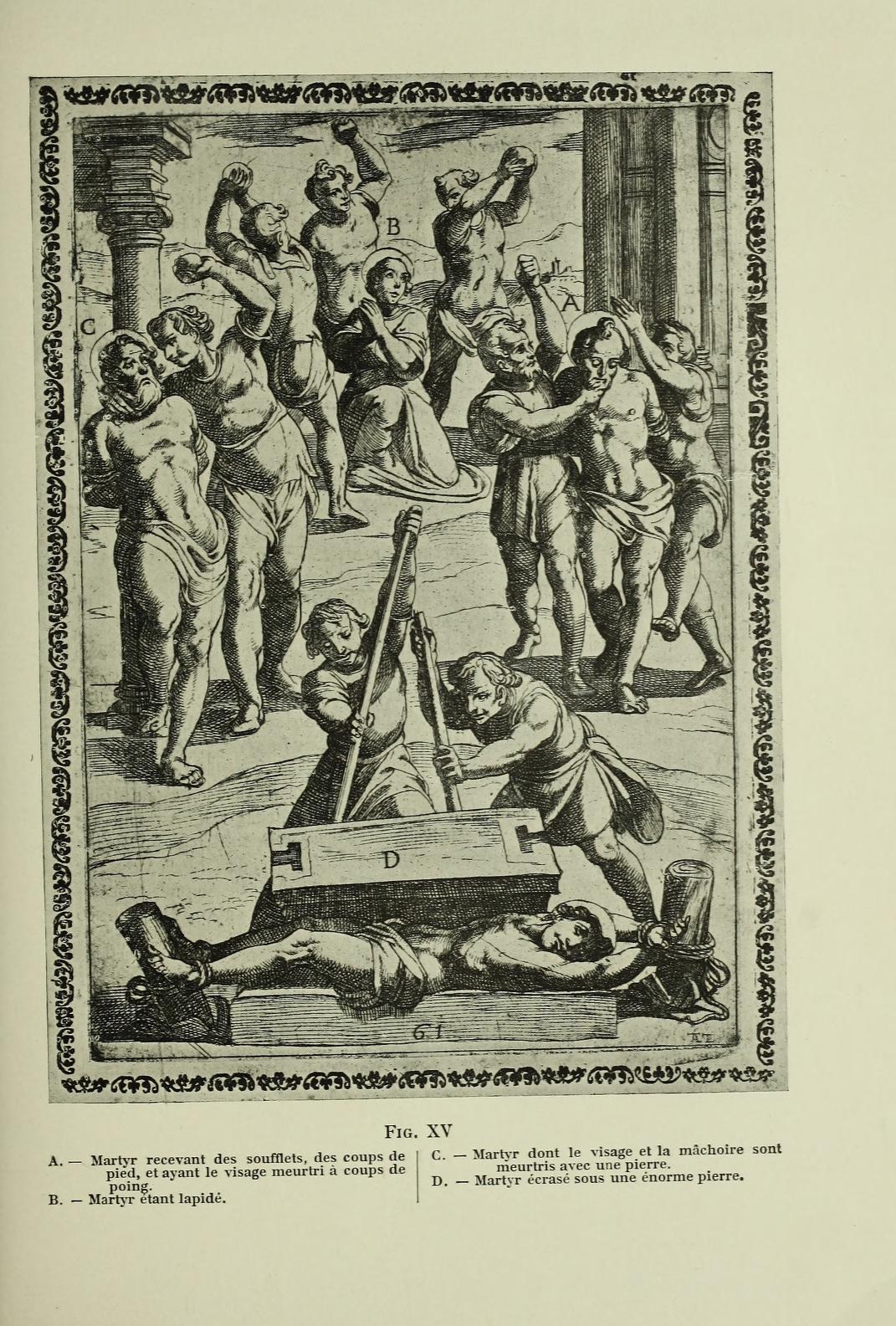
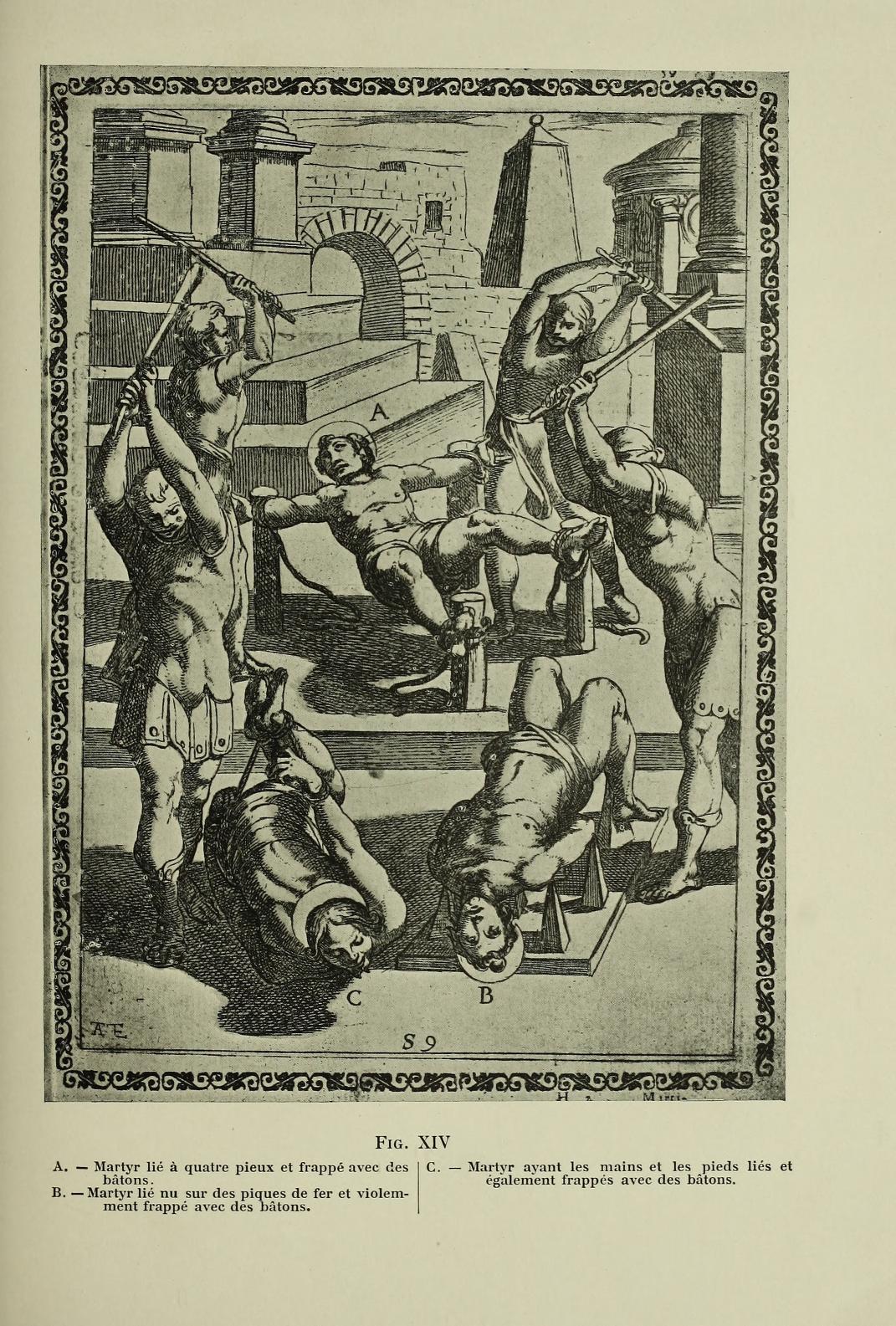
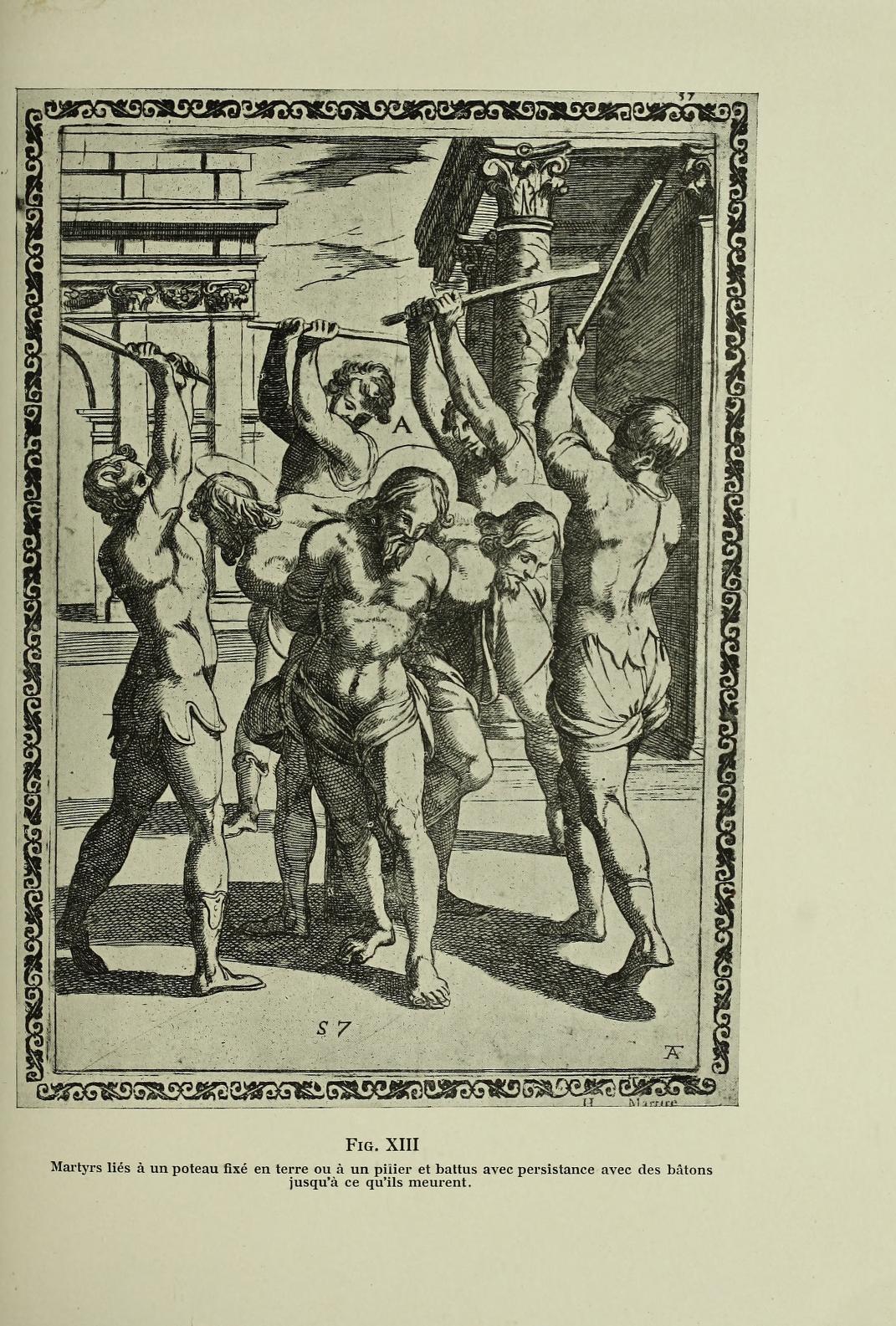
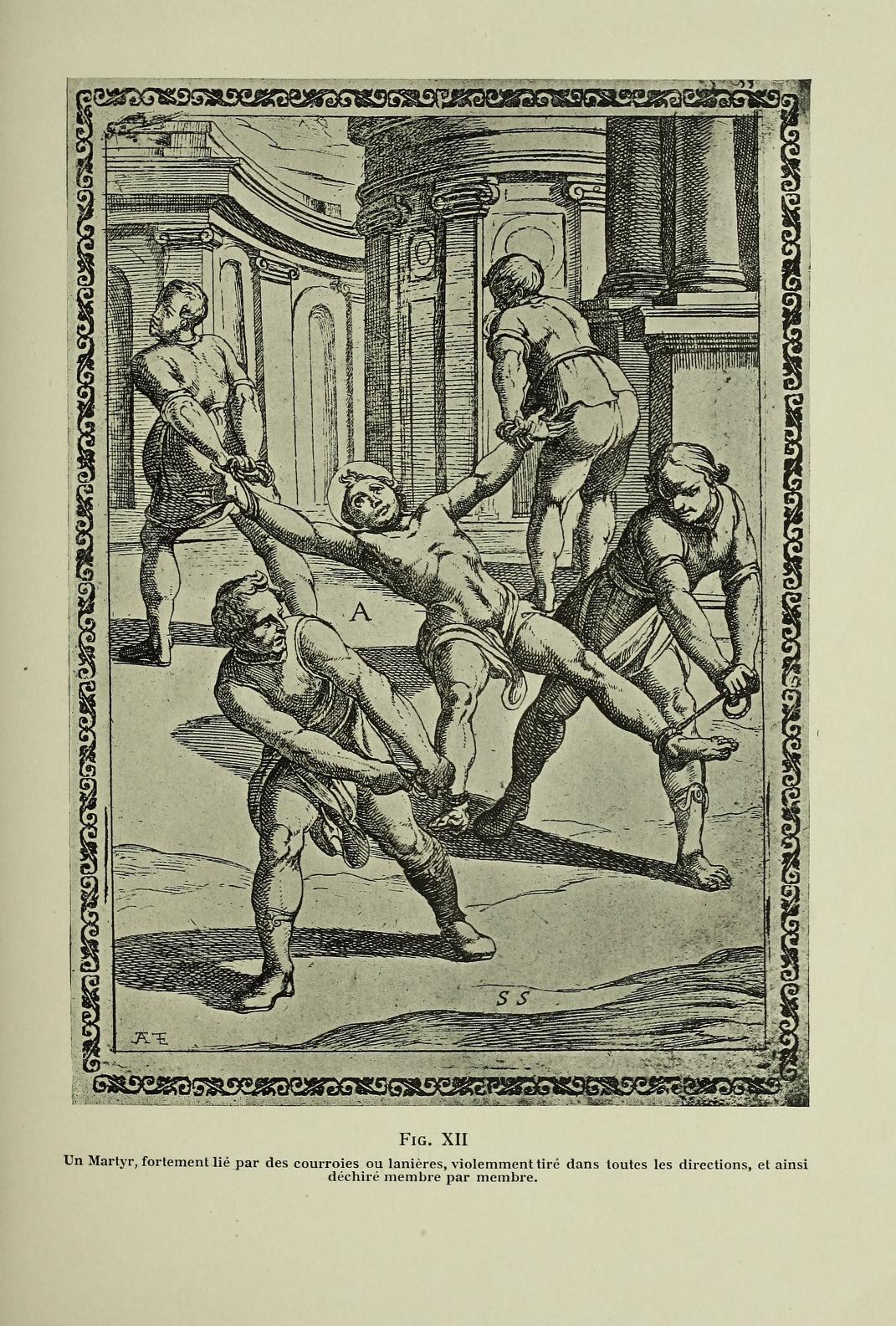
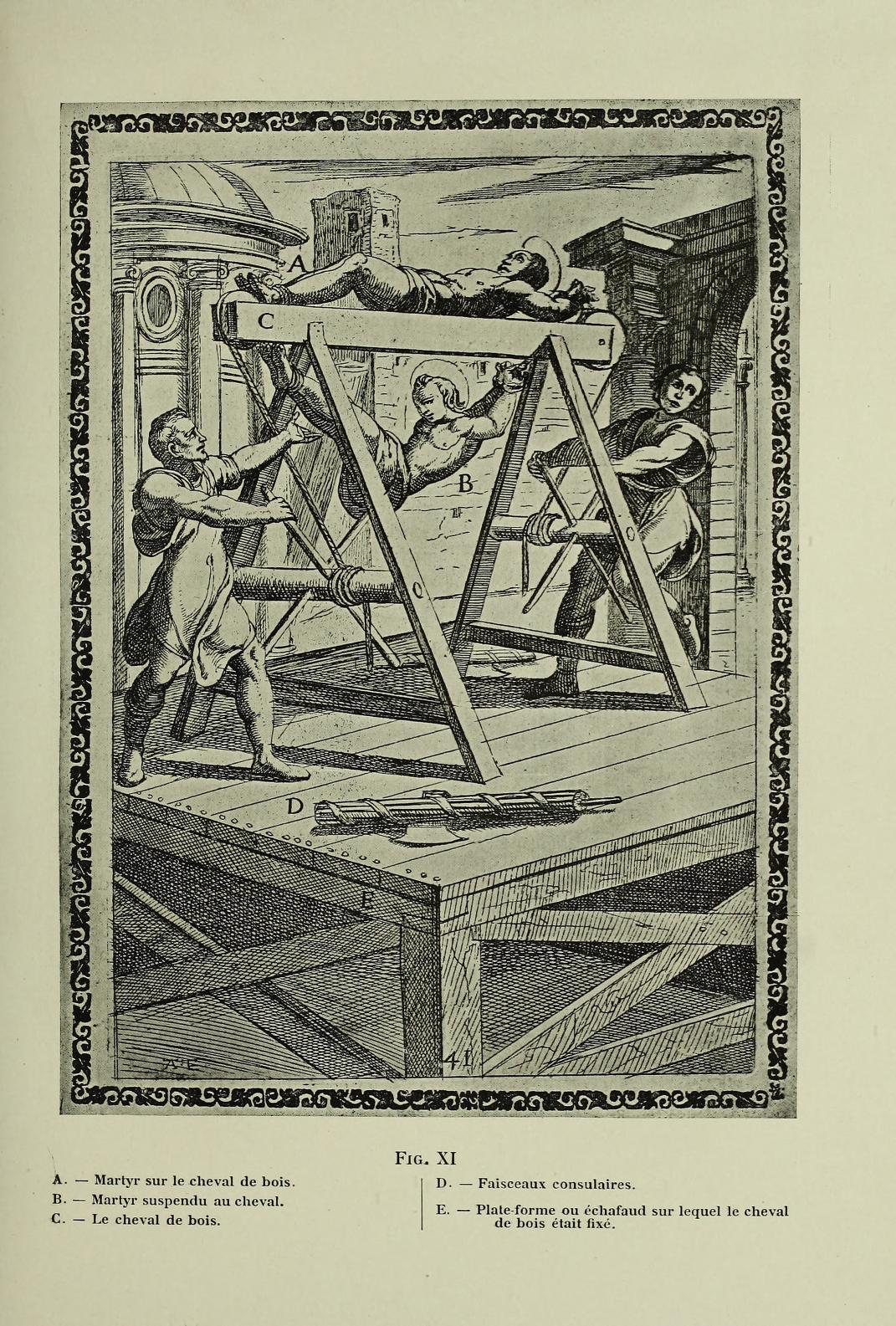
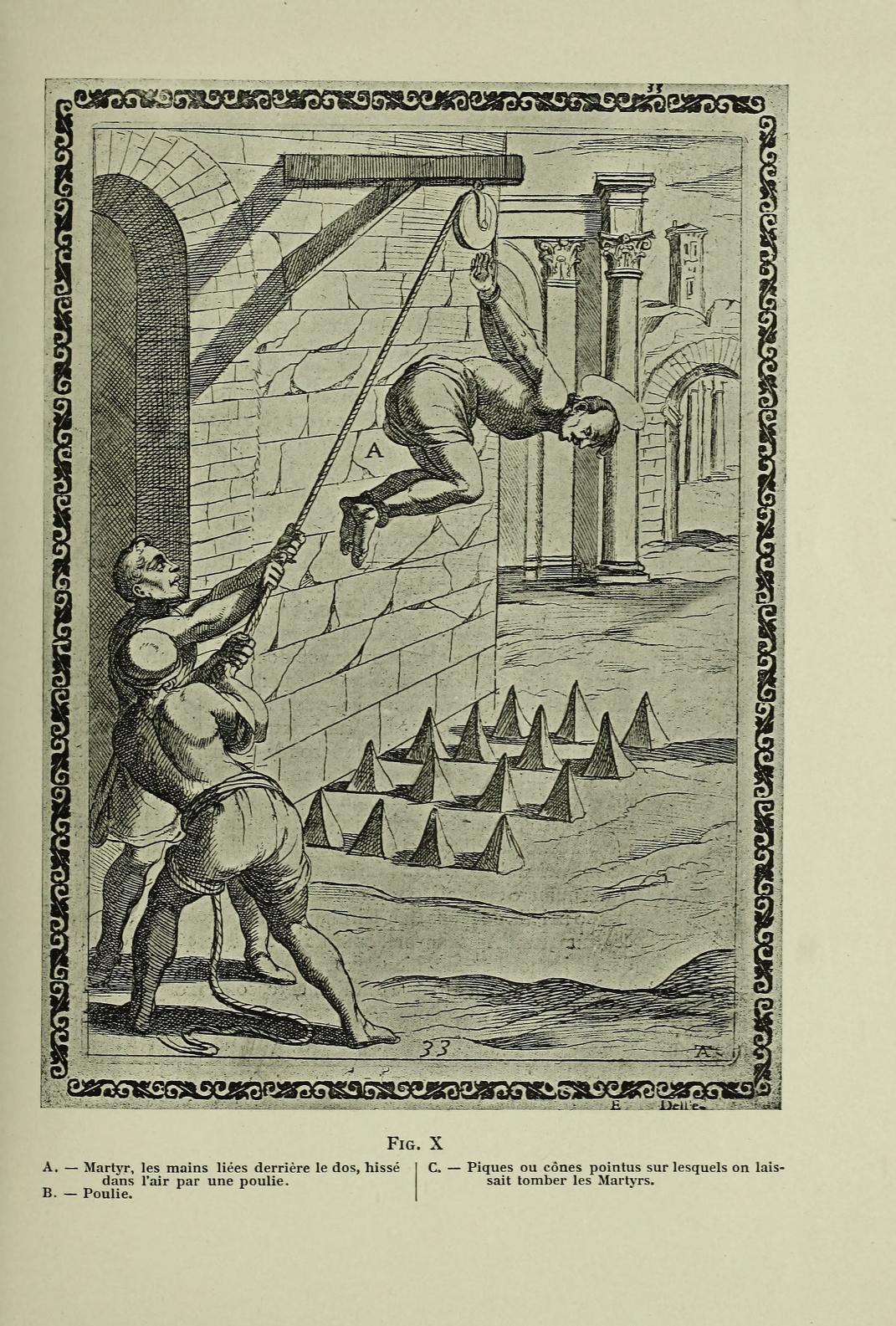
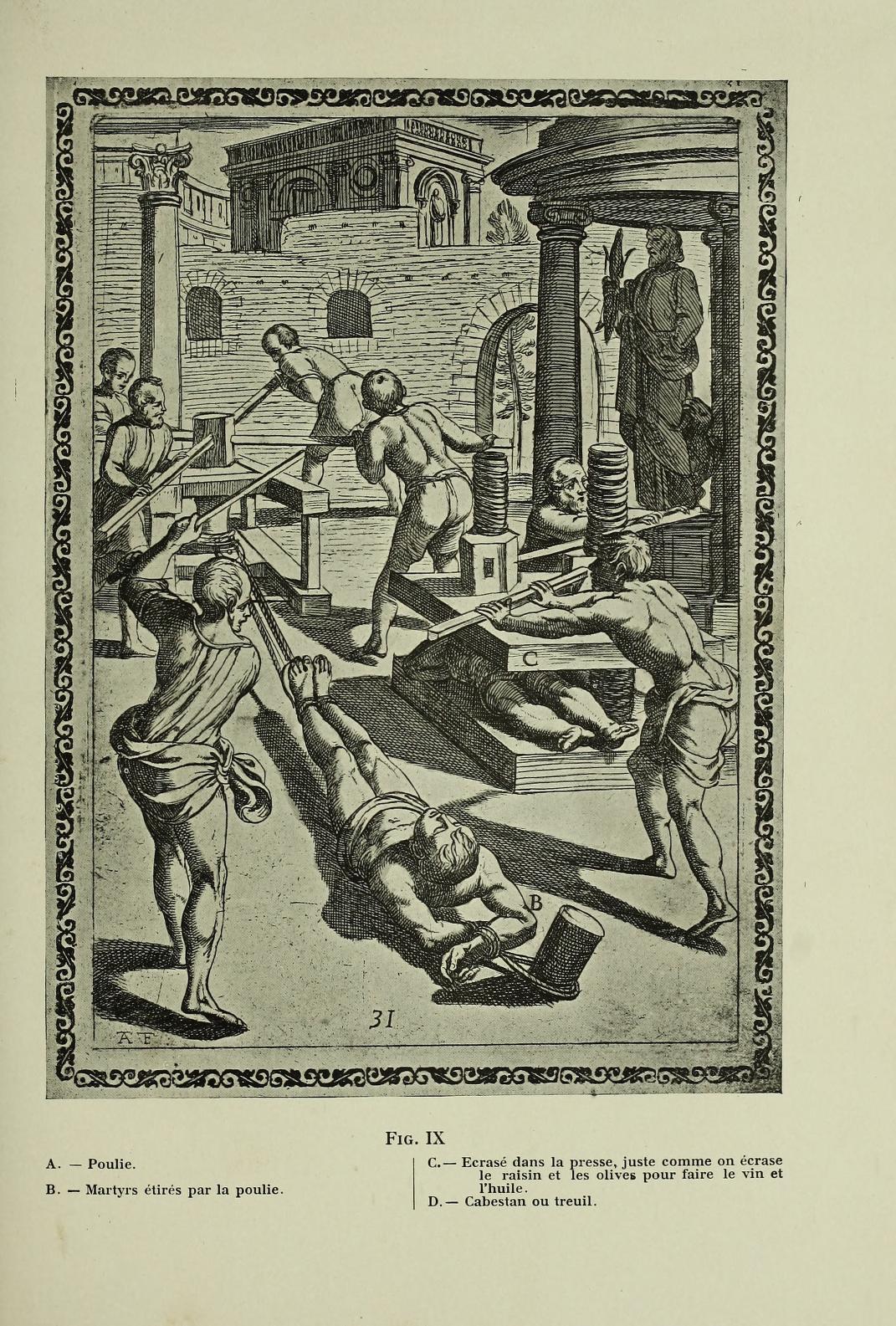
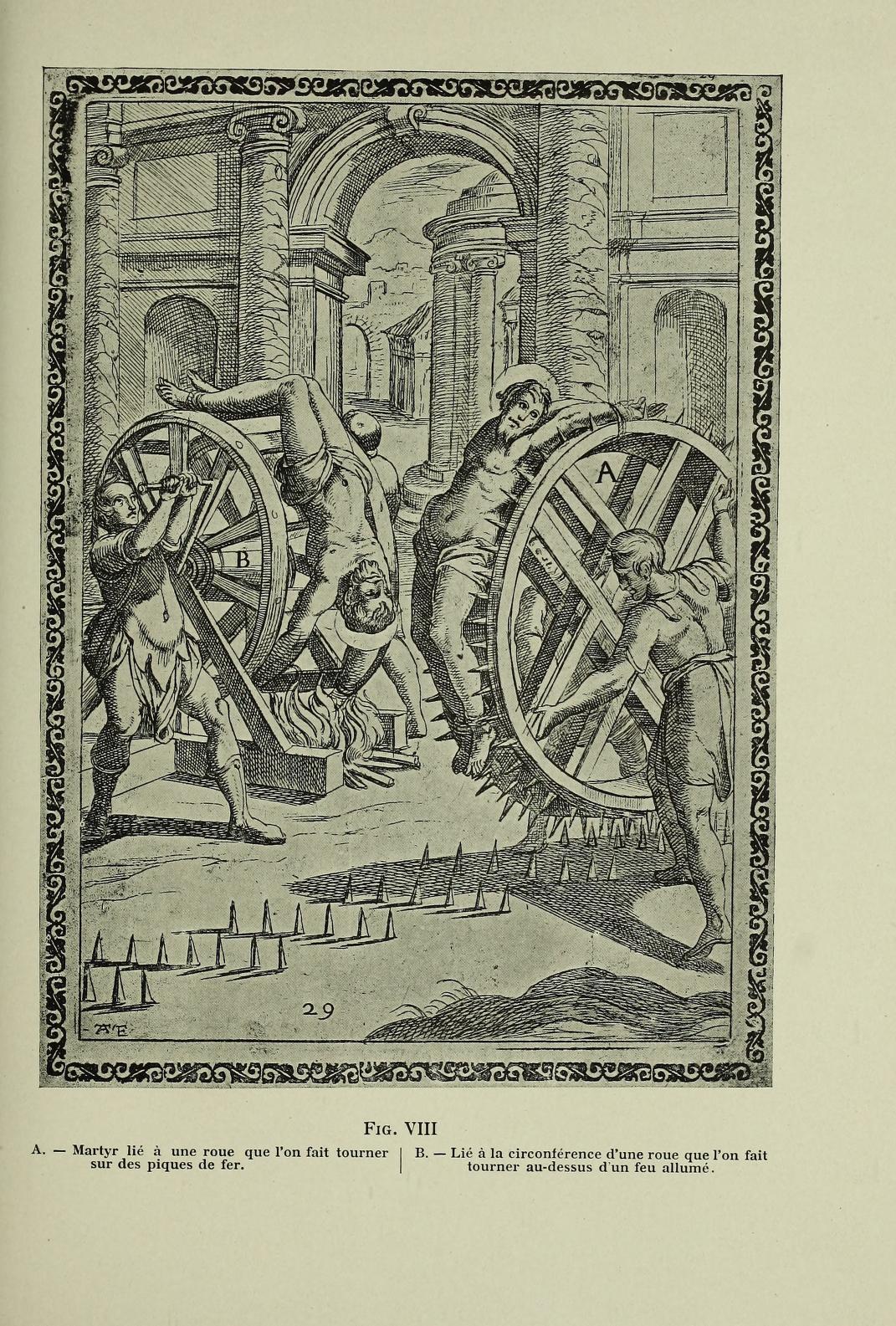
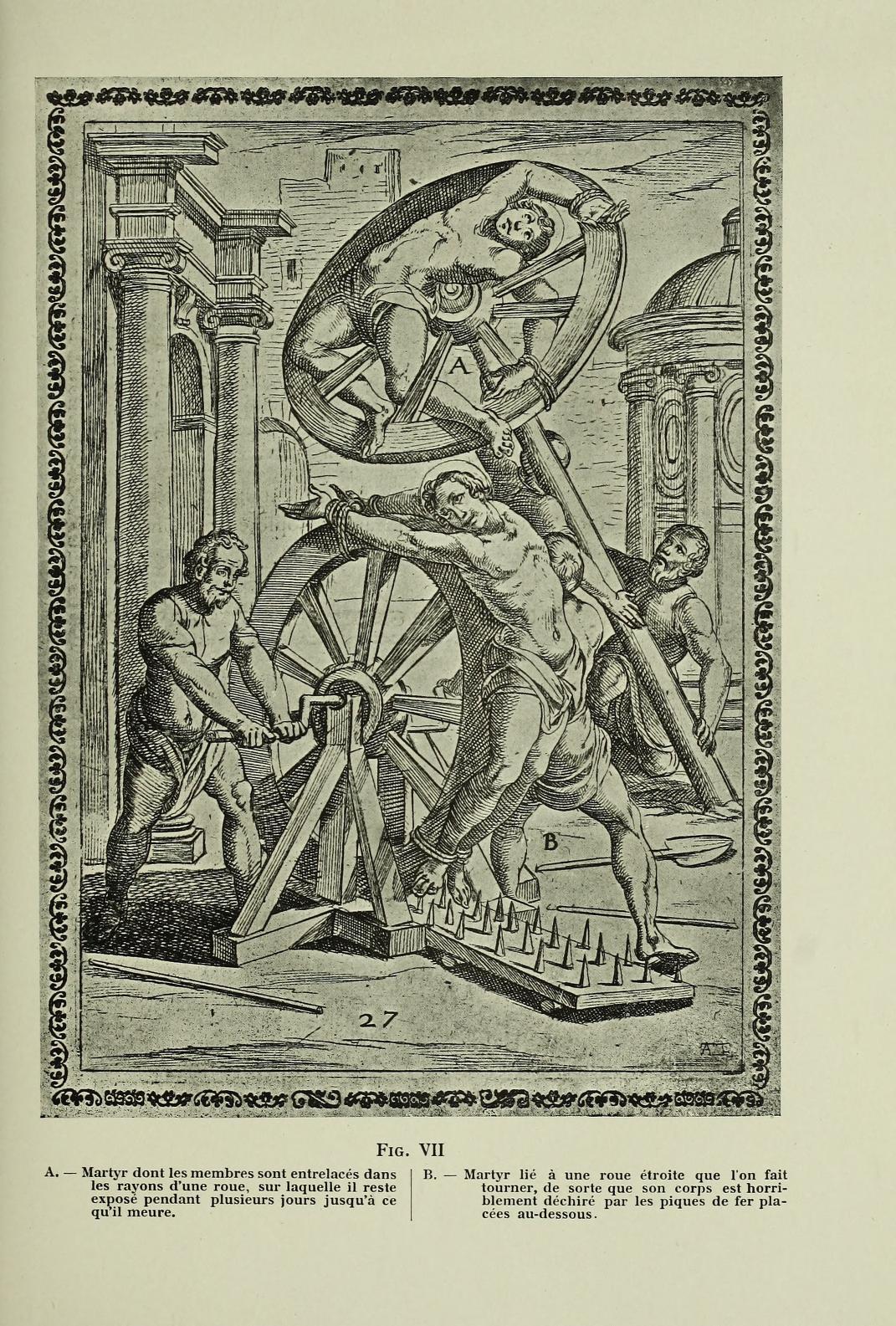
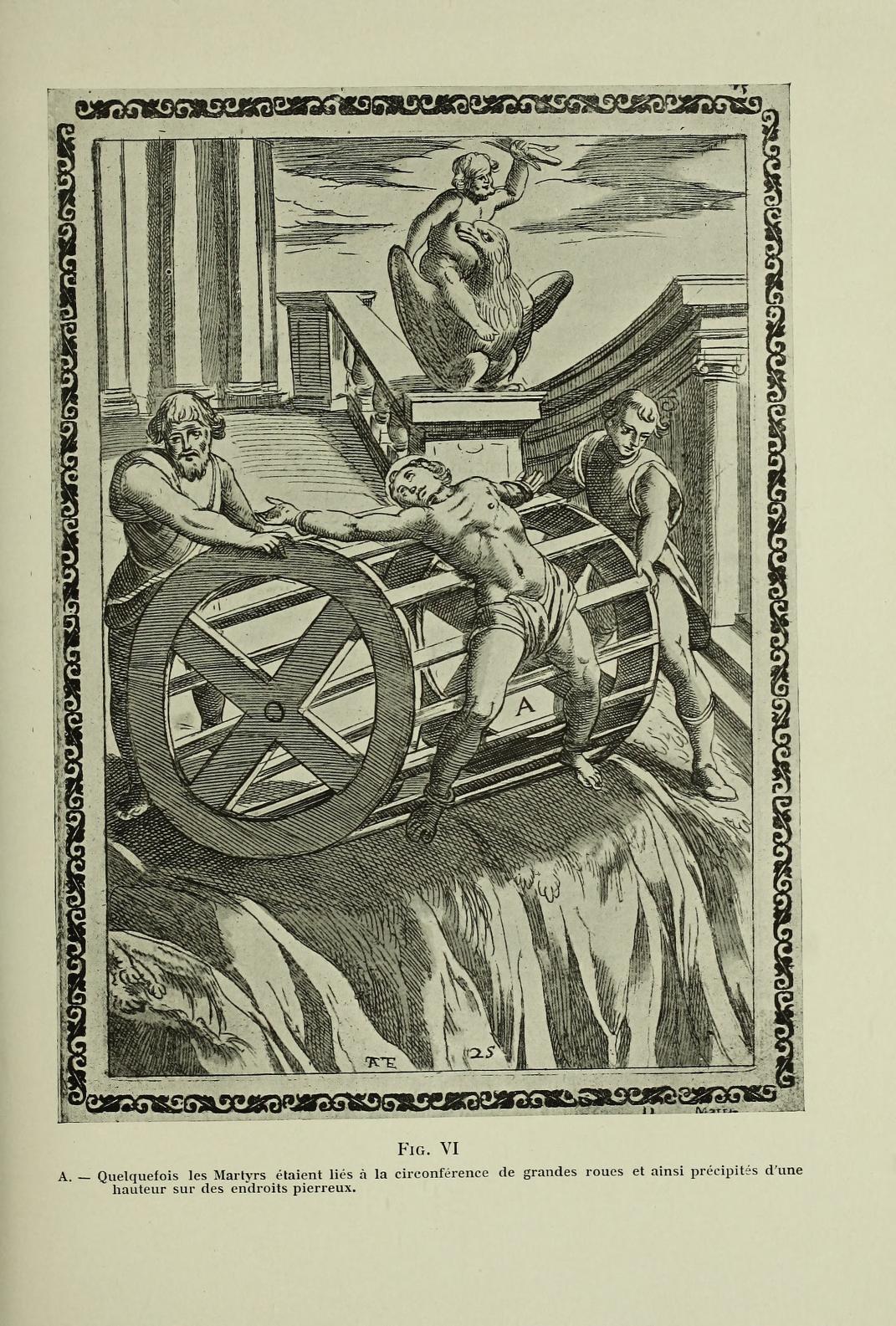
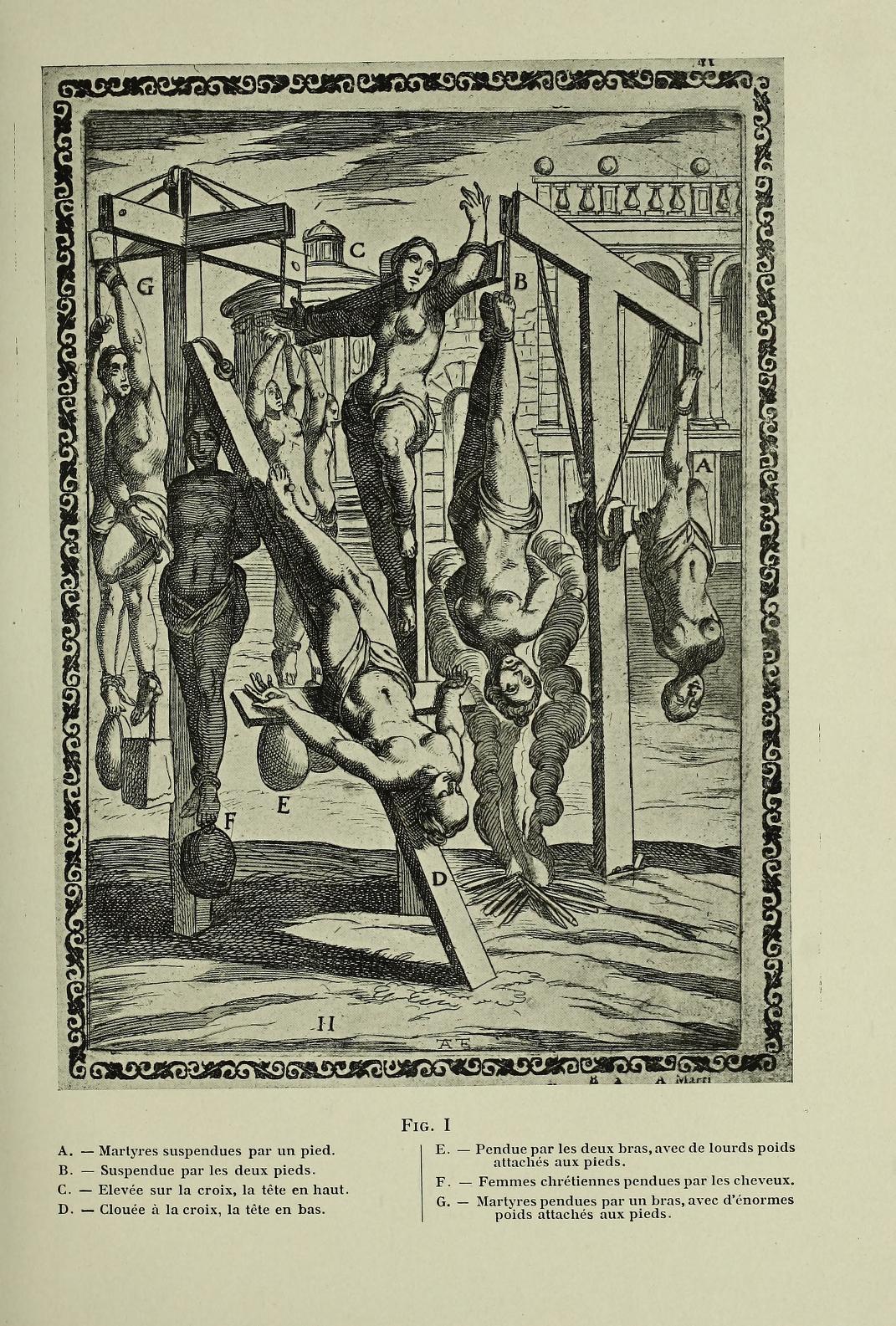
The forty-six copper engravings, designed by Giovanni Guerra and executed by Antonio Tempesta, belong to the same visual world. They are detailed, dynamic, and unmistakably Baroque. To modern eyes they can appear graphic or even “gory,” yet they formed part of the devotional and aesthetic language of the period. Suffering is rendered meaningful: a path to holiness and a public proof of faith. There is little evidence, in the original text, of the modern senses of romanticisation, aestheticisation for its own sake, or sensual/erotic fascination with pain. The focus remains on the instruments and on the constancy of the martyrs, not on suffering as spectacle or pleasure.
Charles Carrington and the 1904 Edition
In 1904 the Paris-based publisher Charles Carrington issued a French edition that remains the most visually important modern version of the work. Charles Carrington (real name Paul Harry Ferdinando, 1867–1921) was one of the most notorious British publishers of erotic and flagellation literature in Paris at the turn of the century. He specialised in books about whipping, torture, dominance and sadomasochistic themes.
To circumvent British obscenity laws he operated from Paris and frequently dressed his publications in a “scientific,” “historical” or “bibliophilic” guise.
In 1902 he had already published Les Châtiments de jadis. Histoire de la torture et des punitions corporelles en Angleterre, a book on historical corporal punishment and torture clearly aimed at the same audience that bought his flagellation novels. Immediately afterwards, in 1903 (English version) and 1904 (French version), followed Gallonio’s Traité des instruments de martyre.
The reason was not pious reissue or pure historical interest. Research into Carrington’s publishing policy shows that it was primarily the morbid attraction of the Tempesta engravings that interested him. Those plates depict instruments and scenes of martyrdom in a clinical, almost technical manner. For Carrington’s clientele, collectors of “curiosities” surrounding pain, power and the body under coercion, this was pure gold. He positioned the book as a “curieux ouvrage” for bibliophiles and as a “supplement” to the lives of the saints, but the timing and the rest of his catalogue leave little doubt: it fitted seamlessly into his line of books that served sadomasochistic fascinations under the guise of history.
Images, Arousal and Historical Context
Carrington presented the book as a serious historical and bibliophile revival. Yet the market he served was clearly interested in more than pure scholarship. The detailed depictions of wheels, racks, iron claws, brazen bulls, hot plates and other instruments were studied, collected and, for some viewers, found erotically compelling. In an era when organised, explicitly consensual BDSM as we understand it today was still largely underground and far less visible, historical and religious imagery of controlled suffering offered one of the few publicly circulating visual languages for such fascinations.
It is important to be clear: looking at these images with arousal does not mean the viewer endorsed or desired real non-consensual torture. The same distinction holds today. The visual language of restraint, power imbalance and the aestheticisation of the body under pressure has long fed into modern BDSM art and fantasy. That historical continuity is real and worth examining. At the same time, the actual events Gallonio described were acts of religious persecution carried out without consent. This archive exists to document and discuss the art and cultural history of these themes, never to approve non-consensual violence.
The 1904 Carrington edition therefore occupies a revealing place in the prehistory of BDSM imagery. It shows how late-Renaissance martyrdom illustrations were rediscovered and recirculated at the beginning of the twentieth century for an audience that already recognised their erotic potential, even while the modern language of consent and negotiated power exchange was still taking shape.
The complete set of plates from the 1904 Carrington edition, including the original French captions and explanatory text, can be viewed here:
Webarchive
Traité des instruments
← Traité des instruments
 Traité des instruments
 Traité des instruments
 Traité des instruments
 Traité des instruments
 Traité des instruments
 Traité des instruments
 Traité des instruments
 Traité des instruments
 Traité des instruments
 Traité des instruments
 Traité des instruments
 Traité des instruments
 Traité des instruments
 Traité des instruments
 Traité des instruments
 Traité des instruments
 Traité des instruments
 Traité des instruments
 Traité des instruments
 Traité des instruments
 Traité des instruments
 Traité des instruments
 Traité des instruments
 Traité des instruments
 Traité des instruments
 Traité des instruments
 Traité des instruments
 Traité des instruments
 Traité des instruments
 Traité des instruments
 Traité des instruments
 Traité des instruments
 Traité des instruments
 Traité des instruments
 Traité des instruments
 Traité des instruments
 Traité des instruments
 Traité des instruments
 Traité des instruments
 Traité des instruments
 Traité des instruments
 Traité des instruments
 Traité des instruments