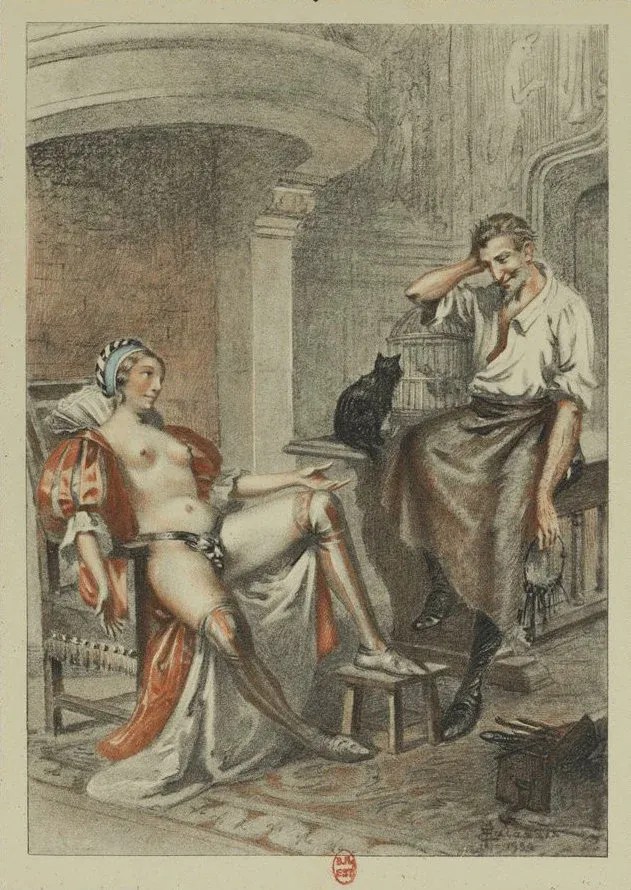
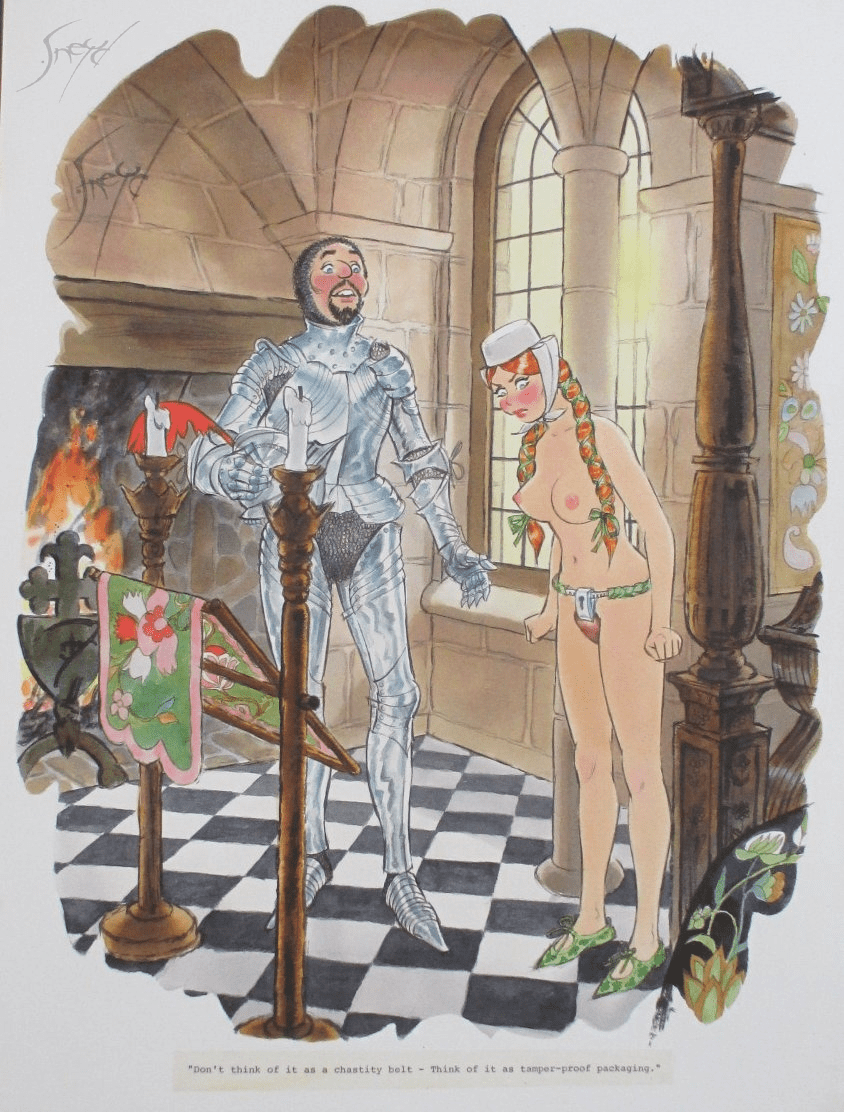
Few objects in the history of erotic fantasy carry as much cultural baggage as the chastity belt. For generations it has been presented as a grim medieval invention: jealous crusading husbands locking their wives into iron “girdles of virtue” before departing for the Holy Land. Museums displayed them as authentic relics. Postcard series claimed to show examples from the Musée de Cluny. Early erotic photographers and illustrators treated them as historical fact.
The reality is far more interesting…and far more modern.


The Myth That Never Was
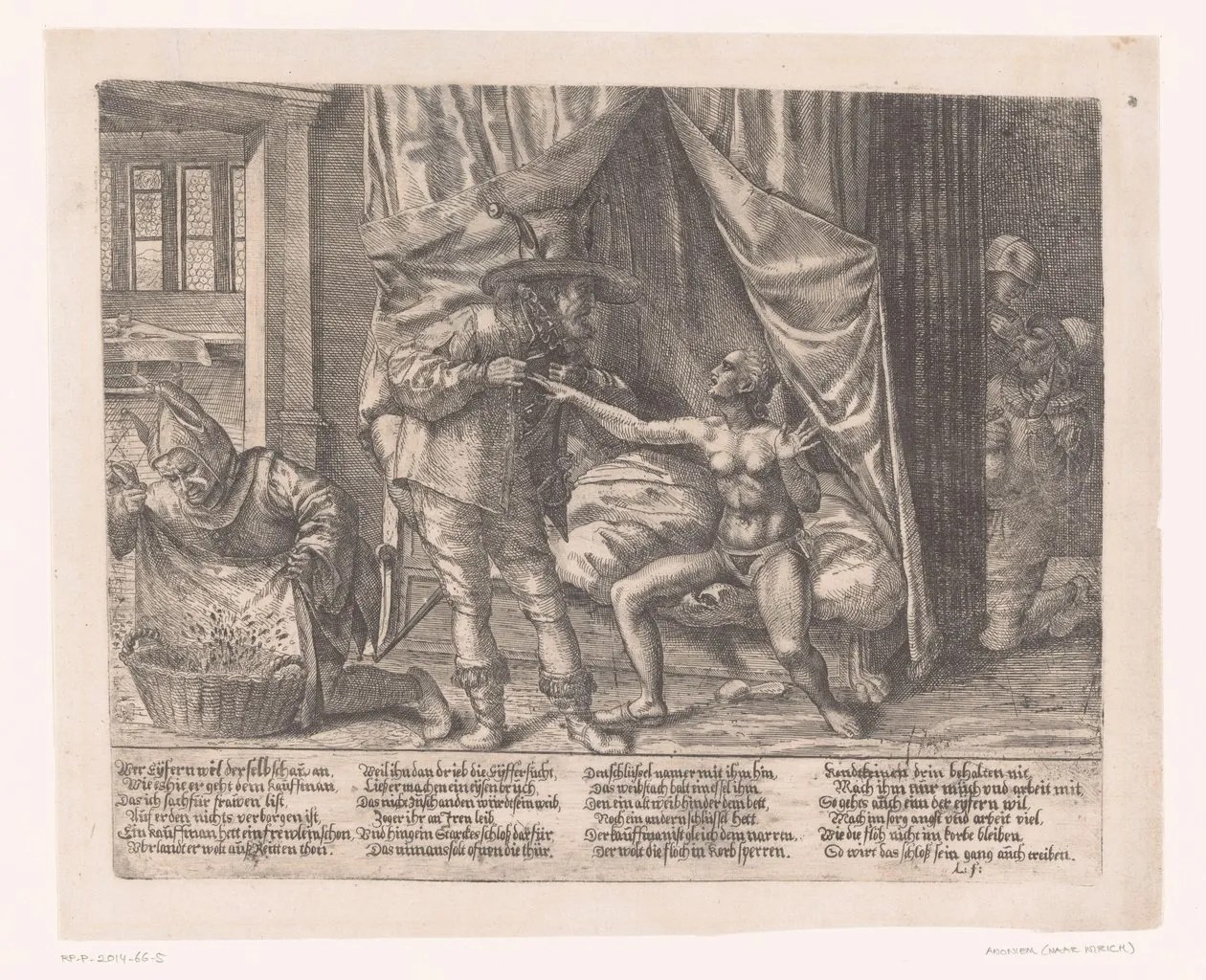
Serious historical research has long dismantled the medieval chastity-belt legend. The earliest known visual reference appears in Konrad Kyeser’s military treatise Bellifortis (1405). There the device is presented in a clearly satirical context among fantastical war machines. Later literary mentions (Brantôme, various Renaissance anecdotes) are almost always humorous, allegorical, or second-hand gossip. No reliable medieval inventory, legal document, or archaeological find supports widespread practical use.
Most of the “medieval” iron belts that once filled museum cases (including famous examples long associated with the Musée de Cluny) have been shown to be 18th- or 19th-century fabrications. They were produced as curiosities for the prurient, as moralizing Victorian exhibits, or simply as profitable hoaxes. The British Museum and other institutions now openly describe the majority of surviving examples as later inventions “for the prurient or as jokes for the tasteless.”
Nineteenth-Century Fantasy Literature Disguised as Science
Two rare French publications helped cement the myth while simultaneously feeding early fetish interest.
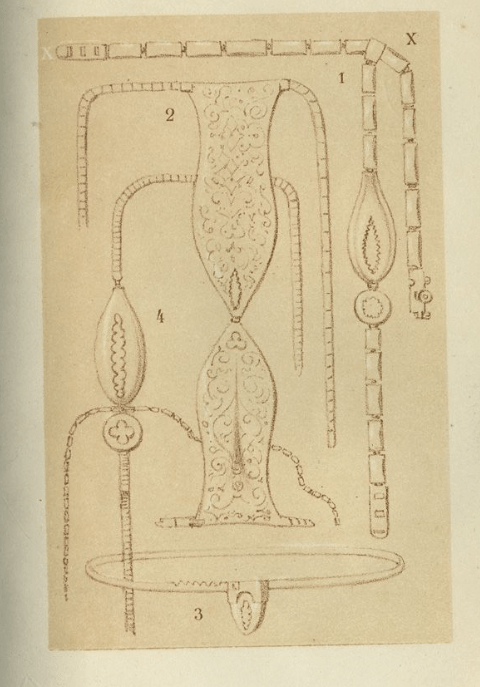
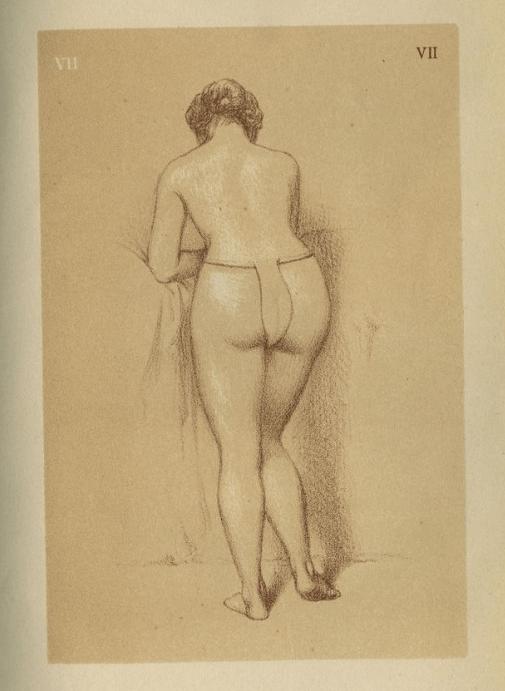
In 1878 a small private printing appeared under the pseudonym É. Ilex (the anagram of “Exilé,” now identified as the officer and amateur ethnographer Émile Duhousset). Titled Les Huis-clos de l’ethnographie, the slender volume mixed Orientalist speculation on circumcision, infibulation, eunuchs and Skoptsy with a short section on “cadenas” and “ceintures.” Accompanied by ten lithographic plates, the work circulated only among members of a supposed anthropological society and is today catalogued in the Enfer of the Bibliothèque nationale. Its illustrations of locked belts helped give visual form to the emerging legend.

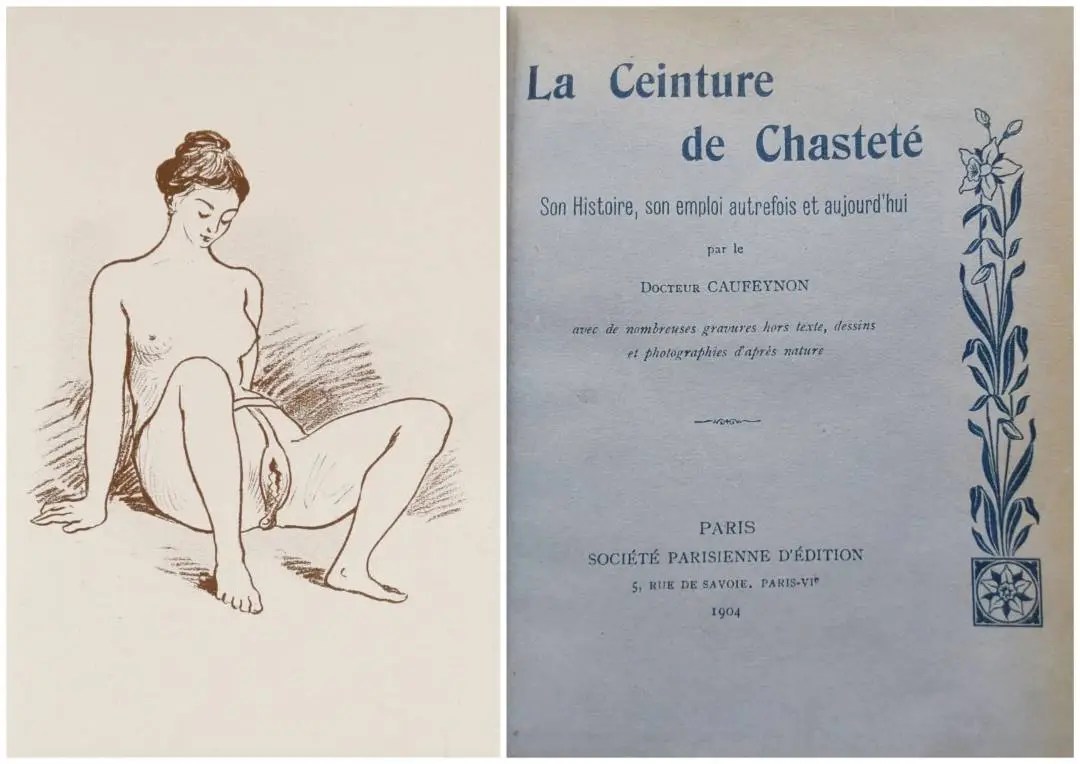
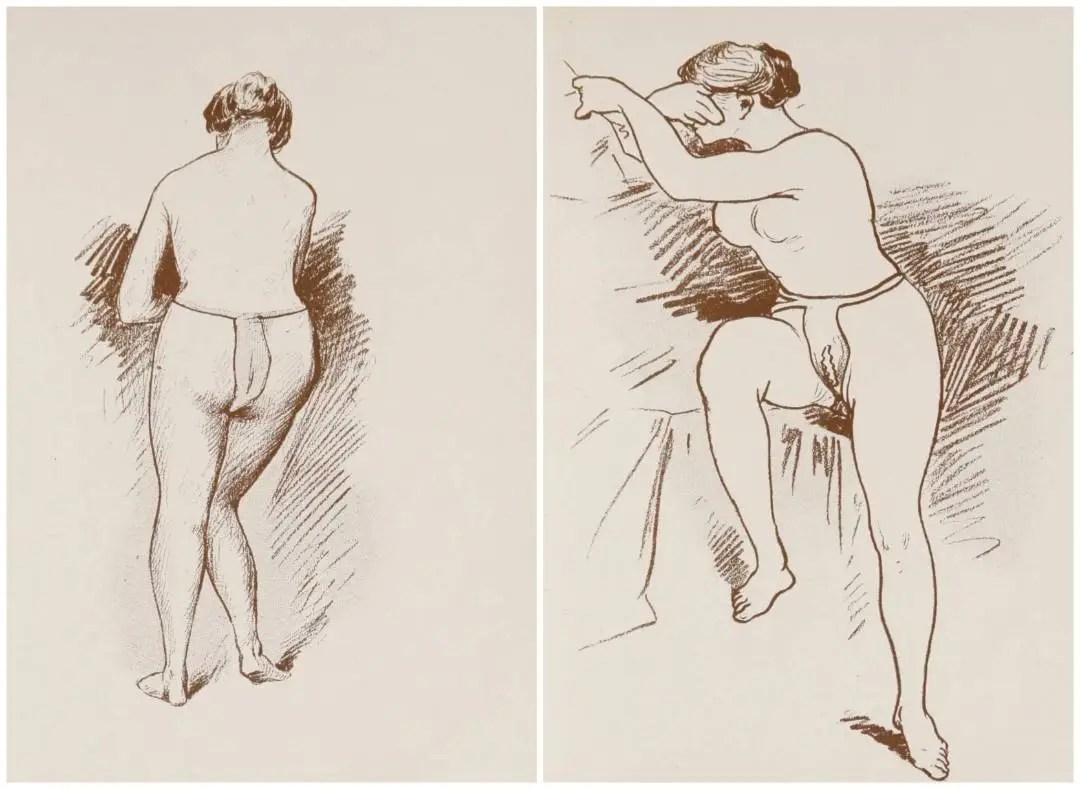
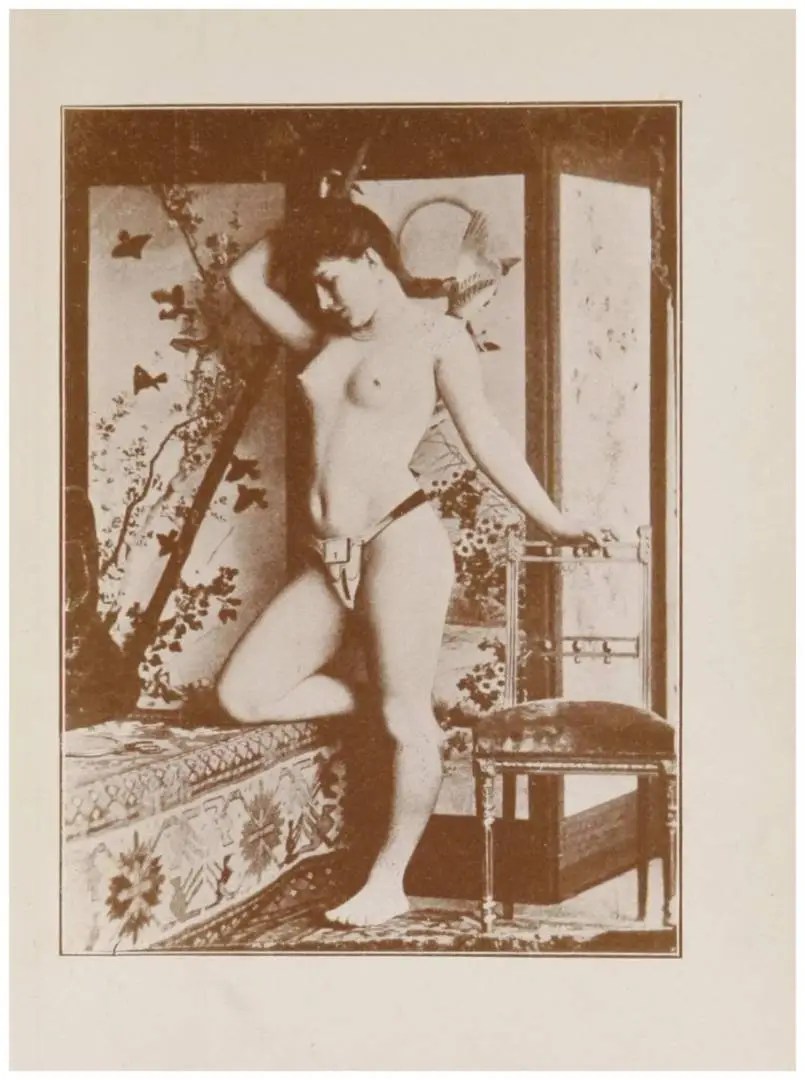
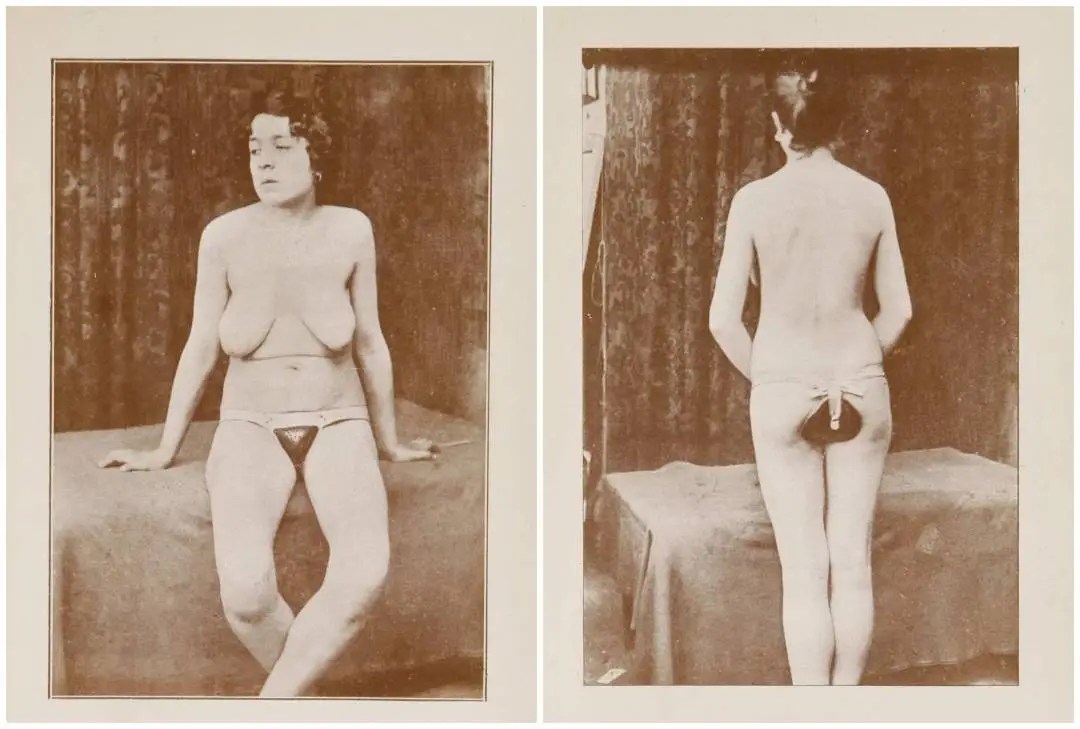
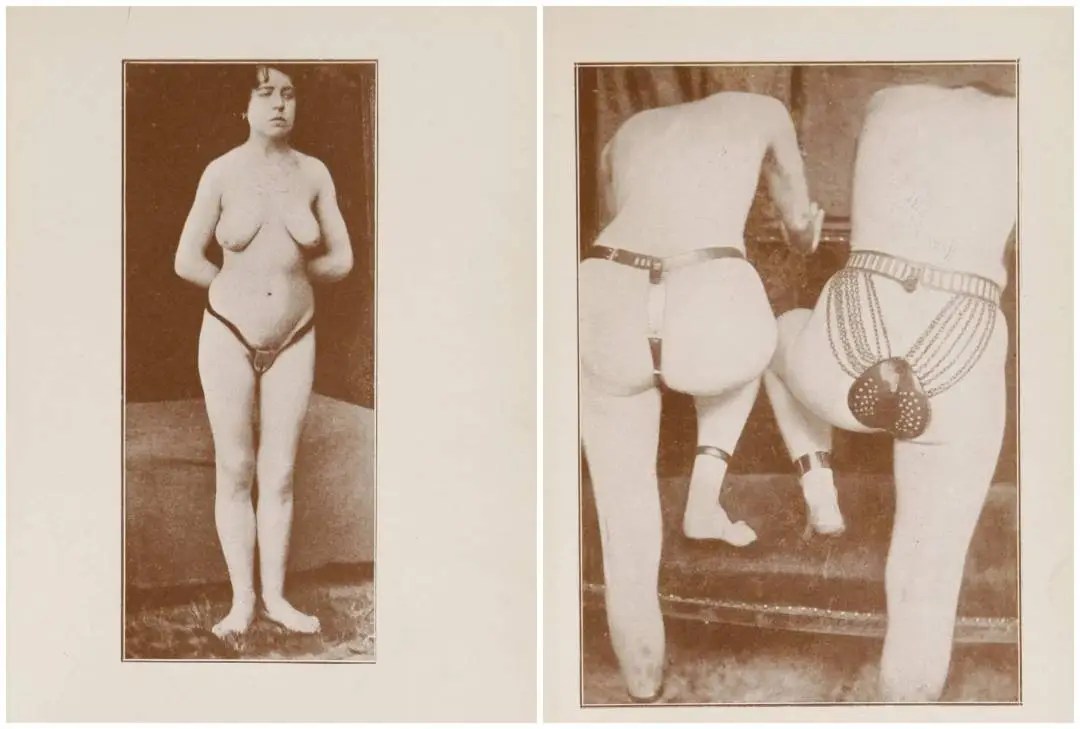
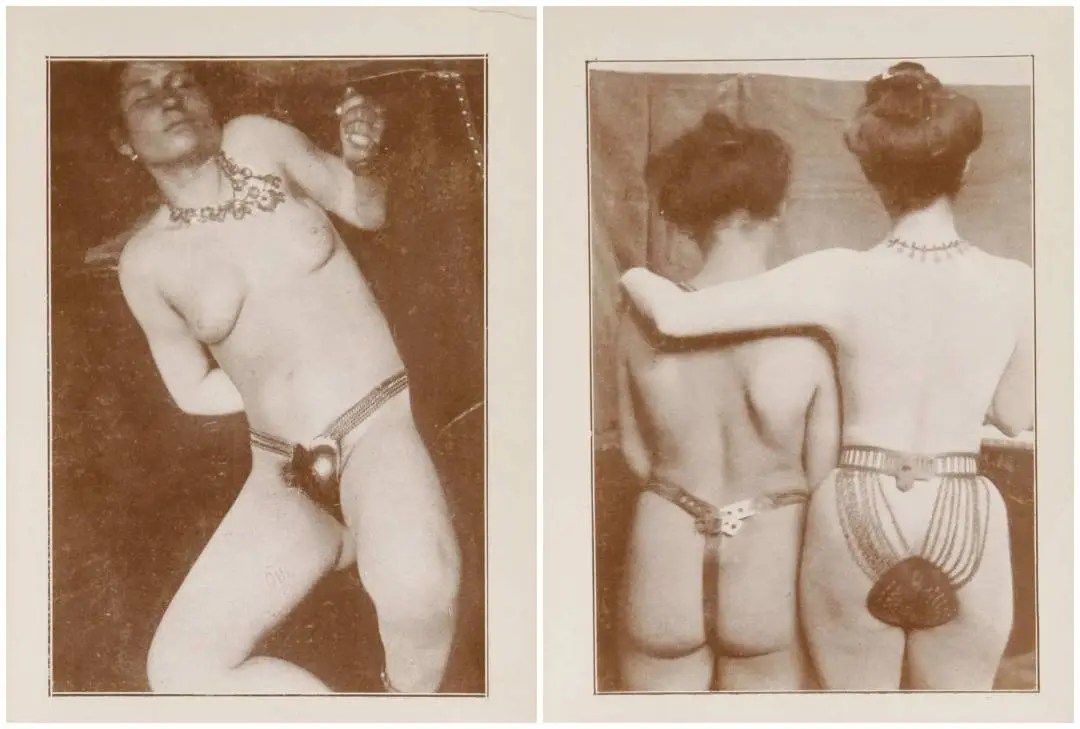
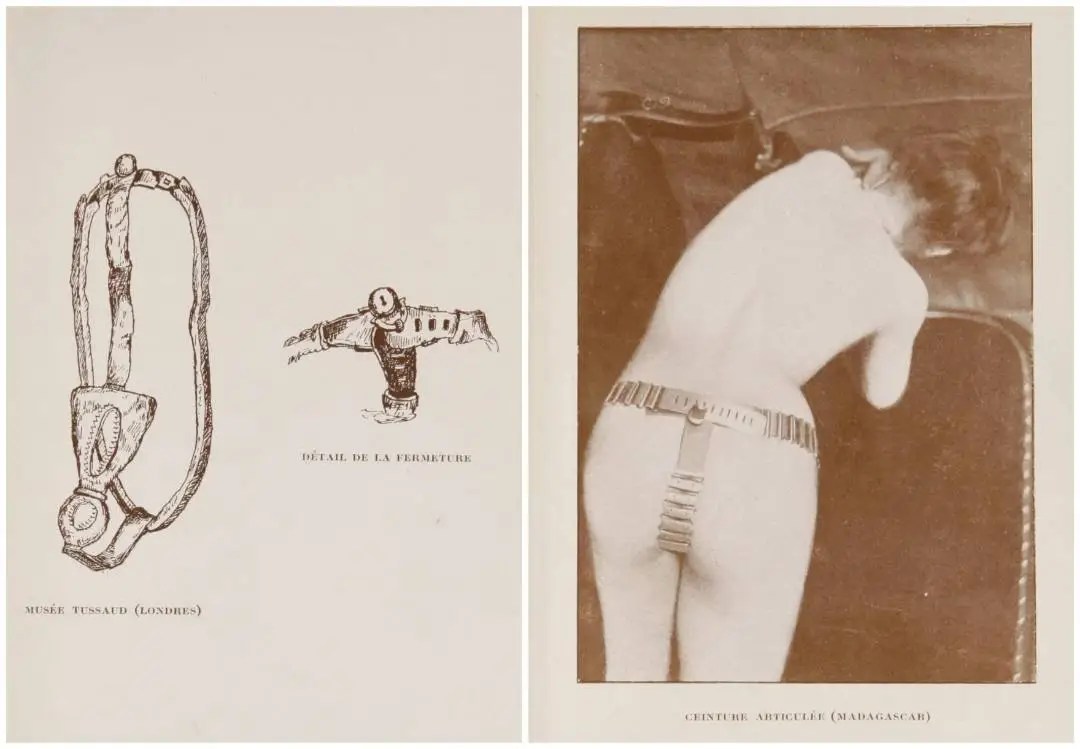
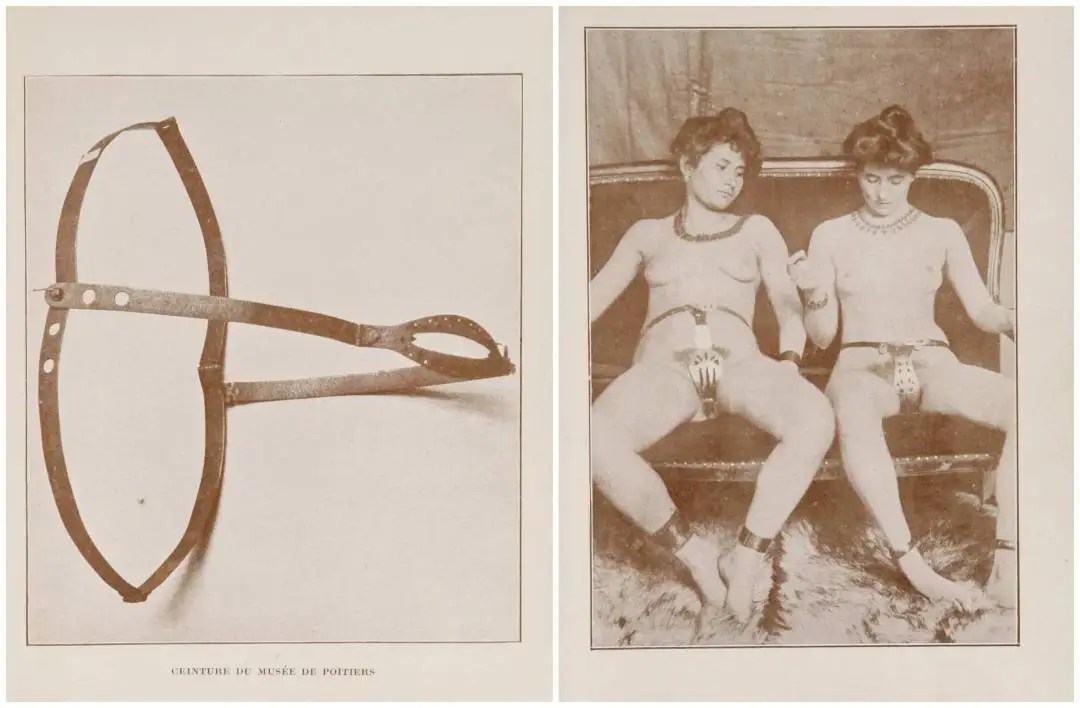
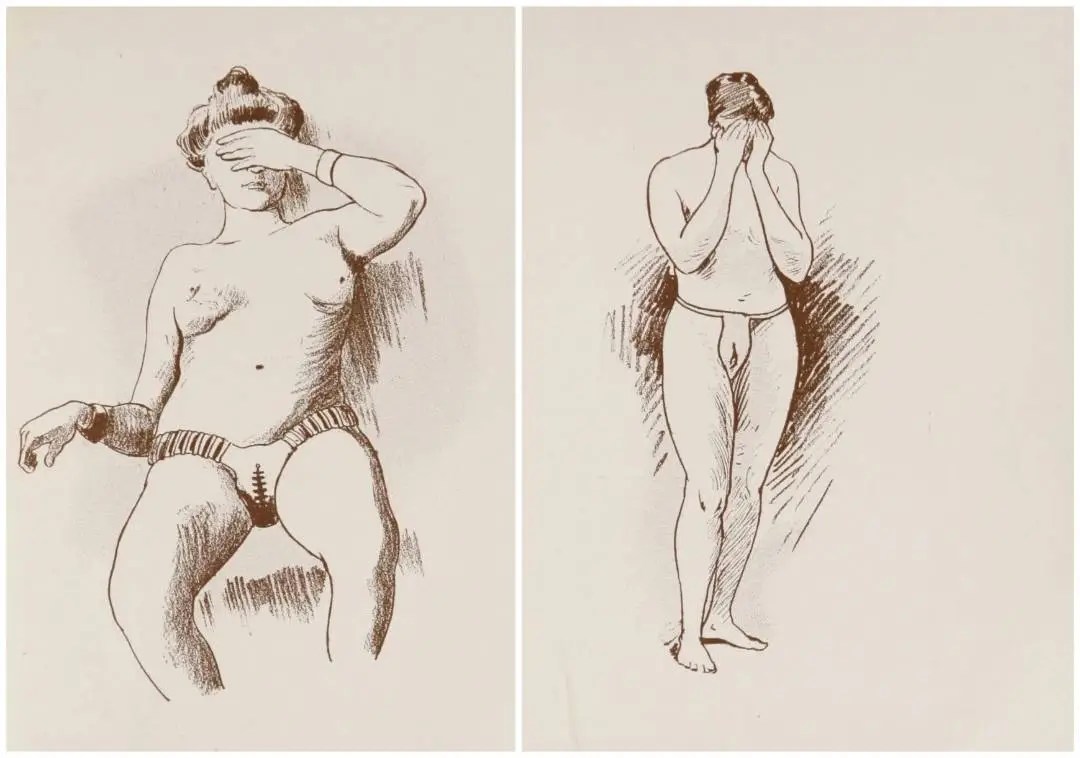
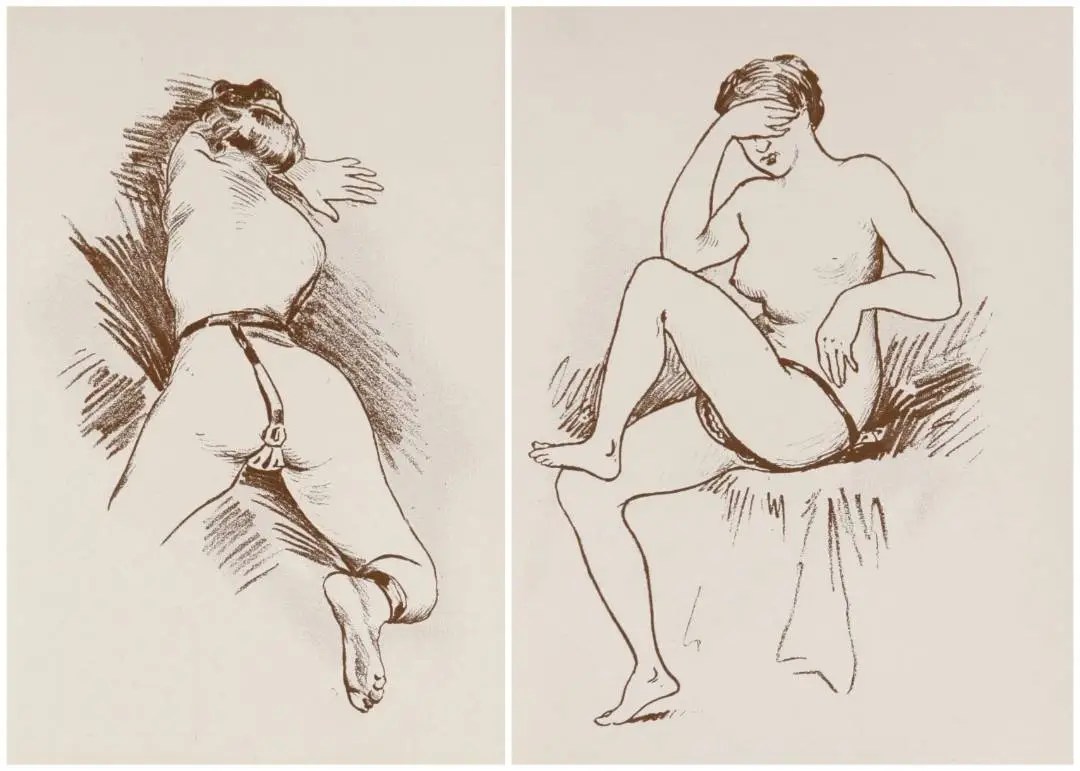
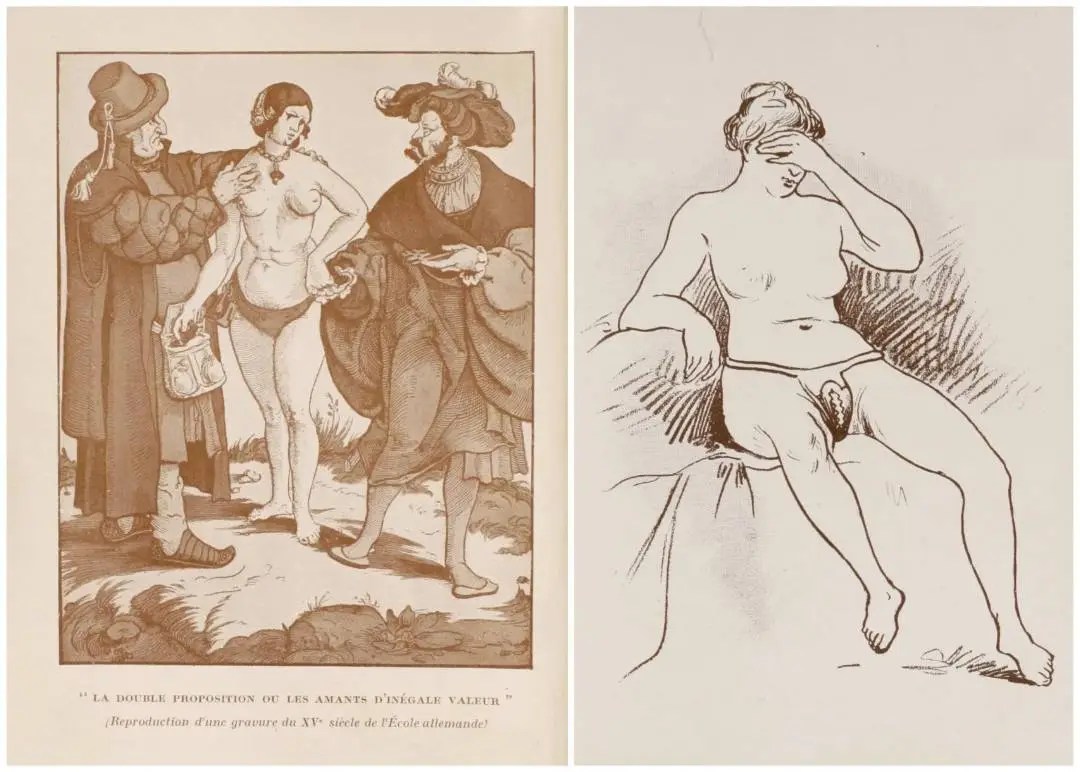
Even more influential was the 1904/1905 book La Ceinture de chasteté, son histoire, ses modèles, ses usages by “Docteur Caufeynon” (Jean Fauconney). Limited, according to some sources, to as few as fifty copies in its first form, the work presented itself as a serious historical and medical study. In reality it was a richly illustrated piece of Victorian-era erotica in scientific costume. It gathered every circulating legend, reproduced (or invented) drawings and photographs of “museum pieces,” and added a layer of medical commentary. The photographic plates, some attributed to the Swiss erotic photographer Henri Oltramare, showed elaborately locked devices on living models and became reference images for later postcard series and studio work.

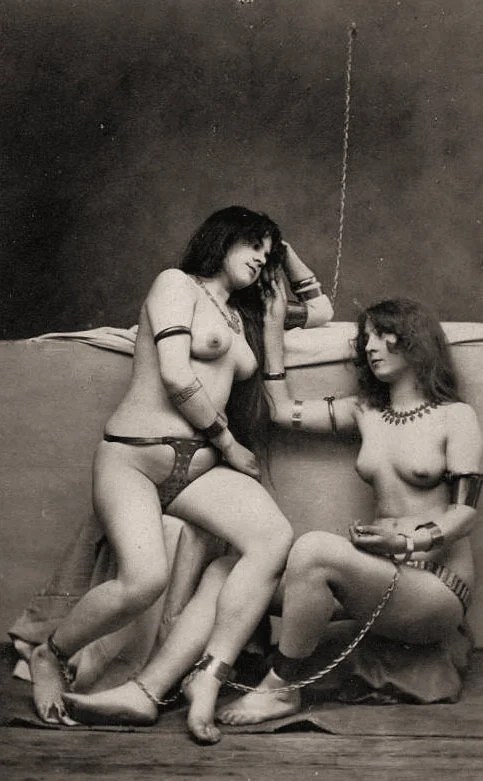
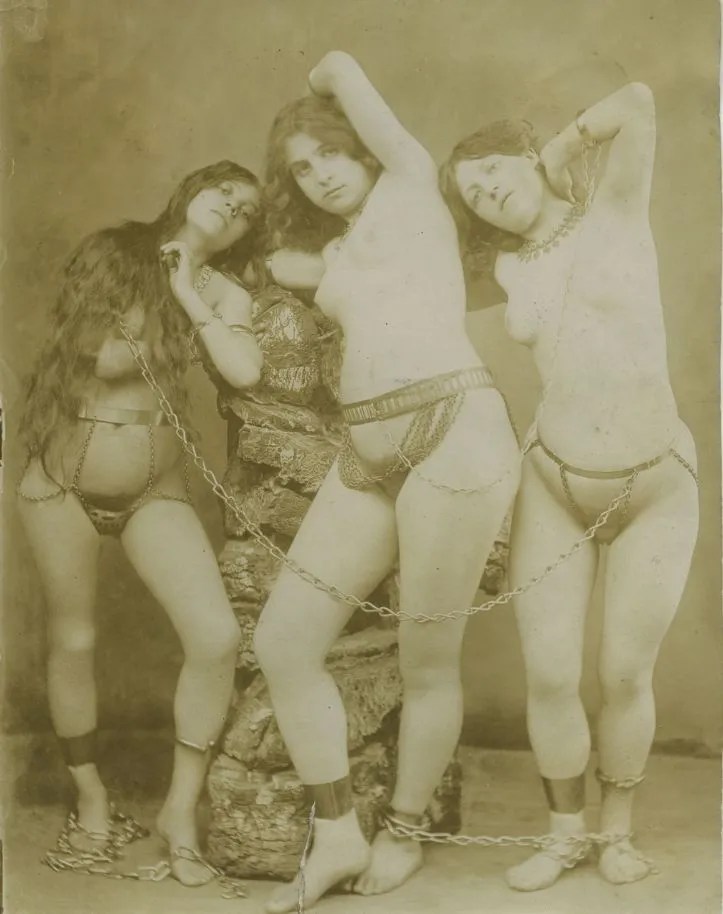
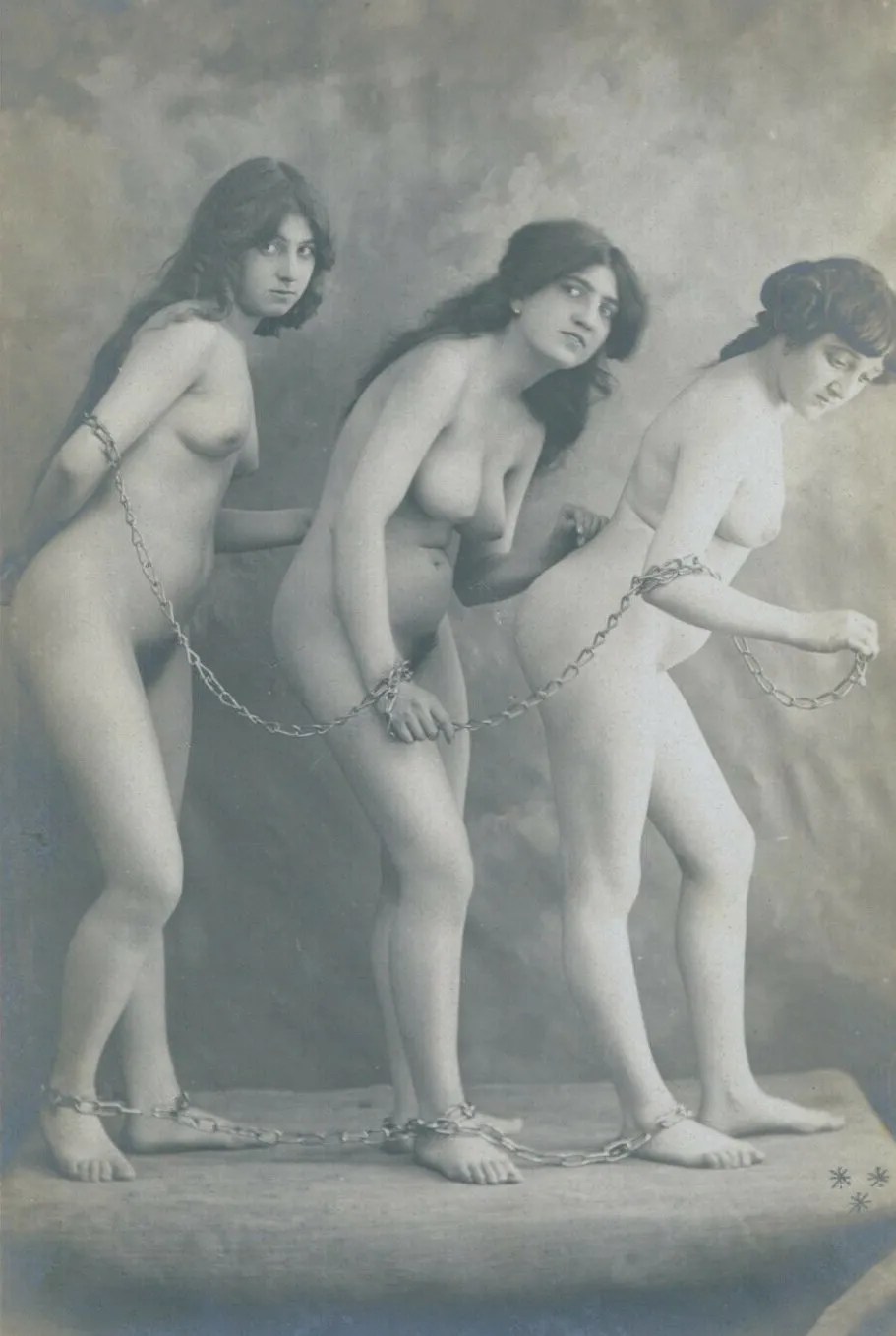
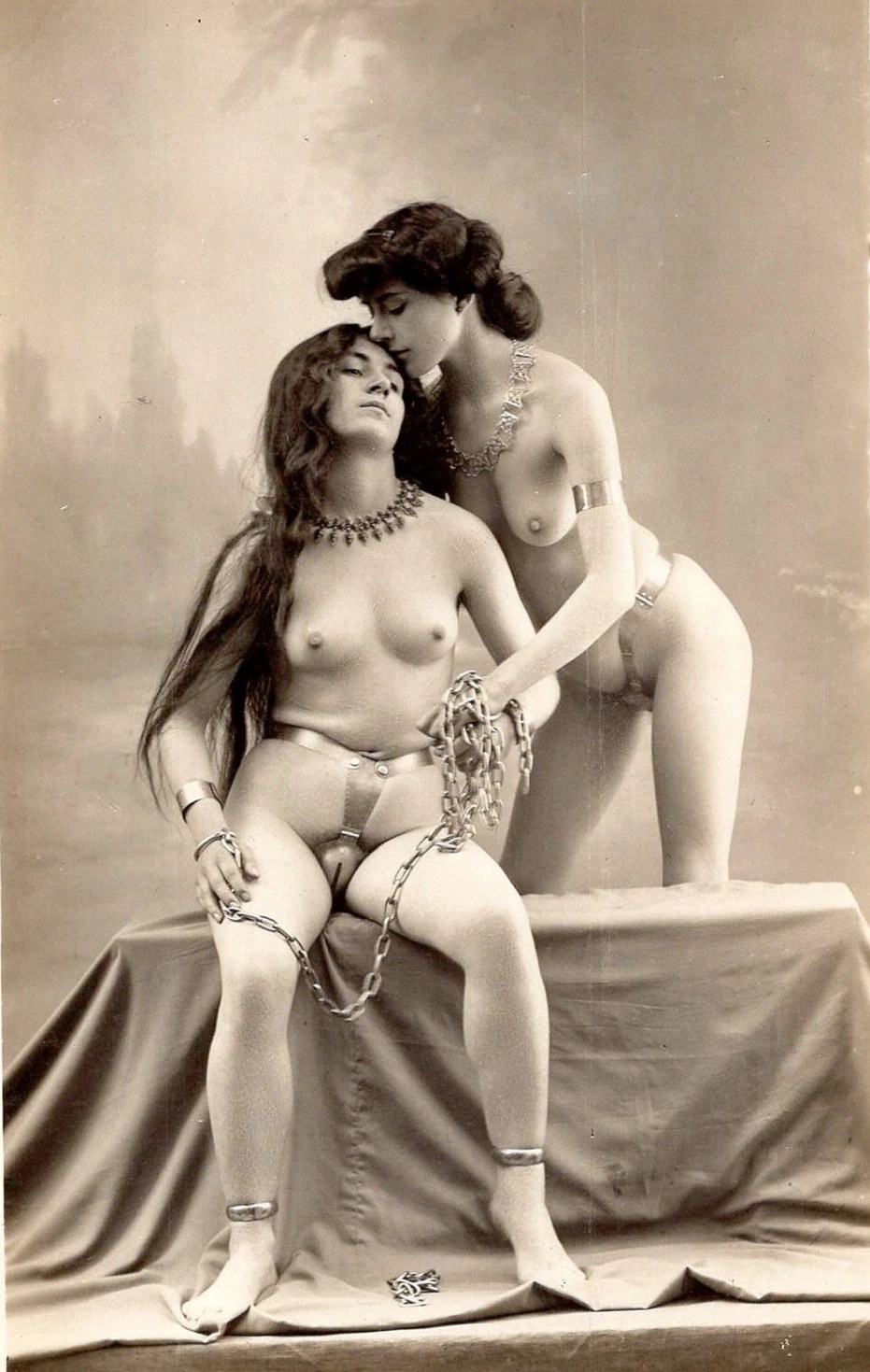
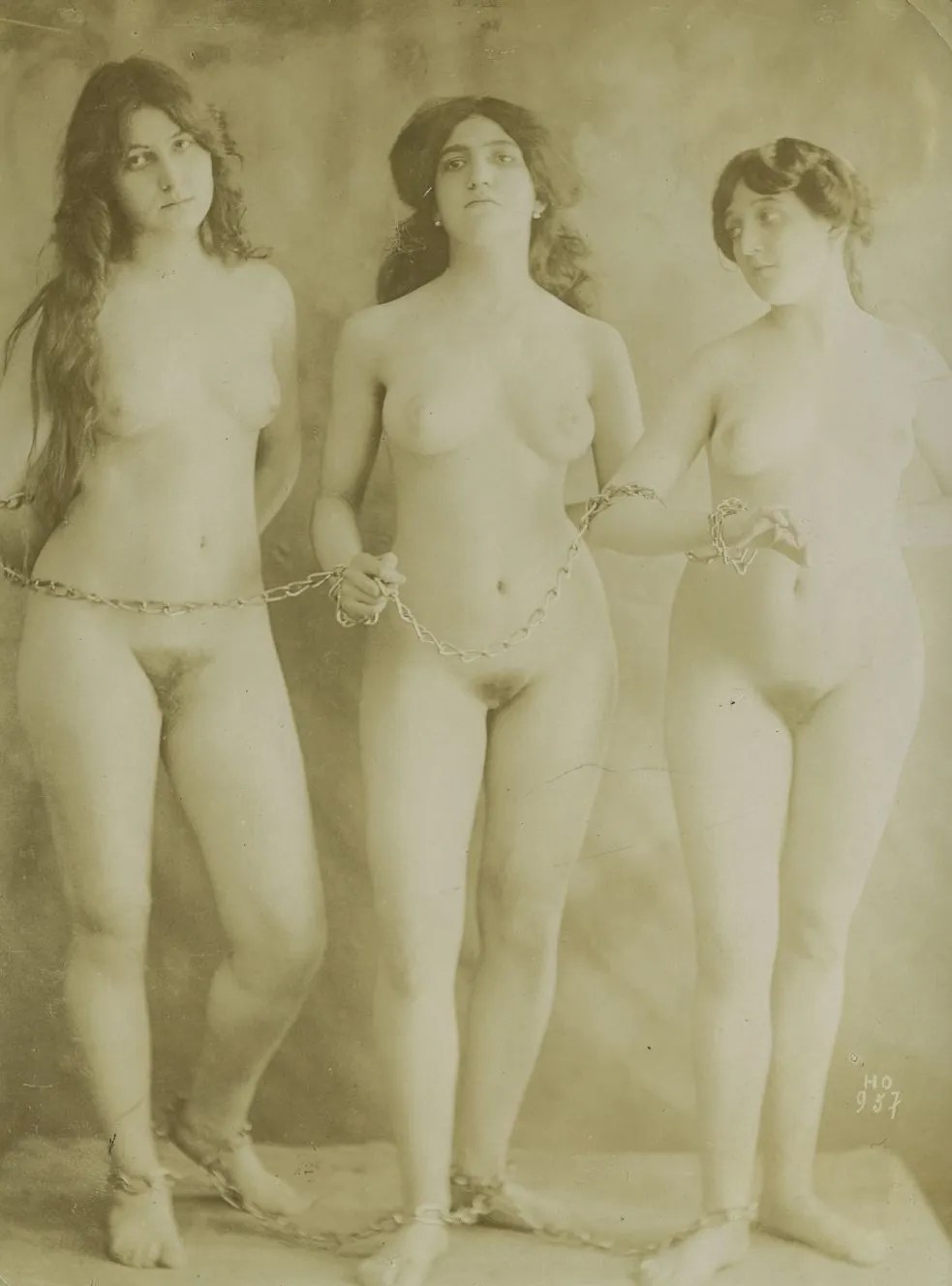
These books, together with the sensational press of the period (a 1904 Berlin newspaper story about an American millionaire’s wife locked into a belt and seeking police help is typical), transformed a medieval joke into a powerful modern fantasy.
The Photographic Evidence: Postcards and Studio Images
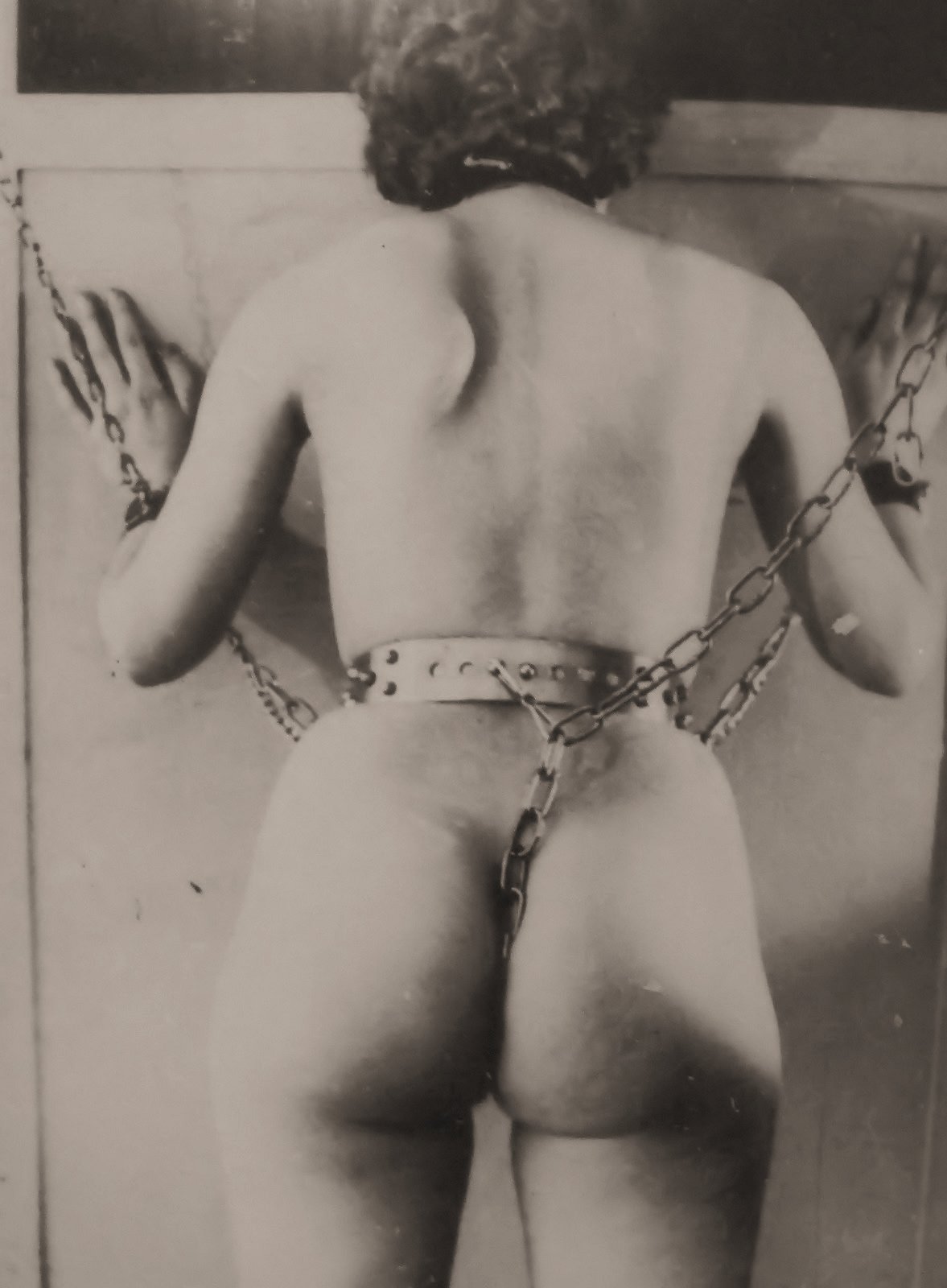
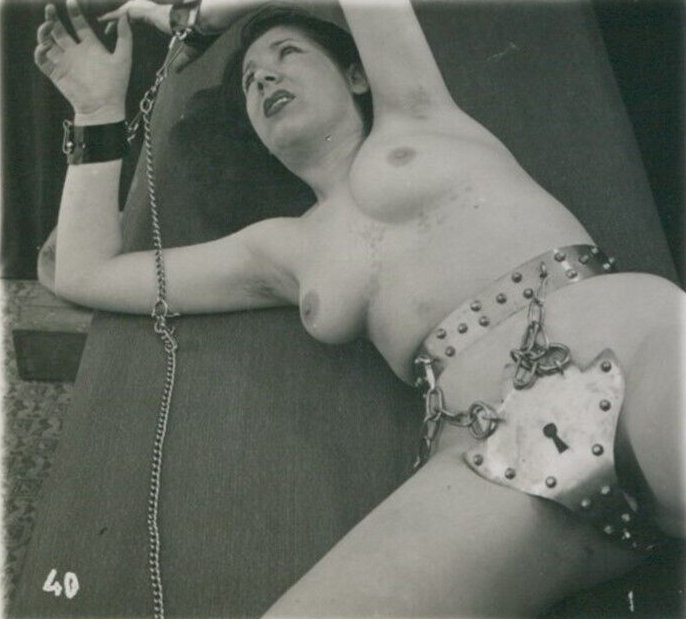
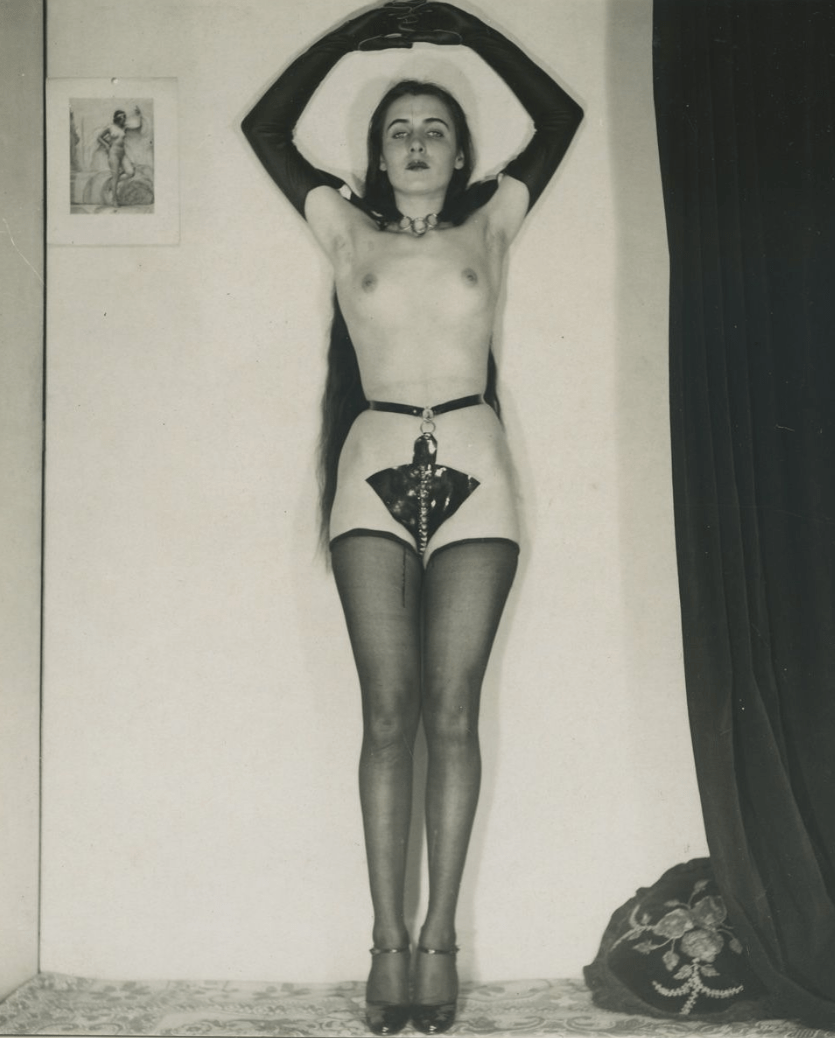
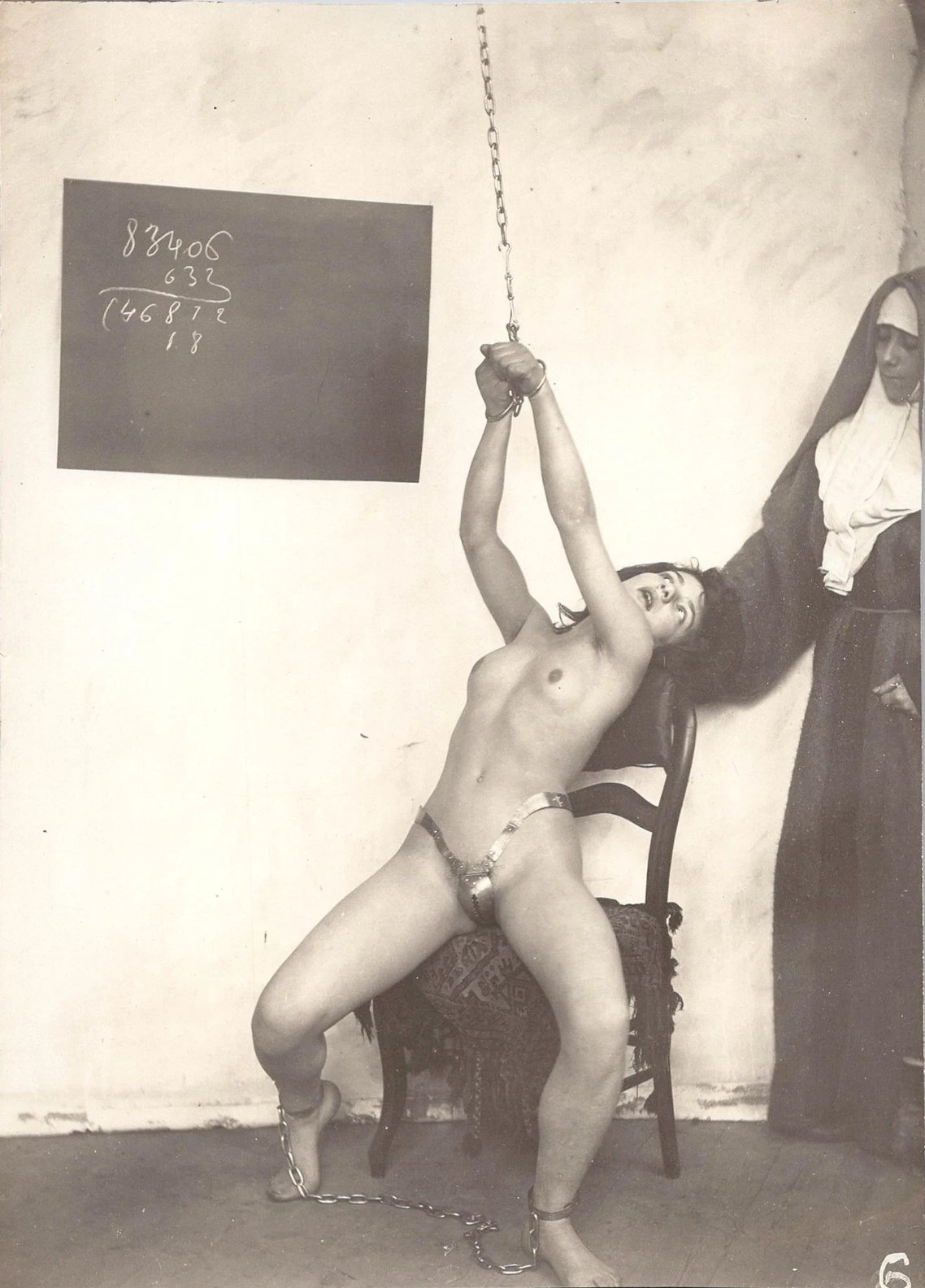
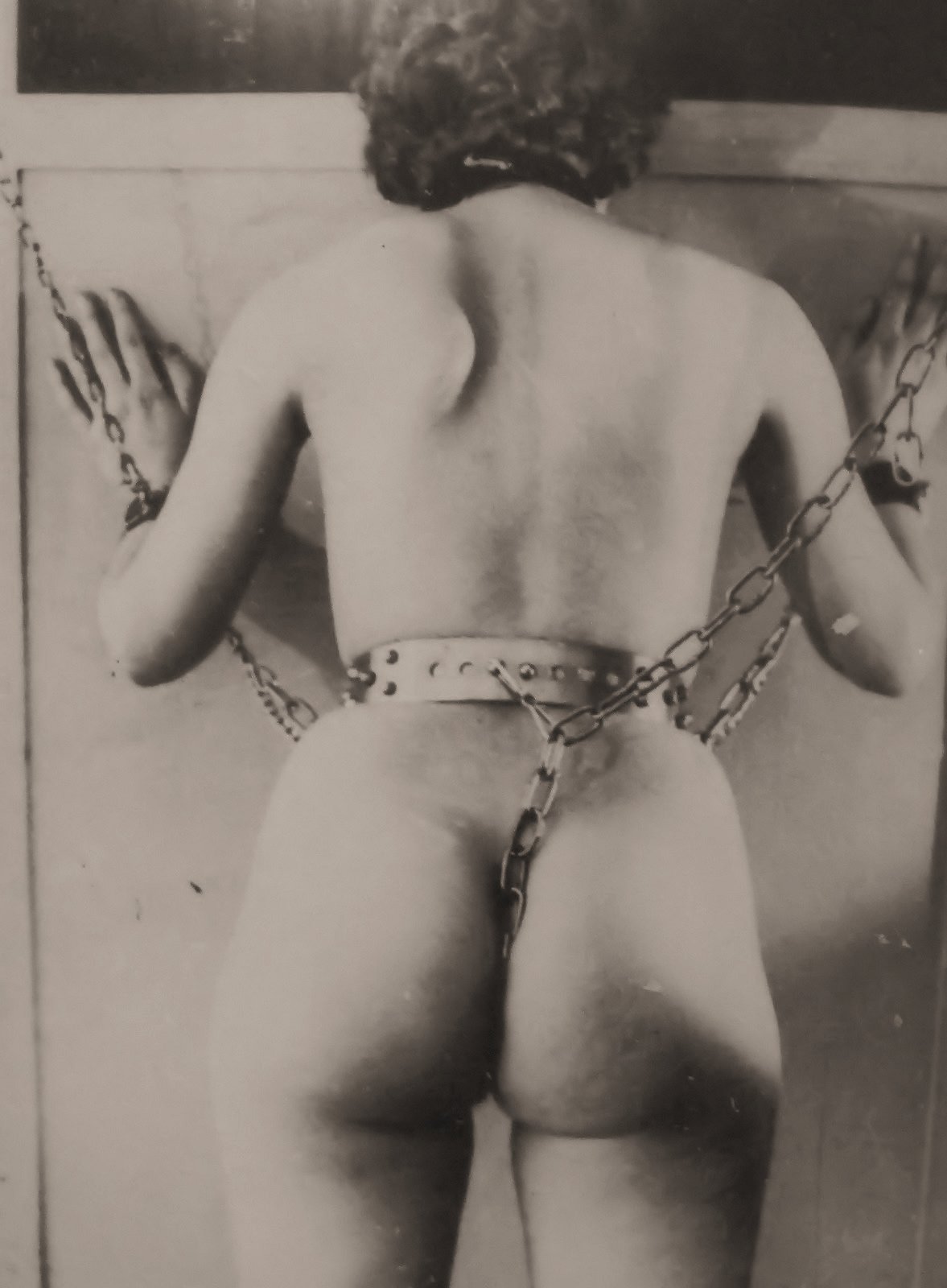
Around 1900–1915 a series of photographic postcards appeared that claimed to show authentic chastity belts from the Musée de Cluny. The devices were carefully lit, often presented as historical artifacts. Later research has made clear that many of these “museum pieces” were contemporary fabrications or heavily retouched. In parallel, a smaller group of rare photographs showed women actually wearing belts. In several of these the metalwork was drawn or painted onto the negative, creating an early form of fetish photo-montage.

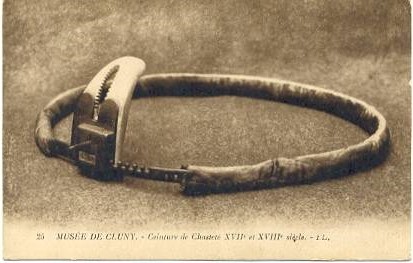
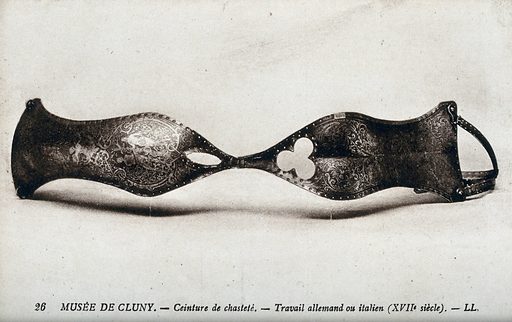
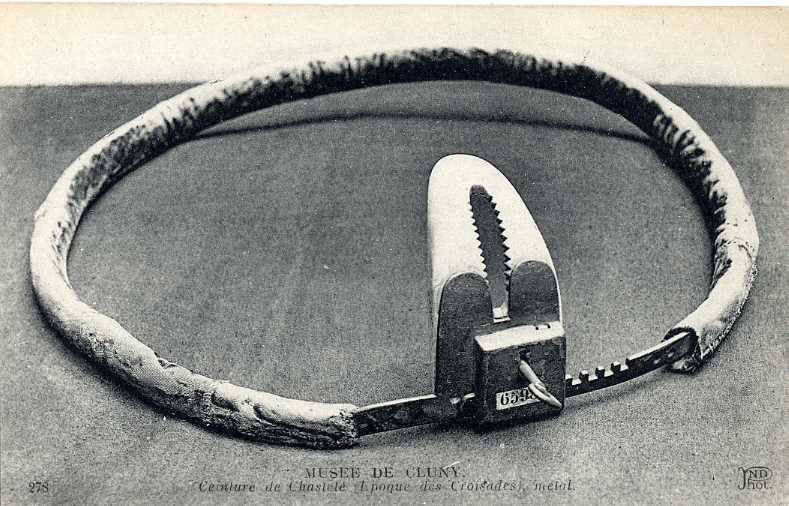
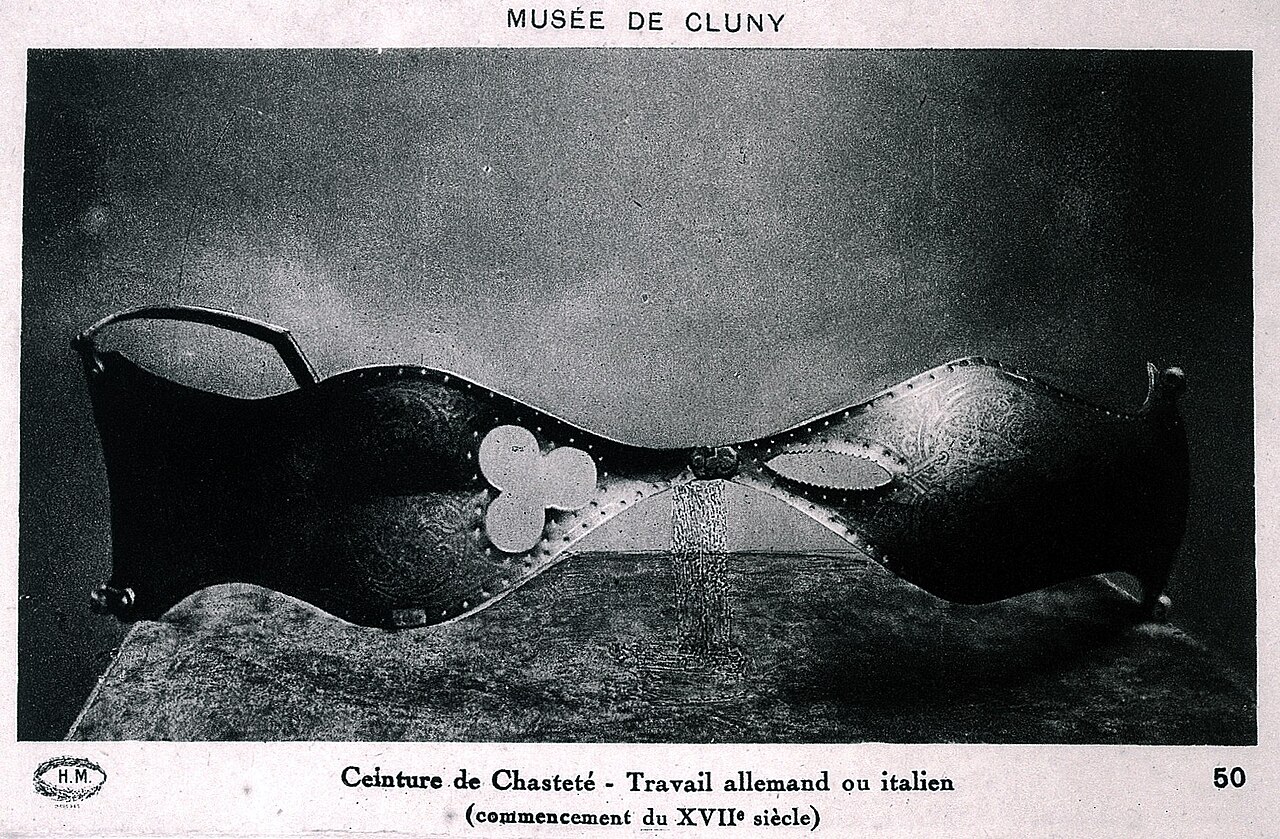
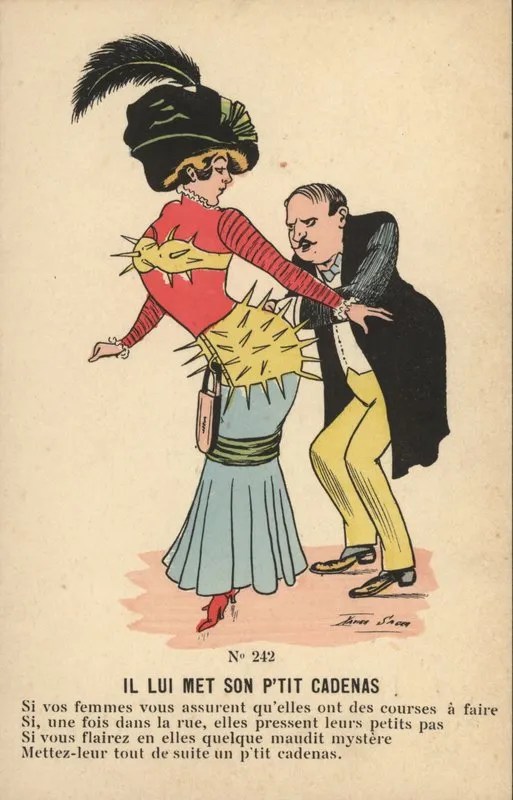
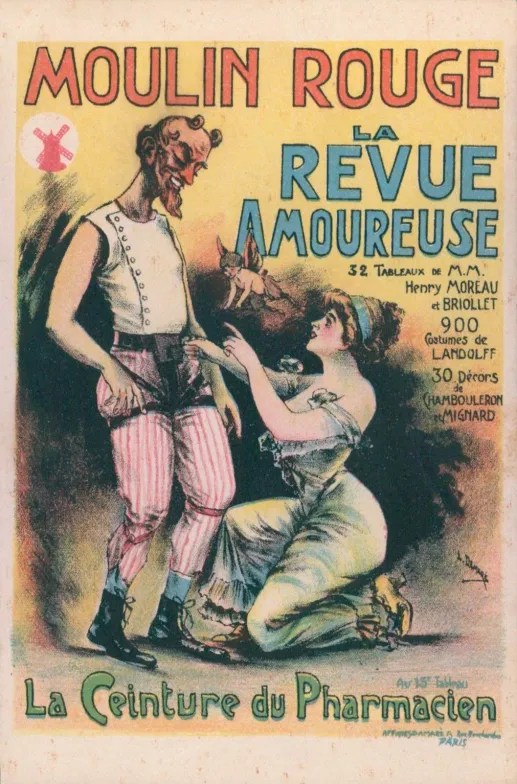
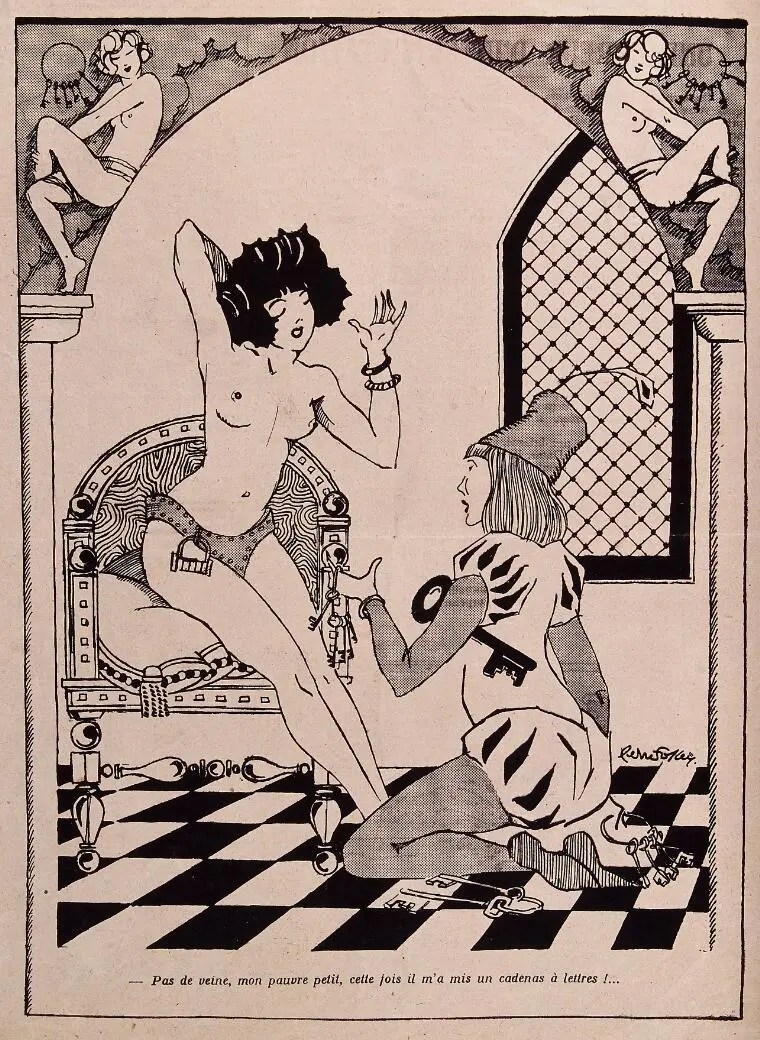
These images sit at a fascinating intersection: they are simultaneously historical forgeries, erotic artifacts of their own time, and the visual ancestors of modern chastity play. Their ambiguity, are we looking at a museum curiosity, a private commission, or pure fantasy? only increases their appeal to collectors of vintage BDSM photography.


Both images (the close-up and the four-panel series) come from the collection of Prof. Dr. Fr. S. Krauss (Friedrich Salomon Krauss, 1859–1938) and were published in Dr. J. R. Spinner’s 1931 sexological study Die Jungfernschaft. Virginität und Defloration als Kulturprobleme.The original captions read:
- Close-up: “Keuschheitsgürtel am lebenden Modell – Photographische Aufnahme. Aus der Sammlung Prof. Dr. Fr. S. Krauss”
- Four panels: “Der Keuschheitsgürtel im Aktphoto der Vorkriegszeit – Aus der Sammlung Prof. Dr. Fr. S. Krauss”
These are classic examples of early-20th-century photographic engagement with the chastity-belt myth. The close-up shows a model from behind wearing a conspicuously ornamented metal device with a clover-shaped shield and a keyhole-style lock. The lighting and pose are typical of the period’s “scientific” or semi-erotic documentation. The four panels present different models in frontal, side and rear views, wearing various designs, some with heart-shaped openings, others more heavily ornamented or fitted with chains.
As with many comparable images of the era, it is not always clear whether the belts were fully functional or (partly) adapted or retouched for the camera. They belong firmly to the same tradition of “museum pieces” and studio photographs that also appear in the French publications around 1900–1905 (Caufeynon and others) and in the contemporary postcard series.
From Hoax to Consensual Practice
By the mid-20th century the chastity belt had completed its journey from Victorian moral panic and museum hoax into the leather and fetish communities. What began as a symbol of patriarchal control was reclaimed as a tool of consensual power exchange, orgasm denial, and intense psychological intimacy. Contemporary stainless-steel, silicone and polycarbonate devices bear little resemblance to the heavy iron “medieval” fakes, yet they inherit the same potent symbolism.
The photographs and rare books of the late 19th and early 20th centuries remain the most eloquent witnesses to that transformation. They document not a genuine medieval practice, but the birth of a modern erotic myth, one that continues to exert a powerful hold on the imagination.
The images once sold as postcards of “ancient” Cluny relics, the carefully posed studio photographs with drawn-on hardware, and the limited-edition volumes of 1878 and 1905 are therefore far more than historical curiosities. They are the visual and textual roots of a fetish that is still very much alive.


Sources & Recommended