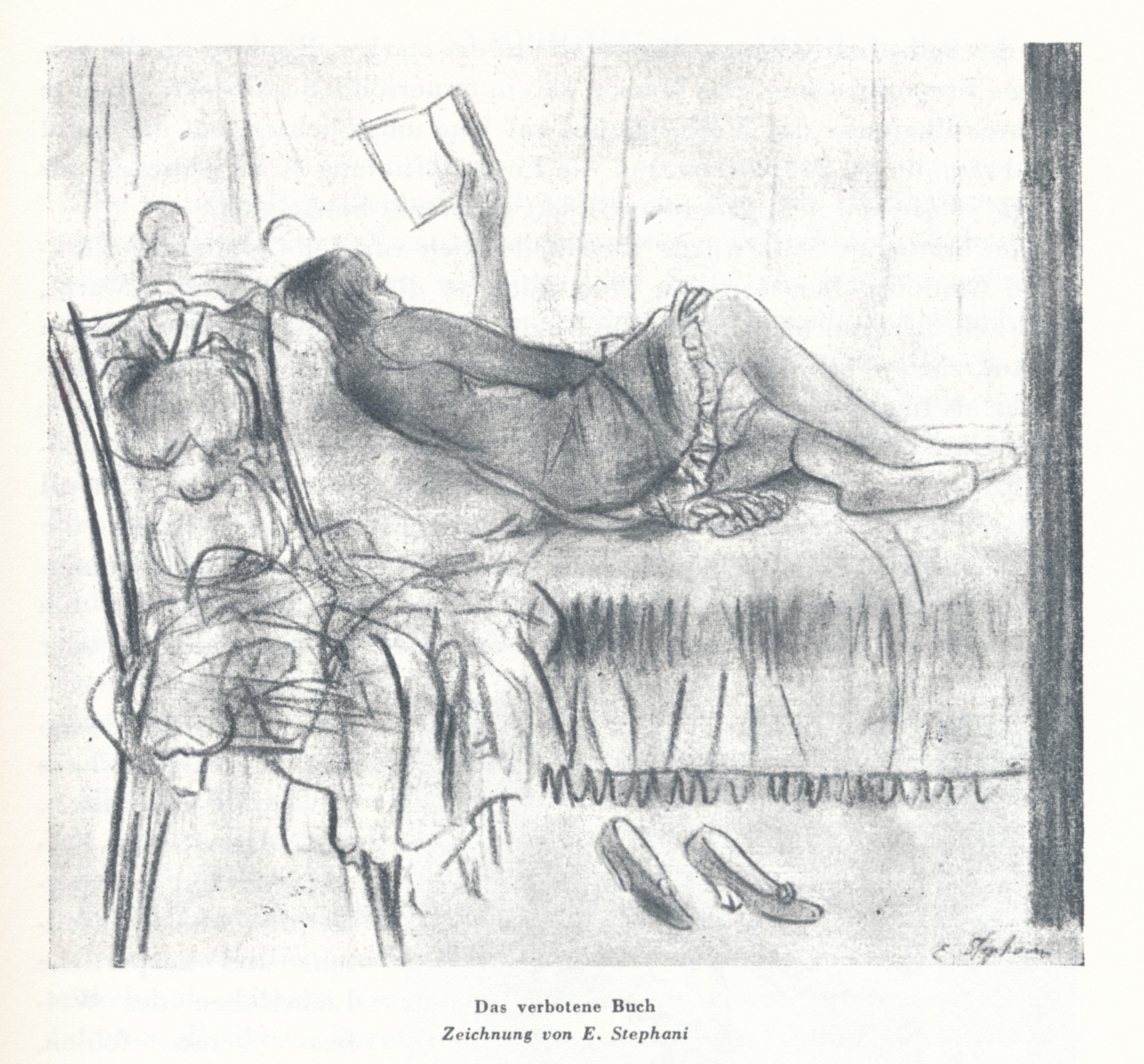
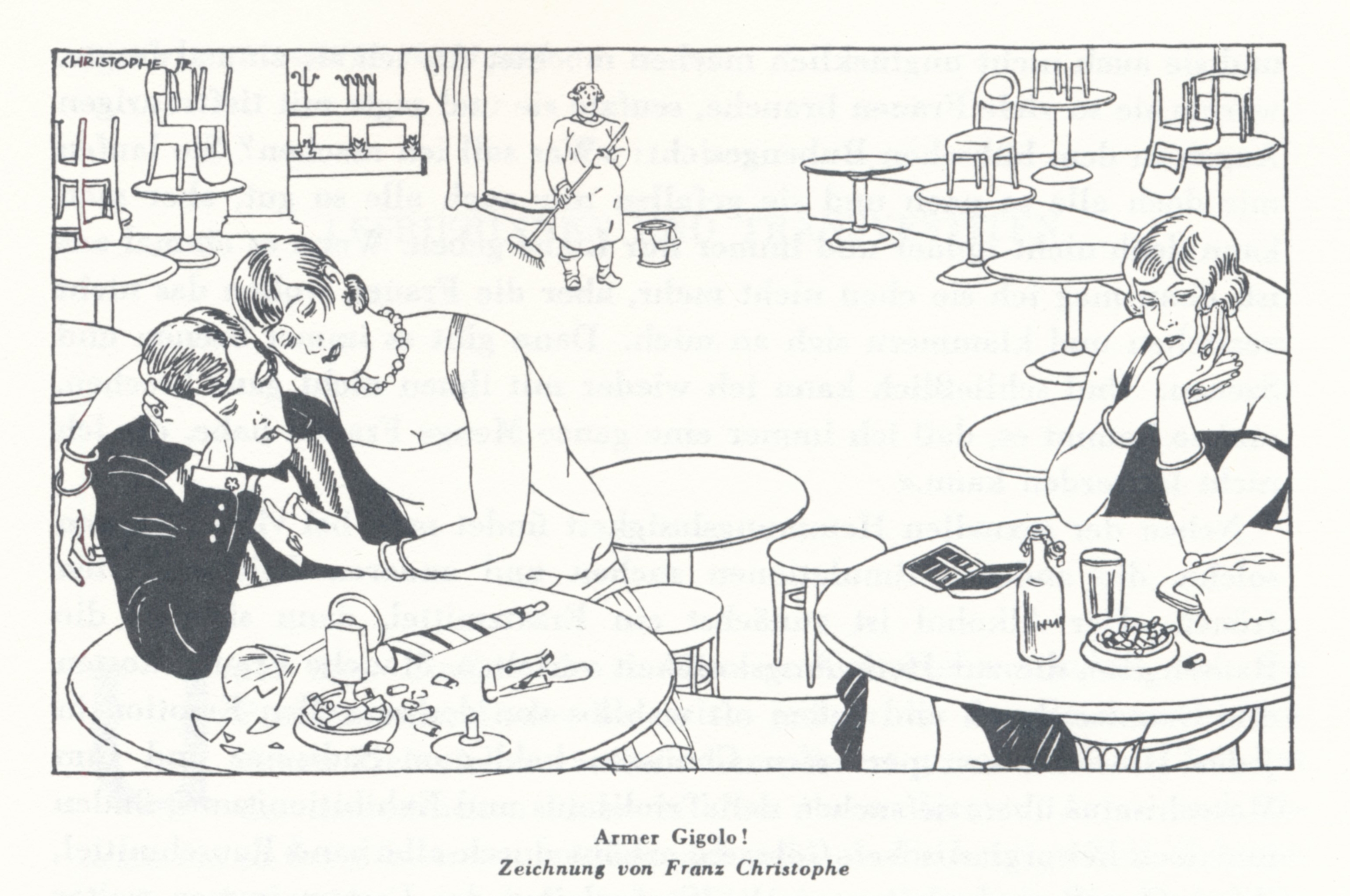
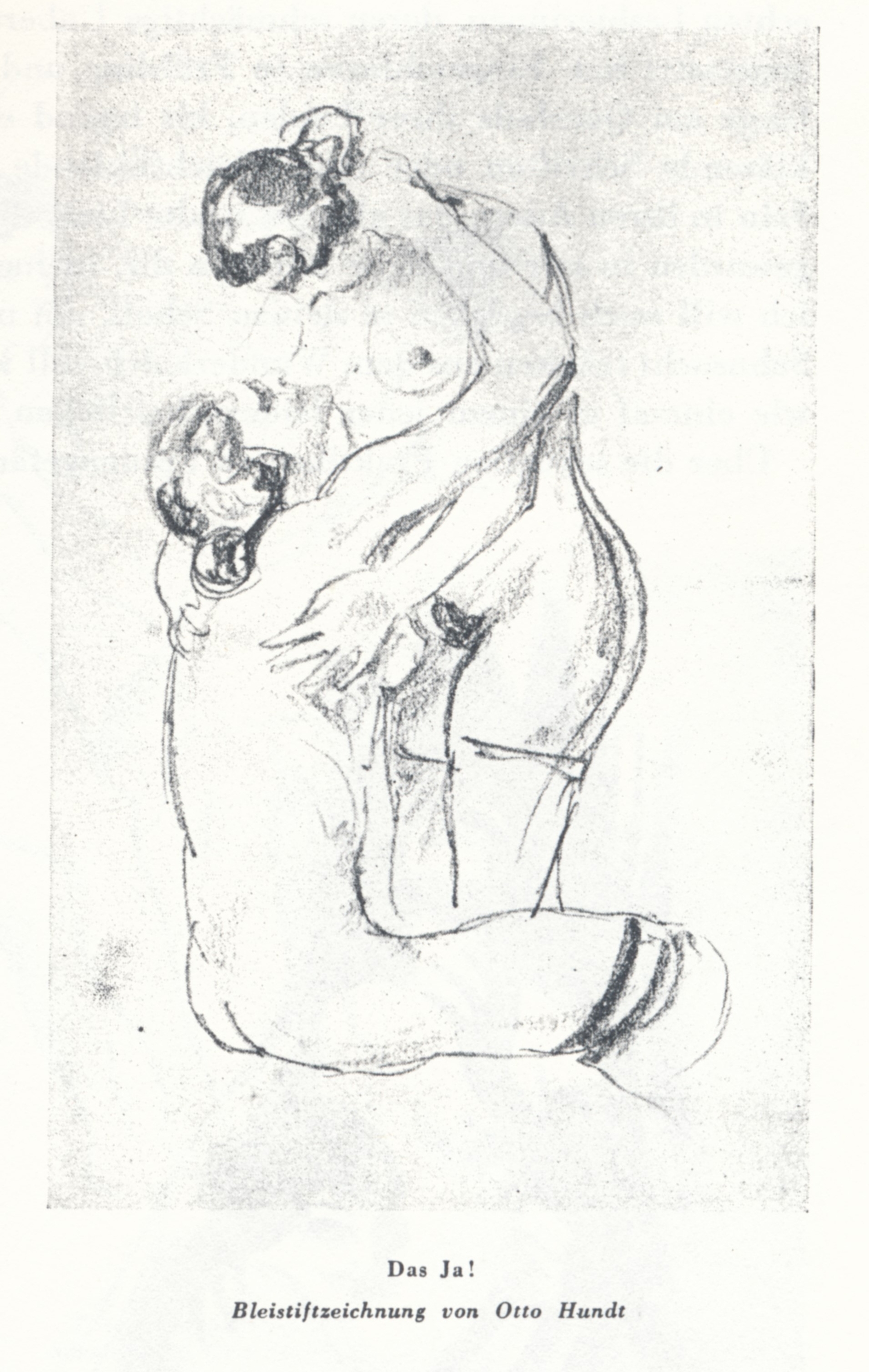
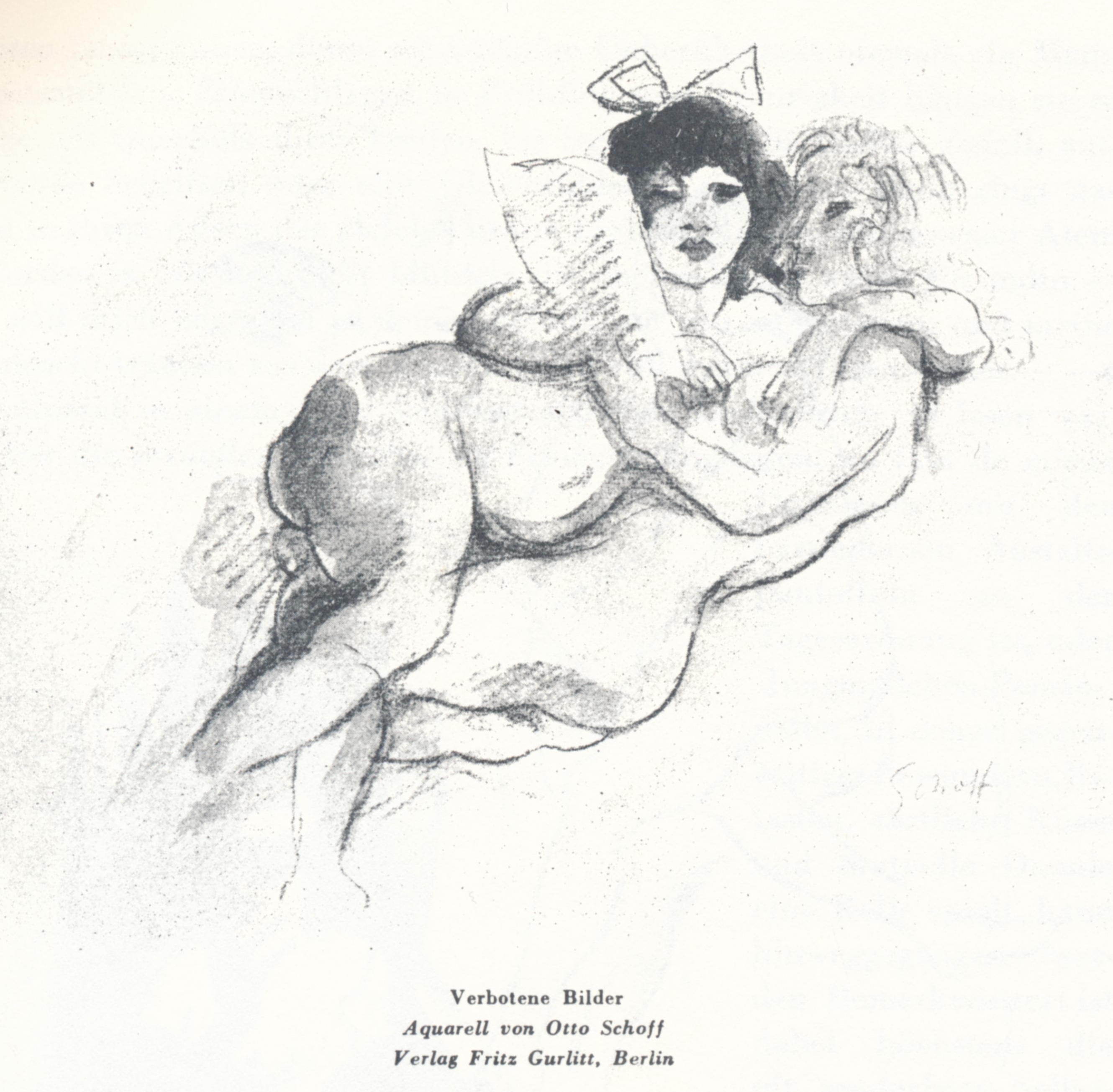
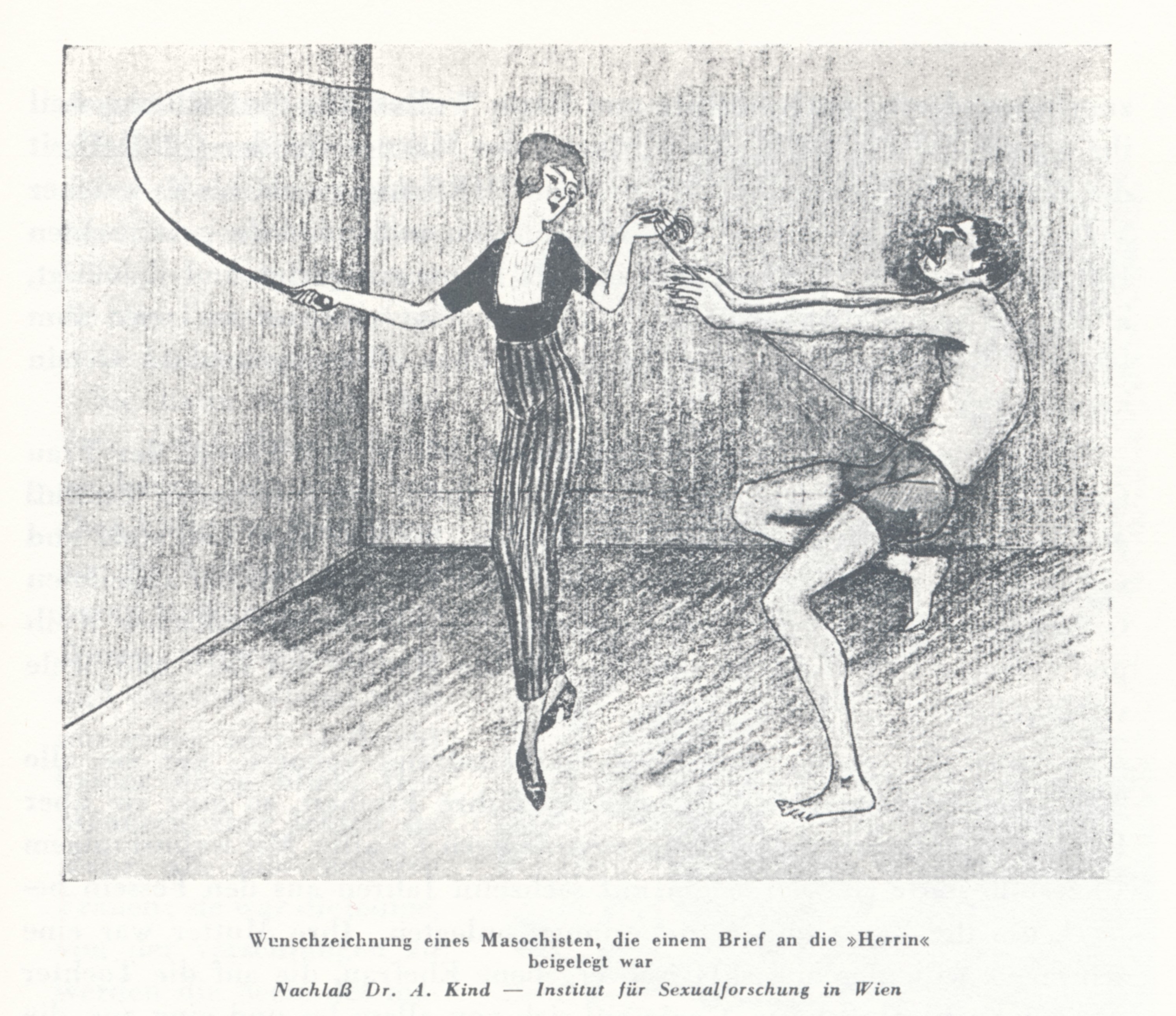
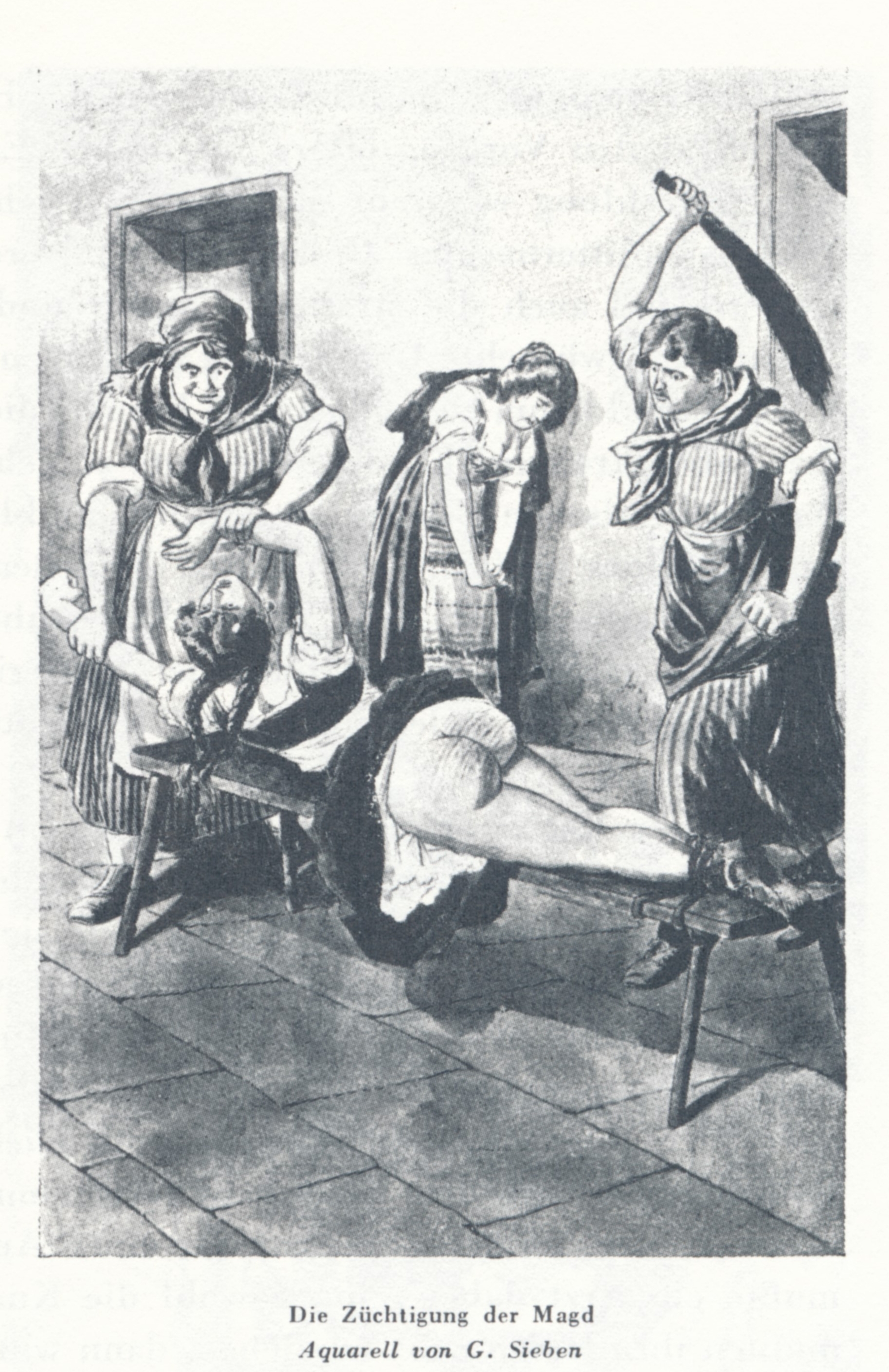
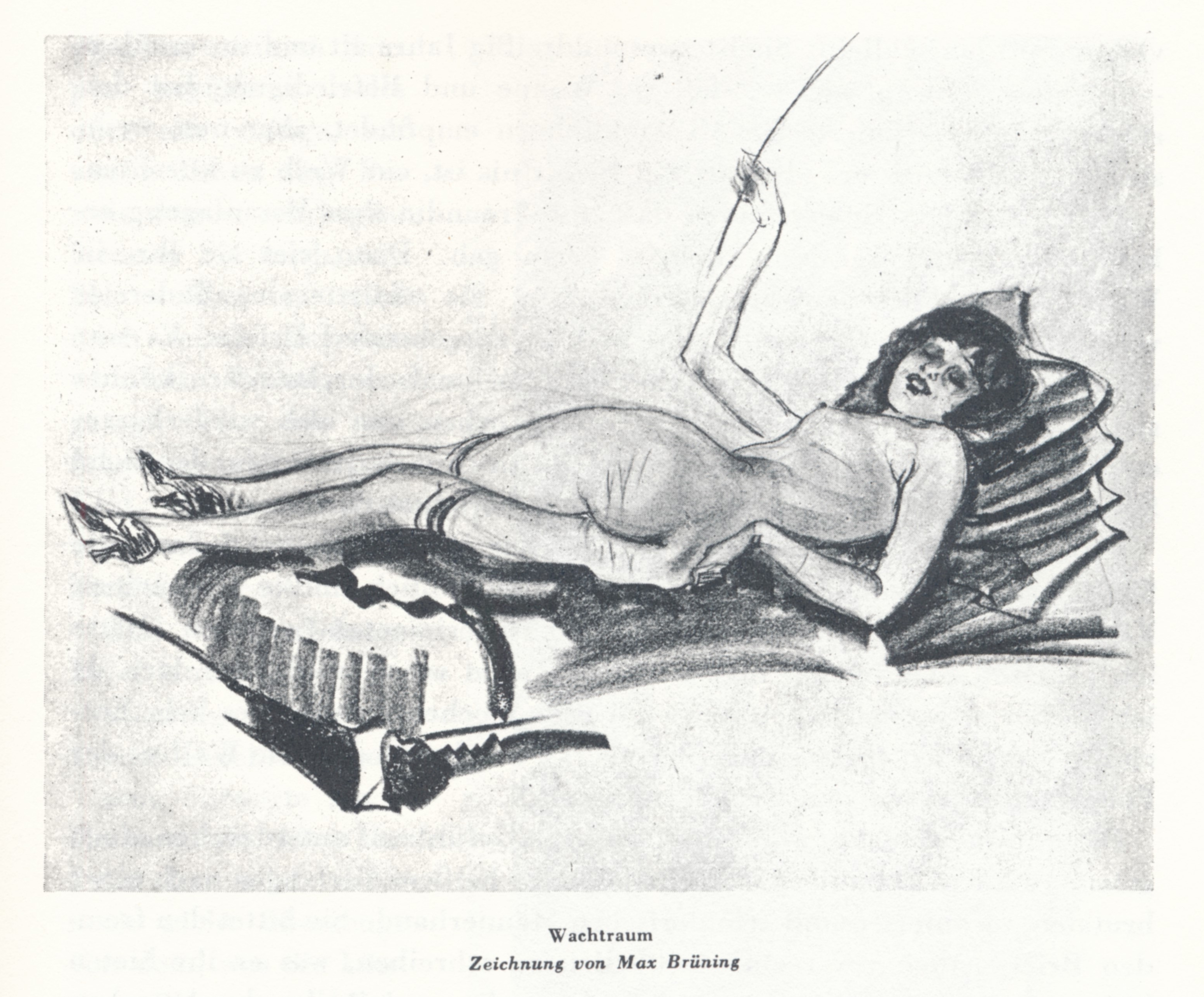
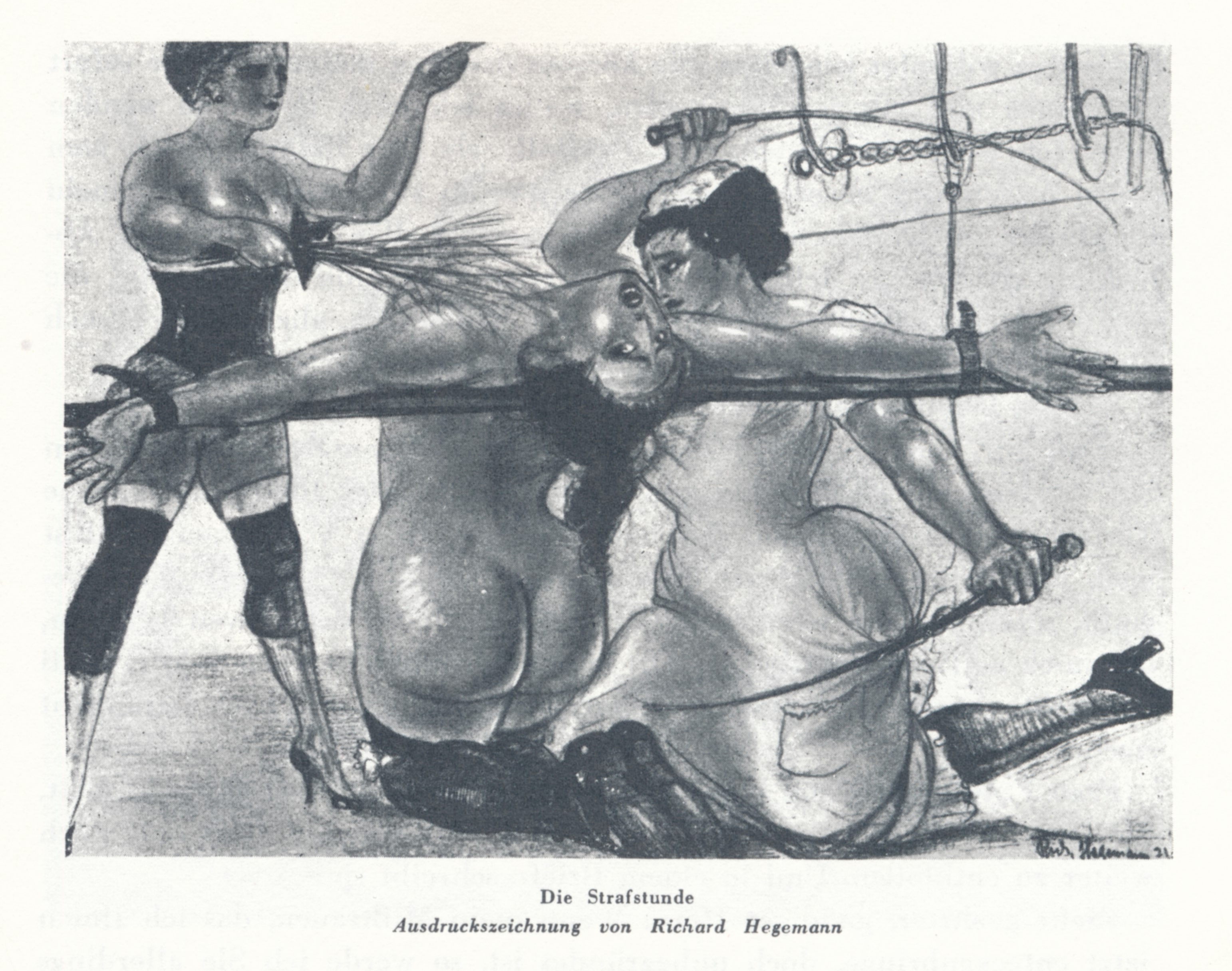
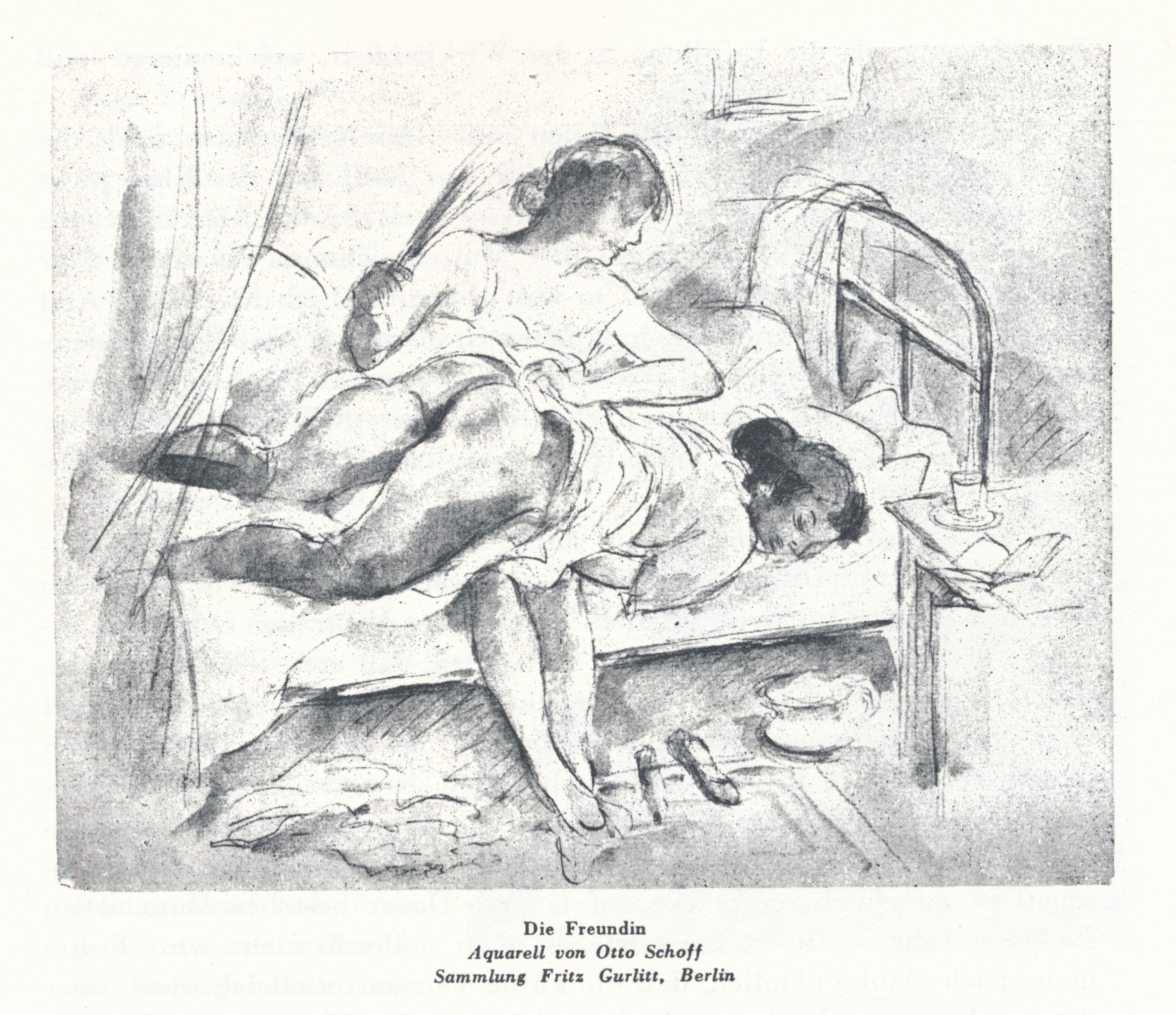
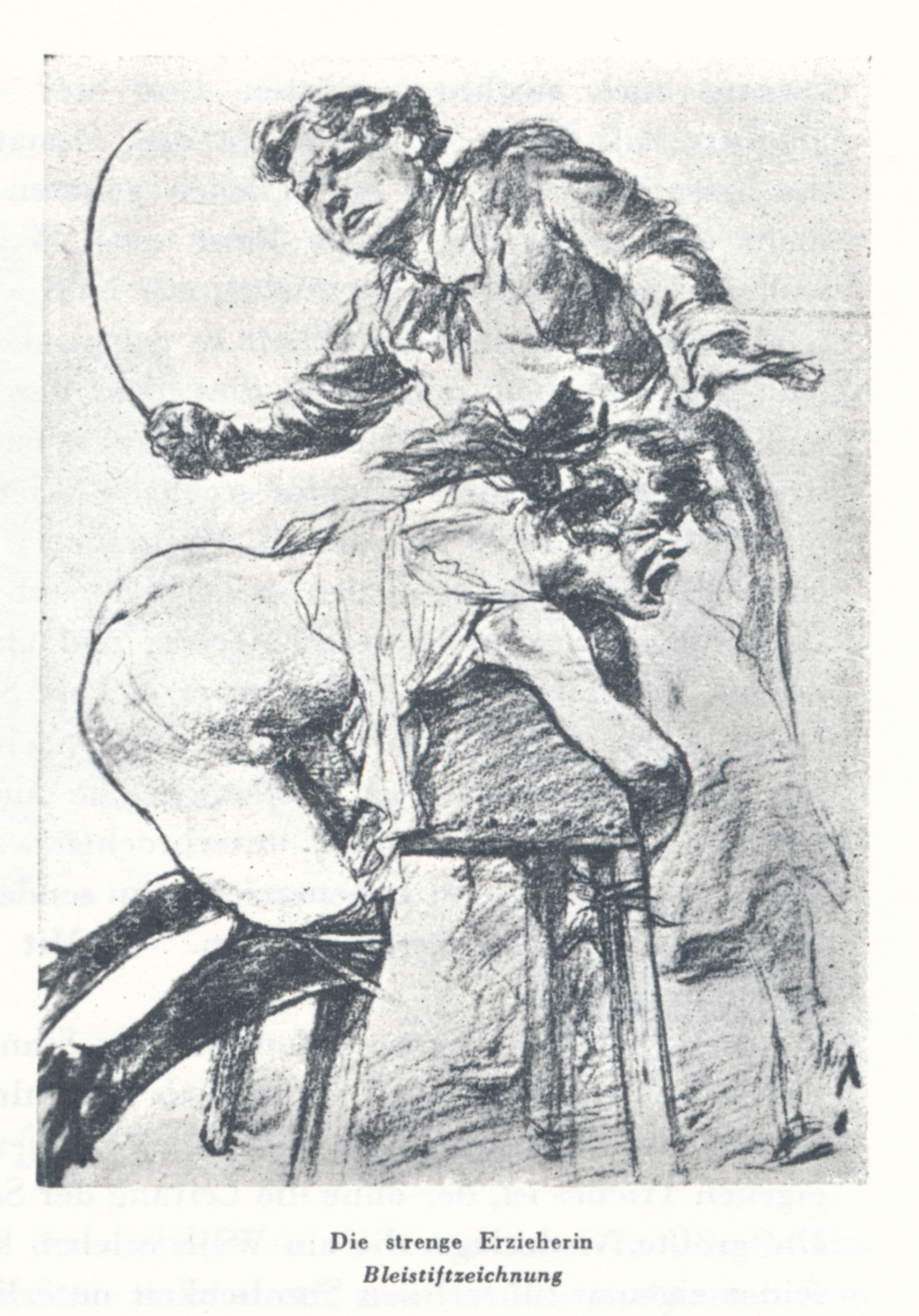
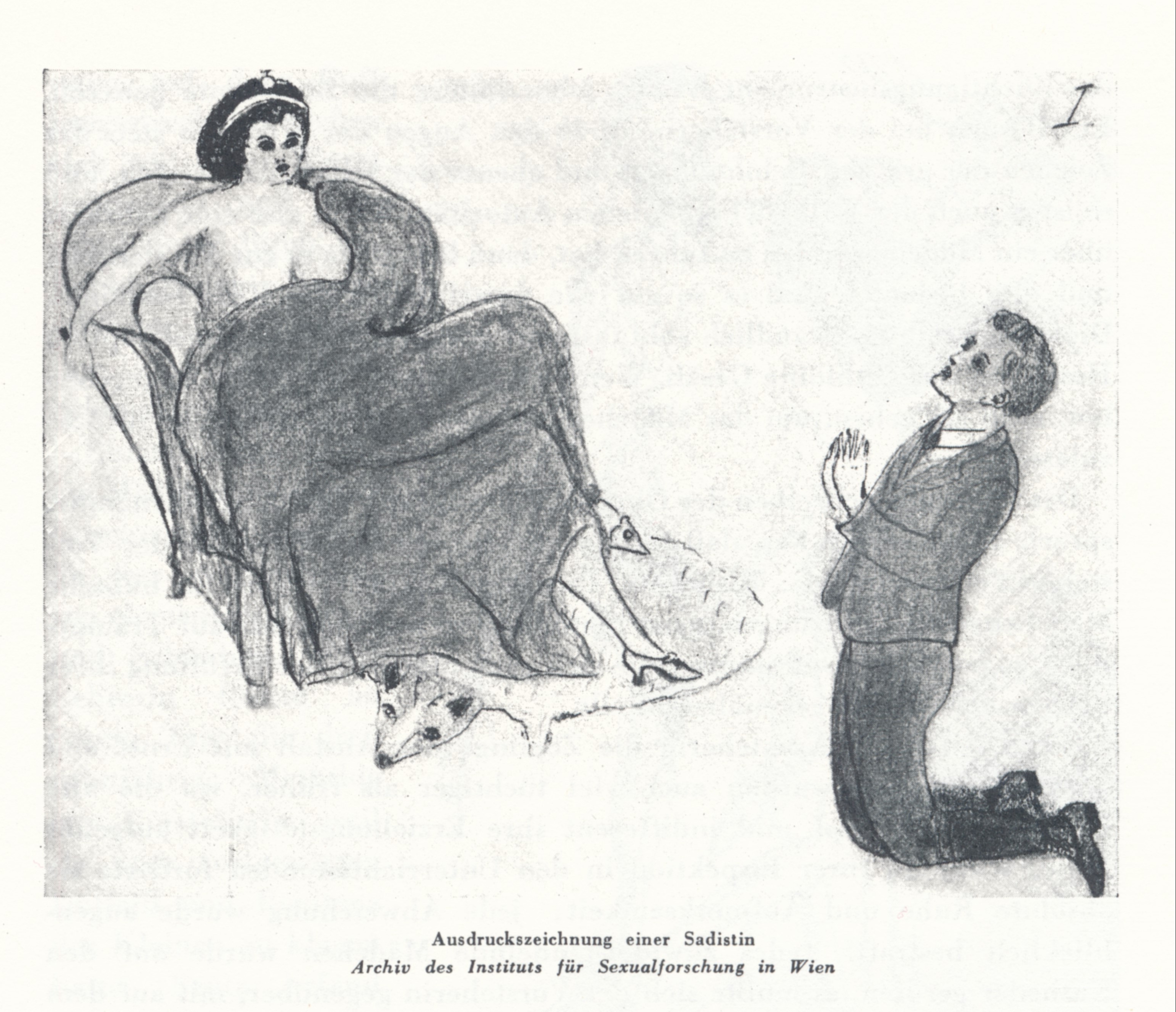
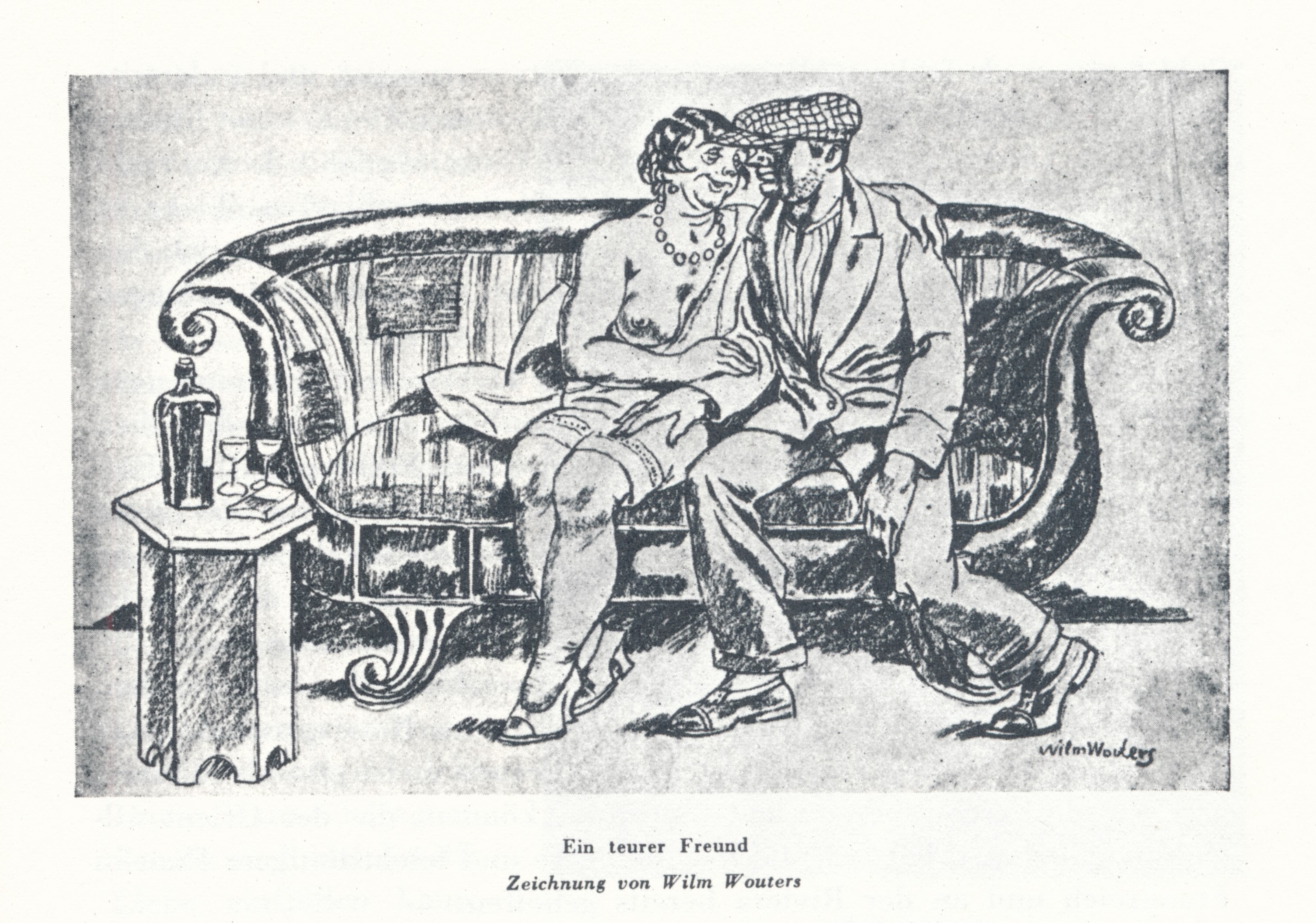
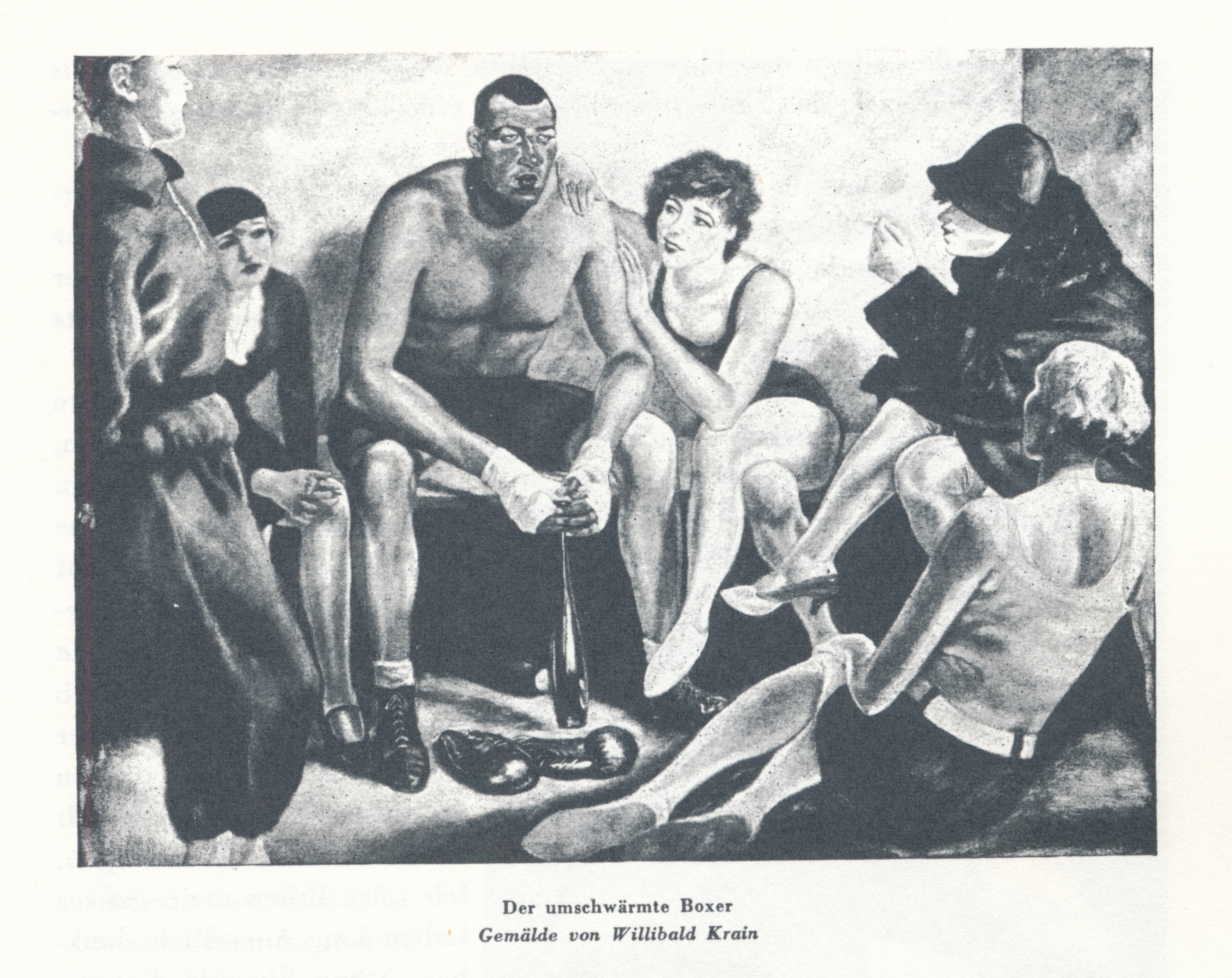
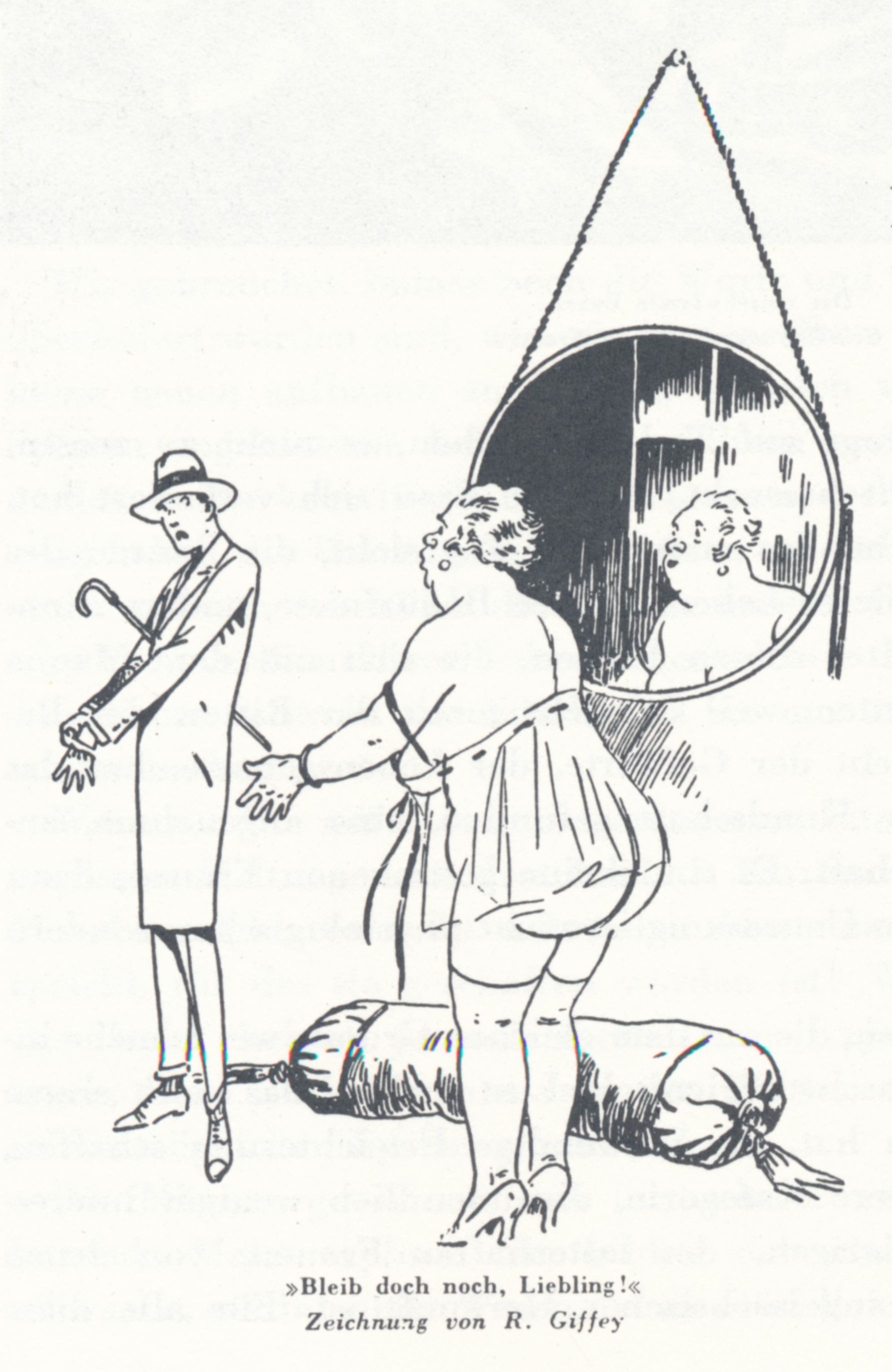
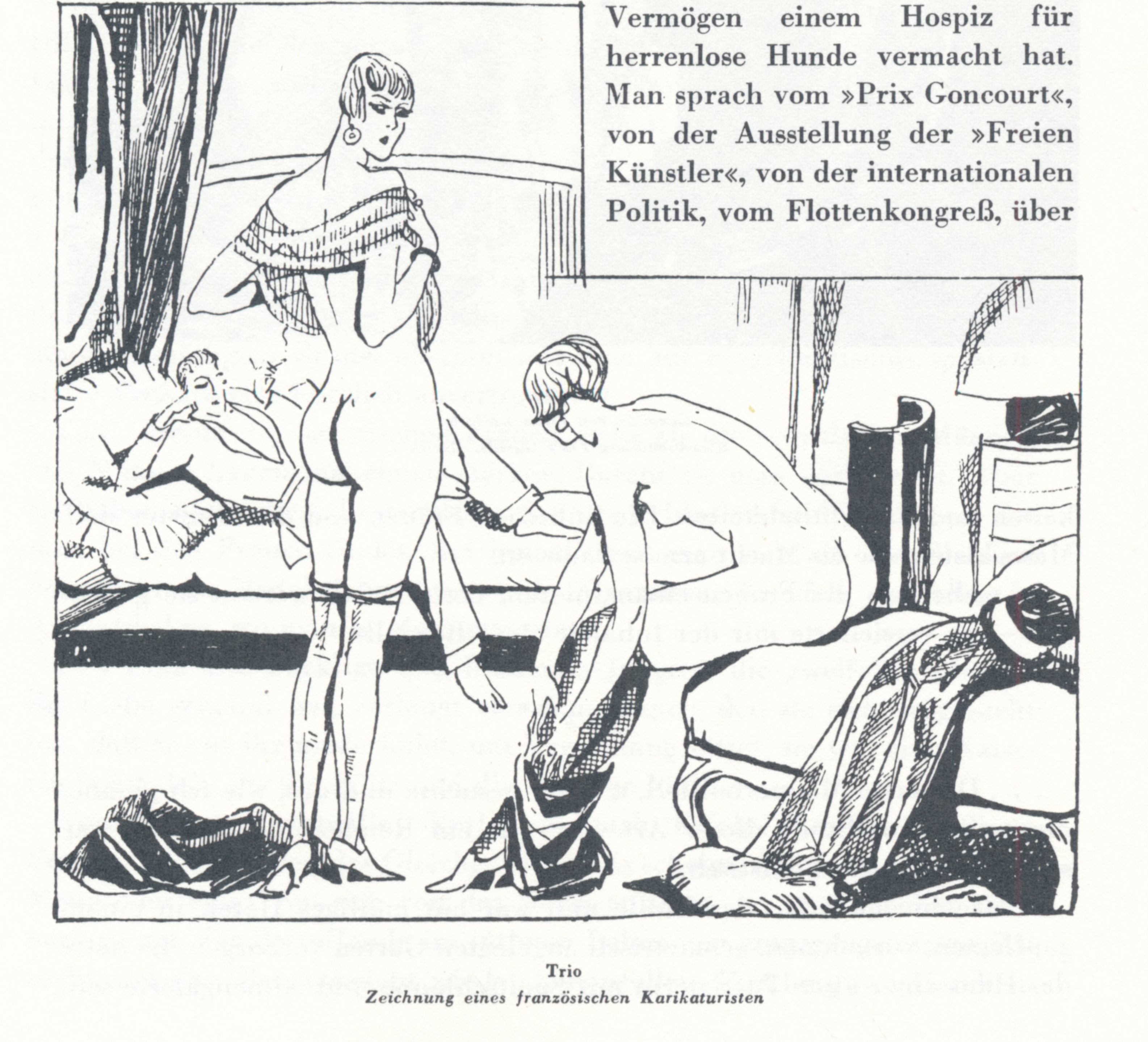
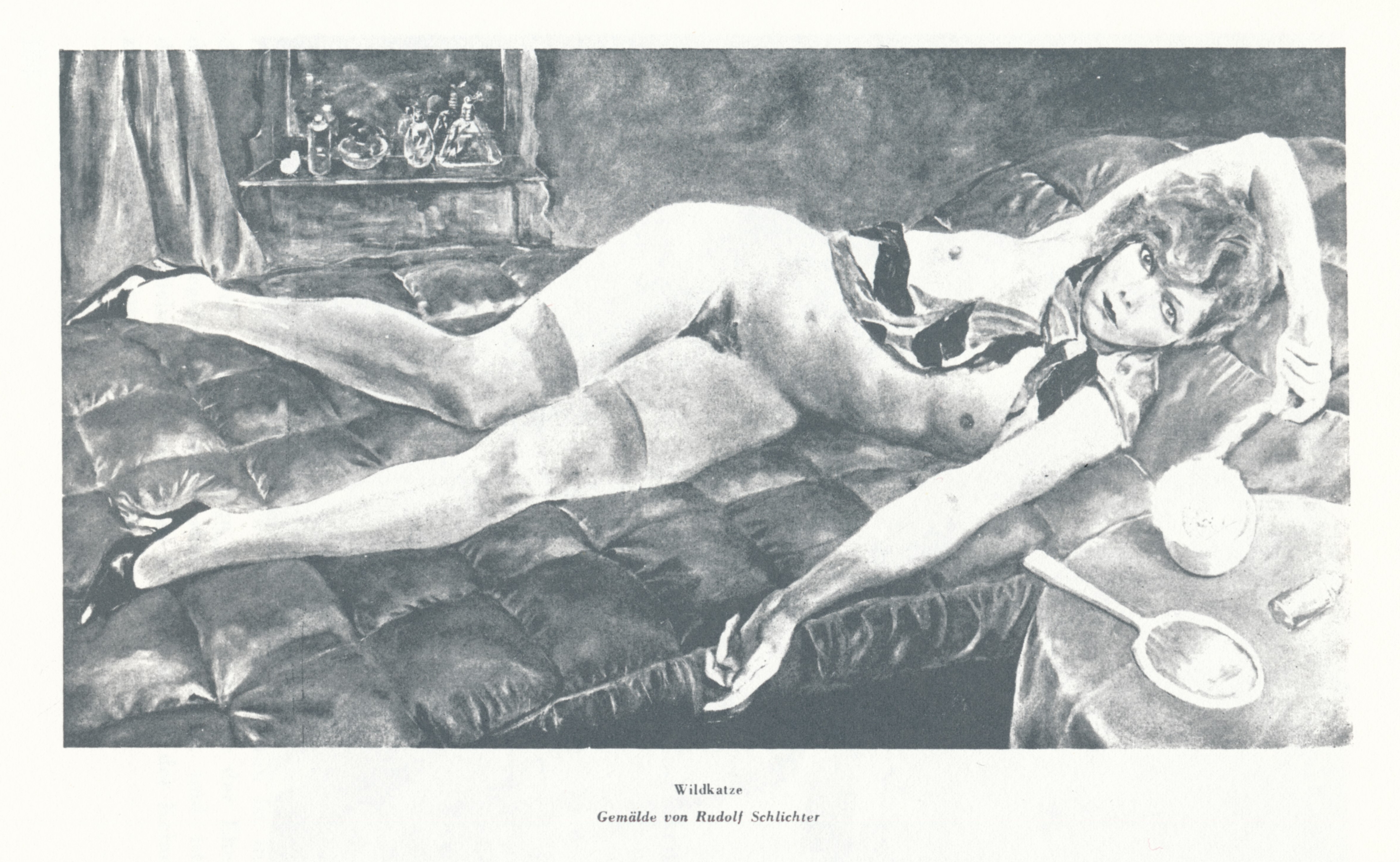
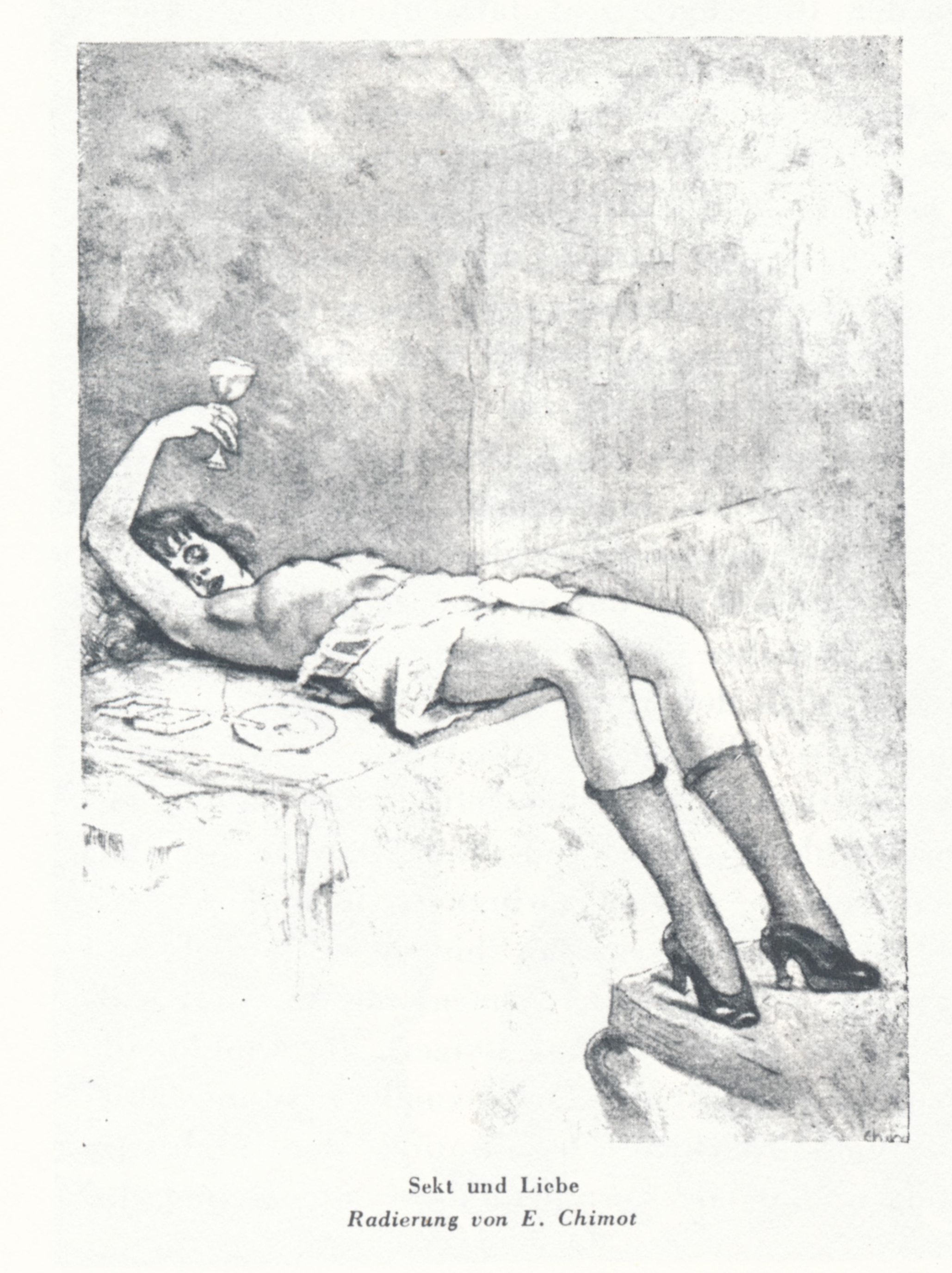
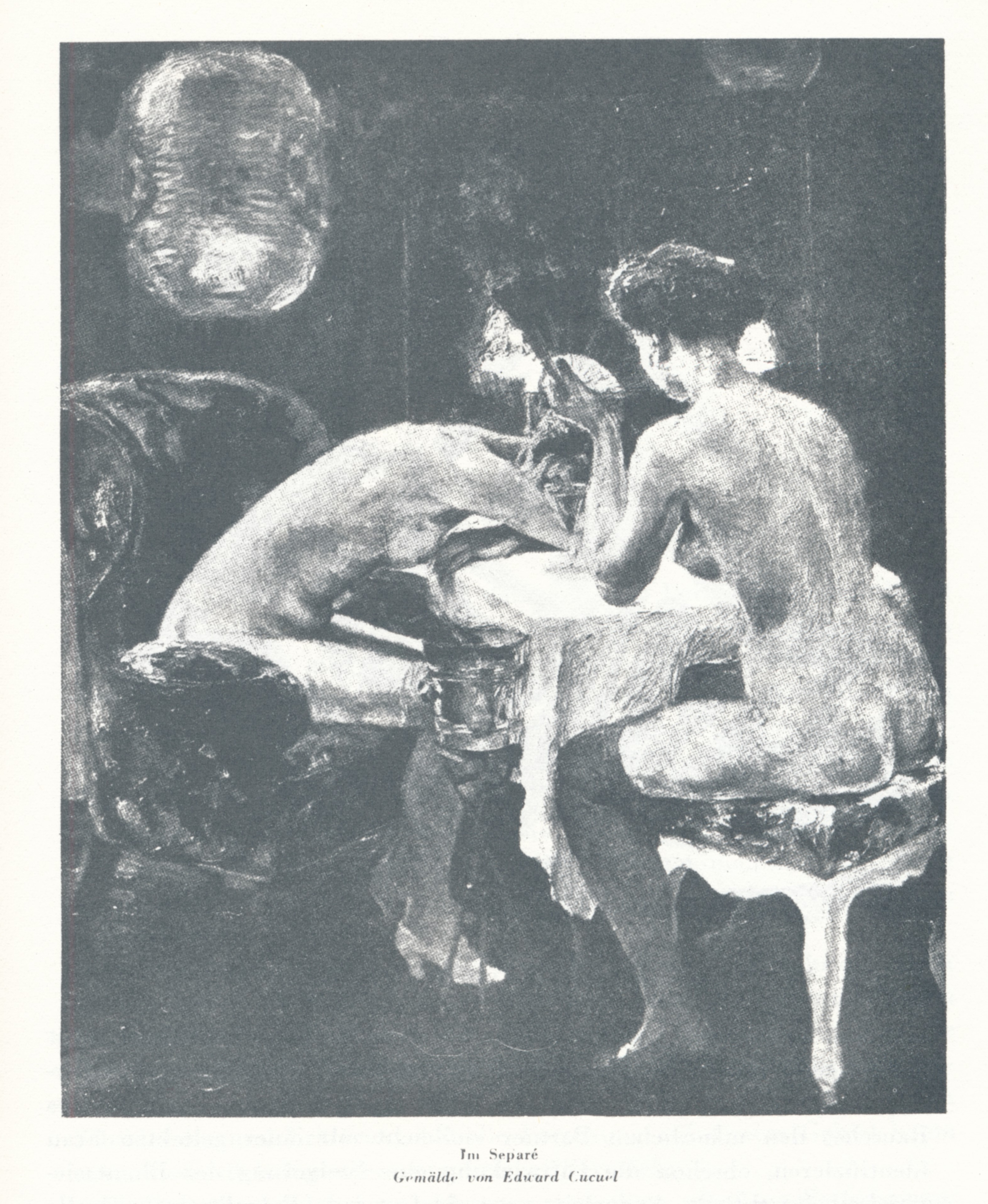
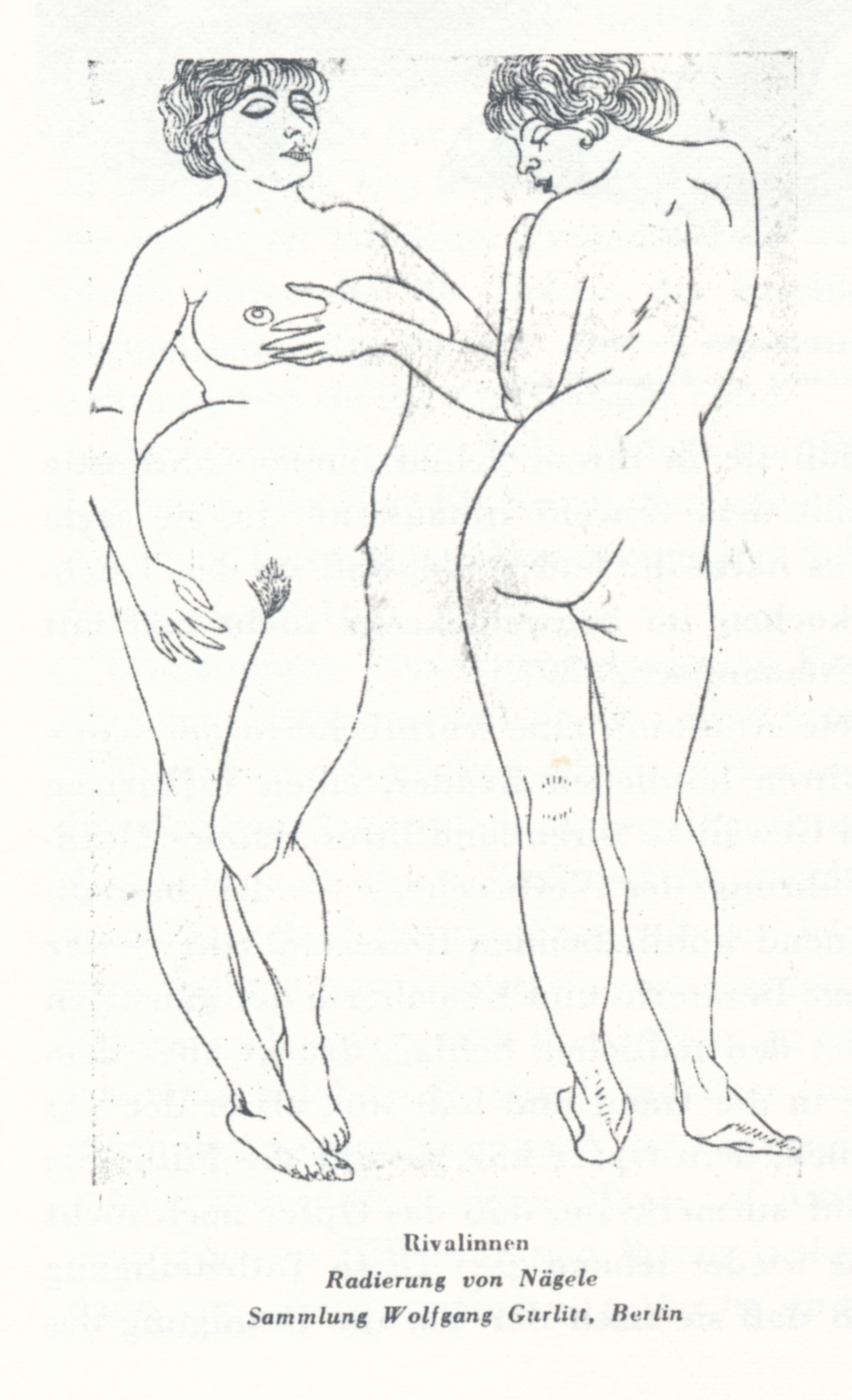
In the final years of the Weimar Republic, when Berlin pulsed with cabarets, experimental sexology, and a daring exploration of every shade of desire, Countess Agnes Eszterházy assembled one of the most provocative anthologies on female sexuality ever published in German. Das Lasterhafte Weib – Bekenntnisse und Bilddokumente zu den Steigerungen und Aberrationen im weiblichen Triebleben. Psychologie und Pathologie der sexuellen Ab- und Irrwege des Weibes, is part confession album, part photographic dossier, and part pseudo-scientific treatise. Its subtitle promises exactly what it delivers: raw personal accounts and visual evidence of “intensifications and aberrations” in women’s sexual drives, together with psychological and pathological analyses of every “deviation and wrong path” the female libido could take.
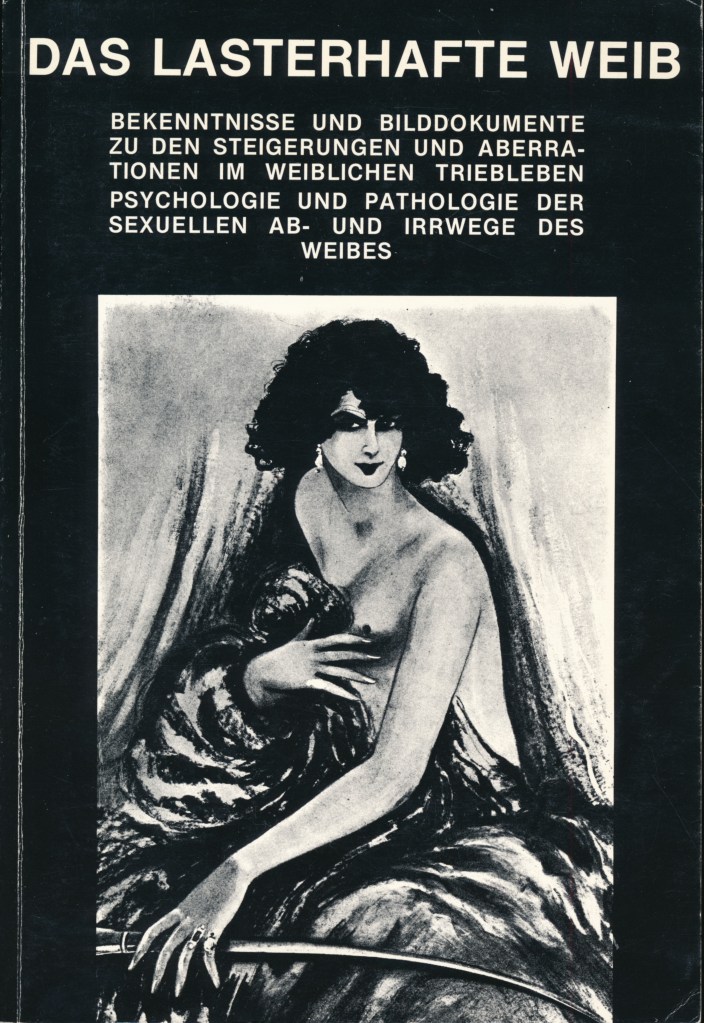
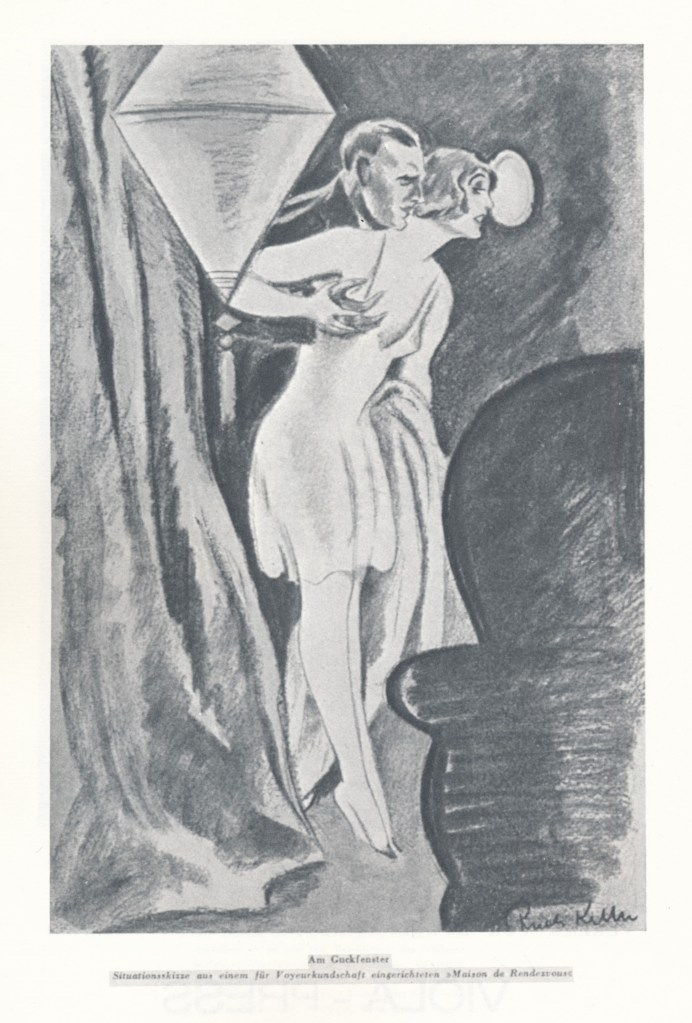
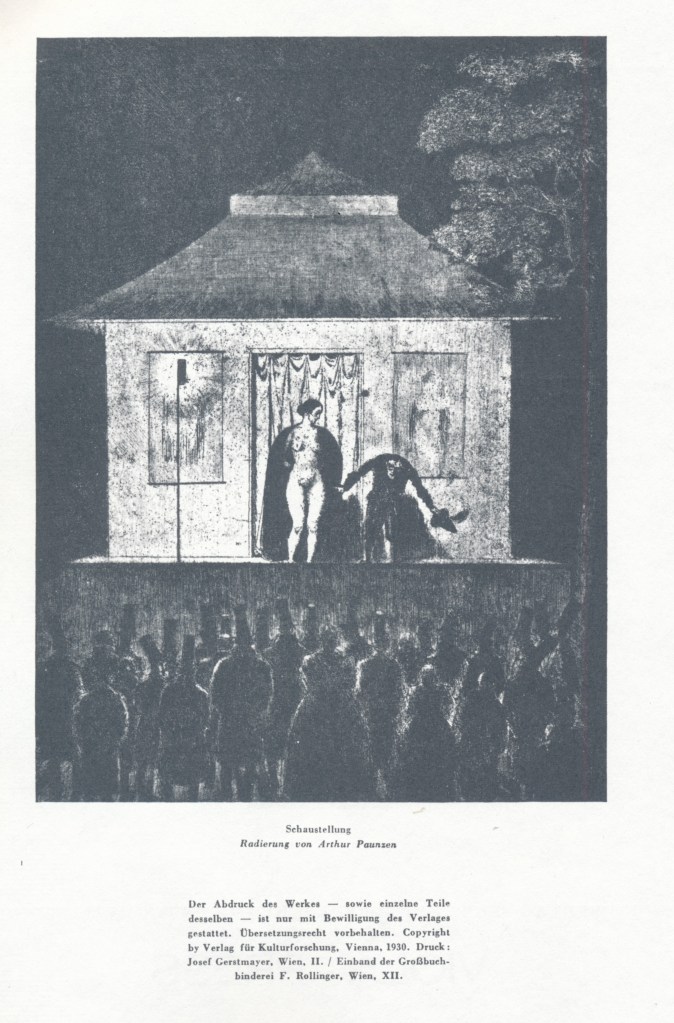
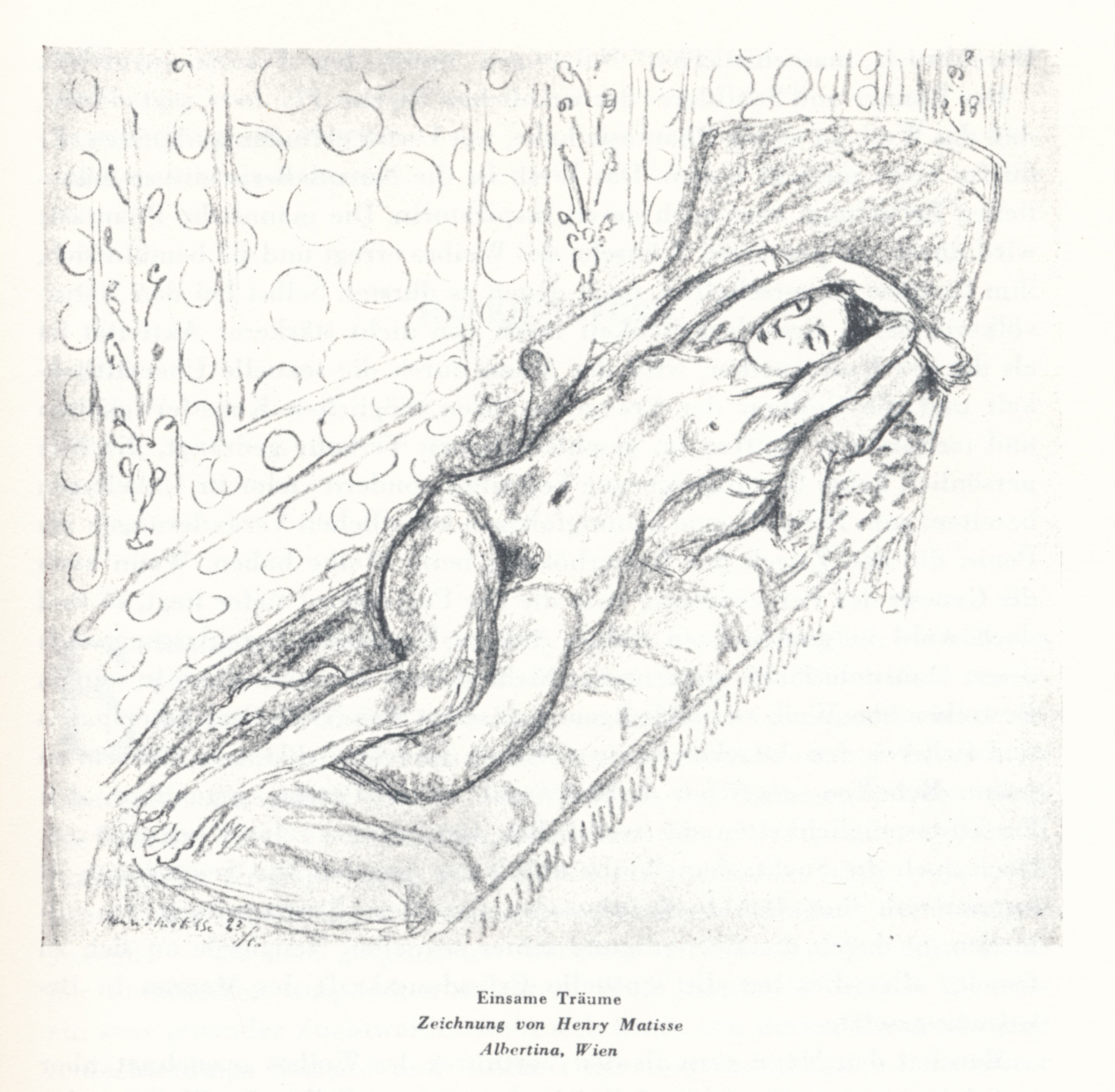
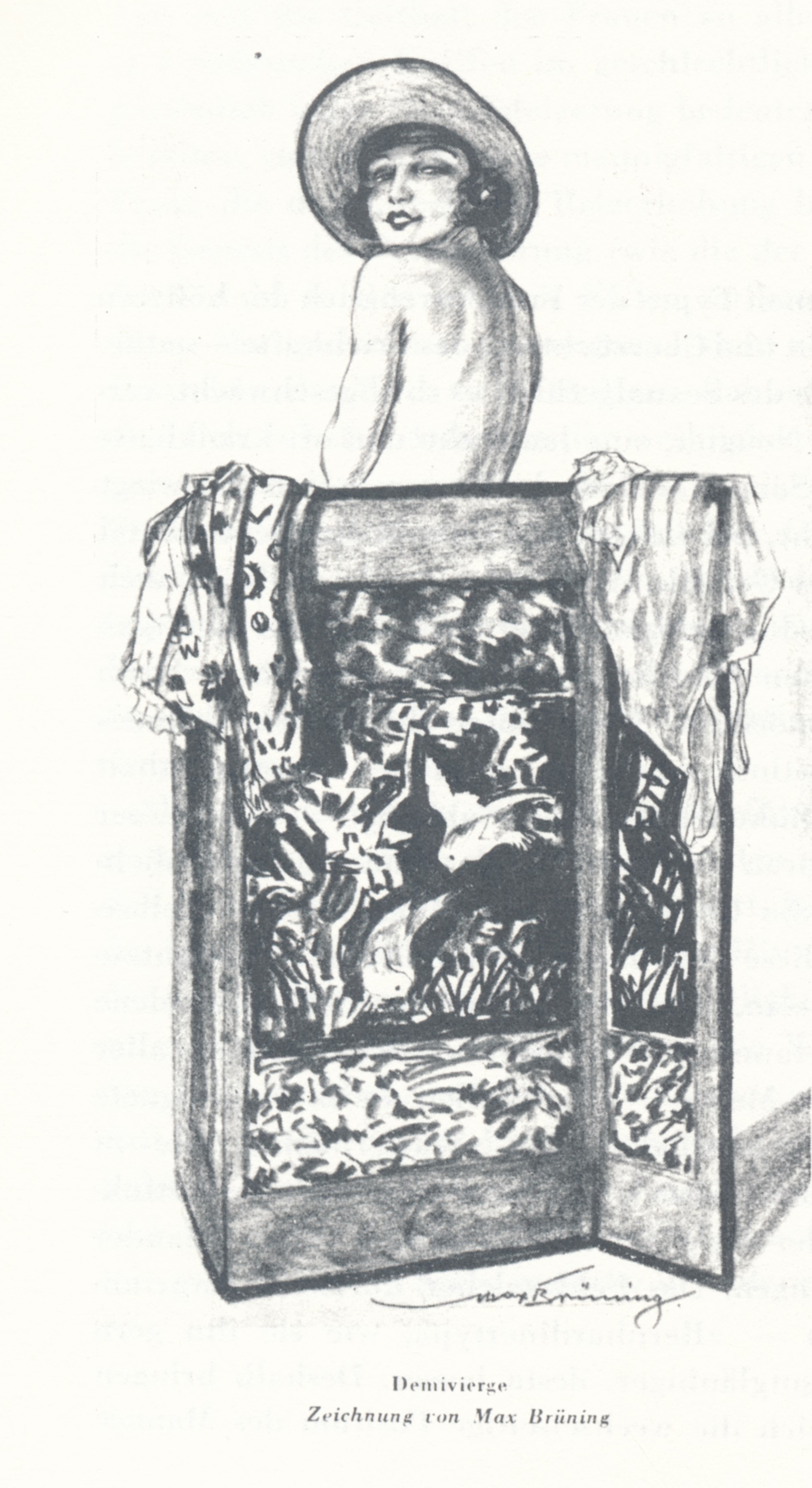
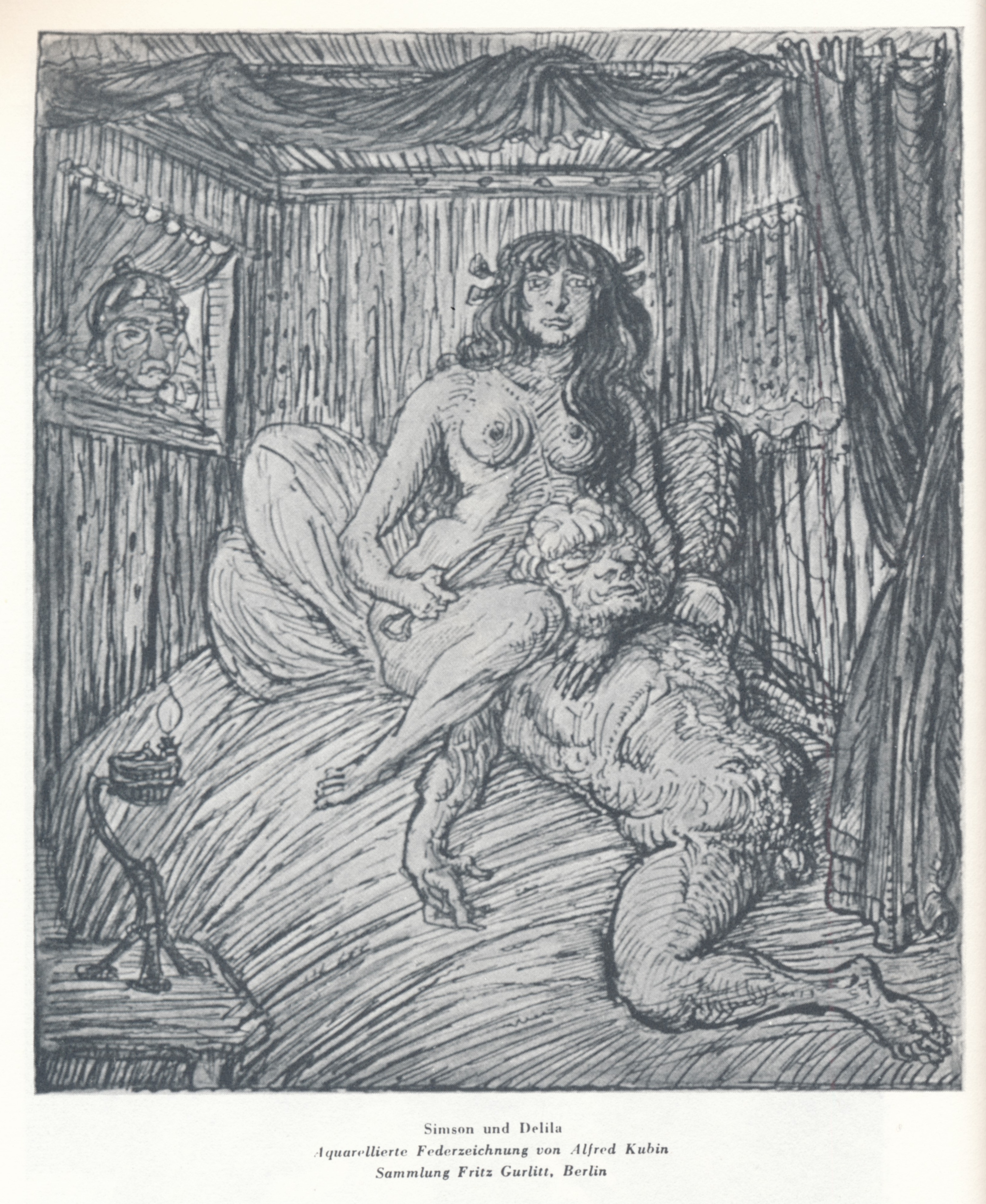
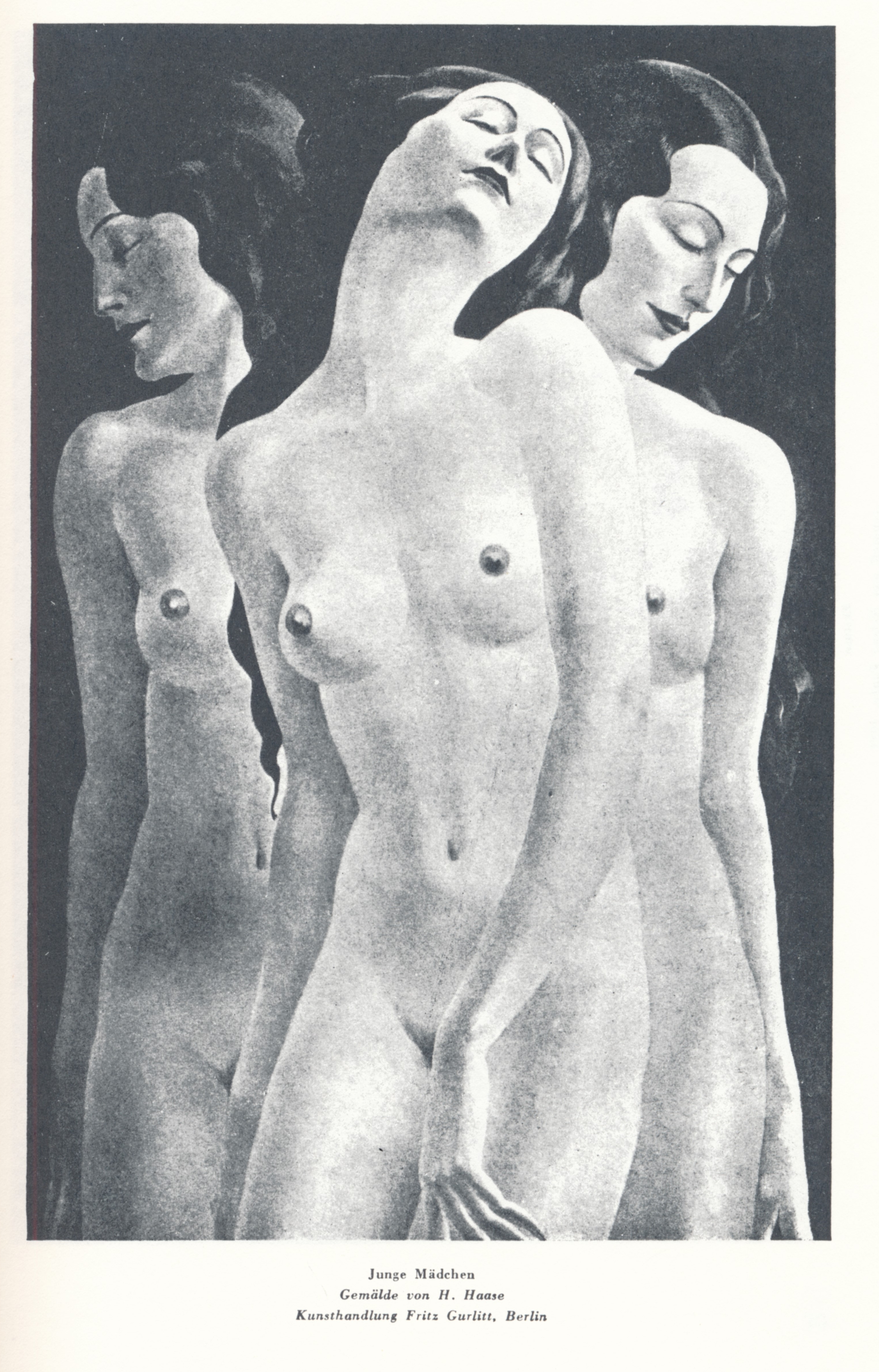
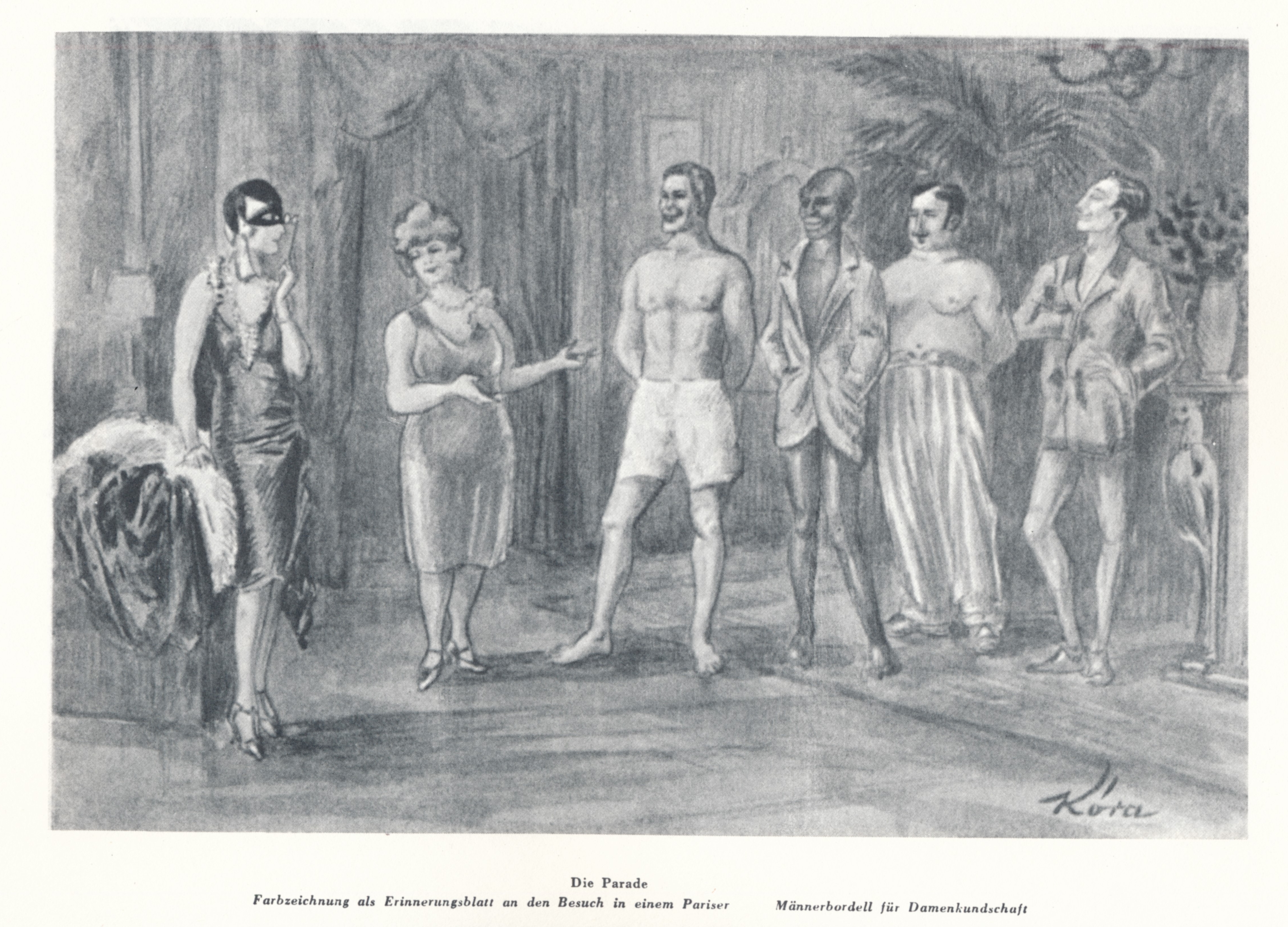
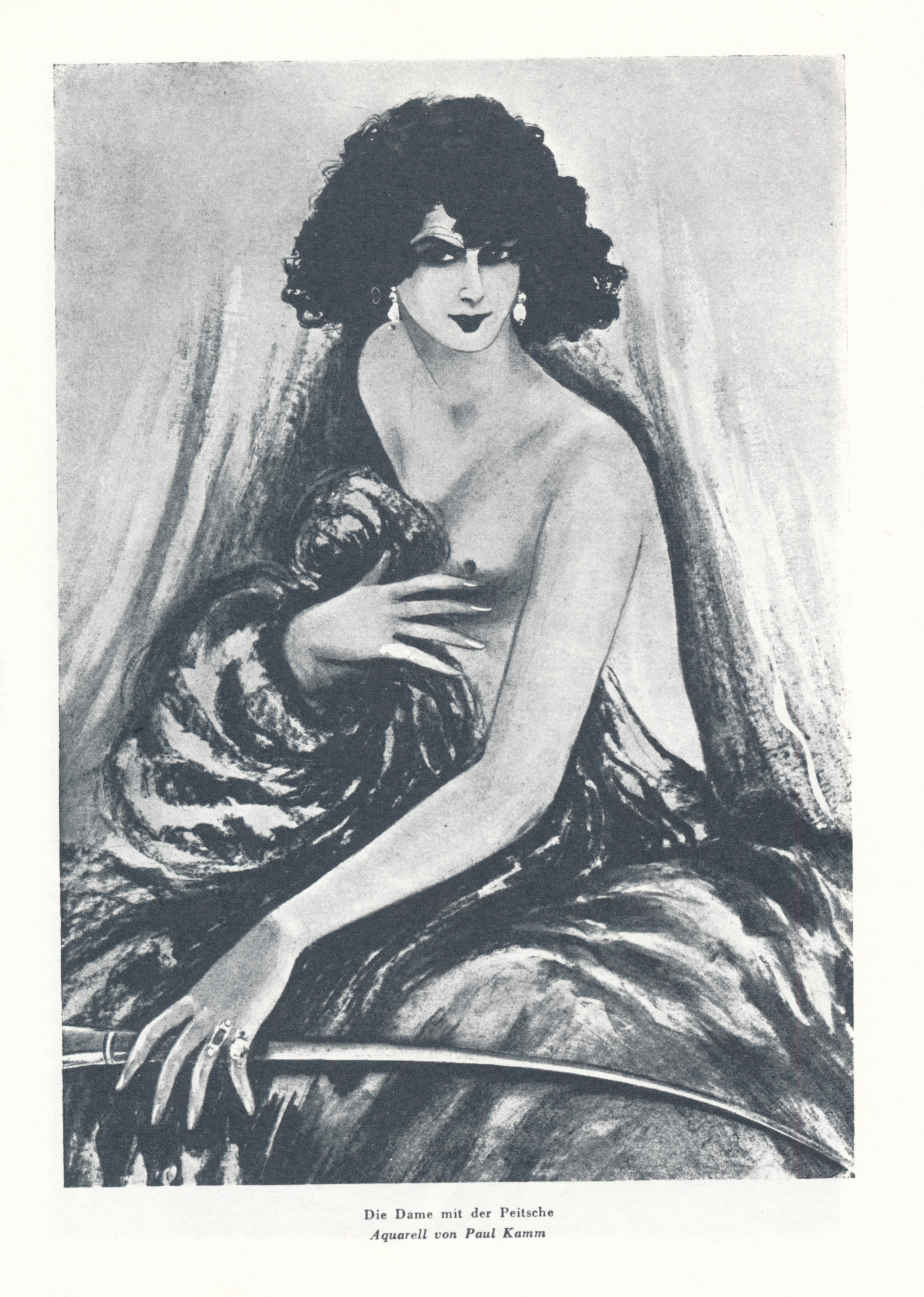
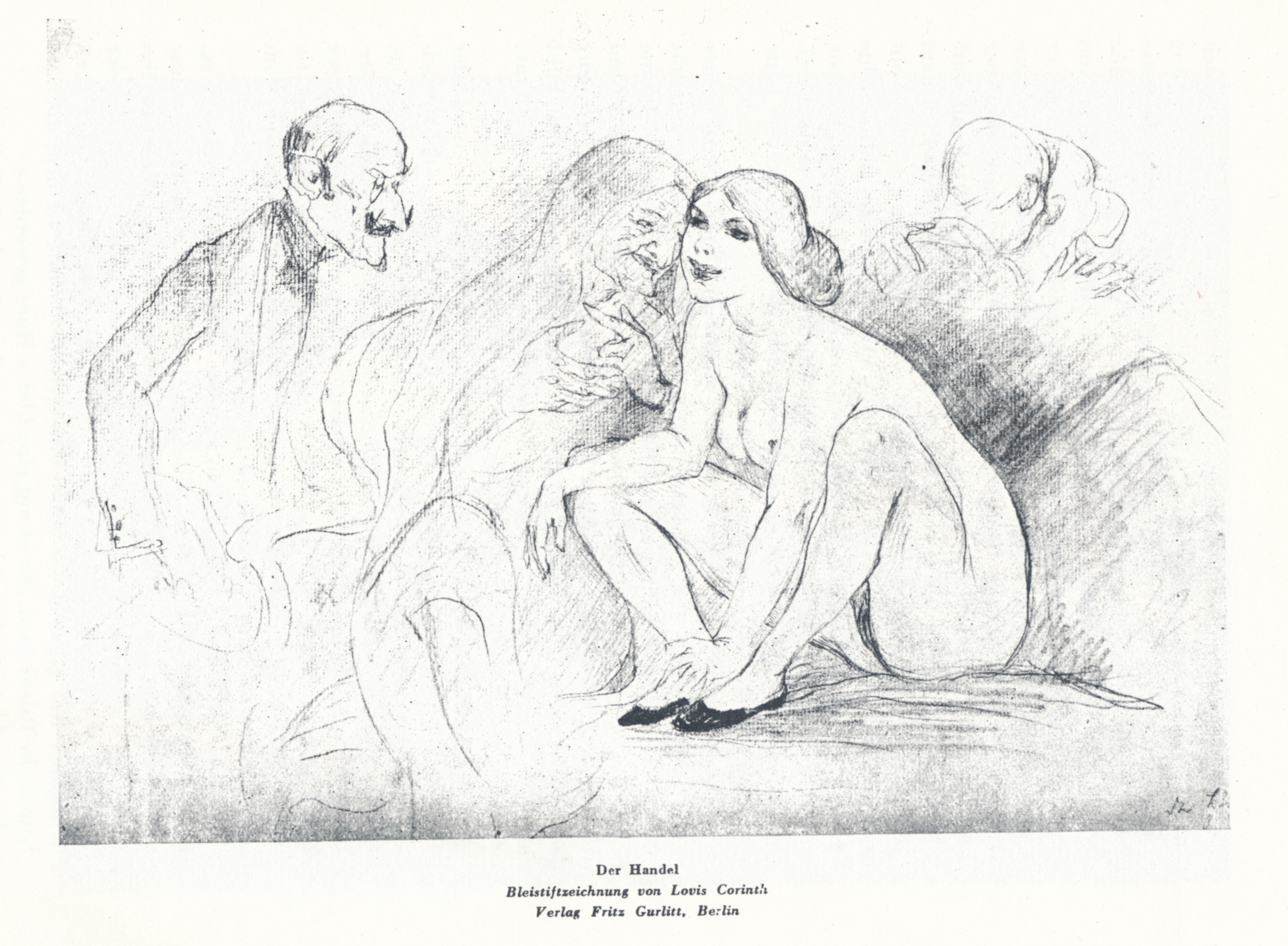
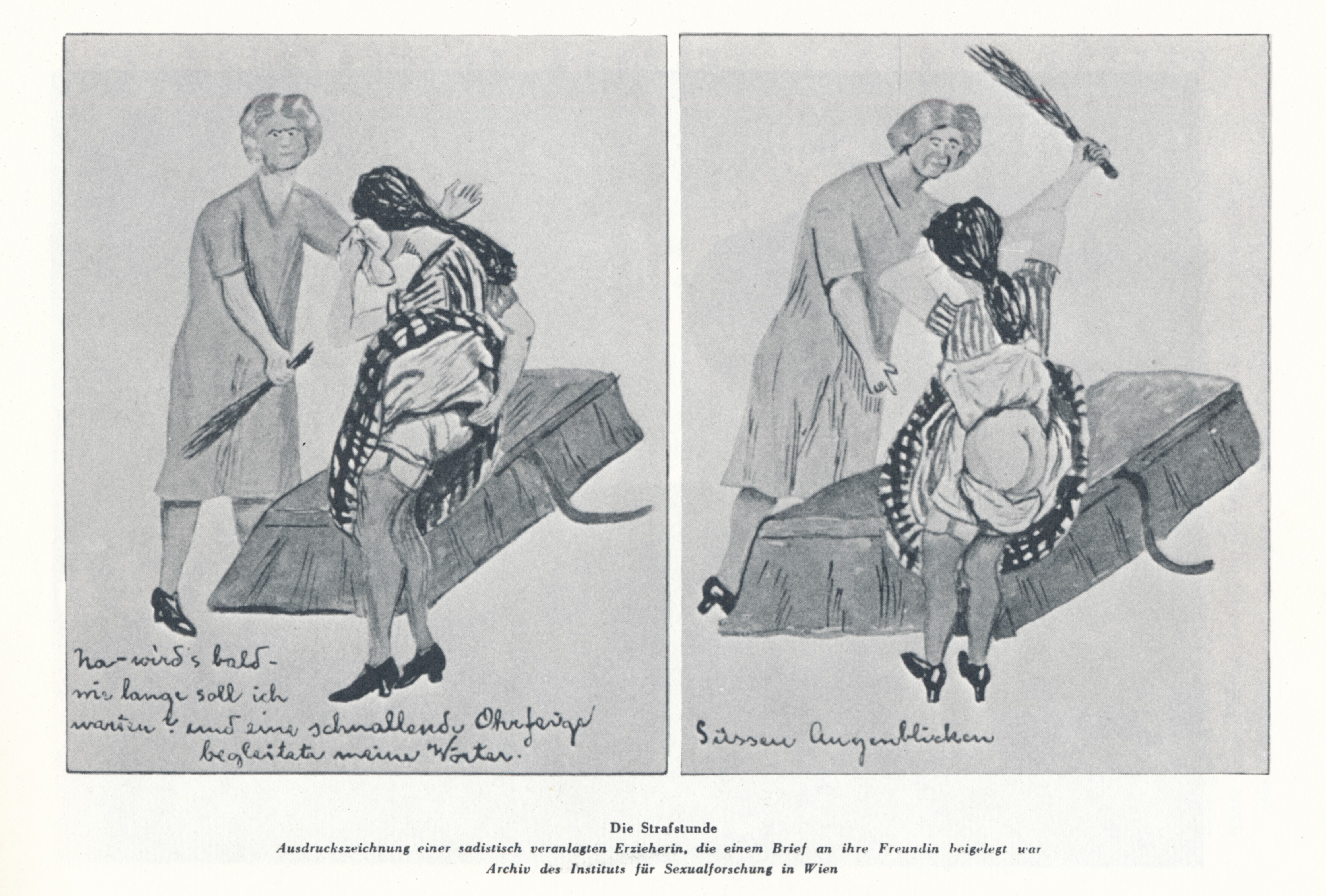
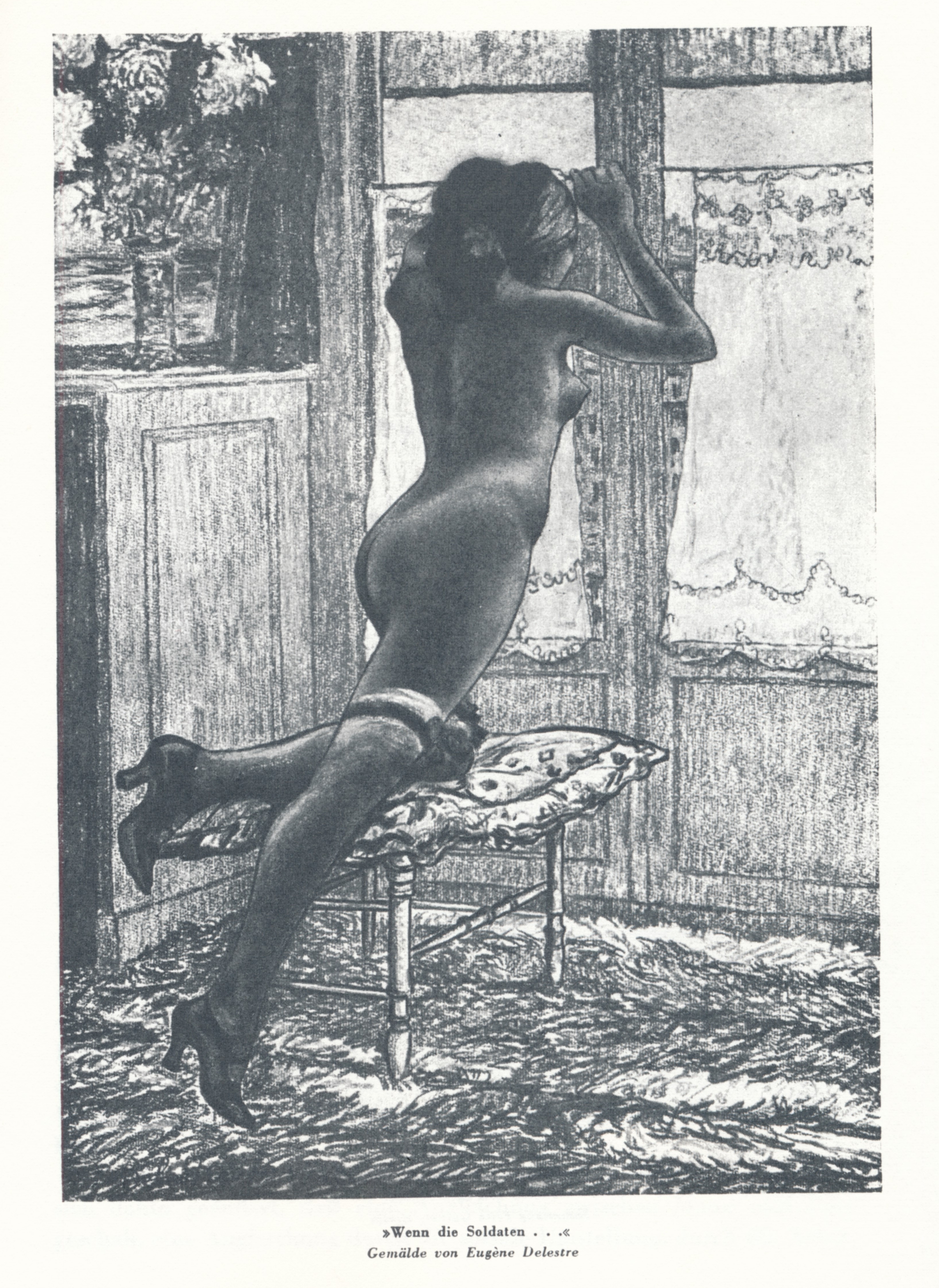
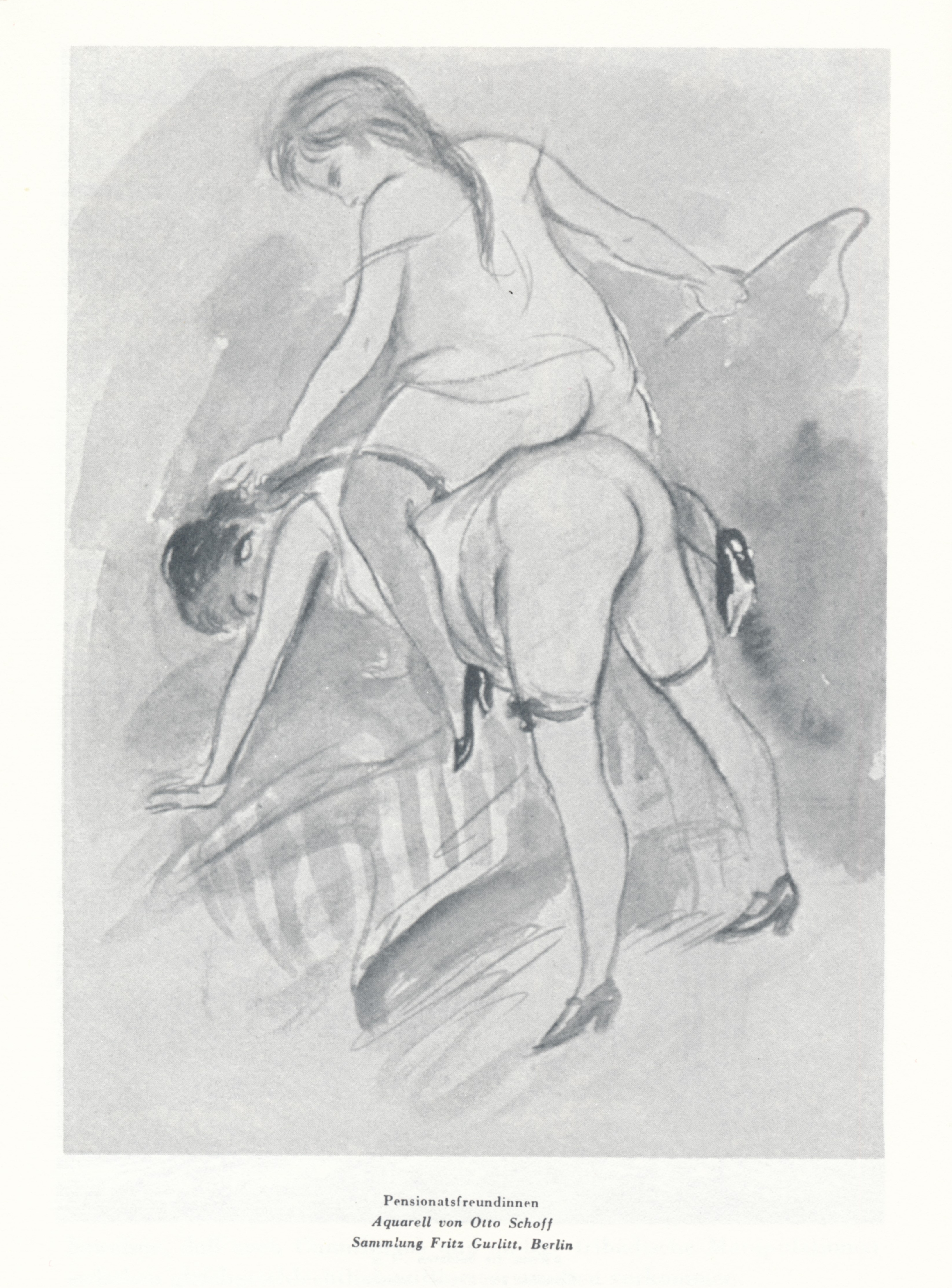
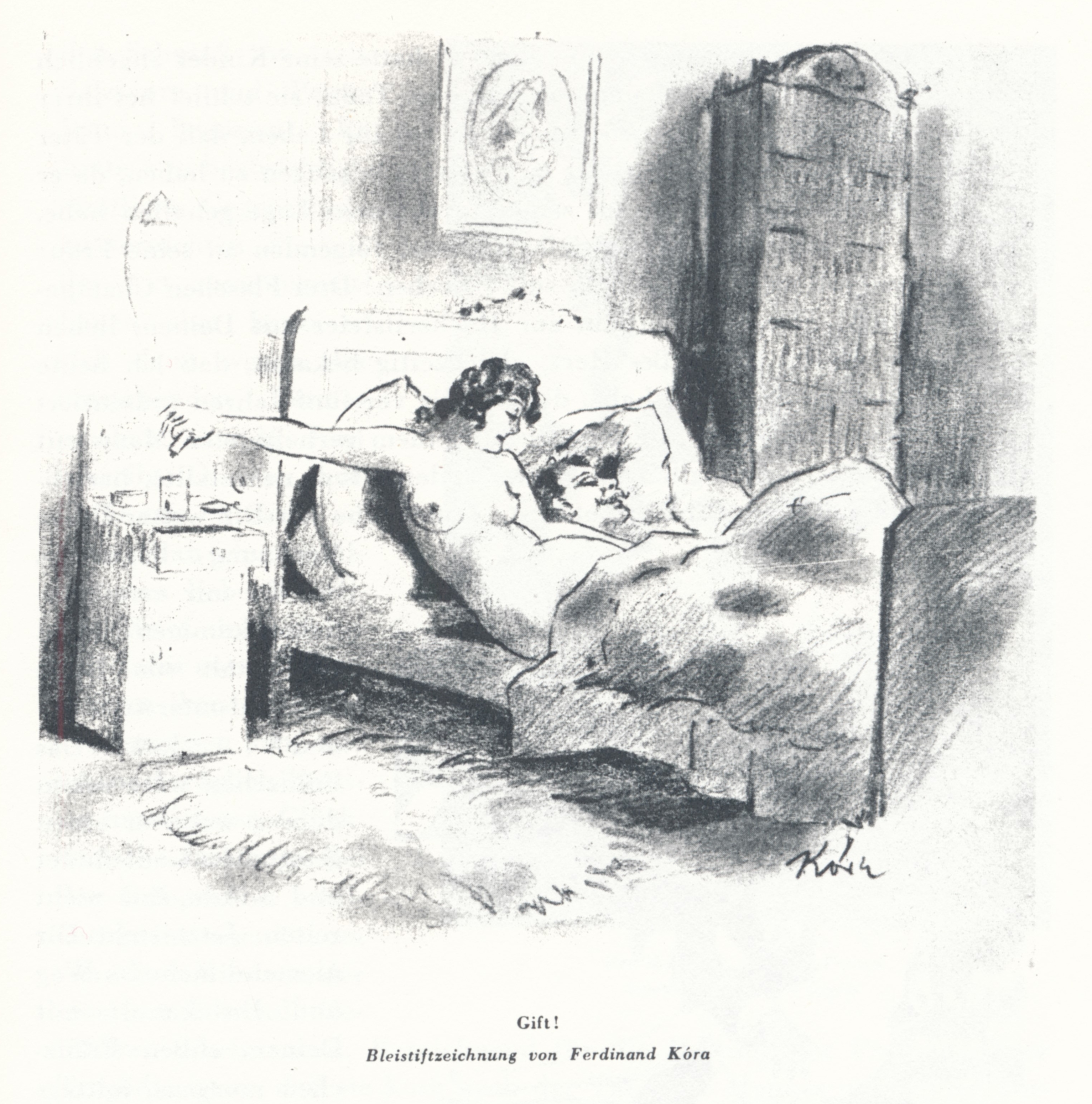
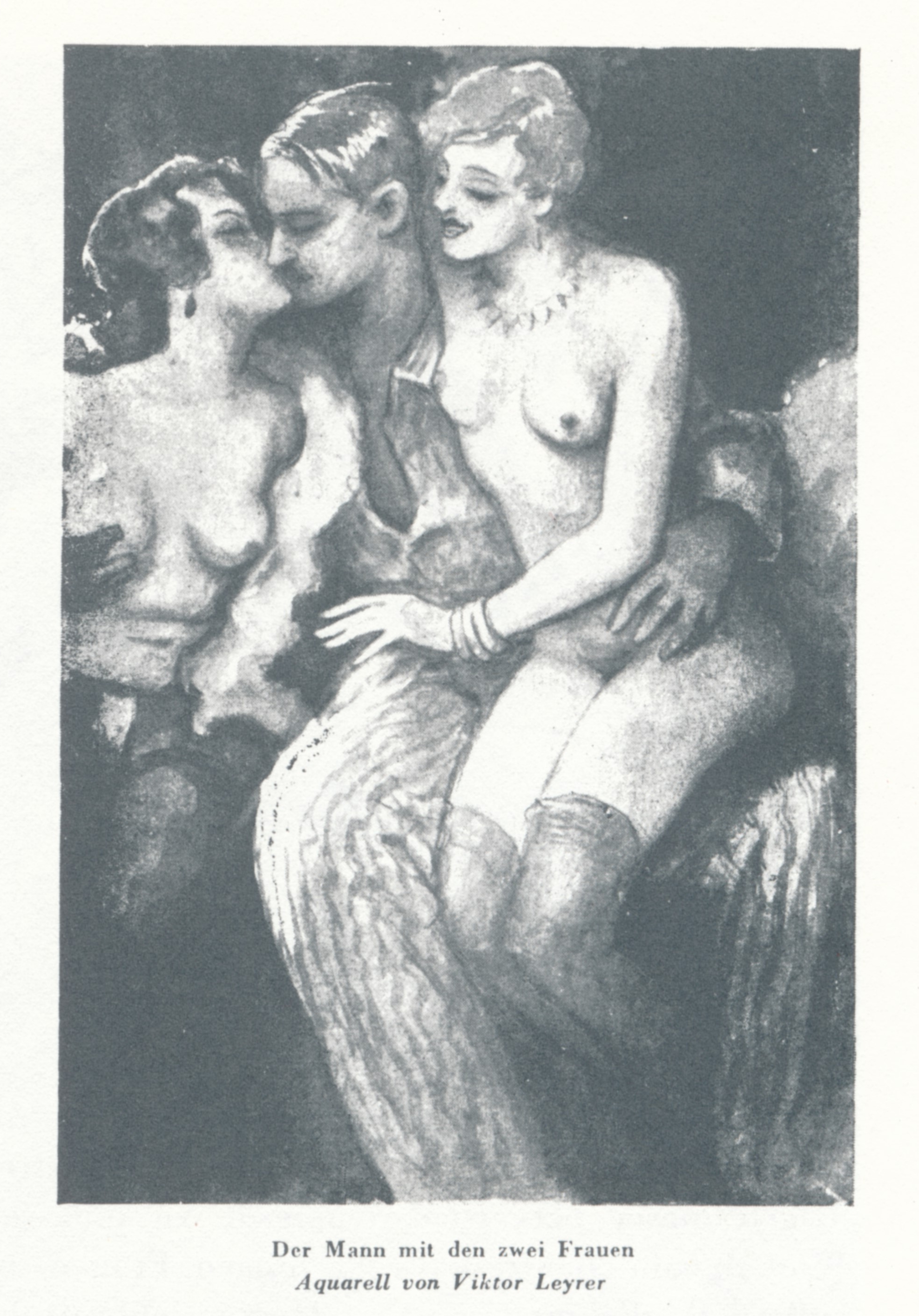
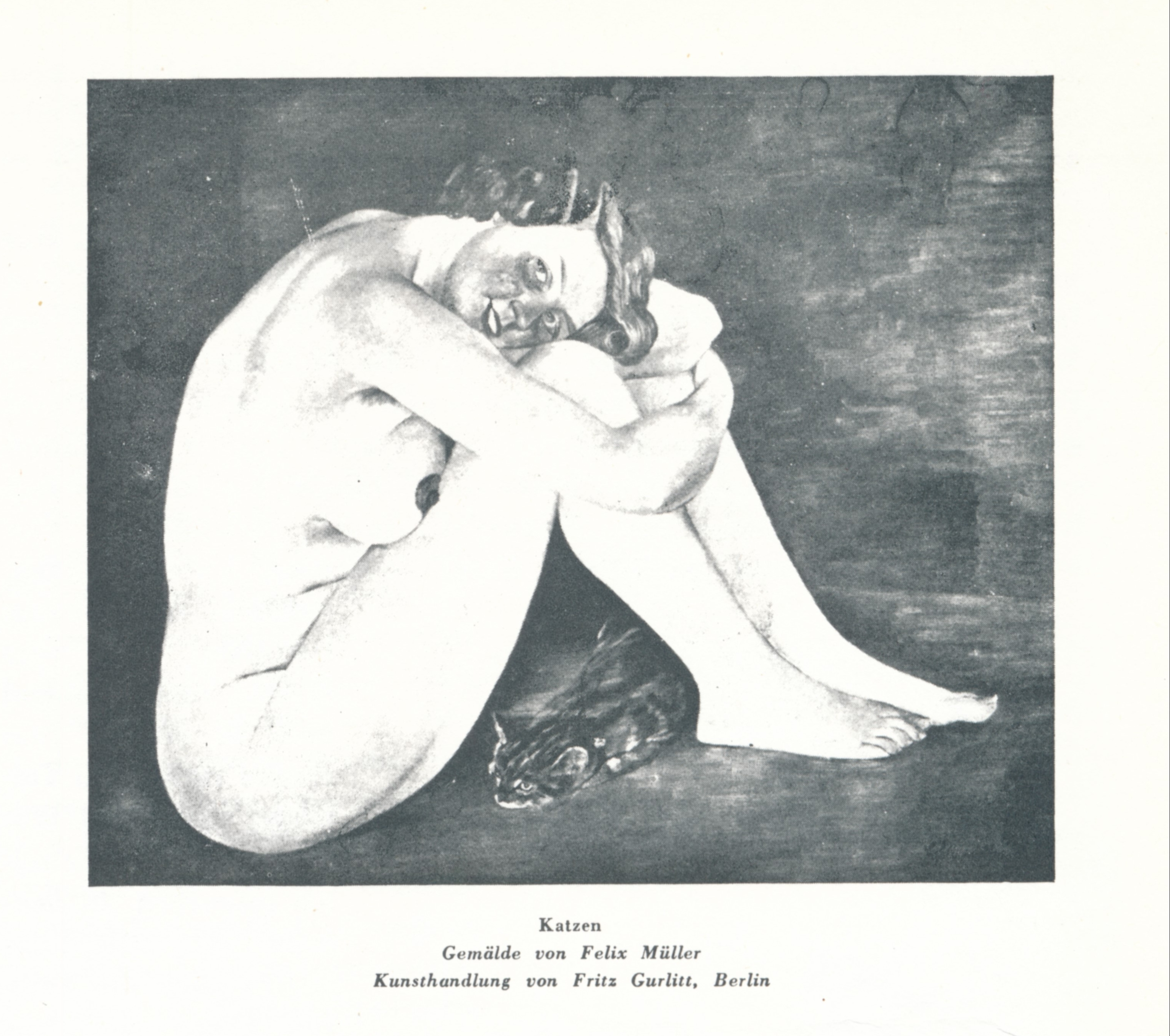
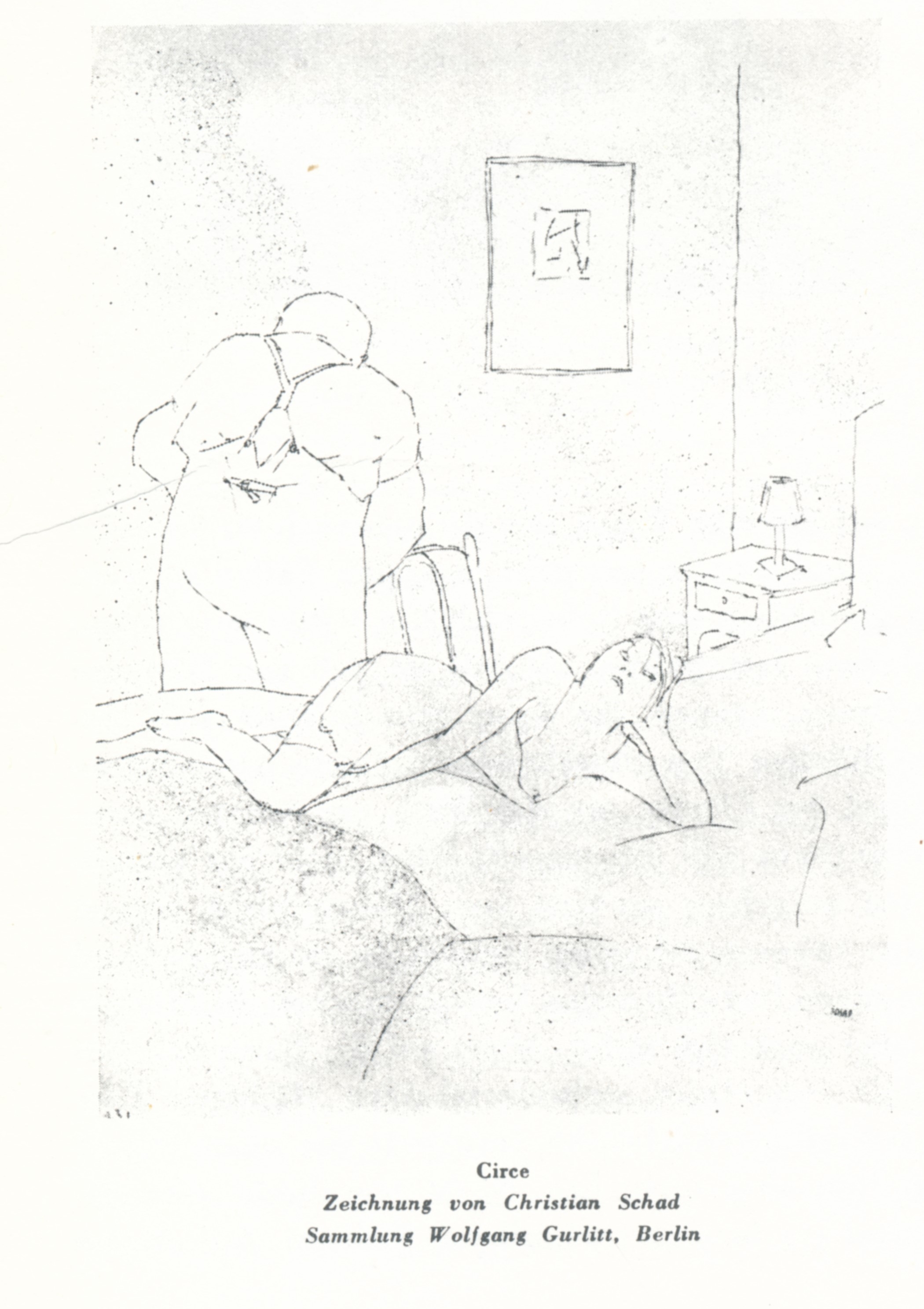
The striking cover sets the tone perfectly: a sultry, dark-haired beauty in a dramatic, half-draped pose, one hand cupping her breast, the other resting on a riding crop or whip. It is pure Weimar eroticism: elegant, decadent, and unapologetically carnal. Inside, readers found a mixture of first-person “confessions,” clinical case studies, and a generous helping of Bilddokumente: vintage photographs and illustrations depicting flagellation, bondage, female domination, lesbian encounters, fetish wear, and various forms of sadomasochistic play. The book sits squarely in the tradition of early 20th-century sexological literature (think Krafft-Ebing’s Psychopathia Sexualis meets underground fetish photography), yet it was marketed with the same sensational flair as the era’s most explicit erotica.
What makes Das Lasterhafte Weib especially fascinating for BDSM historians is its unfiltered focus on female agency in kink. While many contemporary works portrayed women solely as objects of male desire, Eszterházy’s anthology gives voice (and imagery) to women as active participants, dominatrices, masochists, sapphic lovers, and everything in between. It treats female sadism and masochism not as rare curiosities but as natural extensions of the “female Triebleben” (sexual instinct).
The volume even includes Ruth Margarete Roellig’s groundbreaking essay “Lesbierinnen und Transvestiten” (Lesbians and Transvestites), offering one of the earliest sympathetic portrayals of Berlin’s queer nightlife.
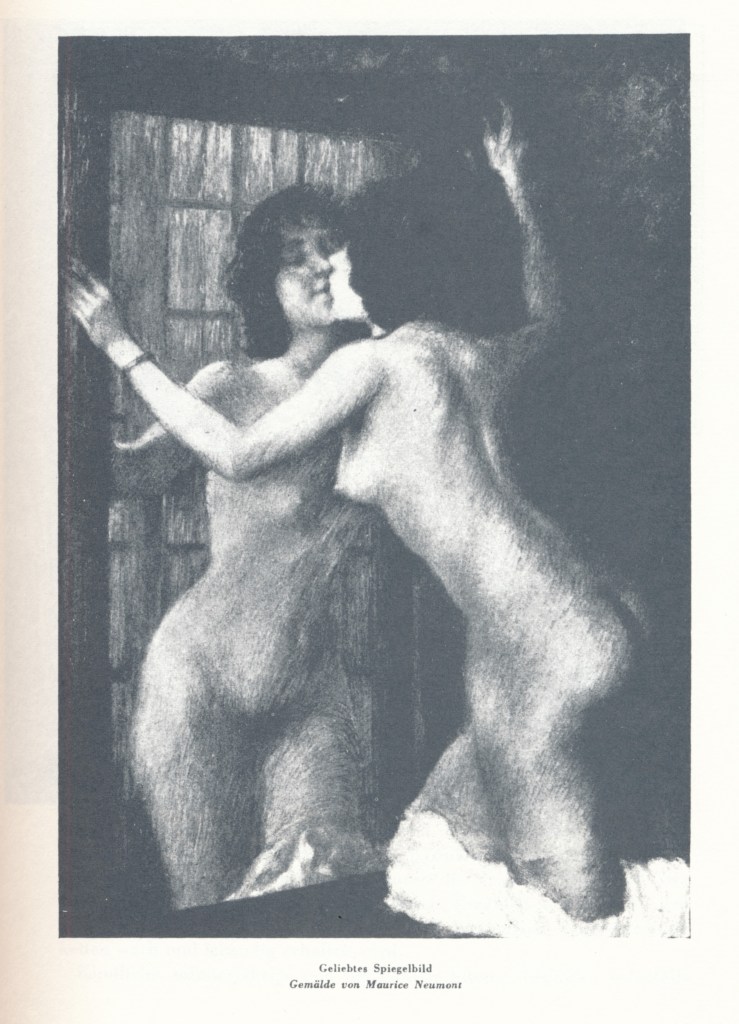
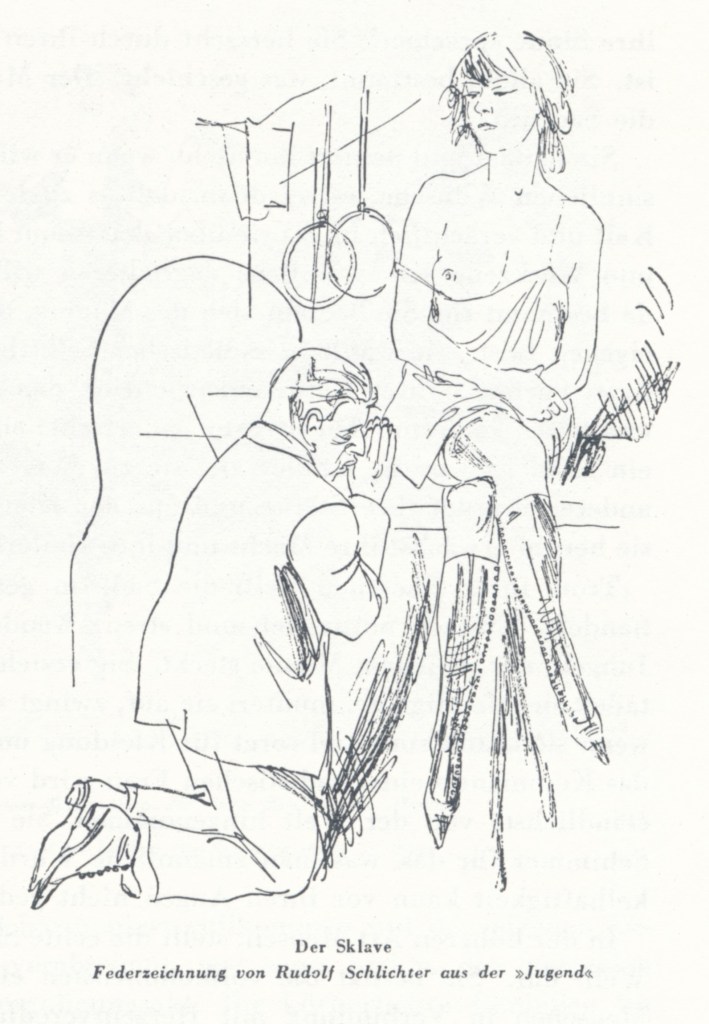
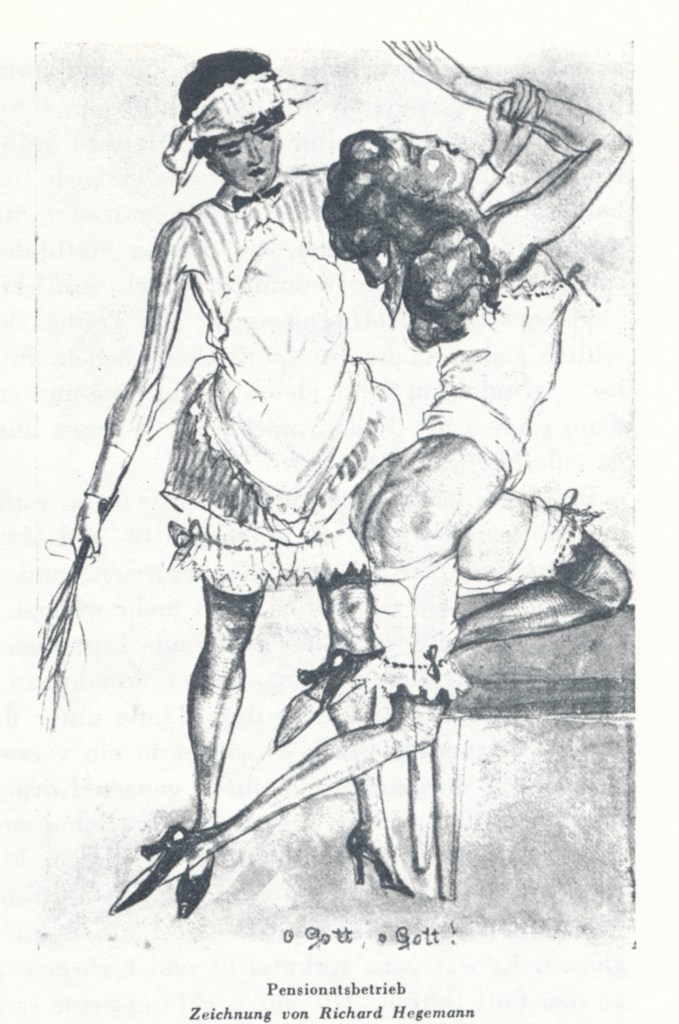
Though direct quotes from the original German text are rarely reproduced today, the spirit of the book is captured in its own subtitle and the cultural moment it documented. As one Weimar-era observer noted of similar works, these pages were meant to “reveal the hidden vices that society both condemned and secretly craved.”
For lovers and collectors of vintage BDSM art and literature, Das Lasterhafte Weib remains a time capsule of 1930s erotic imagination, equal parts scientific curiosity and unbridled fantasy. Just a few years after its publication, the Nazis would burn such books and close the very clubs and studios that inspired its images. That makes this slim, beautifully produced volume not only a collector’s treasure but also a poignant reminder of a brief, brilliant window when female sexuality was allowed to be complex, perverse, and gloriously lasterhaft.
Artist featured in this publication with a collection (bdsm related art) stored on Vintage Bdsm Art:
- Otto Schoff
- Rudolf Schlichter
- Charles Hirlemann
- Richard Hegemann
- Eduard Chimot
- René Giffey
- Paul Kamm
- Rudolf Preuss
- Max Brüning
- Gottfried Sieben
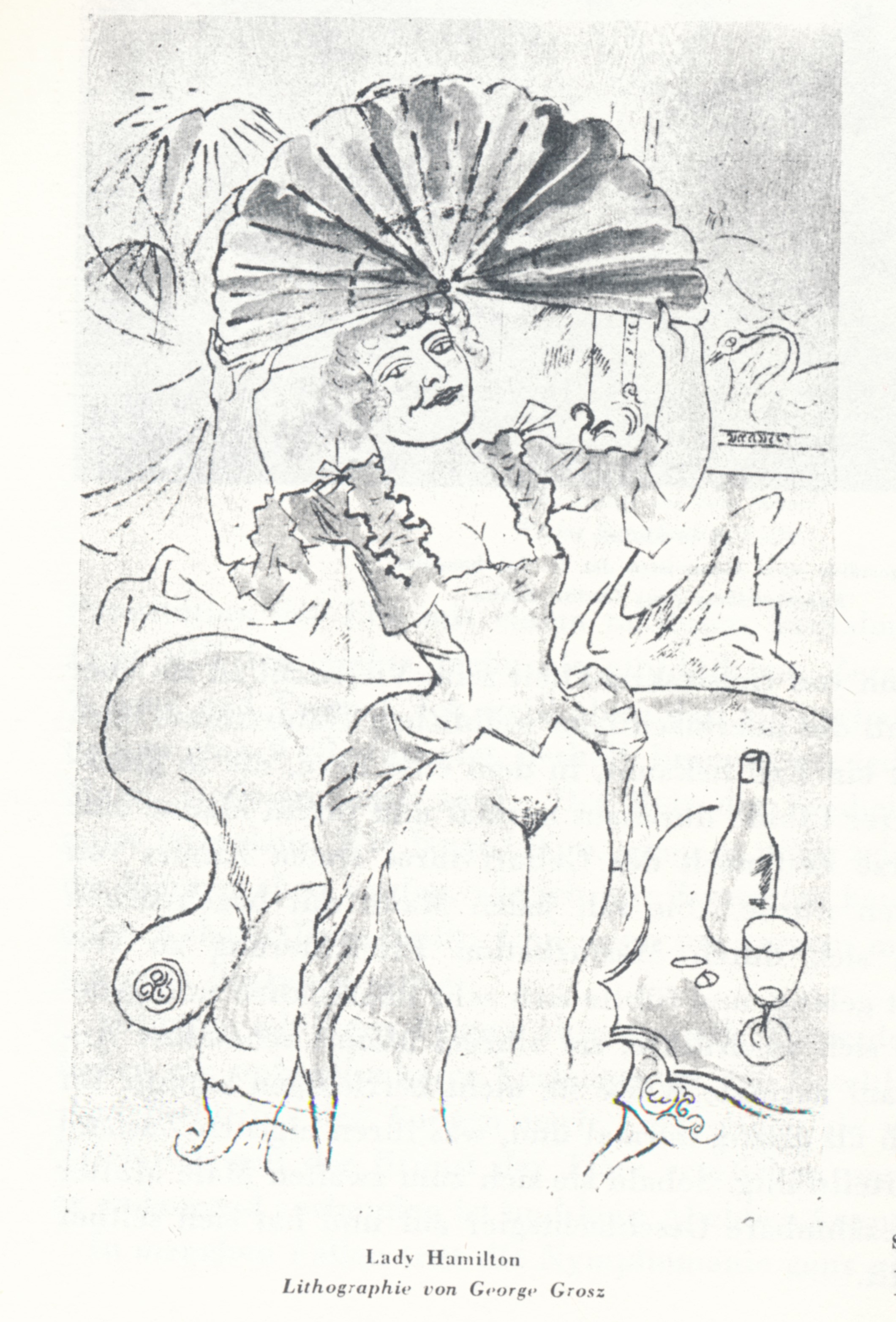
- George Grosz