- Spanking in Satirical Art
Spanking in Satirical Art explores how corporal punishment served as a powerful metaphor in political satire and propaganda. From 1631's "Wolbestalte Pritzisch Schule" (Swedish soldiers paddling Catholic foes) to Napoleonic-era birching of emperors, Boer War postcards humiliating Queen Victoria, and WWI caricatures, these vintage works used infantilization, power reversal, and humiliation to mock authority and deliver sharp geopolitical critique.
- Diana slip – Roger Schall
Roger Schall (1904–1995) was a French photographer who, in the early 1930s, captured images for Diana Slip, a daring Parisian lingerie brand. His elegant photographs emphasize fabric and form, blending commercial documentation with an artistic touch. This showcases a unique era in Parisian fashion photography before World War II disrupted the scene.
- Pioneers of Sensual Self-Portraiture
Sensual self-portraiture has evolved from 19th-century daring experiments into a profound medium for personal expression and self-acceptance. Pioneers like Virginia Oldoïni and Pierre Molinier challenged societal norms, transforming photography into a tool for agency and emotional exploration. This genre continues to foster self-discovery and empowerment in modern times.
- Jack the Binder, Rare Vintage Breast Bondage
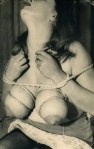
In 1950s–1960s Soho, an anonymous photographer known as Jack the Binder obsessively documented extreme breast bondage. Recruiting models with large breasts, he tightly roped, whipped, stretched, and deformed them—sometimes evoking lactation—in raw, grainy black-and-white photos. Bert Sliggers' book unveils 125 images from original negatives, preserving this clandestine fetish legacy.
- Pre-1930 Spanking and Fetish Films
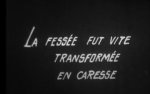
Before 1930, erotic spanking films were extremely rare, consisting mainly of short, silent French stag reels produced clandestinely in Paris during the 1920s. The most notable survivor is The School of Spanking (c. 1925), featuring playful schoolgirl and group spanking scenes. Earlier examples (1890s–1910s) were comedic novelty shorts with light punishment gags, not true fetish erotica. These fragile films mark the dawn of specialized corporal punishment cinema.