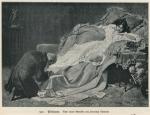
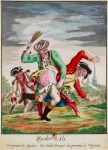
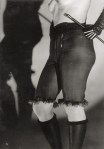
In the mid-20th century, when BDSM imagery and stories were largely hidden from public view, a handful of dedicated publishers in New York’s Times Square kept the flame alive. One of the most important figures in this scene was Edward Mishkin, whose bookstores and small-scale publishing operations brought fetish art and literature directly to readers hungry for authentic explorations of dominance, submission, bondage, and power exchange. Far from being mere commercial ventures, Mishkin’s publications served as early archives of BDSM fantasy-works that many people still turn to today when discovering or deepening their own kinky identities.
Mishkin operated primarily through his flagship bookstore, Publishers Outlet (located at 254 West 42nd Street), which doubled as a distribution hub for mail-order material. From there he expanded into publishing under several imprints that specialized in illustrated paperbacks, digest-sized booklets, and photo-illustrated bulletins. His output focused unapologetically on S&M, female dominance, male submission, spanking, and leather fetish themes, exactly the kind of content that helped shape the visual language of modern BDSM.
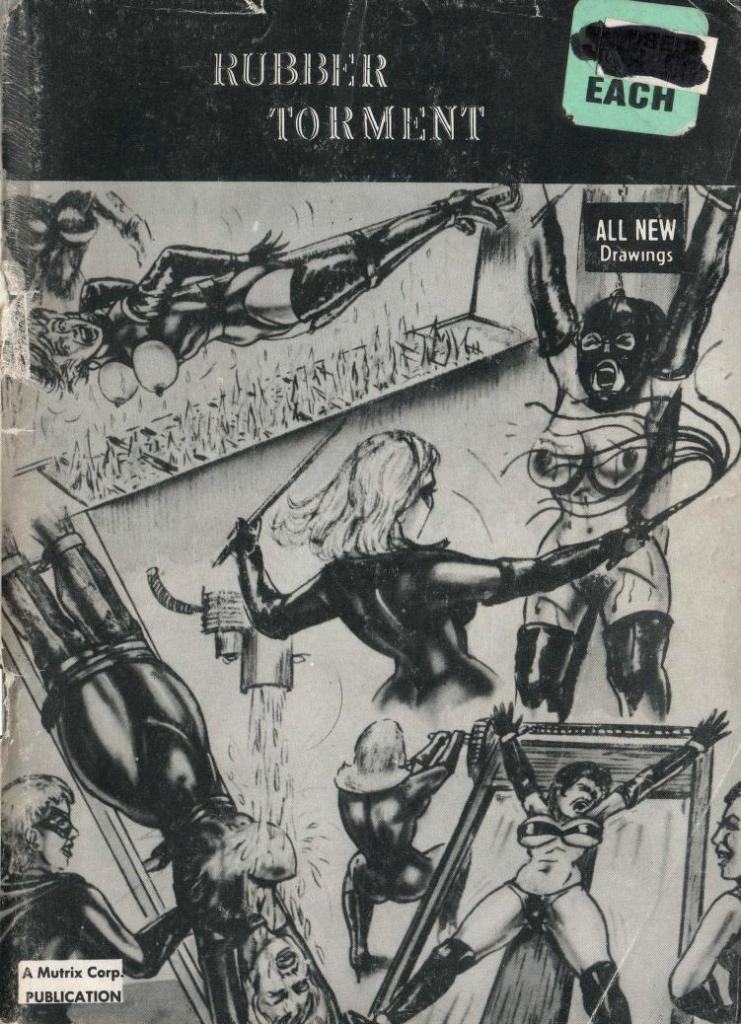
His Publishing Imprints
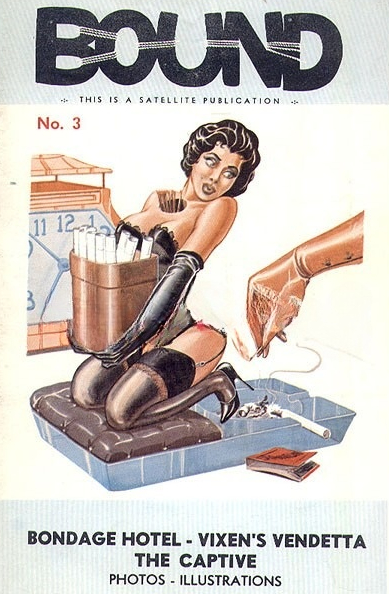
- Satellite Publishing Co. (founded c. 1961)
A collaborative venture with Stanley Malkin and artist Eric Stanton. Satellite produced a series of small “bulletins” and digests that combined original fetish photography, reader letters, short fiction, and full-page illustrations. Many of these remain prized by collectors for their raw, unfiltered depictions of bondage and discipline. - Mutrix (acquired and rebranded from Irving Klaw’s Nutrix line around 1964)
Mishkin continued and expanded this popular series of 5×7-inch, 64-page booklets. Mutrix titles often featured new covers and additional artwork while reprinting or adapting earlier material. The format was perfect for discreet mail-order distribution and became a staple for fetish enthusiasts.
The Artists Who Brought the Vision to Life
Mishkin’s greatest contribution to BDSM culture may well be the platform he gave to two towering talents of fetish illustration.
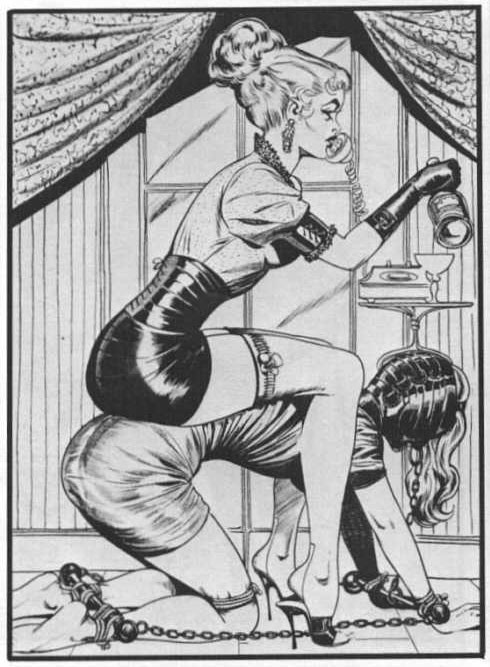
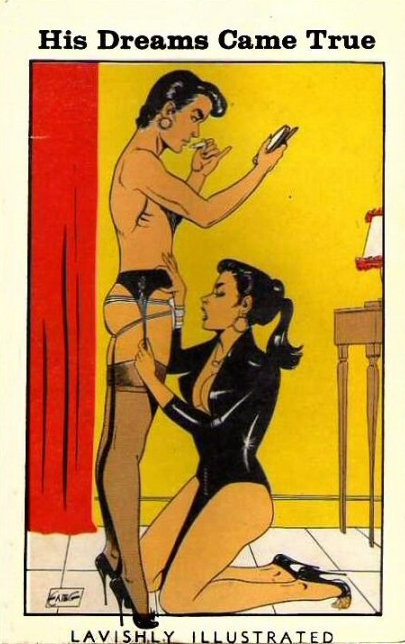
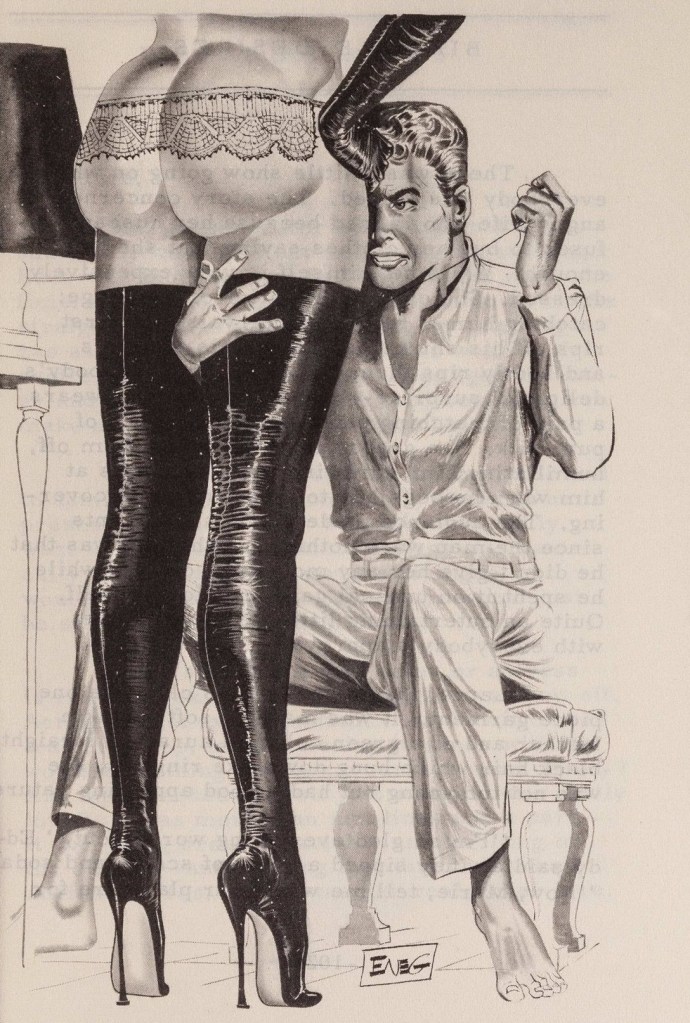
Gene Bilbrew (pseudonym: Eneg)
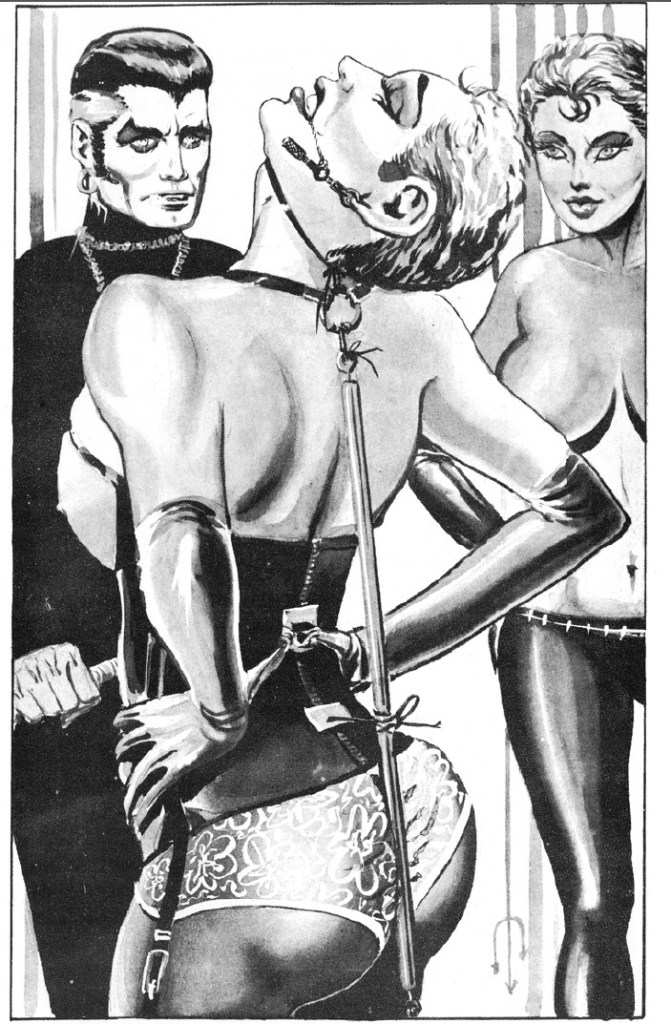
One of the most prolific and influential Black artists in the history of fetish art. Bilbrew created the majority of the covers and interior illustrations for Satan Press titles and Mutrix booklets. His bold, expressive linework, full of dramatic bondage poses, leather, high heels, and dominant female figures, defined the look of underground S&M publishing in the late 1950s and 1960s. Many of the most iconic Satan Press covers that collectors still seek out today are Bilbrew originals.
Eric Stanton
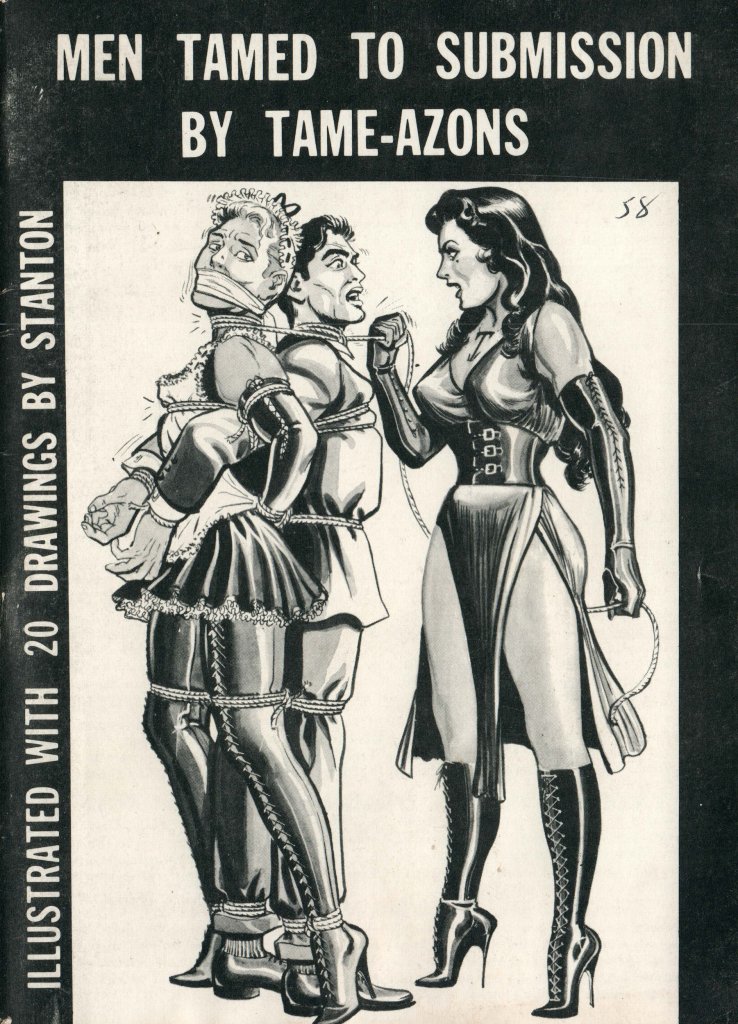
Already a rising star in the fetish world, Stanton became a business partner in Satellite Publishing and supplied countless illustrations and comic-style sequences for Mishkin’s lines. Works such as the Bondage Playmates series, Bound to Please, and pieces later collected in Mutrix editions (including Bondage Enthusiasts Bound In Leather) bear his unmistakable dynamic style. Stanton also contributed to photo sessions for Satellite, helping stage live models in bondage scenarios that complemented the drawn art.

Joe Shuster (co-creator of Superman)
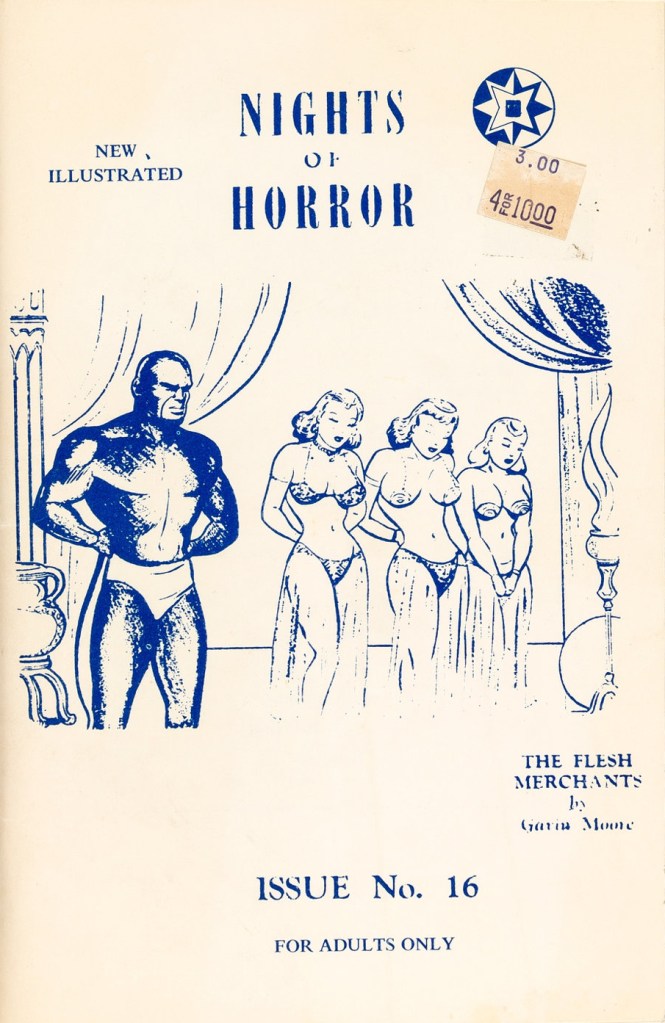
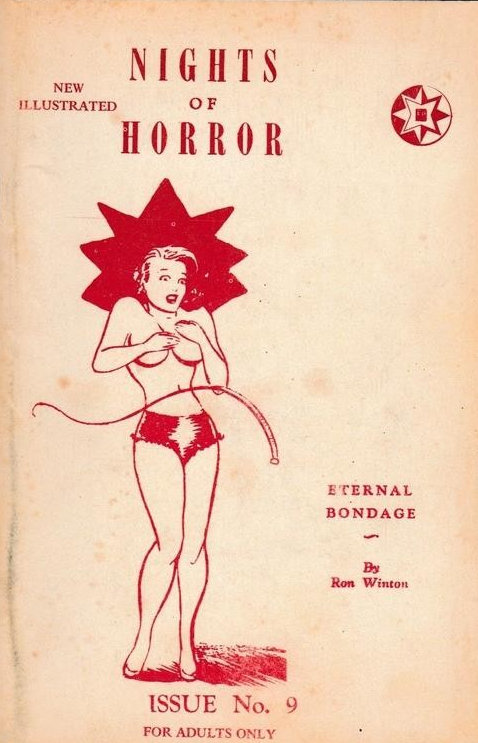
Shuster produced some of the most extreme “women in peril” bondage illustrations for the Nights of Horror series in the early 1950s. Mishkin distributed or sold copies of these booklets through his stores and mail-order network. Although this was not a long-term regular collaboration like Bilbrew’s or Stanton’s, the material became part of the evidence in Mishkin’s 1959 obscenity case and added to the intense, raw edge of the underground scene.
Hal Zucker (sometimes appearing under variations such as H. Zucca)
Zucker is mentioned in historical accounts of the Times Square smut scene as one of the illustrators active in the low-budget pulp environment around Mishkin. His contributions fit the fast-paced, anonymous production style of the era.
Many other illustrations and covers in Mishkin’s catalog were created by lesser-documented or completely anonymous “house” artists. In the underground publishing world of the 1950s and 1960s, work was often produced quickly under pseudonyms or without credit, with cash payments and minimal formal contracts. This reflected the practical realities of operating in a legally risky and discreet market.
While Mishkin’s catalog was primarily illustration-driven, Satellite Publishing Co. also incorporated original fetish photography, often shot in simple studio settings with willing amateur and semi-professional models. These images, paired with the artwork, gave readers a richer, multi-media glimpse into the world of BDSM fantasy.
Mishkin’s Creative Direction: A Clear Vision for Fetish Content
Edward Mishkin was not a distant publisher. He took an active, hands-on role in shaping the material that appeared under his imprints. Court records from the 1959–1966 proceedings reveal that he gave his writers and artists very detailed instructions about the kind of content he wanted to produce.
As one author later testified:
He wanted the books to be full of sex scenes and lesbian scenes… The sex had to be very strong, it had to be rough, it had to be clearly spelled out… I had to write sex very bluntly, make the sex scenes very strong… The sex scenes had to be unusual sex scenes between men and women, and women and women, and men and men… He wanted scenes in which women were making love with women… and there were spankings and scenes—sex in an abnormal and irregular fashion.
Another author recalled that Mishkin instructed him “to deal very graphically with… the darkening of the flesh under flagellation…”
Artists who created the covers and interior illustrations received similar guidance, with an emphasis on beatings, fetishism, irregular clothing, and powerful depictions of dominance and submission.
These instructions show Mishkin’s clear understanding of his target readership. Rather than aiming for broad commercial appeal, he deliberately crafted material for a niche audience interested in sadomasochism, female dominance, male submission, spanking, and leather fetish themes. He even provided writers with reference books such as Krafft-Ebing’s Psychopathia Sexualis and Caprio’s Variations in Sexual Behavior to help them portray these fantasies more convincingly.
In an era when open discussion of BDSM desires was almost nonexistent, this focused approach resulted in raw, unapologetic publications that spoke directly to readers who felt those desires. Many of the Satan Press covers, Mutrix booklets, and Satellite bulletins that collectors still treasure today owe their distinctive intensity to Mishkin’s precise creative direction.
Why This Still Matters
For anyone today who first encountered their BDSM feelings through vintage illustrations, old paperbacks, or underground catalogs, Mishkin’s publications represent more than historical curiosities. They were among the very first widely available resources that said, without apology: “These desires are real, they have a visual language, and you are not alone.” In an era before the internet, before specialized websites or social media groups, these booklets and paperbacks offered validation, inspiration, and a sense of community to countless readers.
Recommended Sites & Literature
Times Square Smut by Jim Linderman
FetHistory
30th Street Graphics / Fetish Nostalgia Ebooks
Vintage Bdsm Art: Gene Bilbrew – Eric Stanton – Joe Shuster