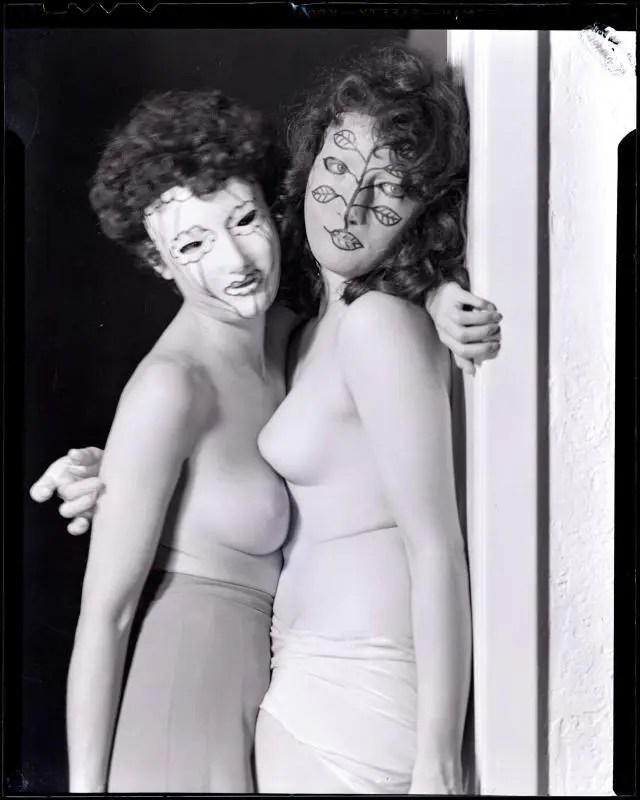
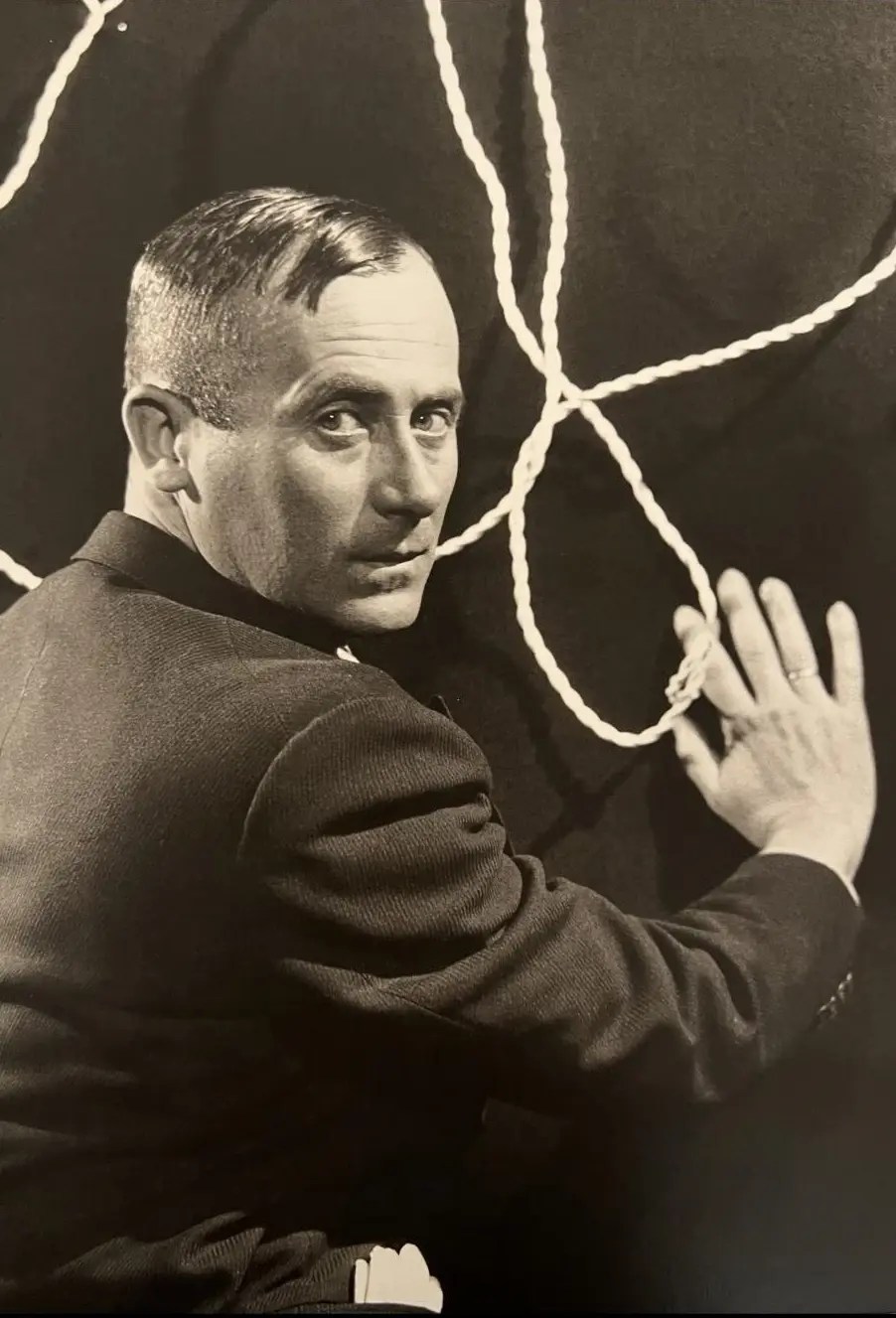
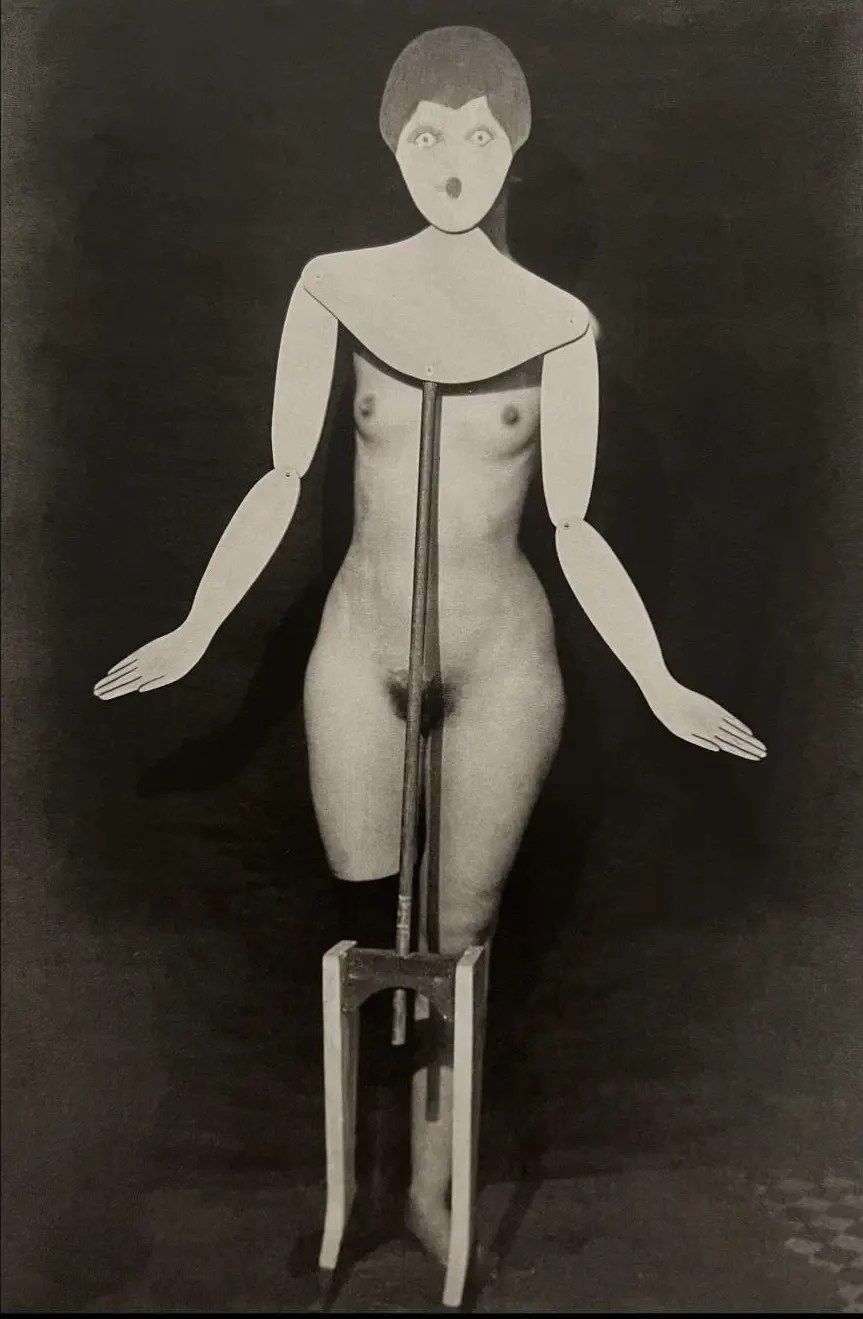
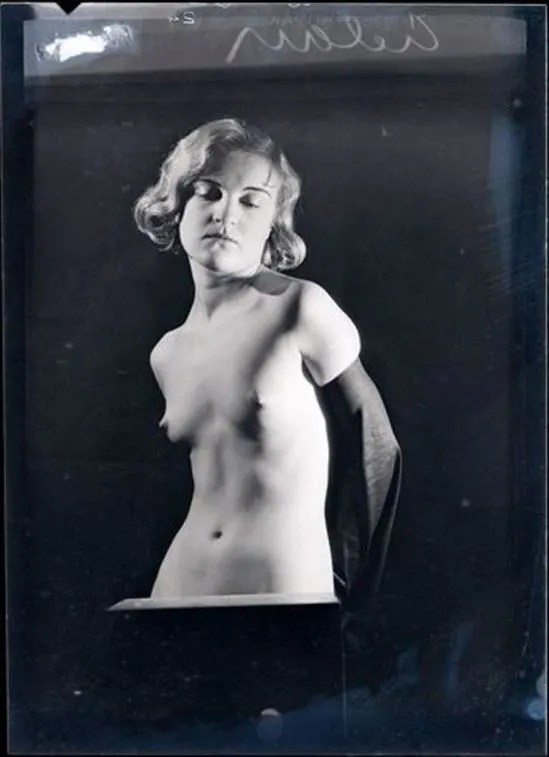
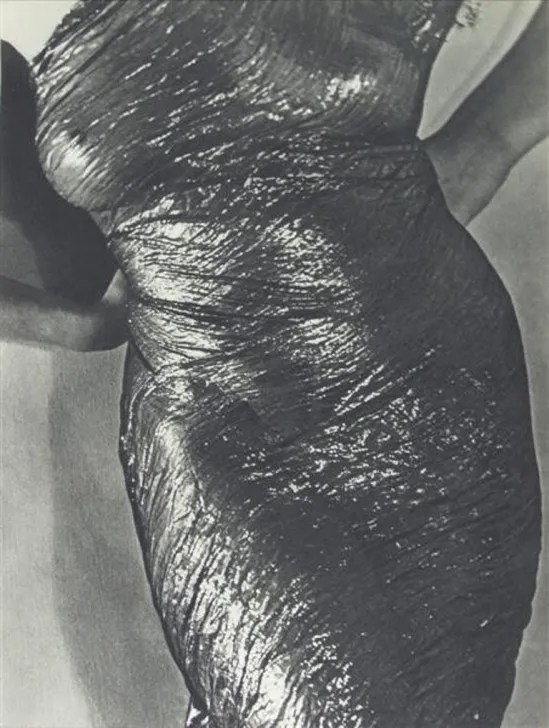
Man Ray (1890–1976) hardly needs an introduction as one of the most iconic photographers of Surrealism. His work teeters on the edge of dream and desire, with rayographs, solarizations, and portraits that transform the body into an enigmatic object of fascination. On my blog SensualViews I explored his broader photographic legacy: from Le Violon d’Ingres to the ethereal Larmes featuring Lee Miller. Yet in the shadow of those well-known images lies a lesser-discussed but deeply intriguing side: Man Ray as both chronicler and participant in early, conscious sadomasochistic dynamics.
Early Fascination with Sadomasochism
Man Ray had always been interested in sadomasochism. In his autobiography Self Portrait, he reflects on childhood experiences of corporal punishment:
I received a thrashing, which I almost enjoyed. Was I a budding sadist or masochist?
Man Ray in his autobiography Self Portrait
Throughout his life, he repeatedly conflated sex and violence. He drew a strong connection between artistic power and masculine power, specifically power over women, a form of bohemian machismo typical of those circles.
The Turbulent Relationship with Lee Miller
This link between artistic prowess and masculine dominance emerges sharply in his relationship with Lee Miller, his muse, lover, assistant, and fellow photographer. When Miller left him in 1932 to pursue her own career, Man Ray reacted dramatically: he created a self-portrait surrounded by instruments of suicide (a noose loosely around his neck, a pistol with a cigarette stub inserted), a theatrical expression of humiliation and loss. Later, he incorporated fragmented parts of her body, disembodied lips in Observatory Time, The Lovers, an eye on a metronome in Object to Be Destroyed as if symbolically holding onto or dissecting her.
As art historian Janine Mileaf notes in Please Touch: Dada & Surrealist Objects after the Readymade, much like Severin at the end of Venus in Furs, Man Ray chose to be a sadist because he failed as a masochist. This personal failure and subsequent need for control seep into his photography, where power dynamics are not only staged but deeply explored.
Surrealist Exploration of Bondage and Power
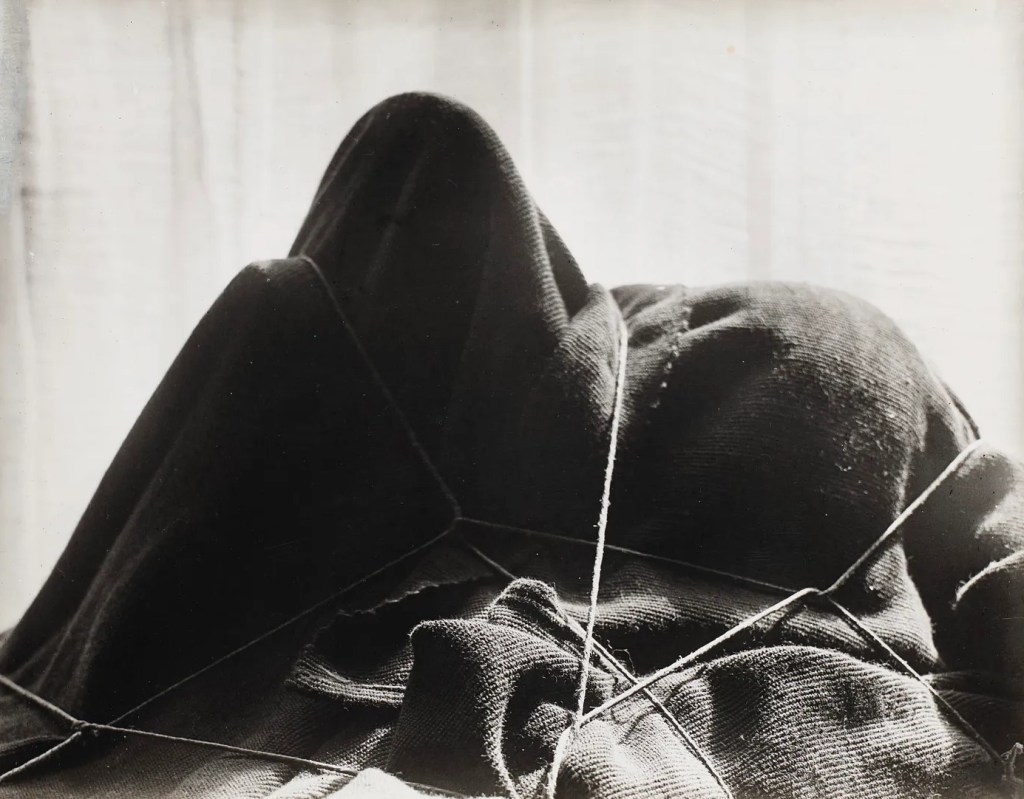
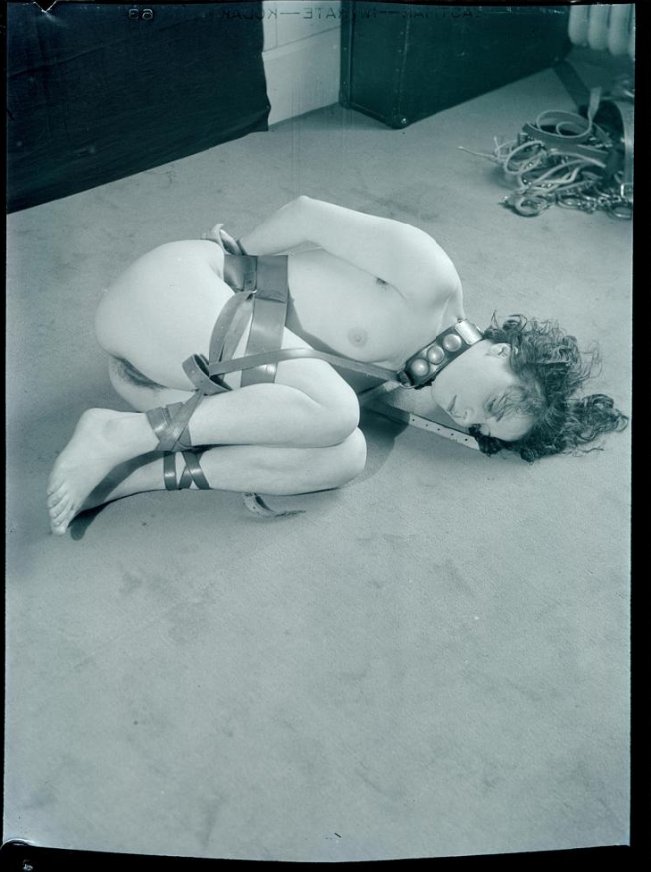
Man Ray’s photography from the late 1920s and early 1930s frequently incorporates elements of bondage and sadomasochism. Not as purely commercial kink, but as an artistic exploration of Surrealist ideals: unleashing the unconscious through pain, surrender, and fetish. His work destabilizes traditional gender roles by emphasizing collaborative processes, the subjective experience of the masochist, and the simulation of erotic violence often in non-reproductive, pleasure-centered scenes.
This is evident in series where bondage transforms the body into an ‘erotic object,’ inspired by the Marquis de Sade and occultism.
The Pivotal Collaboration with William Seabrook
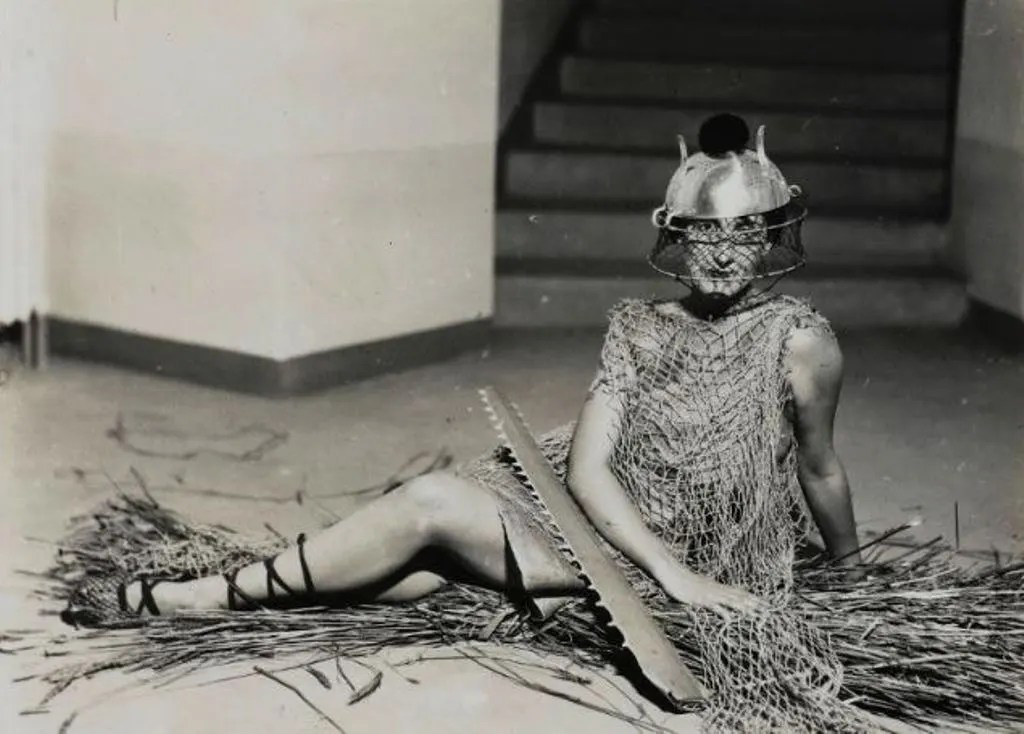
In the late 1920s and early 1930s, Man Ray found a unique patron in the American writer, adventurer, and occultist William Seabrook (1884–1945). Seabrook viewed sadism and bondage not merely as sexual preference but as mystical ritual, a gateway to transcendence. Around 1929–1930, he commissioned Man Ray for concrete projects: three series of photographs visualizing his fantasies, often with Lee Miller as model.
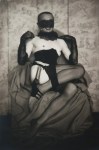
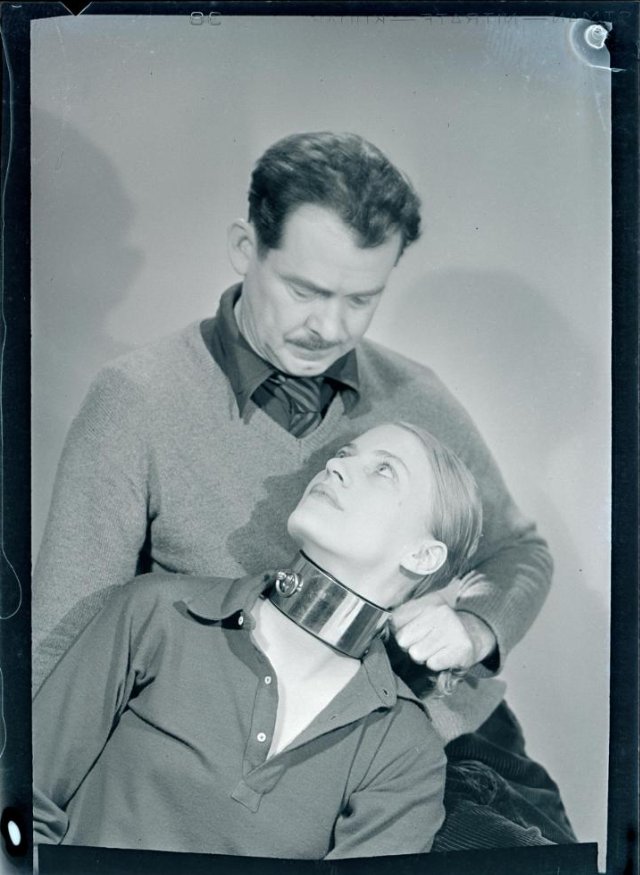
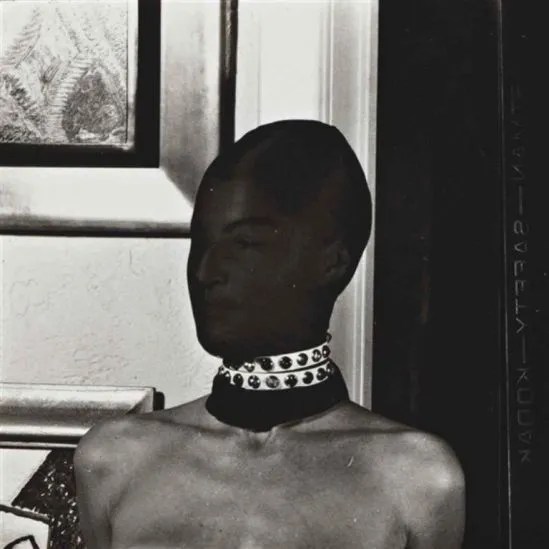
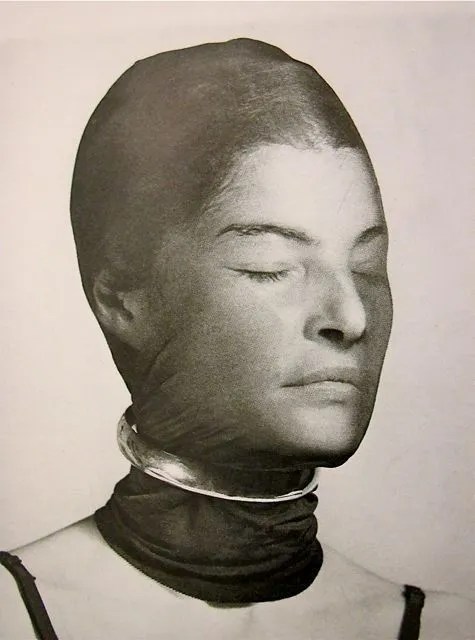
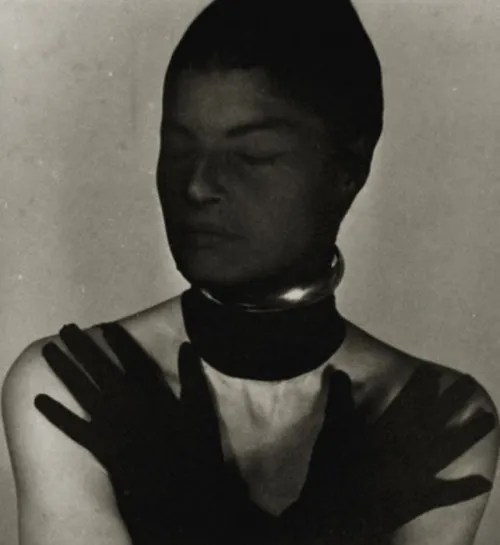
A well-known example is the series featuring Miller in a rigid silver collar (designed by Man Ray and crafted via Maison Worth), arms bound in crucifixion-like poses, with Seabrook himself appearing: hand on throat, leash in hand.
Even more striking: the custom collar with hinges and knobs restricting head movement, a symbol of “regal submission” that later appeared in portraits of Marjorie Worthington (Seabrook’s partner).
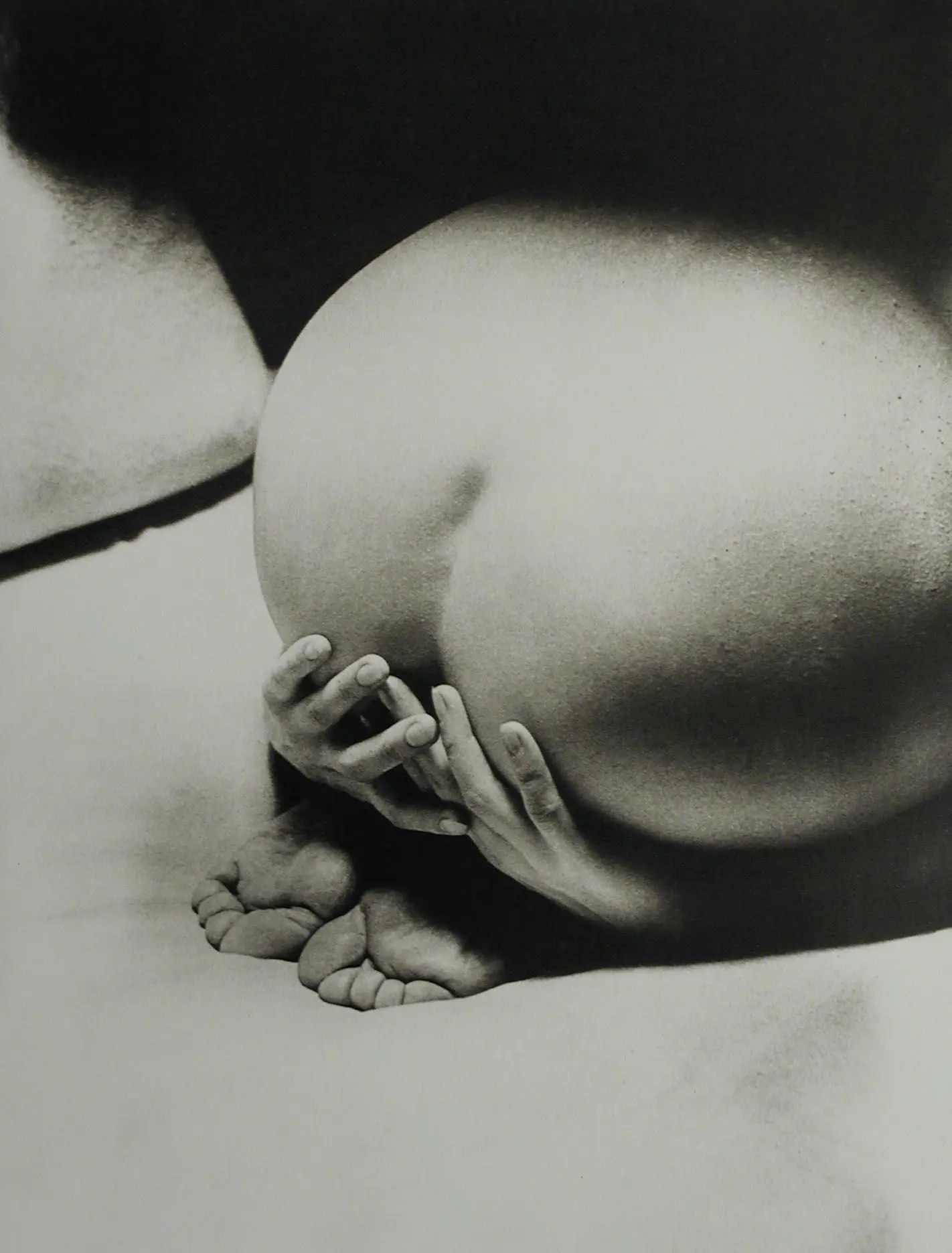
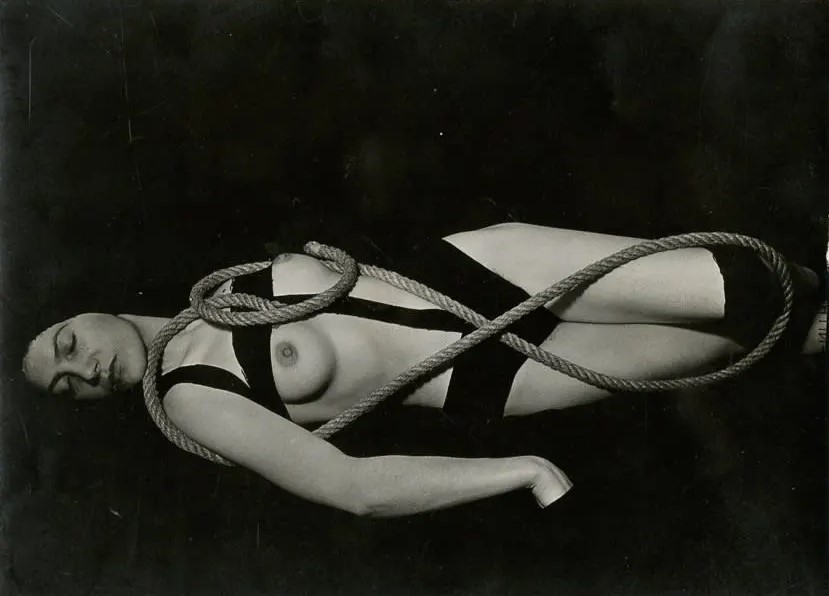
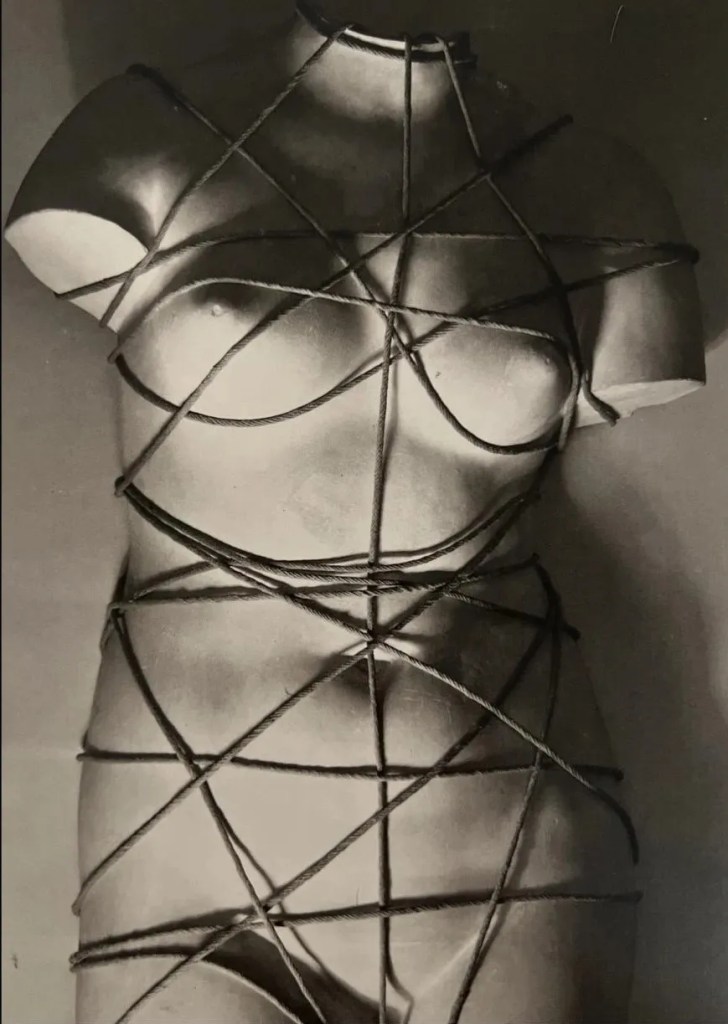
Man Ray’s own works aligned seamlessly with these themes. Consider Nu aux bandelettes (1928–1929), with model Natasha: the nude body partially wrapped in white bandages, an visual echo of mummification, classical sculpture, and bondage. Light and shadow carve the forms sharply, skin revealed in forbidden fragments. The image balances eroticism and alienation: the body is simultaneously displayed and concealed, desired and objectified.
A Notorious Incident: Blurring Art and Real-Life D/s
One infamous anecdote illustrates how the boundary between art and real-life D/s blurred: in 1929/1930, Seabrook left a naked, professional submissive chained to the staircase when Man Ray and Lee Miller were house-sitting, with explicit instructions not to release her. Man Ray photographed the scene; Miller later described it as “electrically charged and slightly terrifying.”
Conclusion: A Bridge Between Avant-Garde and Kink History
Man Ray’s work with and for William Seabrook forms a unique bridge between Surrealist aesthetics and early, conscious BDSM practices. It was never provocation for provocation’s sake, but an investigation into power, surrender, the body as canvas, and the mind as a prison that can be liberated. While most Surrealists cast fetish and eroticism in metaphors, Man Ray documented something closer to contemporary consensual power exchange, albeit tinted by the bohemian machismo and personal conflicts of the artist himself.
Sources
Man Ray, Lee Miller and William Seabrook: 1930s bondage
The Erotic Object: Man Ray, Marquis de Sade, Surrealism & Bondage
Staging Sadomasochism: Images of Bondage in Man Ray’s Surrealist Photography, 1929-1932 by Audrey Dianne Warne
Sensual Views
Mannequins & Nu aux bandelettes – Vintage Fetish Photos