The desire for artificial sexual aid is almost as old as humanity itself. The oldest known dildo was discovered in a cave in southern Germany and dates to roughly 28 000 years ago, carved from stone or bone. In classical antiquity the Greeks and Romans used phallus‑shaped objects for pleasure and ritual; the Romans even produced “double” dildos, typically leather or metal, for group play. Across East Asia, affluent Chinese men gave their wives bronze dildos to promote fidelity, believing a single husband could not satisfy multiple wives.
The first true sex machines appeared in the 18th century, often disguised as medical devices to treat “hysteria” in women—a fictional condition physicians attributed to an “over‑active uterus” and believed could be relieved by orgasm (then called a “paroxysm”). In 1734 the first steam‑powered “pleasure machine” was invented: a hand‑operated device that generated vibrations. It was not a purely sexual toy but was intended for therapeutic clitoral massage.
The first vibrator buzzed into life in 1880 when an American doctor, George Taylor, patented and sold a steam-powered contraption called The Manipulator.
Hedonist

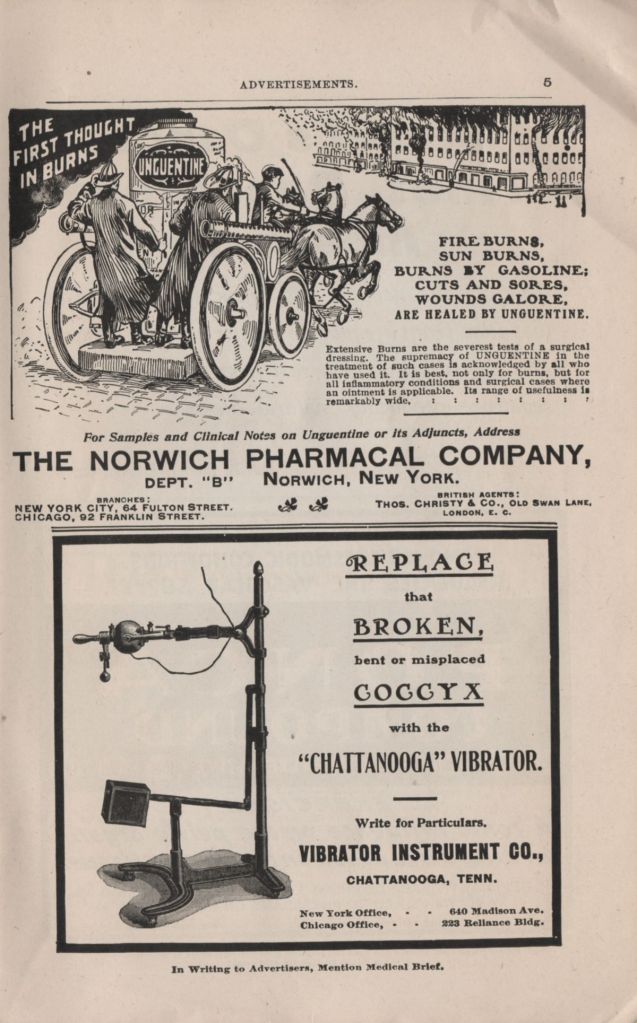
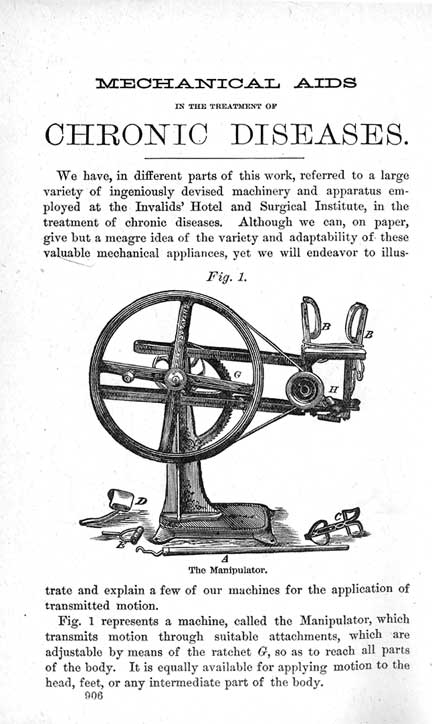

The first Mechanical “Medical” Instruments
Early mechanical devices (18th–19th century)
The first mechanical vibrators emerged in a medical context as tools for therapeutic massage (1860-1870), designed to relieve pain, relax muscles, or provide general “health massage.” They were often large, hand-operated or steam-powered, and promoted as serious medical instruments.
Steam-powered vibrators (mid-19th century)
From around 1850–1870, the first steam- and hand-crank vibrators appeared, including the famous “Manipulator” invented by American physician George Taylor in 1869. This was a large, table-mounted device with a vibrating sphere or attachment, powered by a steam engine and operated manually. It was patented and sold as a medical aid for general massage and pain relief (e.g., neuralgia or back complaints), not tied to any single condition. While primarily medical, it soon found private and recreational applications as well.
Macaura’s Pulsocon Hand Vibrator (1880s)
A more portable hand-cranked device capable of up to 5,000 vibrations per minute, with interchangeable heads for different types of massage. It represented a clear technical advance over bulky steam machines and was similarly marketed as a health instrument, marking the transition toward more accessible, personal vibrators.
General context
These early devices were typically intended for broad therapeutic purposes (not exclusively for women or any specific “hysteria” treatment). Only from the late 19th and early 20th centuries did they begin to be widely adopted for personal pleasure, often outside the medical sphere.
Mythe Debunked
The popular story that Victorian doctors routinely used vibrators (or early sex machines/dildos) to induce orgasms in women as a medical treatment for “female hysteria” is a widespread myth. It originated primarily from Rachel Maines’ 1999 book The Technology of Orgasm: “Hysteria,” the Vibrator, and Women’s Sexual Satisfaction, where she presented it as a hypothesis.
Historians Hallie Lieberman and Eric Schatzberg (2018 peer-reviewed paper) examined Maines’ sources and found none supported routine genital massage or vibrator use for orgasms in hysteria treatment. Victorian doctors understood female sexuality better than the myth suggests, and such practices would have been controversial if widespread.
What Is True?
- Hysteria was a genuine diagnosis until removed from medical manuals in 1952.
- Vibrators did start as 19th-century medical tools for general massage (steam- or electric-powered).
- By the early 20th century, women discovered and adopted them for personal sexual pleasure, often through home advertisements.
This myth persists because it’s entertaining and fits stereotypes of repressed Victorians, but rigorous history shows it’s largely unfounded.
Early 1900: Electrification and Wider Acceptance
Around 1900 the first self‑contained “sex machine” appeared, a contraption that sprayed milk into the vagina to simulate ejaculation, hinting at the future of automation. By the 1920s electric motors replaced hand cranks entirely. The Polar Club Electric Vibrator (1928), advertised for “neck massage,” was unmistakably a sexual aid, and its plug‑in design made it affordable enough to appear in catalogues and bathhouses. This shift marked the transition from covert medical devices to openly sold consumer products.
Male Sex Machines
Alongside female vibrators, devices aimed at male stimulation emerged: vacuum pumps, penis stretchers, and later automatic “stroker” machines that mimic a rhythmic thrusting motion. From the 1940s through the 1980s, researchers employed such apparatuses (e.g., penis cameras, strain gauges) for scientific studies of male sexuality.
Vintage Collections Today
The Sex Machines Museum in Prague preserves a remarkable array of 19th‑century steam‑driven and group‑use devices, offering a tangible glimpse of the engineering creativity that preceded today’s sleek, app‑controlled toys.
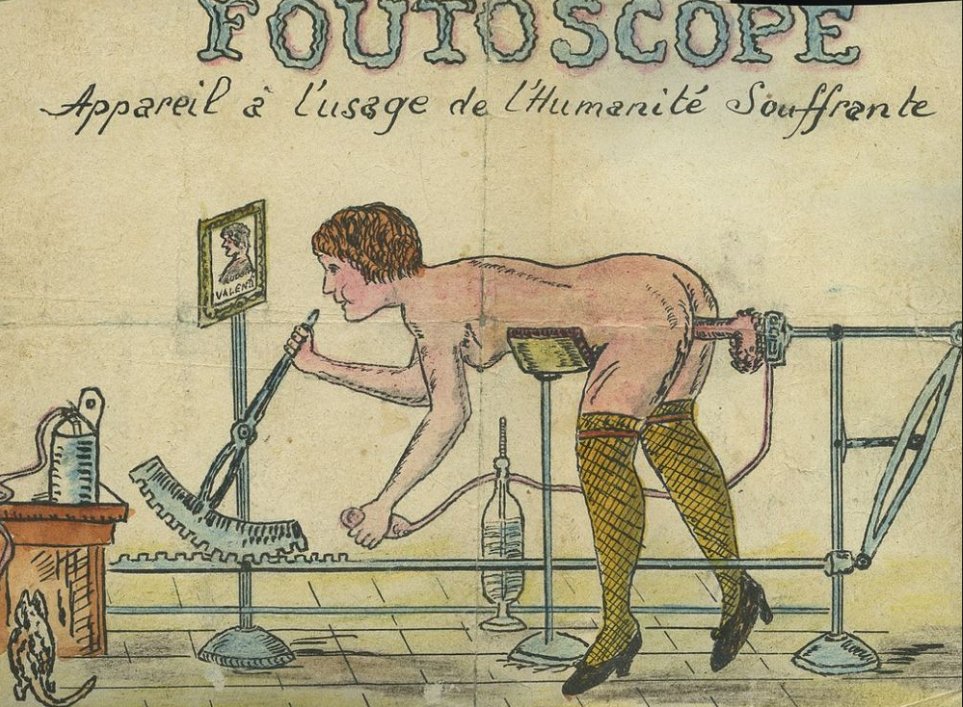
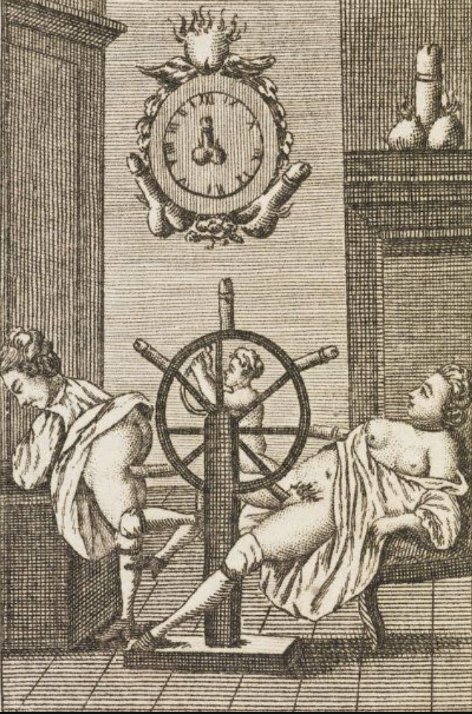
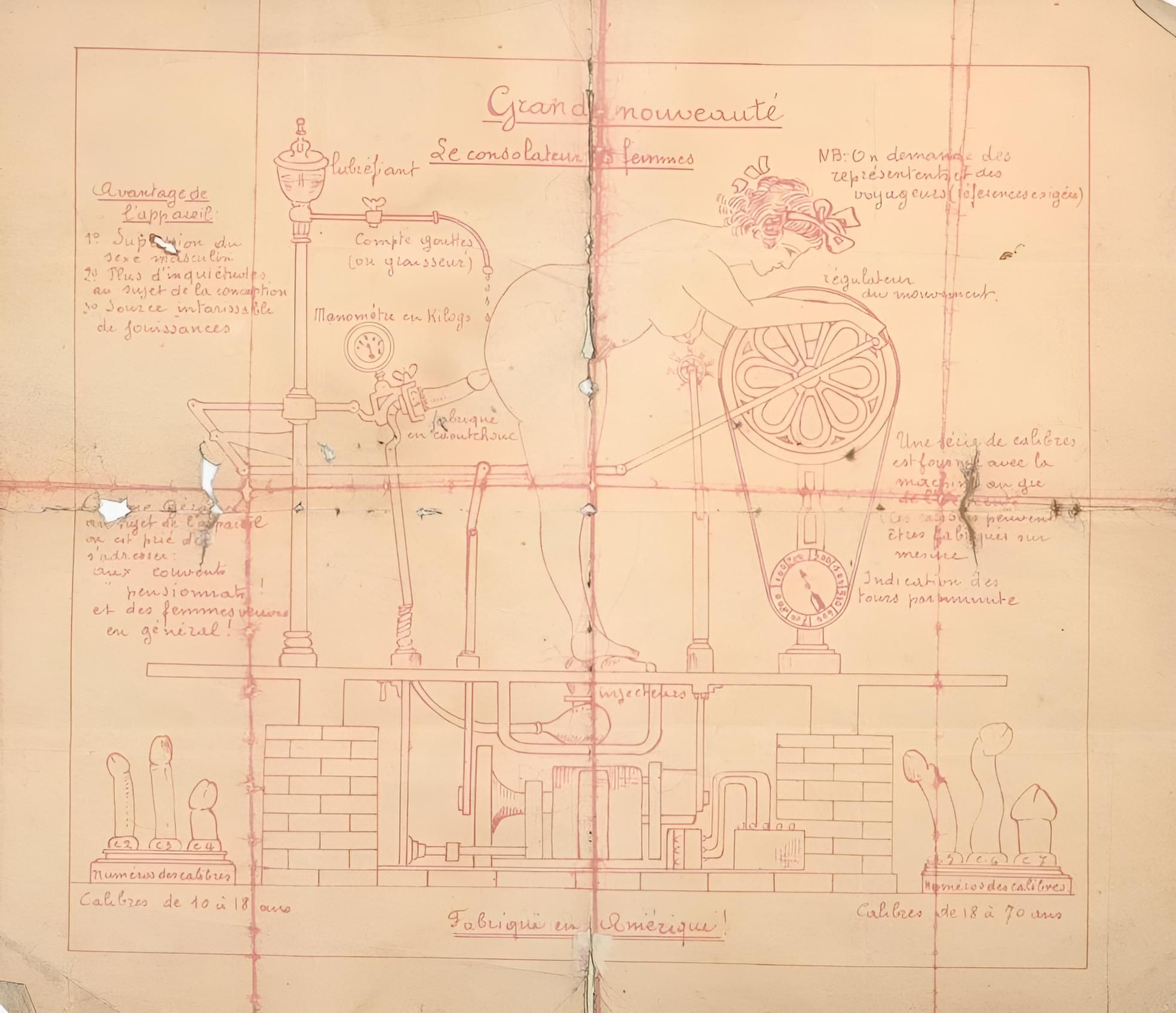
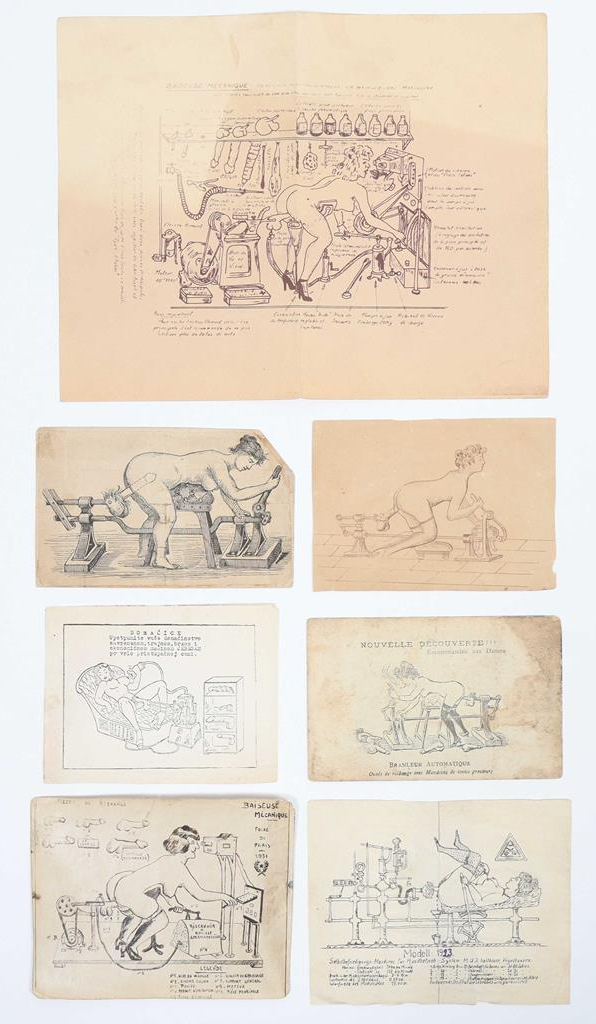
Creative presentations in art
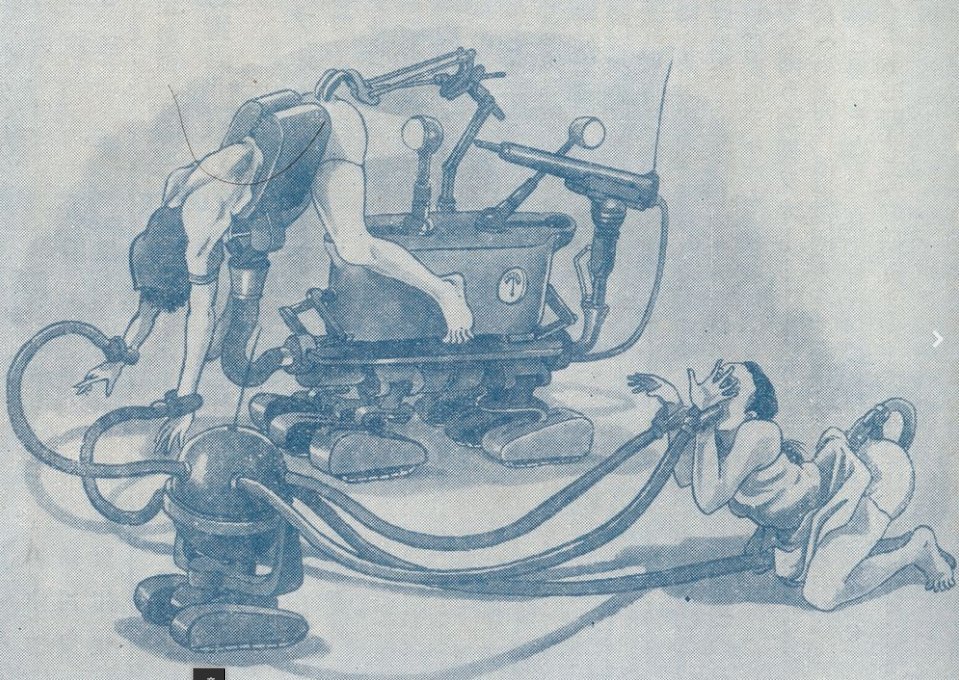
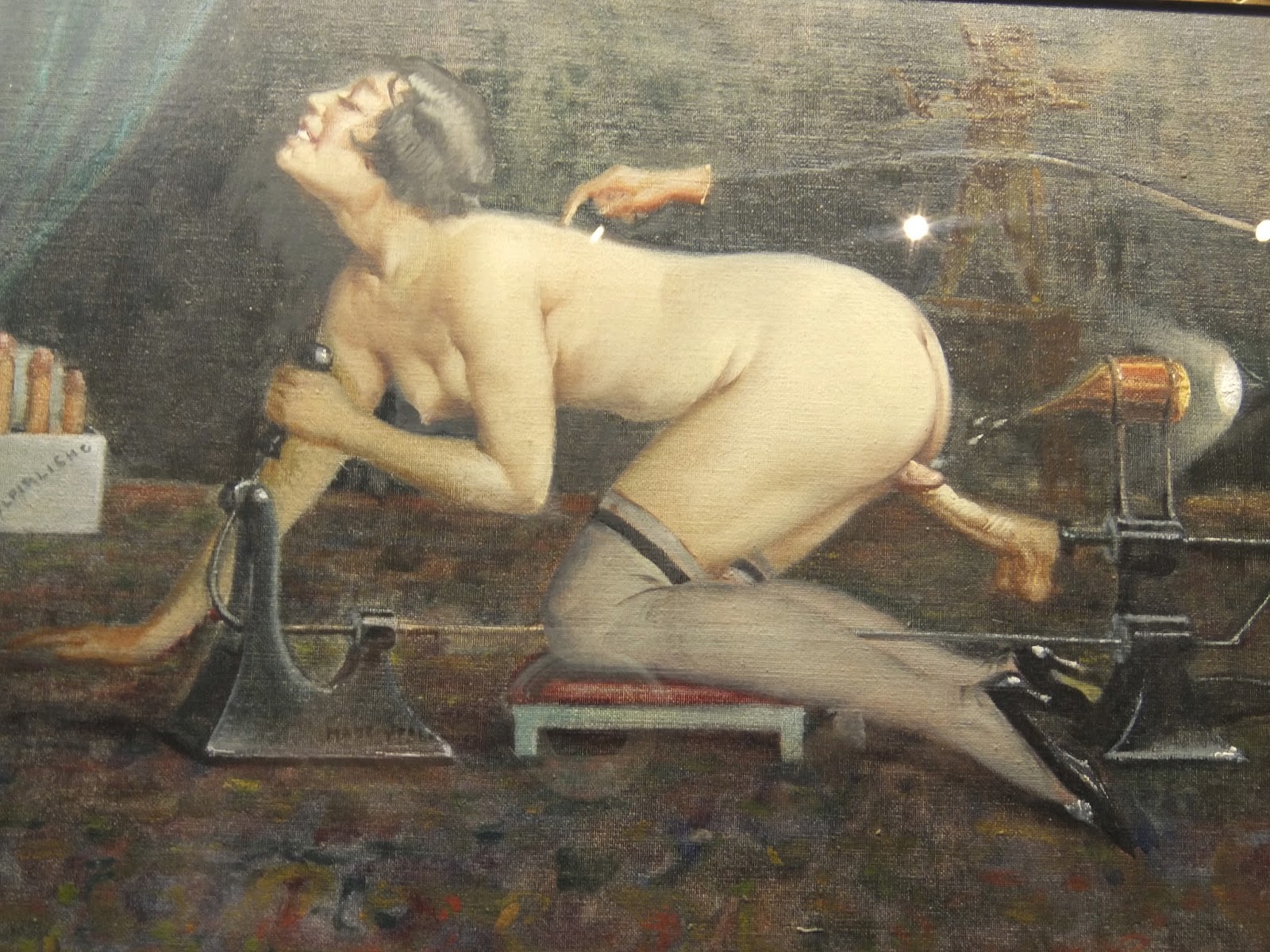
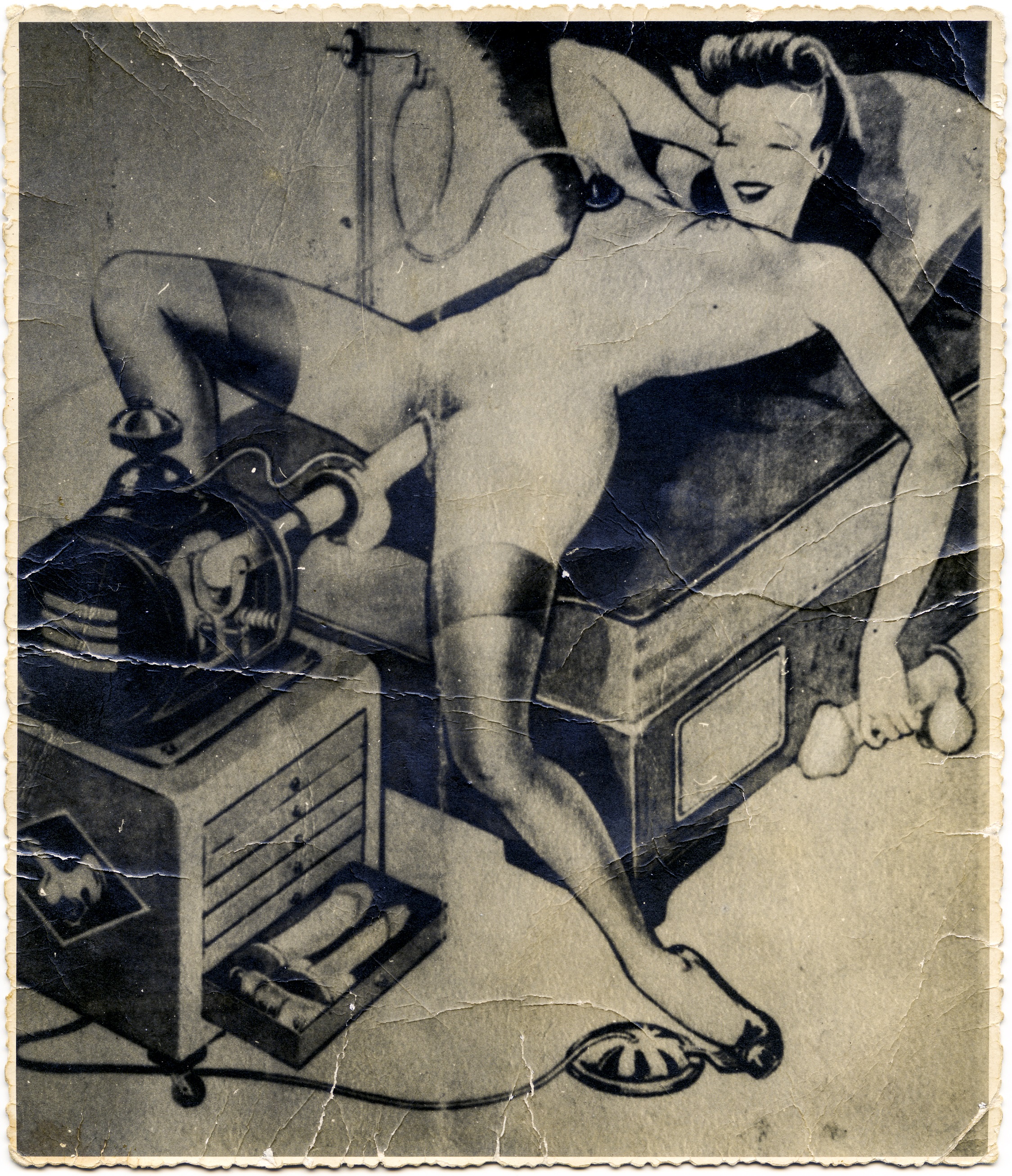
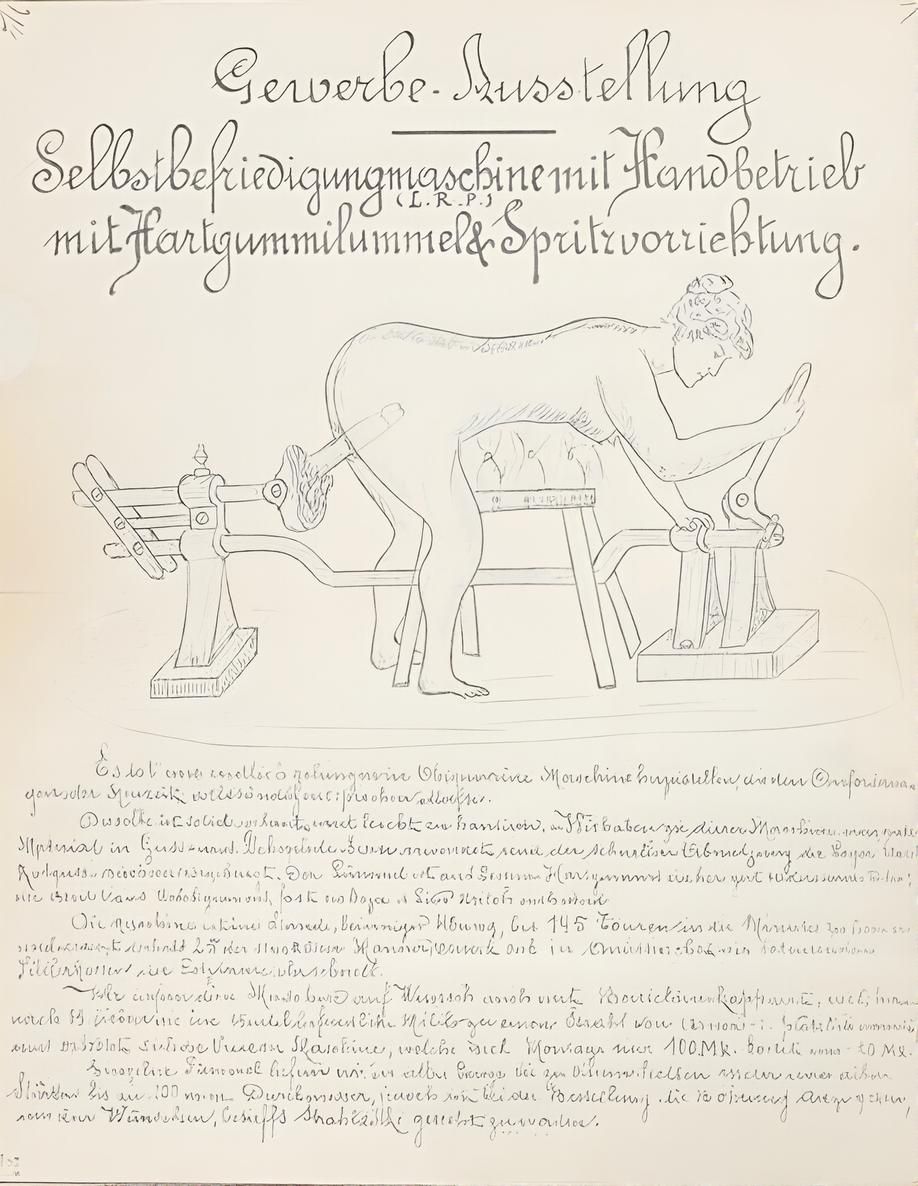
In art everything is possible, and so there are many fascinated artworks presenting sex machines. Artists are almost never known, if so I mention it. Enlarge to view detailed information.














Well researched! Thank you:)))))))))))))))))))
LikeLiked by 1 person
Thank you!
LikeLiked by 1 person