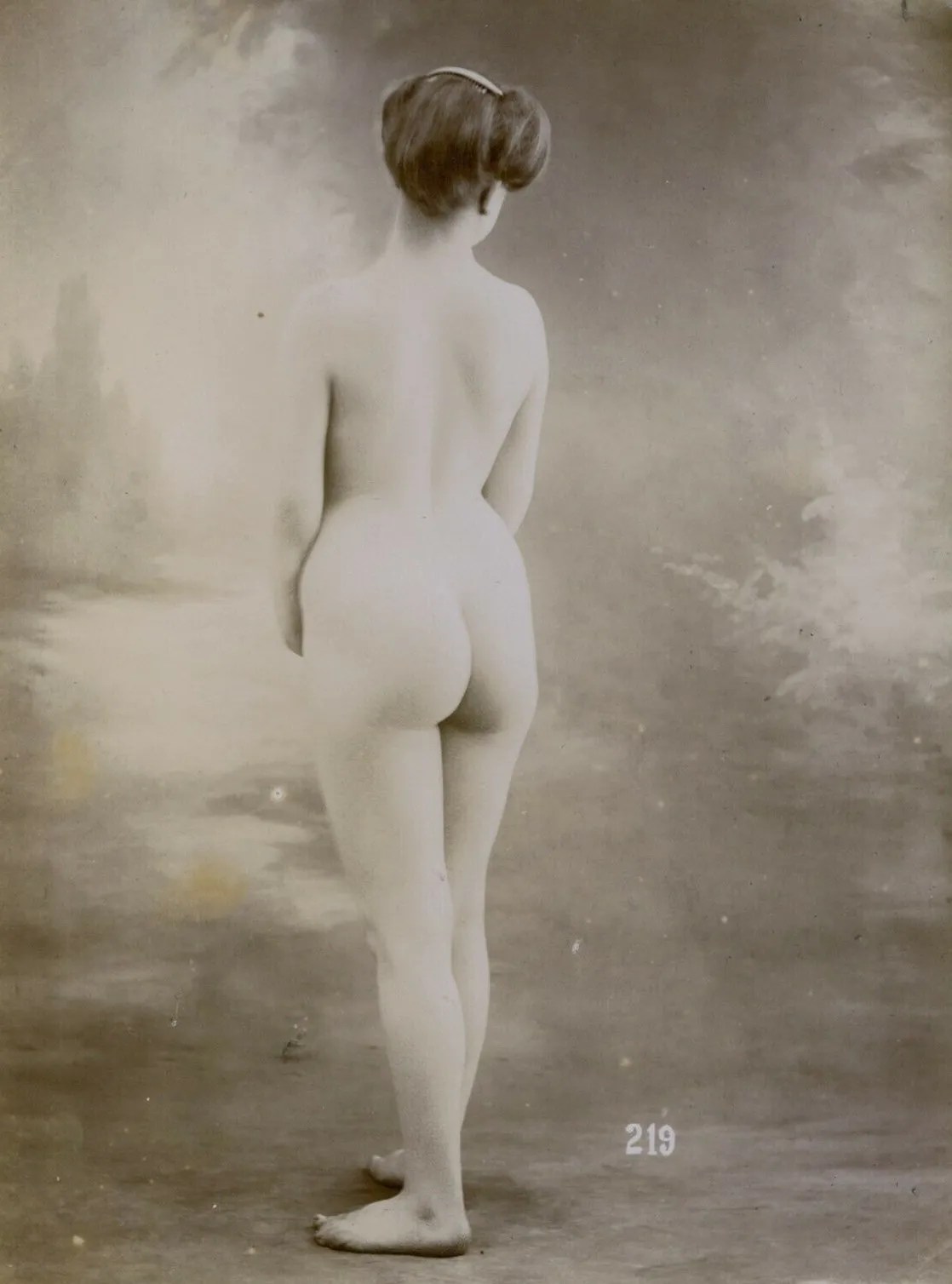
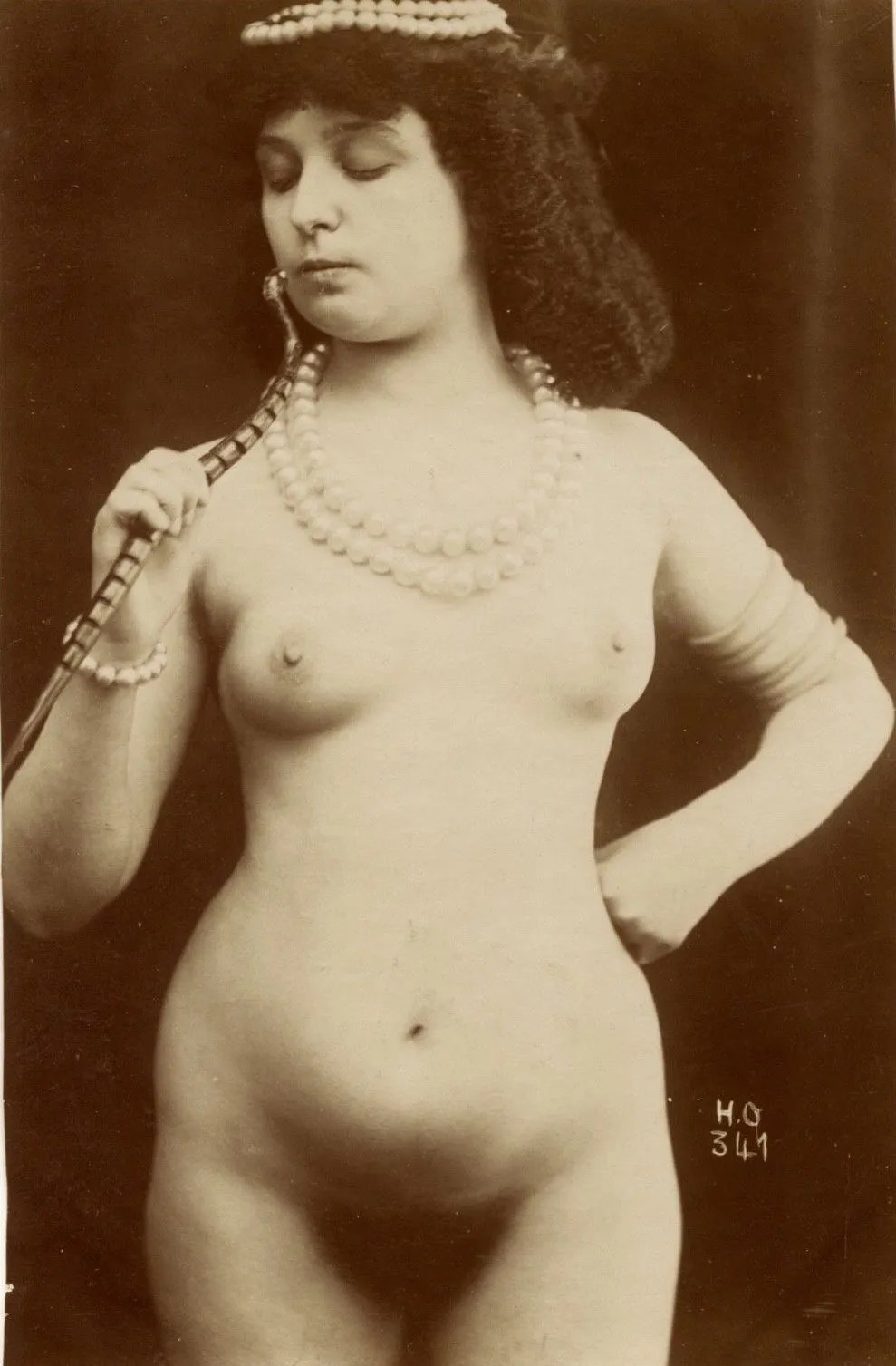
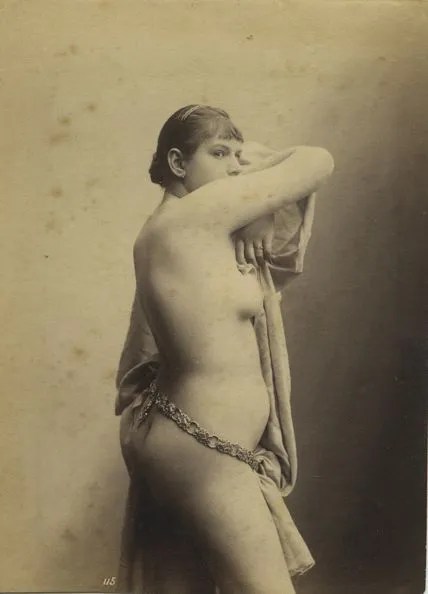
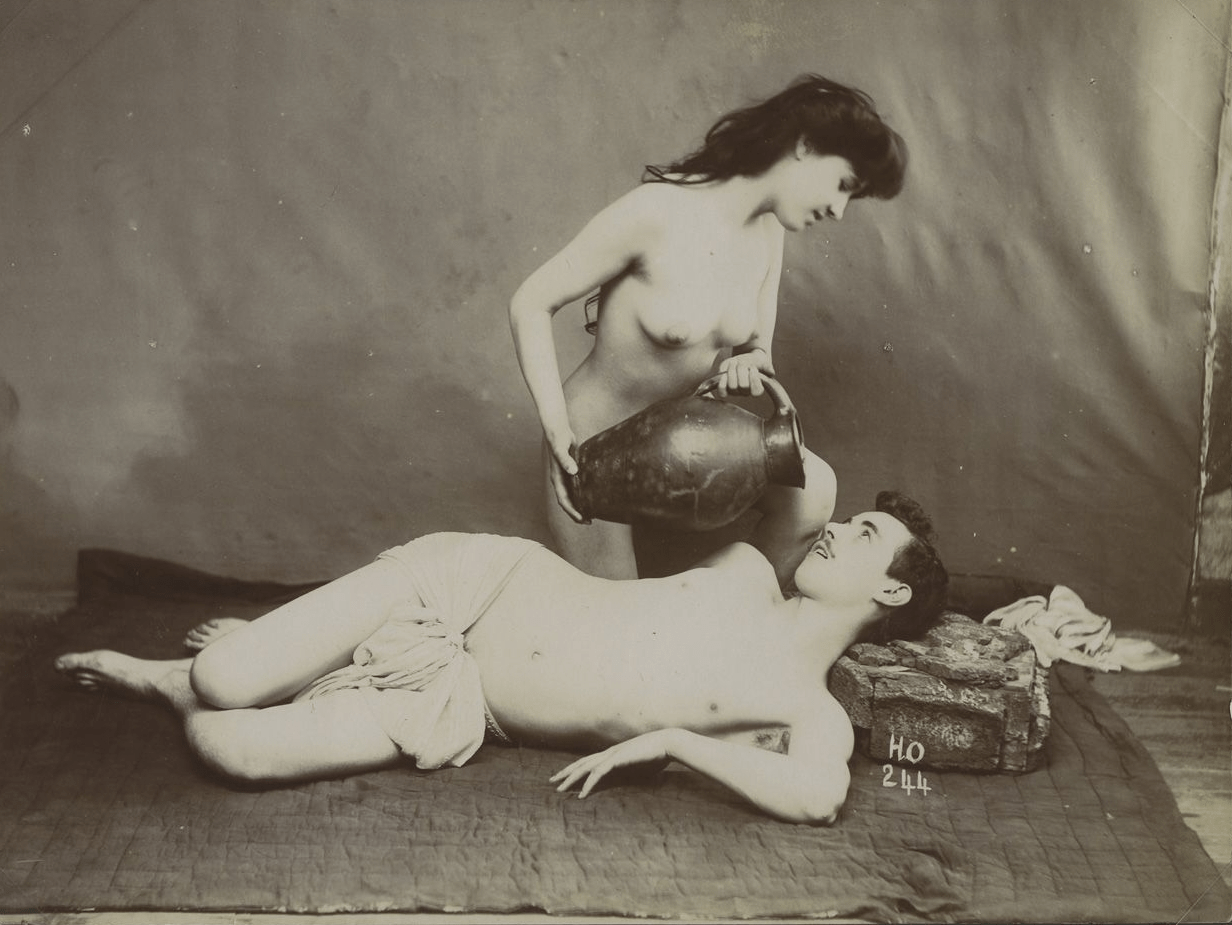
Henri Oltramare (1878–1953) was a Geneva-born, Paris-based photographer of the Belle Époque and Années Folles.
The human body, in its most secret movements, is the only true book of life
Henri Oltramare, quoted in La Beauté Humaine, 1923

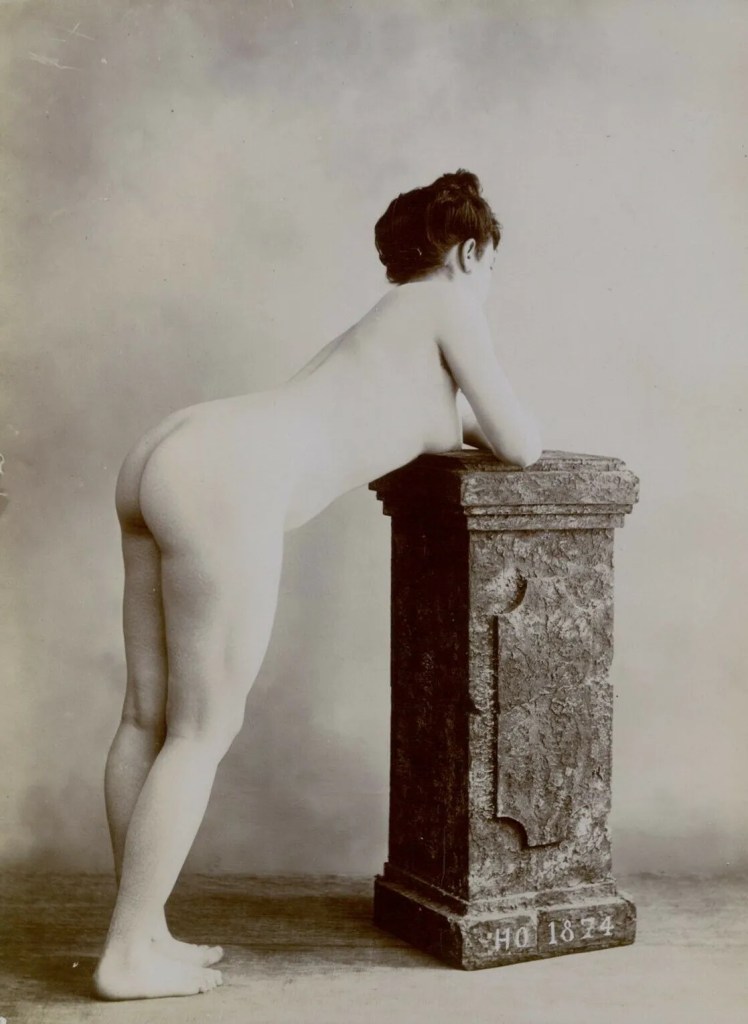

From Academic Nudes to Forbidden Fantasies
Trained at the Geneva School of Fine Arts, Oltramare moved to Paris around 1905 and quickly became one of the most sought-after photographers of artistic nudes for salons, private albums, and the burgeoning postcard trade. His early work, soft-focus, classically posed models in the style of Pierre Louÿs and the Académie Colarossi, is still regularly reproduced in books on pictorialism.
The Orientalist Series – Newly Surfaced, ca. 1919–1925
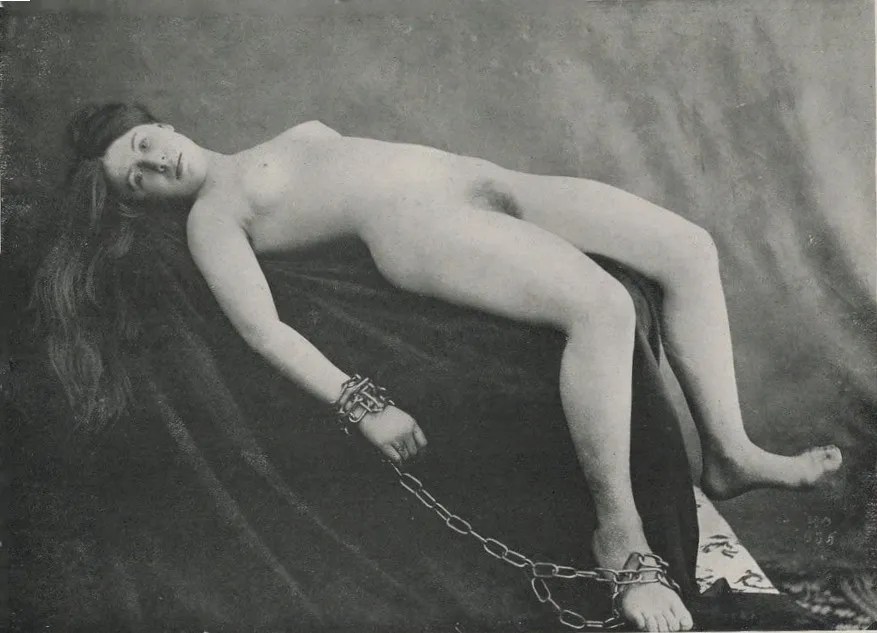
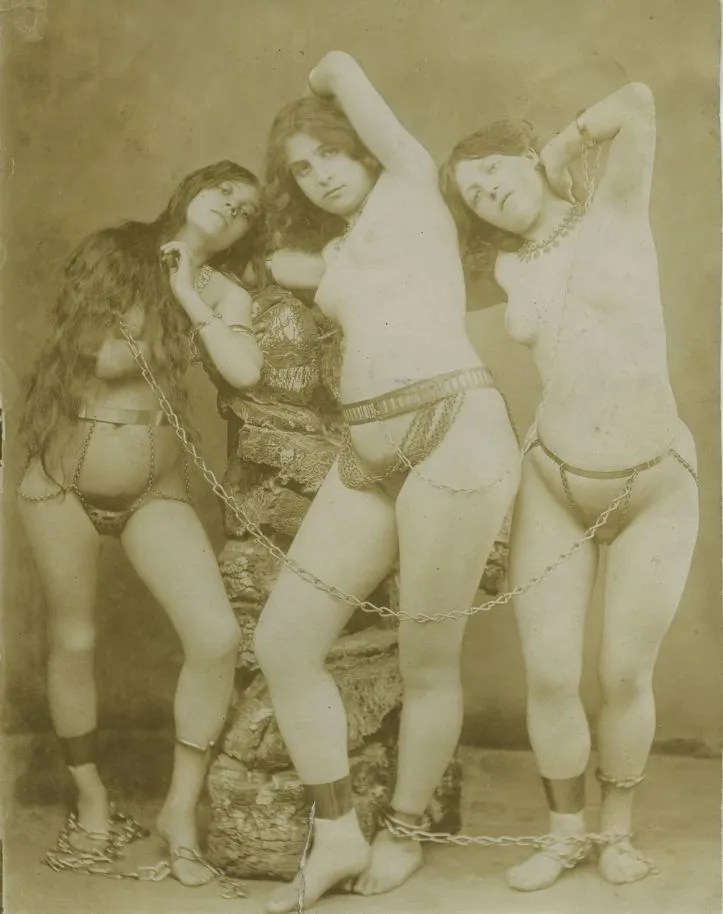
In recent years a small but stunning group of previously unknown Oltramare prints has emerged, shifting our understanding of his oeuvre. Shot in the same Montmartre studio that produced his famous “Greek” and “Egyptian” series, these images plunge deep into fin-de-siècle Orientalist fetish territory: veiled odalisques in chains, naked harem slaves displayed on auction blocks, and stern, turbaned overseers inspecting their merchandise.
Typical hallmarks of Oltramare remain unmistakable:
- exquisite platinum or albumen printing with rich, velvety tones
- dramatic side-lighting that sculpts the body like bronze
- meticulously painted backdrops of mosques, palm courts, and seraglios
- the same favourite models (notably “Lucie” and “Yvonne”) re-appearing in European and “Oriental” guise alike
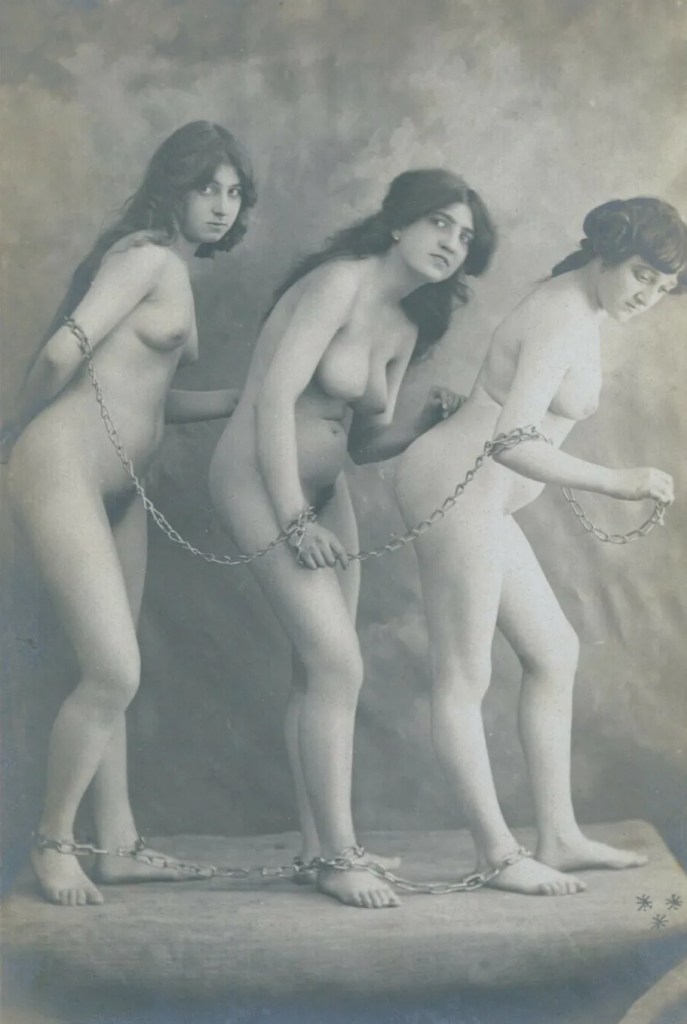
View a complete serie here

Between Art and Taboo
While never as openly sadistic as Yva Richard or as surreal as Bellmer, Oltramare’s Orientalist photographs sit exactly on the knife-edge that separated acceptable “art studies” from clandestine erotica in 1920s France. Distributed in plain envelopes to a discreet clientele of collectors, diplomats, and writers, they were never exhibited publicly during his lifetime.
Rediscovery
Most of these prints survived in a single Swiss private collection and only surfaced in the last decade. Their rarity, combined with Oltramare’s technical mastery, now places them among the most coveted items for historians of early fetish photography.