In the shadowed ateliers of 1930s Paris, where the line between stage spotlight and secret shutter blurred into erotic haze, few figures flicker as tantalizingly as Lucette Desmoulins (1910–1964). Born Luce Desmoulins on December 8, 1910, in Paris’s 14th arrondissement to a mechanic father and seamstress mother, she emerged from humble threads into the glittering web of French theater and film. Yet it was her clandestine poses for the Biederer Studio (brothers Jacques and Charles, masters of veiled fetish) that etched her into the annals of subtle surrender. As one admirer noted in the jazz-age whispers: She was the only named siren in a sea of anonymous silhouettes, her body a canvas for silk-bound fantasies.


Arsène Lupin, banquier, 1930

Desmoulins’ path wound from the footlights to the lens, embodying the era’s intoxicating blend of glamour and guarded desire. Debuting on stage in 1927 with musicals like Ma Femme and Flossie, she danced through roles that teased the boundaries of innocence and allure: Arsène Lupin thief’s accomplice one night, banker’s temptress the next. By 1930, as talkies whispered onto screens, she slipped into cinema, her lithe form gracing 18 films until her enigmatic fade after L’Habit vert in 1937. Known credits include 77 rue Chalgrin (1931) as the eponymous Lucette, Un soir de réveillon (1933), Le bossu (1934), On a trouvé une femme nue (1934), Toi, c’est moi (1936) and Fille de papa (1936).
Elegance Contests and Hidden Romances
Paris of the interwar years adored her at concours d’élégance, where she paraded in feathered gowns and gartered whispers, a vision of poised provocation. Offstage, life mirrored her roles: she became the companion of cartoonist Pol Rab (1898–1933), bearing their daughter Odette just a year before his untimely death. These fragments paint a woman who navigated love’s tighter knots with quiet grace. Post-1937, traces vanish; rumors swirl of a bookseller’s quiet life, then a seamstress mending the very fabrics that once bound her in fantasy. She slipped away after 1939, her final act unwritten, leaving only echoes in attic prints.


The Biederer Enigma: Poses of Surrender and Play
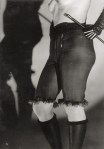
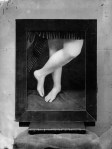
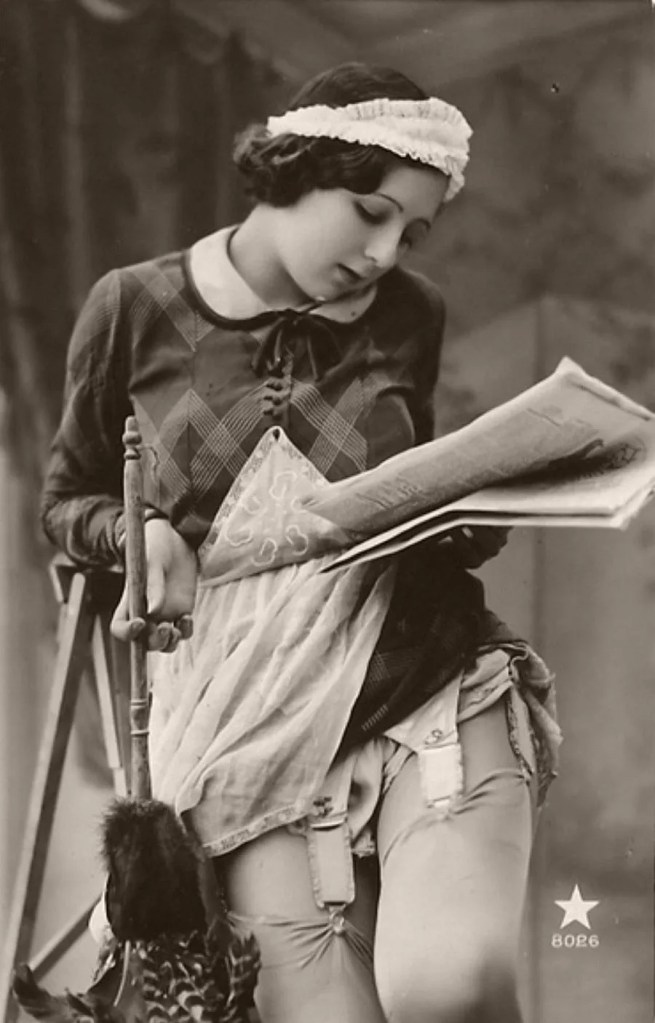
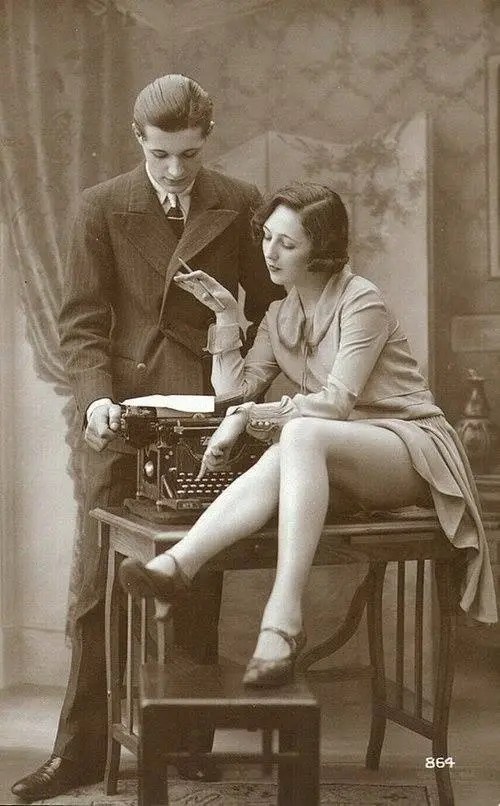
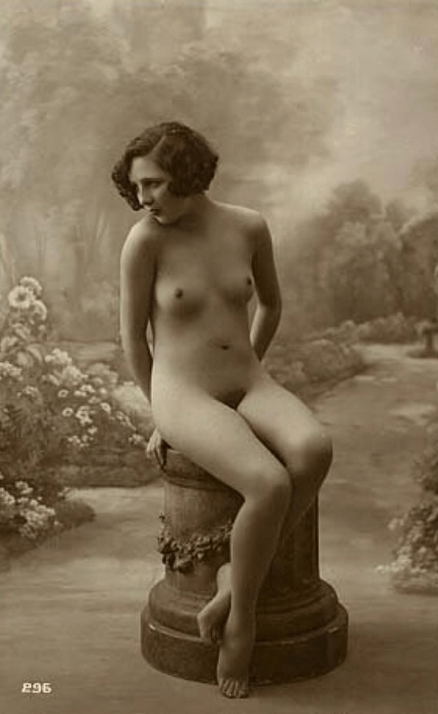
But it is in the Biederer brothers’ lair that Desmoulins truly unbound. Unlike the legion of nameless models who arched under their gaze, she alone signed her skin to their legacy: risqué, nude, and laced with the subtle BDSM undercurrents that defined their oeuvre. From 1920s sessions, her images capture role-play’s delicious alchemy. A secretary bent over a desk in His Secretary, a maid in frilled apron teasing submission in Maid Service, or doll-like ingénue cradling porcelain in Doll Life, her eyes half-lidded in feigned innocence. Mirrors multiply her form in Lucette and the Mirror, reflections folding into infinite vulnerability; a “Dangerous Dame” gloved and gartered, hinting at the power yielded in a single glance.
These weren’t mere pin-ups; they were rituals of overgave. Stockings taut as whispered commands, heels elevating the pose into exquisite tension, a stray ribbon suggesting bonds yet to tighten. Biederer’s watermark marks them as artifacts of an underground elegance, where the model’s consent was the unseen contract. Desmoulins, with her actress’s poise, infused each frame with narrative: the office flirt’s coy arch, the mirrored vanity’s self-surrender. No overt lashes or locks, but the thrill of implication, of gaze and gesture.
View all sets with Lucette as model photographed by Biederer Studio.




A Legacy in Lingerie and Longing
Desmoulins’ archive endures in scattered treasures: Tumblr tributes to her flapper fire, Etsy restorations of Biederer glossies, Reddit reveries on her “risque shoots.” She bridges cinema’s silver screen to photography’s shadowed boudoir, a pioneer of embodied kink before the word wore leather. For bdsmartarchive.com, she arrives not as relic, but revelation:
a model whose every curve chronicles the art of yielding, framed in the era’s most seductive subtlety.