Eugène Réunier, a Pioneer of Erotic Fantasy and Power Dynamics in Early 20th-Century Art stands as a shadowy yet pivotal figure in the pre-war erotic underground. A bridge between Art Nouveau commercialism and the bold, unapologetic explorations of desire that would later fuel the kink community’s visual lexicon. The name Reunier was a pseudonym of German artist Carl Breuer-Courth ( 1884 – 1960). Born in 1884 in Germany, Breuer-Courth apprenticed as a church restorer and muralist under mentors like Johann Vincenz Cissarz, honing a meticulous style that blended elegance with sensuality. By the 1910s, he had settled in Stuttgart, where he built a respectable career as a commercial illustrator, creating whimsical advertisements featuring flirtatious fairies and vibrant children’s book imagery for tales like the Trotzkopf boarding school series. Yet, beneath this polished facade lurked a fascination with the forbidden: bodies in ecstatic surrender, the thrill of restraint, and the intoxicating interplay of dominance and submission.
Historical Importance for the Kink Community
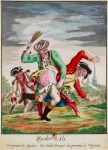
For the kink community, Réunier’s true legacy emerges in the 1920s, a decade when Europe’s avant-garde was dismantling Victorian taboos amid the cultural ferment of Weimar Germany and Parisian bohemia. His illustrations often veered into fetishistic territory, depicting scenarios of corporal punishment, governess-led discipline, and ritualistic power exchanges that echo the sadomasochistic motifs later amplified by artists like John Willie or Eric Stanton. These were not mere titillation; they were early cartographies of consent and fantasy, capturing the psychological undercurrents of BDSM long before the term existed—whips as symbols of liberation, bound forms as emblems of exquisite vulnerability. In an era when such imagery could land creators in court, Réunier’s work preserved a vital thread of kink history.


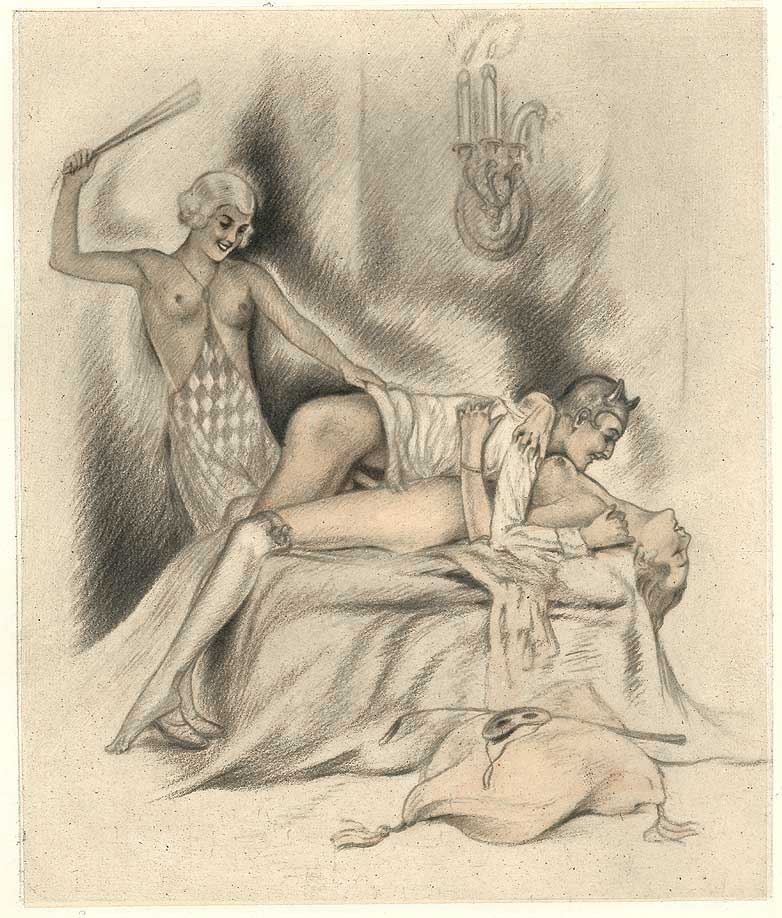
Autour de l’Amour (1925) – The Masterpiece
Réunier’s most enduring contribution is his 1925 portfolio Autour de l’Amour (All About Love), a limited-edition suite of 27 original signed etchings released in Paris (though produced in Stuttgart). Presented in a luxurious green-cloth portfolio with red morocco accents, the first 50 copies featured hand-signed plates. The drawings unfold as a lustful circus of the senses: harlequins in erotic tableau, irascible governesses wielding corrective fervor (La Gouvernante Irascible), and figures entwined in a ballet of dominance that blends whimsy with raw intensity. Motifs of spanking, restraint, and ecstatic torment recur, rendered with a draftsman’s precision that elevates them to high art.
Collaboration with Ernst Schertel
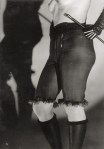
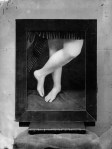
Equally resonant for BDSM history is Réunier’s connection with Ernst Schertel, the occultist and sadomasochism theorist. Schertel’s Der Flagellantismus als Literarisches Motiv (Vol. III, ca. 1931, Parthenon-Verlag) features Réunier’s photographs and illustrations alongside Louis Malteste and Otto Schoff. In this scholarly yet provocative volume, Réunier’s staged scenes and nude studies serve as visual evidence in Schertel’s argument that flagellation is a profound cultural and erotic archetype.
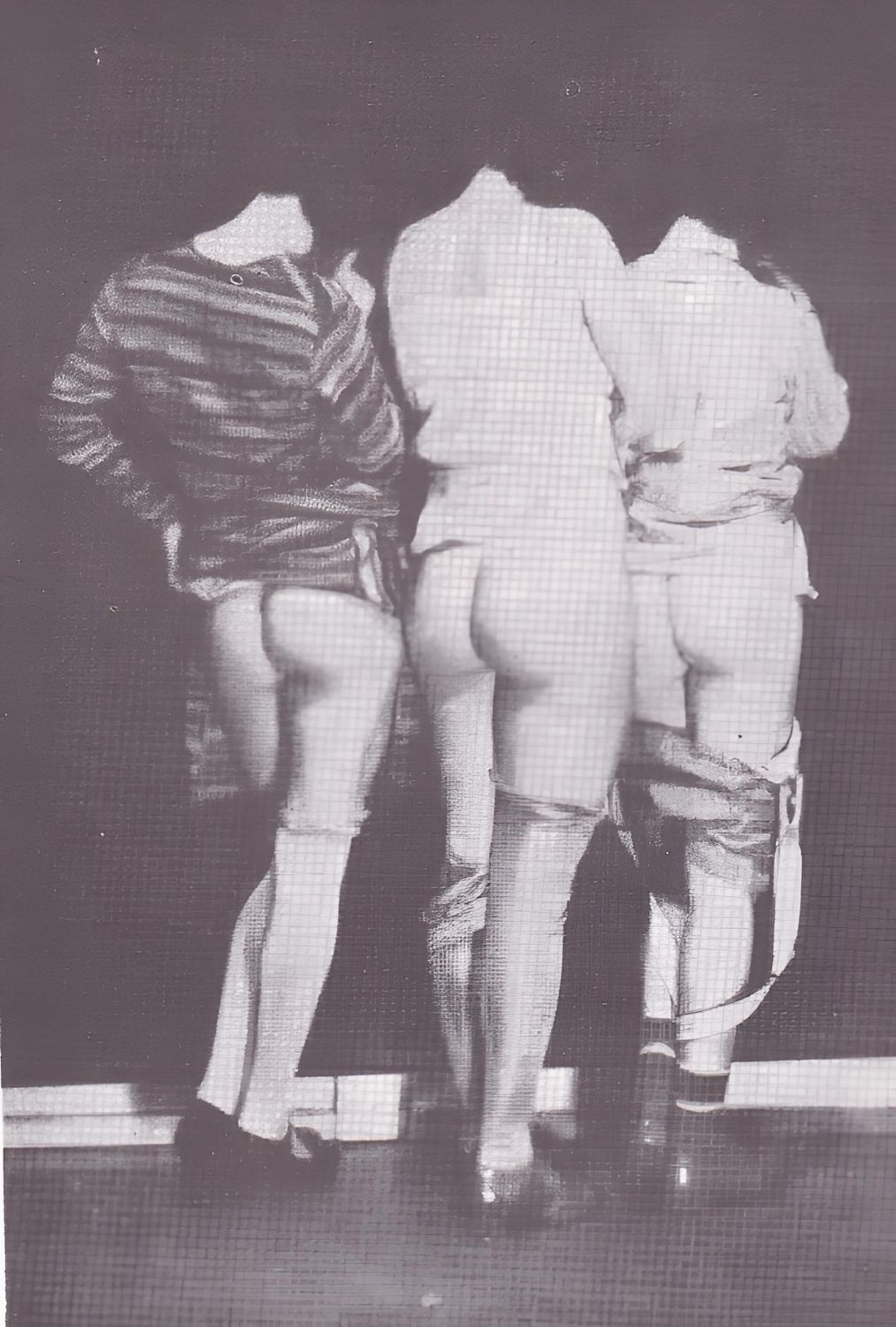


Later Work & Legacy
By the 1930s Réunier moved into photography, collaborating with August Sieberg on Enthüllte Schönheit (1930s), a series of soft-focus artistic nudes. He continued working in Stuttgart until his death in 1960, his double life as family illustrator and secret erotomane perfectly mirroring the era’s compartmentalised desires.