Paul Prött (c. 1880–1945), born in Hagen, Germany, emerged from a life marked by loss and reinvention to become a shadowy force in Weimar-era erotica. After studying art in Munich, he settled in Cologne around 1912, where his early mainstream works (cityscapes, landscapes, and symbolic etchings inspired by his World War I service in Macedonia) captured the grit of locales like Babuna Pass and Skopje.
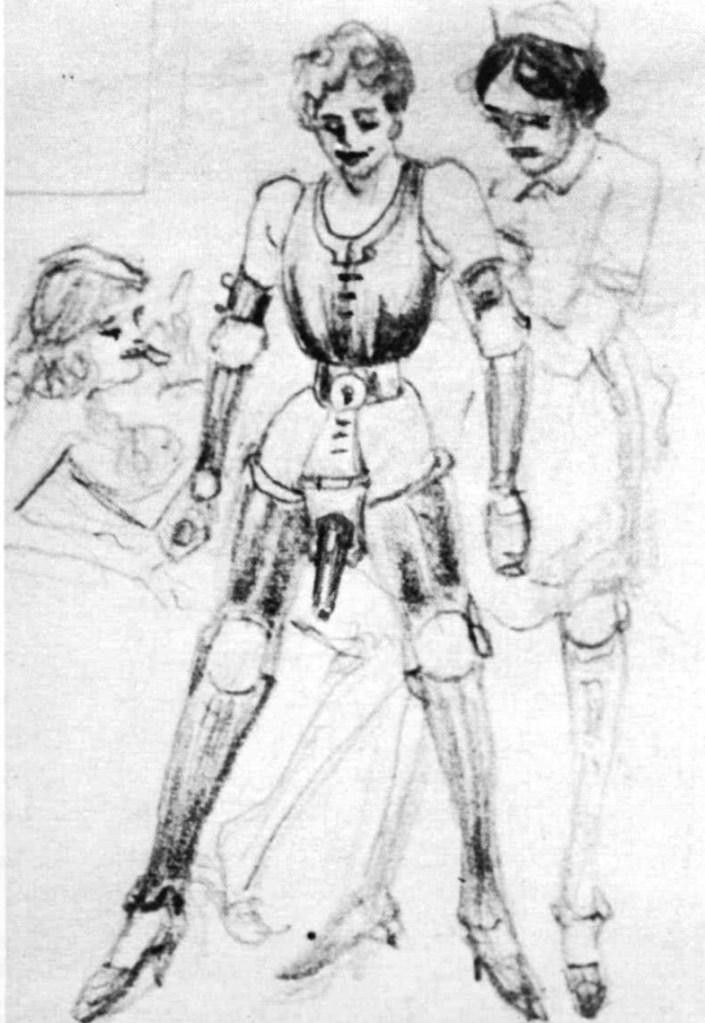
Personal tragedy struck with his wife’s death before the war, prompting a relocation to Berlin in the 1920s with his stepdaughter. There, as a successful commercial designer amid cabaret decadence, Prött channeled his private obsessions into art: he practiced extreme self-discipline through leather corsets, steel bandages, chastity devices, and dilation tools, often creating while “fixated at his drawing board.”
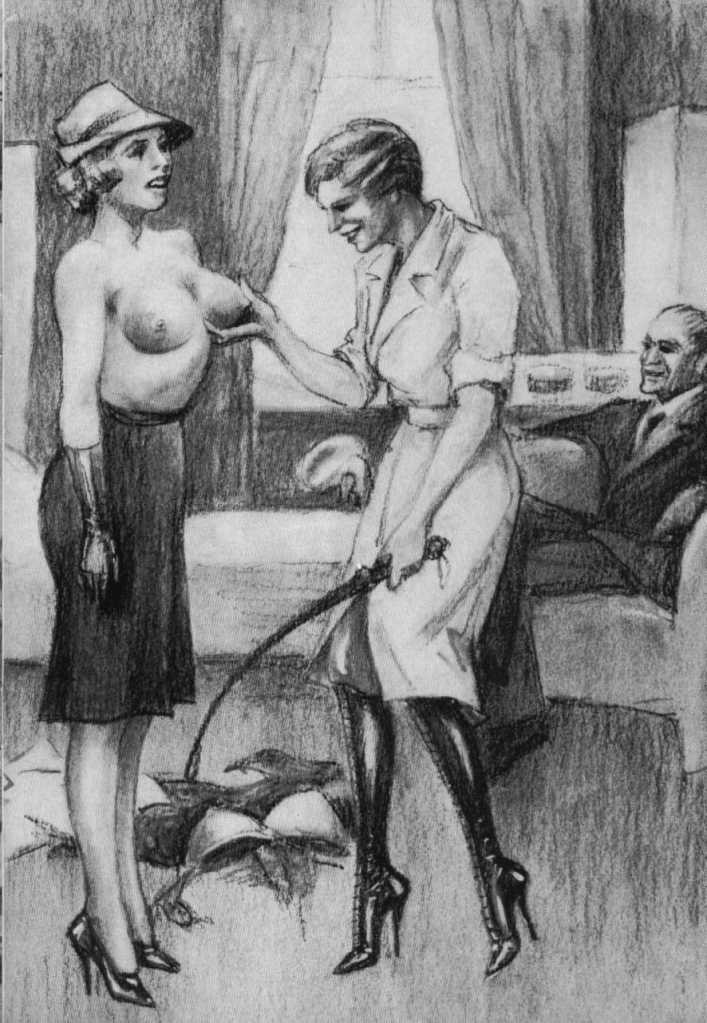
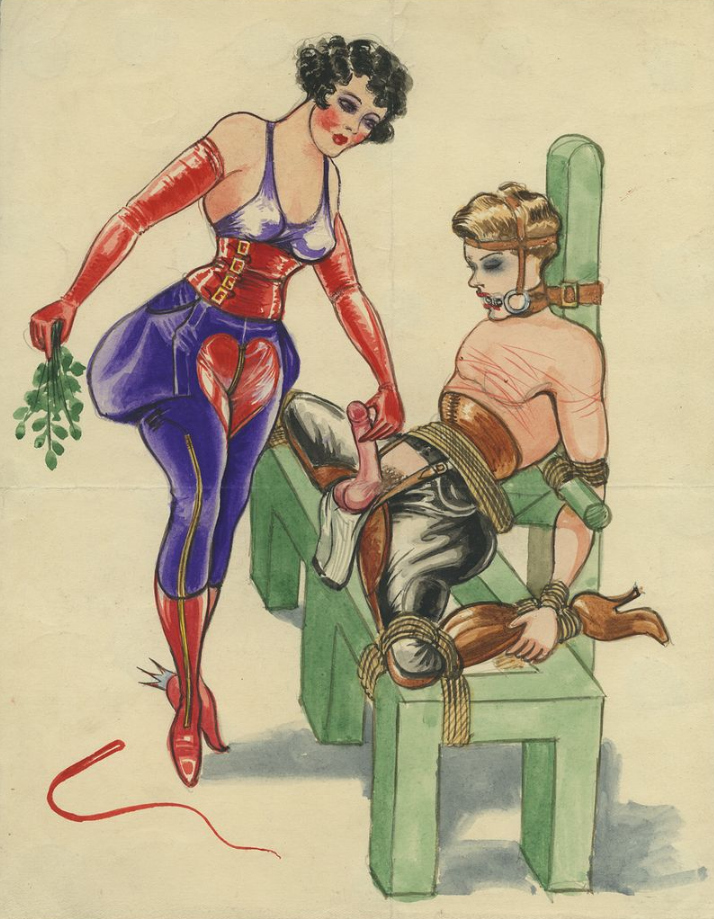
This lived intensity fueled his razor-sharp BDSM vignettes, rendered in stark black-and-white ink and expressionist angles, stripping spanking, boot worship, and leather discipline to their raw, urban essence, no frills, just the crack of authority.
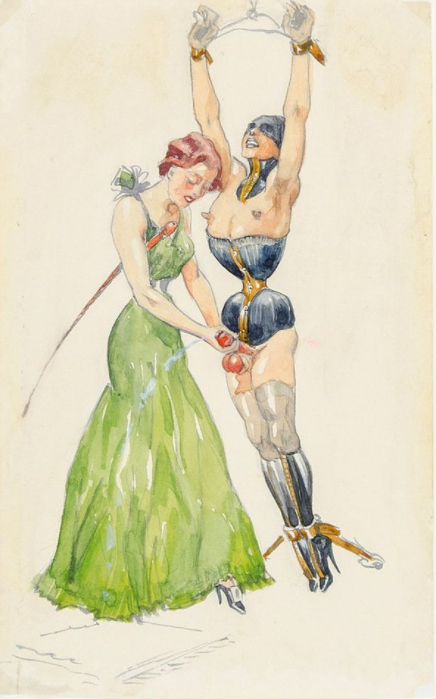

The heel that presses the neck is the metronome of true desire.
Prött, caption in a 1931 private portfolio
From Cabaret Sketches to Clandestine Albums
Prött’s early work appeared in Berlin night-club programs and Die Dame fashion plates, but his underground albums Stiefel und Peitsche, Die Zucht der Stadt, delivered unfiltered M/F and F/M power games: garter-bound secretaries, monocled dominas, and gas-mask fetishism amid Expressionist shadows.
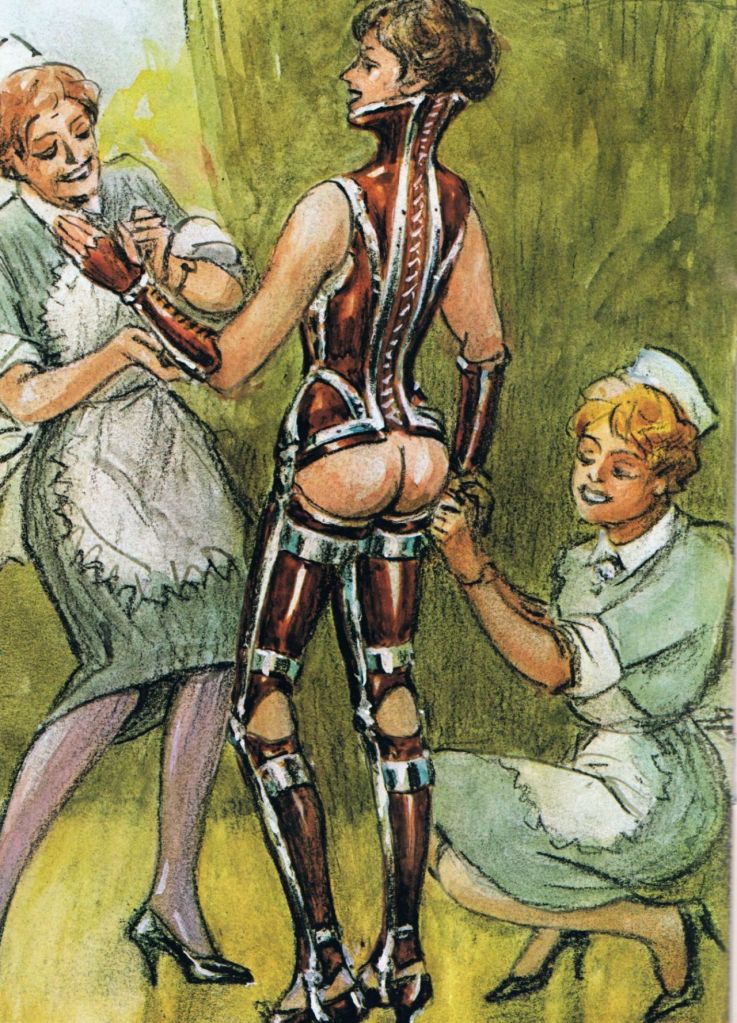
Echo in Post-War Fetish Art
Prött’s brutal minimalism prefigured the stark aesthetics of 1950s American kink mags. His scarce originals remain holy grails for collectors of interwar German erotica.
Discover more from Paul Prötts Art:
Vintage FemDom Art – Vintage Bdsm Art