On the surface, Charles-François Jeandel was the very model of late-19th-century respectability. Born 1859, died 1942. Member of the Société Archéologique de Charente. Lived in a sleepy Charente village, cataloguing Romanesque chapels, photographing his garden, his children, his younger wife. A gentleman archaeologist with a Catholic missal in one hand and a tripod in the other.
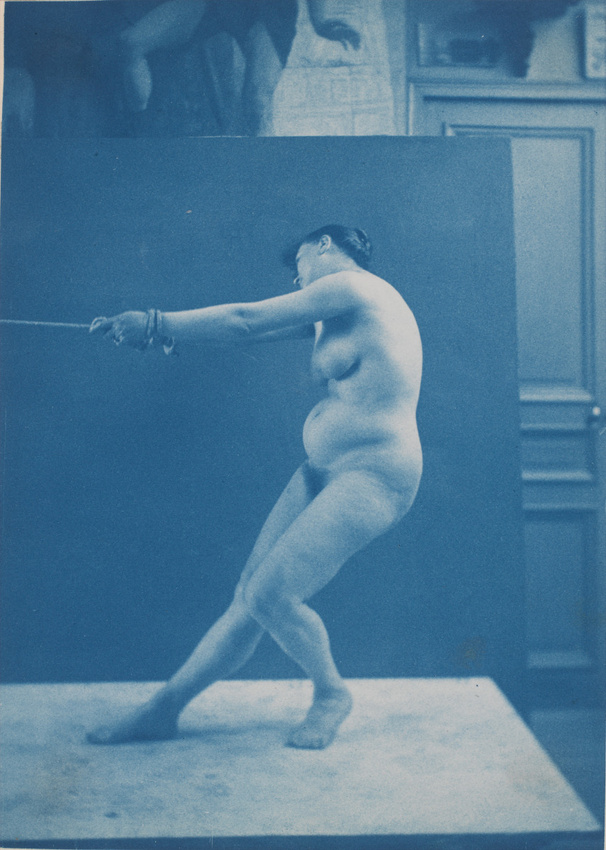
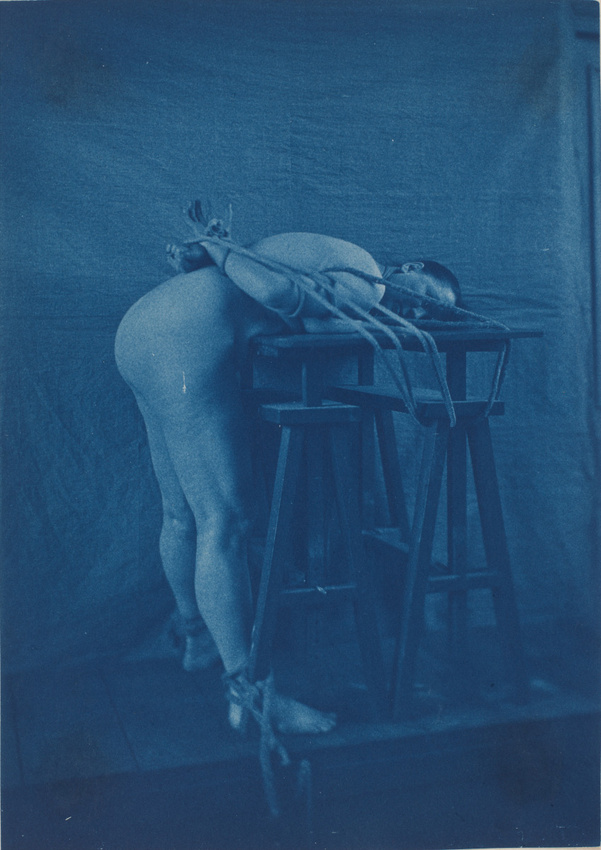
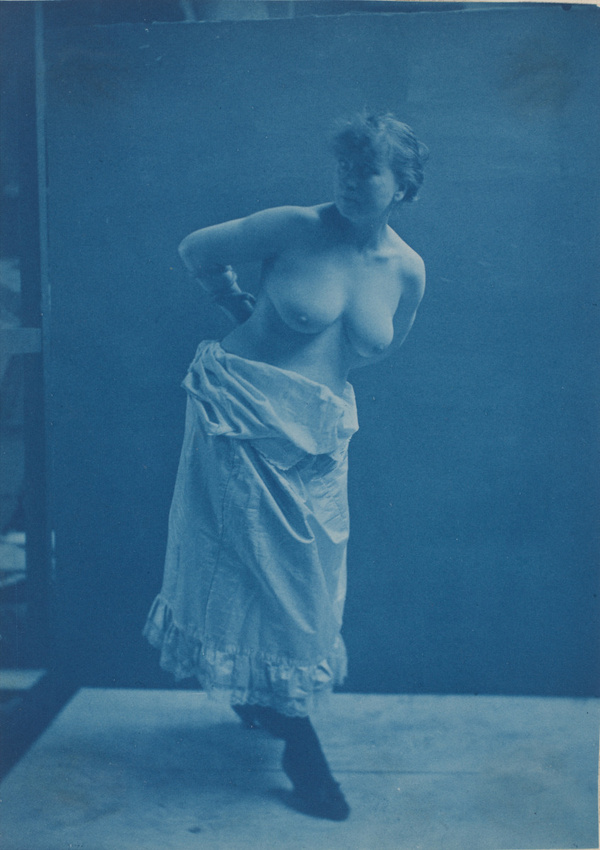
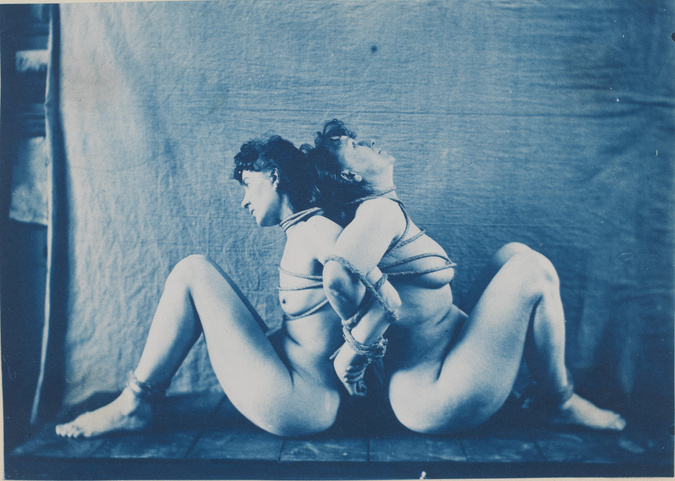
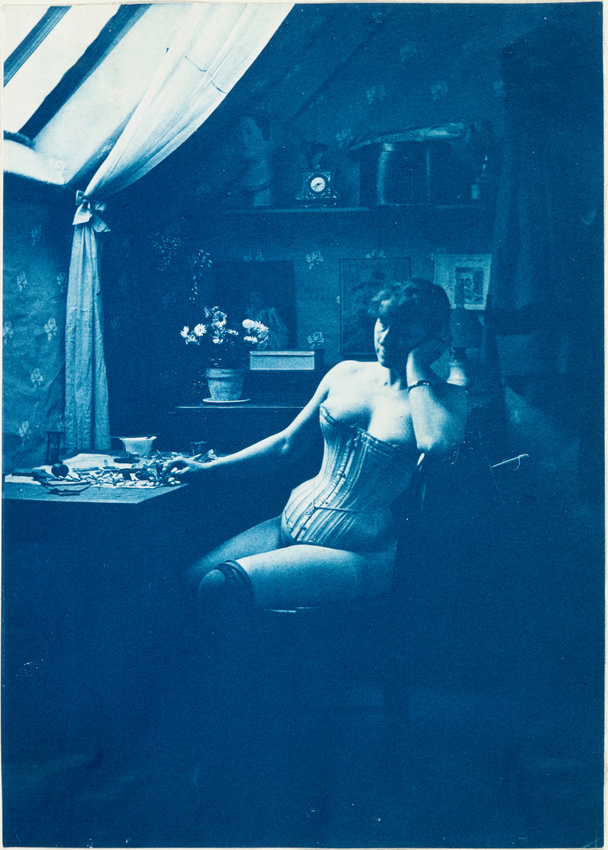
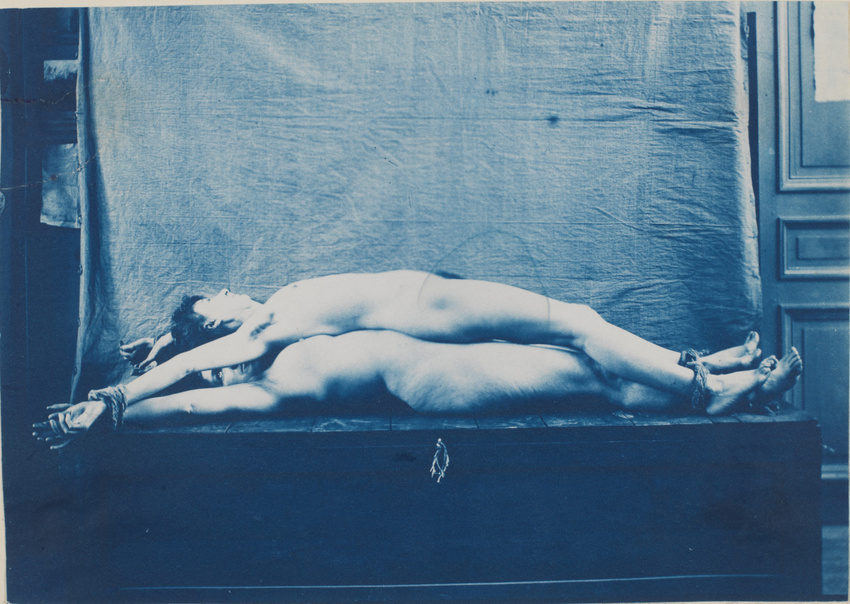
Then you open the album. Tucked away in the Musée d’Orsay (access by appointment only, ask for Fonds Jeandel), lies a single, unmarked cyanotype album containing over 120 plates. All shot circa 1895–1896 in a Parisian studio far from his provincial hearth.
What you see:
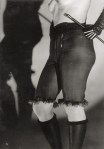
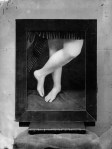
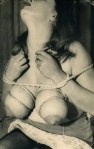
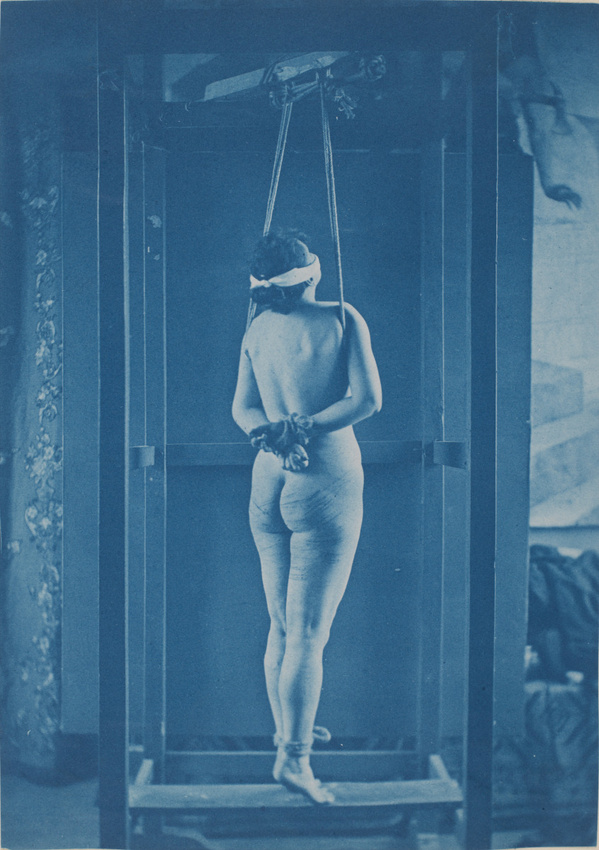
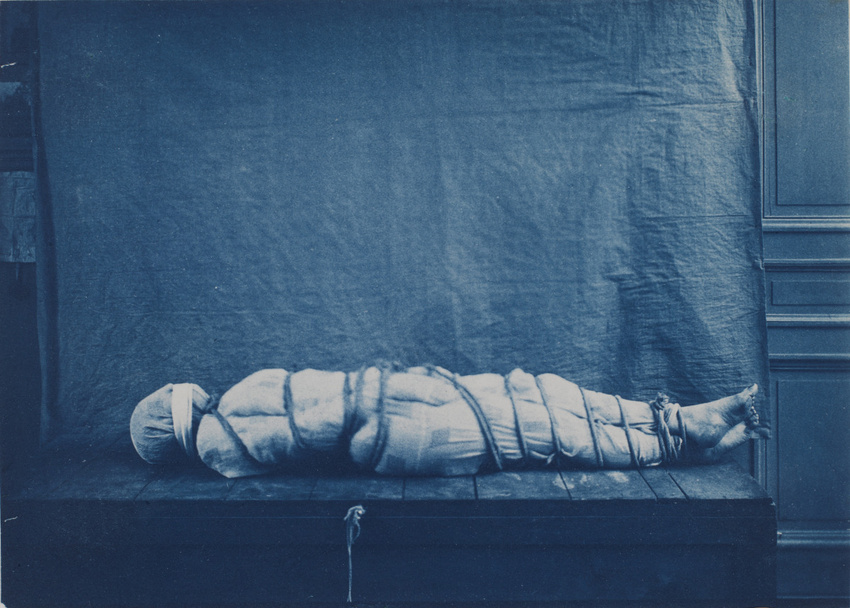
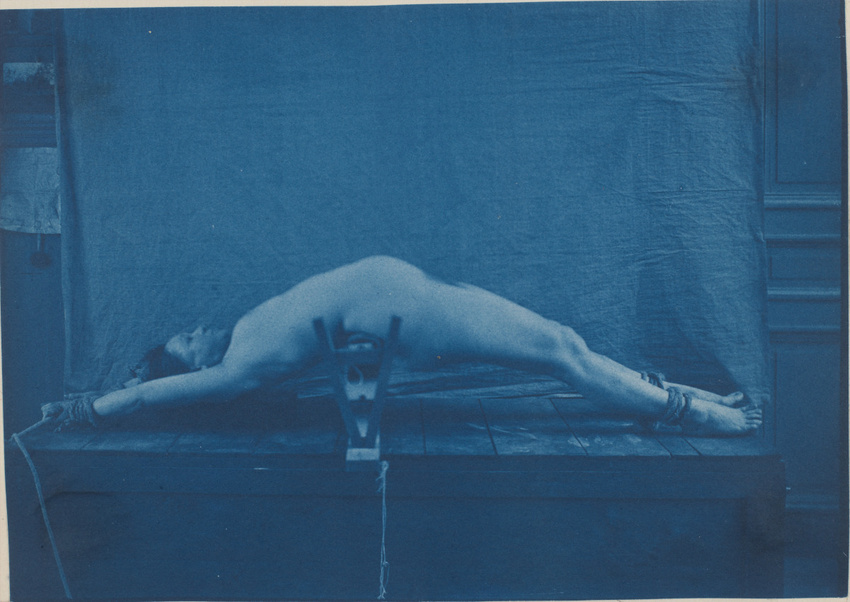
- Young women, one, sometimes two, nude, bound, marked.
- Rope bites into wrists and ankles.
- Gags fashioned from household cloth.
- Blindfolds of black silk.
- On rare plates, a male figure appears, tied, hooded, anonymous.
- The same massive Charentais firefighter table in nearly every frame — its painted surface (still hanging today in the grand staircase of the Hôtel de Ville d’Angoulême) serving as altar, stage, and witness.
The only inscription? “Jeandel” in his own neat hand.
Charles Jeandel, a respectable Angoumoisin notable in every way, was in fact a precursor to bondage. A passion shrouded in mystery
Sophie Carbonnel
The Cyanotype Secret
All prints are cyanotypes, that ghostly Prussian-blue process favored by architects and amateurs for its stability and low cost. Jeandel likely developed them himself in a makeshift darkroom during his Paris sojourns.










The Model in the Frame
One girl recurs, 18 or 19 at the time of shooting. Delicate wrists, dark hair pinned loosely.
The timeline fits: Jeandel married a woman nearly 20 years his junior in 1897.
Is this his future wife, bound in a rented studio before she became Madame Jeandel of Charente?
From Chapel Spires to Rope Marks
How does a man who sketches 12th-century capitals by day spend his Parisian nights young women to antique furniture? We may never know. No diaries. No letters. Just the album, and the firefighter table, still gleaming under Angoulême’s chandeliers, indifferent to the secrets it once held. Discover more photos via Musée d’Orsay.