Today I’m exploring a surprisingly persistent yet taboo fascination: the erotic allure of nuns and monks both delivering and receiving spankings. Far from being a purely contemporary fetish, this motif threads through centuries of religious discipline, provocative art, and whispered convent anecdotes. I’ll draw on archival accounts of corporal punishment within monastic communities, Victorian‑era erotica, and a selection of historic artworks—including pieces from the Spanking Art Works collection—to trace its evolution.
I’ll examine how the birch intersected with the habit. While I’ll reference photographs, the true “action” lives in the illustrations.
My aim is to trace this fetish’s sacred lineage across the ages.
Roots in the Cloister: From Medieval Mortification to Monastic Mischief
The spanking fetish that centers on religious figures didn’t emerge from nowhere; it grew out of disciplina, the Catholic Church’s long‑standing practice of using corporal punishment as a form of spiritual medicine.
Even as early as the sixth century, the Rule of St. Benedict prescribed flogging for offenses such as tardiness or gluttony, seeing it as a way to “mortify the flesh” and purge sin. The punishments weren’t gentle—leather scourges, horse‑hair whips, and birches were all employed, the latter delivering that sharp, over‑the‑knee sting familiar to modern fetish imagery.
By the medieval period (roughly 500‑1500 CE), monasteries and convents functioned like boot camps for the soul. Monks and nuns could receive upper discipline (a back‑whip administered publicly as penance) or lower discipline (a buttocks‑spank given privately for humility), often performed bare‑bottomed to amplify shame.
Ælfric Bata’s tenth‑century Colloquies casually mention monks lashing boys for laziness, treating it as routine as the evening prayers. Nuns were not exempt: English visitation records recount sisters being caned for gossip or idleness, sometimes in public to instruct the whole community. A ninth‑century Carolingian text even debates whether to flog naked monks to satisfy imperial orders while preserving modesty—the abbot ultimately chooses full exposure.
These practices weren’t solely about piety. Power dynamics played a big role: abbots whipping subordinates, or nuns disciplining wayward girls in convent schools (the first European schools, run by monks from the seventh century onward).
Fast‑forward to the Inquisition era, and you find stories of “naughty nuns” birched for alleged promiscuity, recorded in late‑medieval English accounts of monastic scandals. The erotic undertone was almost inevitable—flagellation echoed Christ’s own scourging, intertwining pain with a sense of ecstatic transcendence.
- Early Medieval (c. 500 – 1000 CE) – Benedictine monasteries imposed floggings on rule‑breakers; child oblates were beaten as part of their formation.
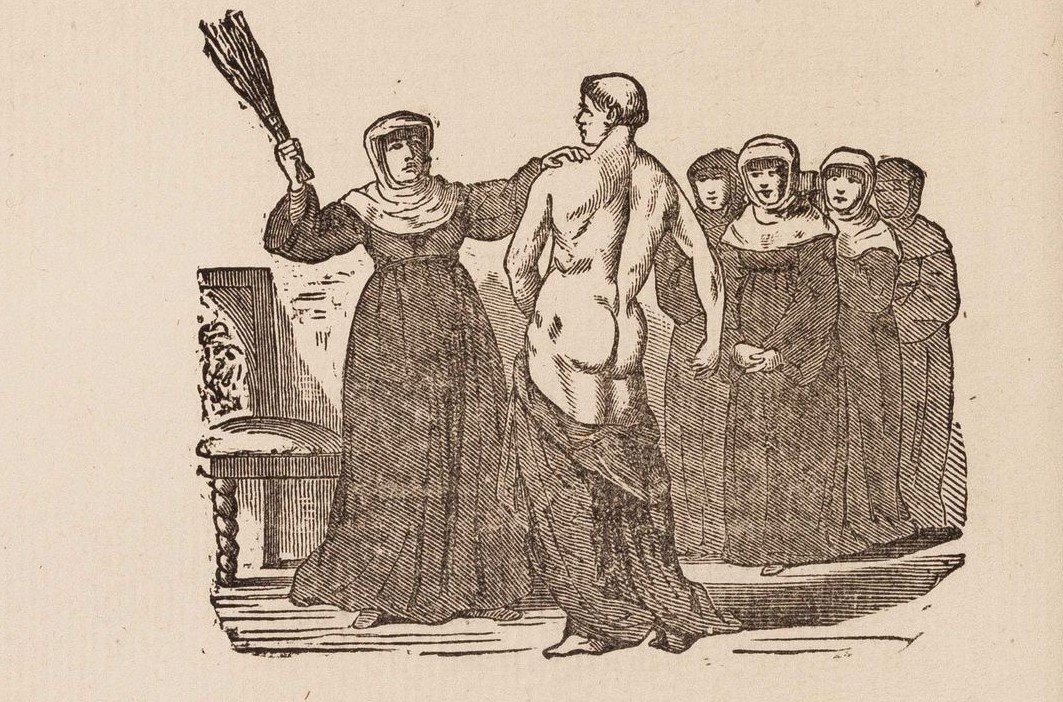
Erotic twist: Bare‑bottom “lower discipline” was used to enforce humility, and the occasional debate over nudity adds a voyeuristic flavor. - High Medieval (c. 1000 – 1400 CE) – Public birchings took place in chapter houses, and nuns were caned for perceived “feminine faults.”
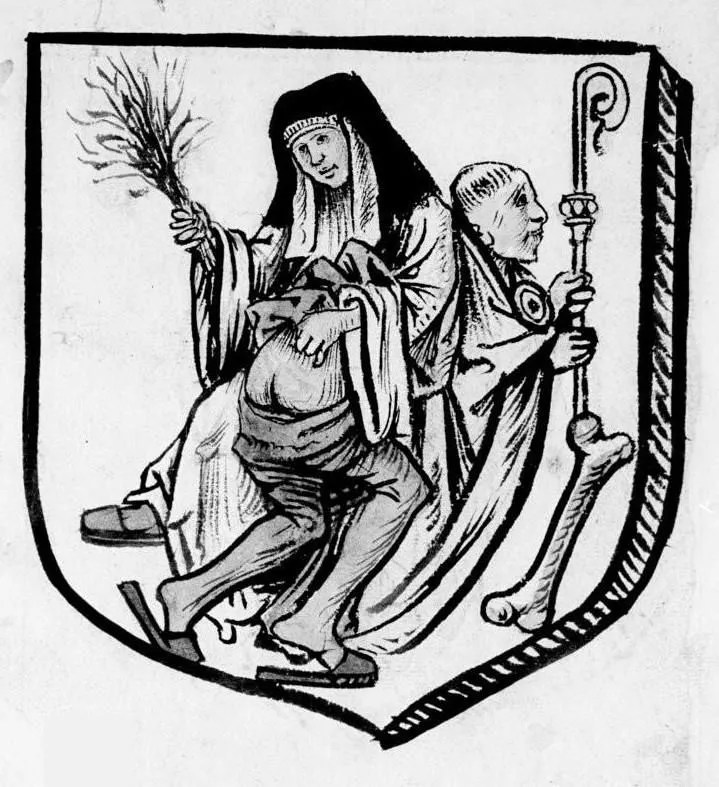
Erotic twist: Marginalia in manuscripts—such as the whimsical “snail‑knight” illustrations—suggest a satirical fascination with spanking fantasies. - Late Medieval / Renaissance (c. 1400 – 1600 CE) – After the Council of Trent, punishments intensified; monks could be flogged for alleged heresy.
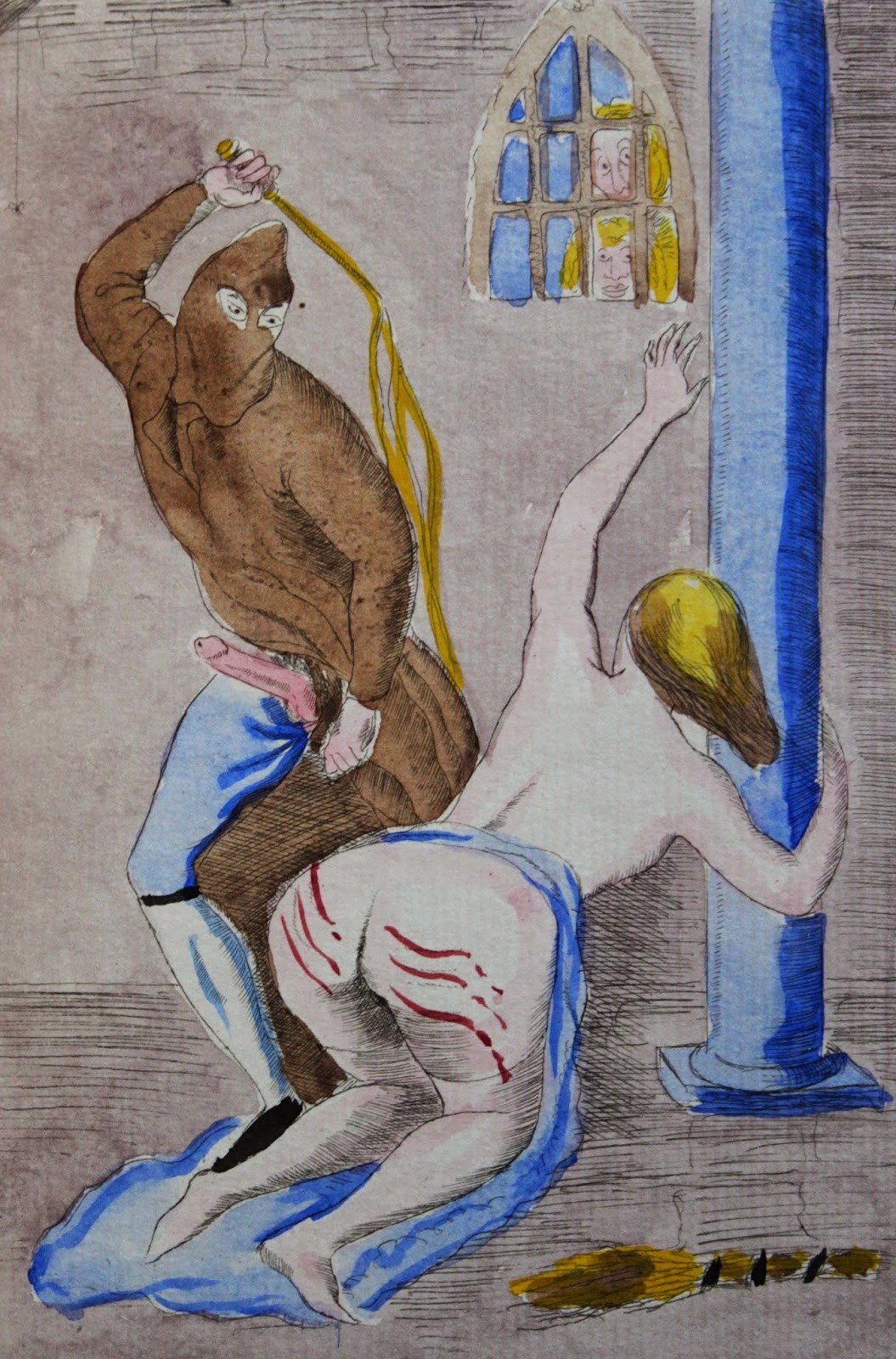
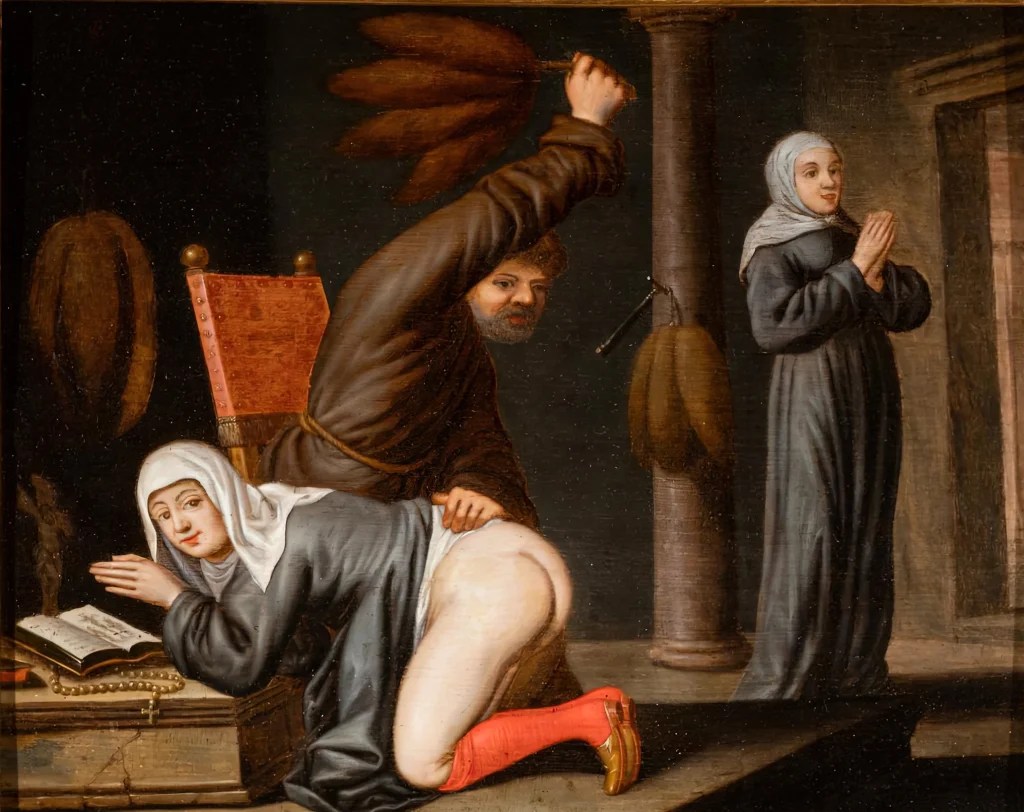
Erotic twist: Anti‑clerical prints from the period depict friars spanking nuns as Protestant propaganda, often with a knowing wink.

The Renaissance Whip: Art Turns Discipline into Desire
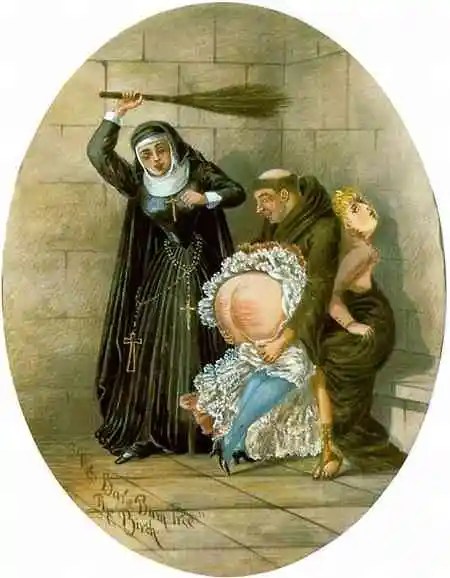
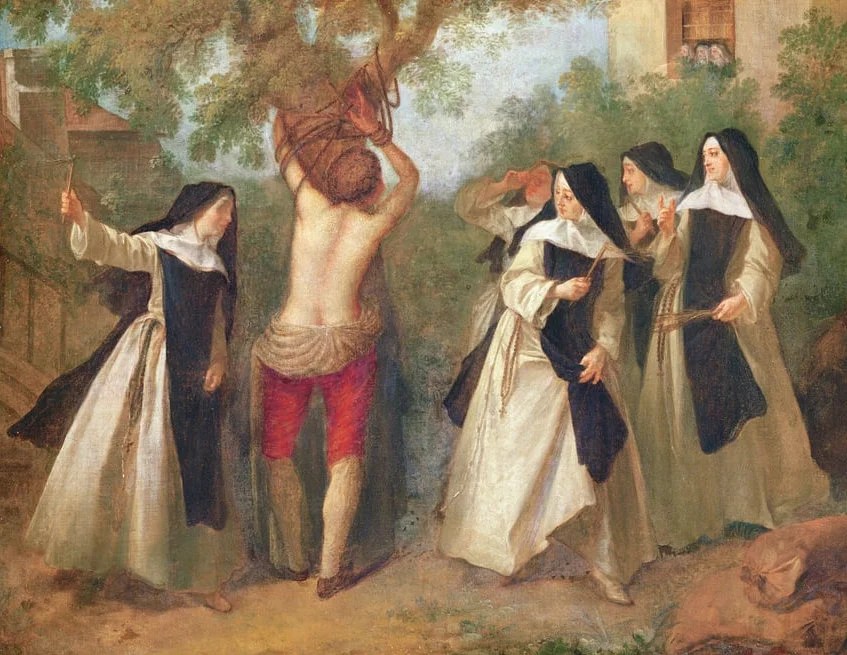
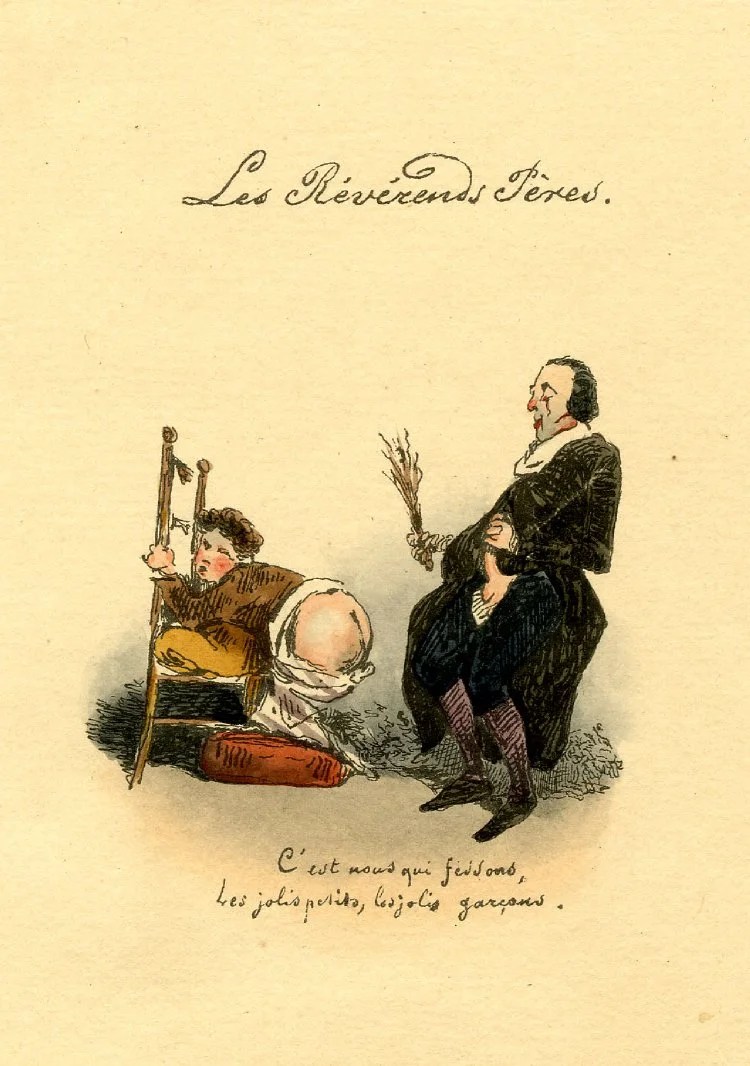
Art has both preserved and eroticized these moments, turning acts of penance into a kind of light‑handed pornography. From the 15th through the 18th centuries, European painters and engravers seemed unable to resist the sight of a habit‑clad rear.
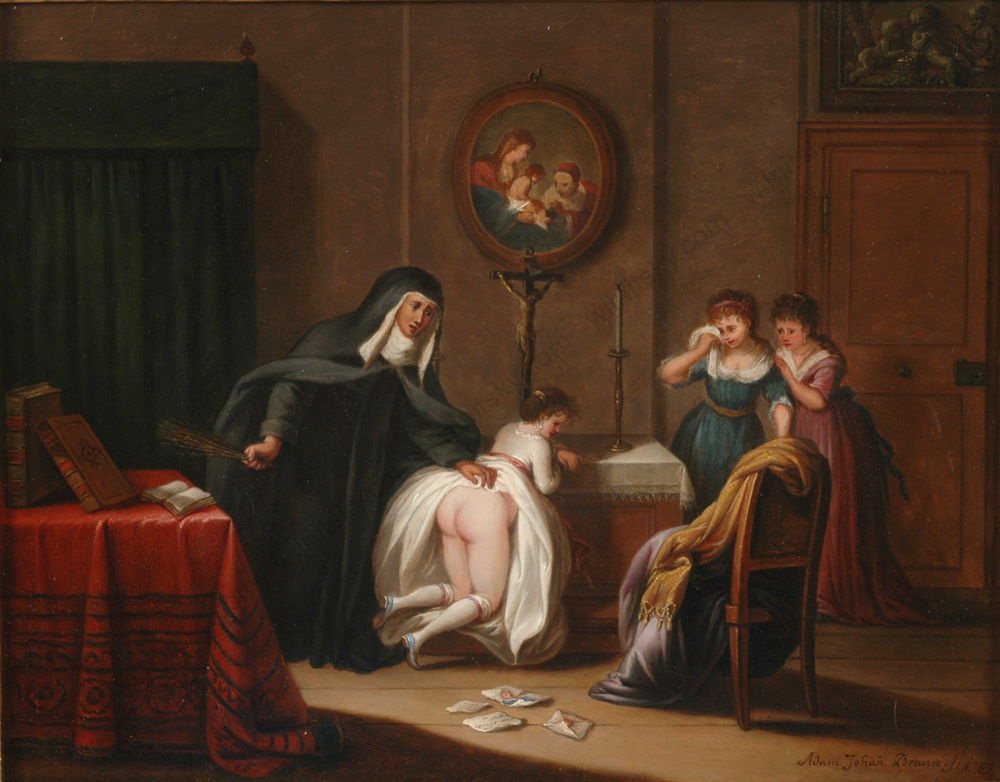
Austrian genre painter Adam Johann Braun captured the scene in 1789: a nun birches a schoolgirl’s bare cheeks for reading “inappropriate” letters. Is it strict discipline, or does a sultry subtext linger? Similar moods surface in anonymous 18th‑century French prints that show friars flogging nuns with fluffy‑tailed whips—perhaps meant as ritual humiliation, perhaps as pure titillation.
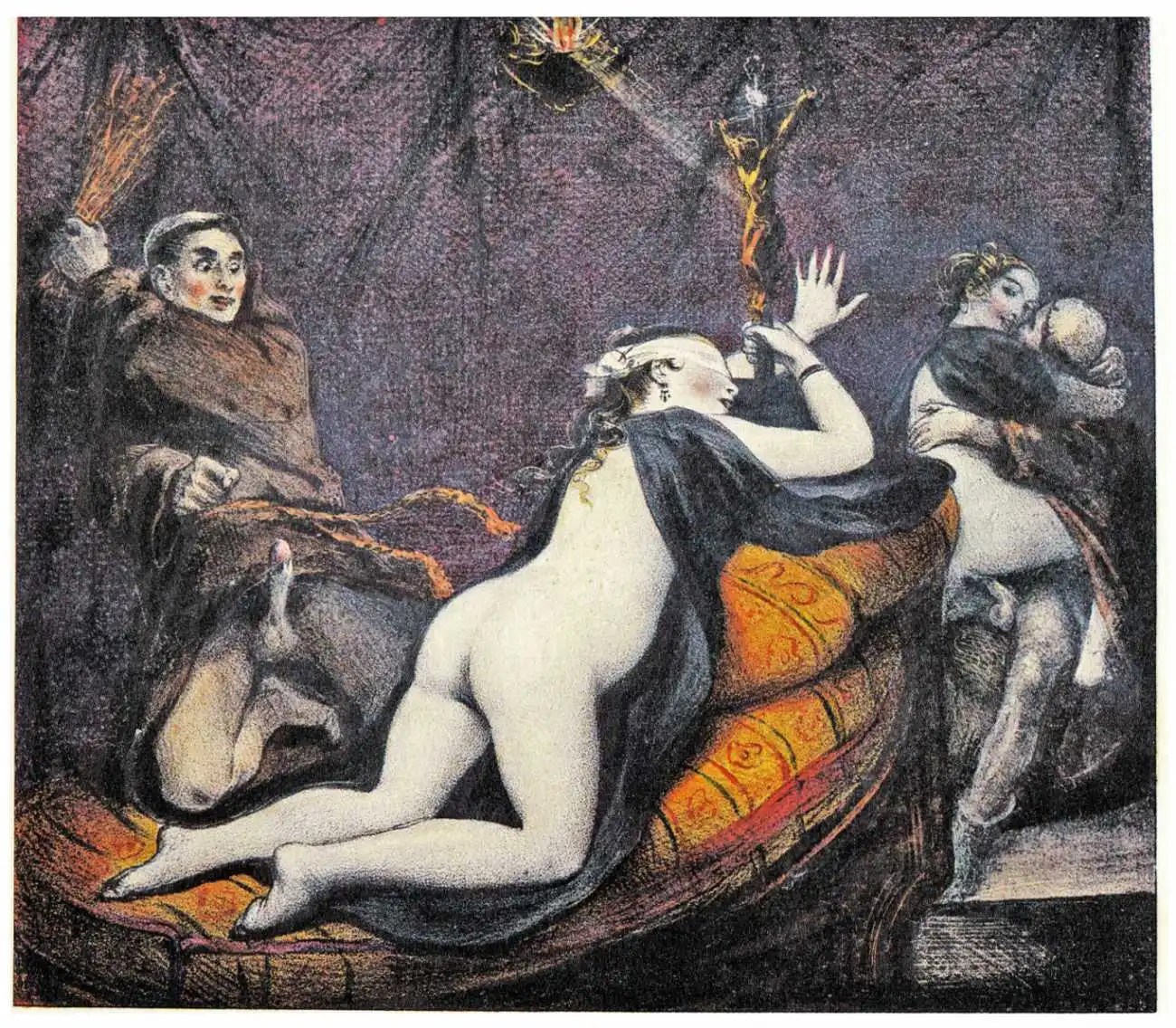
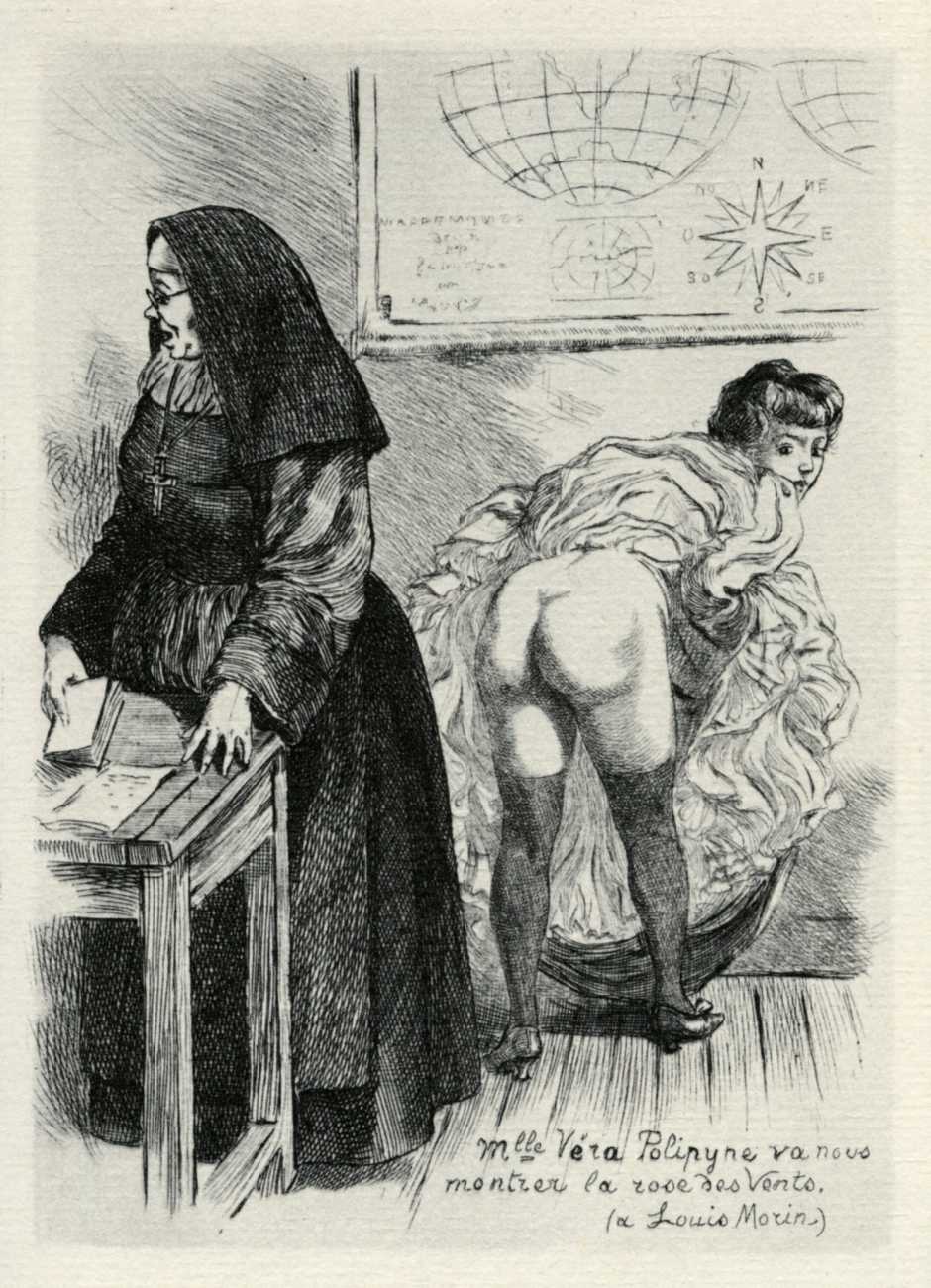
The illustrator Martin van Maële contributed his own take in La Grande Danse Macabre (1905). During the Reformation, engravings took on a political edge. Protestant artists such as Matthaeus Greutner (16th century) sketched monks spanking nuns to mock Catholic “corruption,” yet the exaggerated poses also feed a fetishist imagination.
The Enlightenment saw a boom in French “convent pornography”: cheap pamphlets filled with anti‑clerical cartoons of licentious friars and birch‑wielding sisters, sold side‑by‑side with brothel advertisements in Paris’s Palais Royal. In the 19th century, the Belgian artist Félicien Rops and writer Léon Louÿs produced explicit etchings of nun‑whippings, blending satire with sadomasochism.
Modern echoes persist. Italian comic‑artist Milo Manara amplified the theme in his Borgia graphic novels (2010s), featuring graphic nun‑torment scenes. Film also revisits the subject; The Magdalene Sisters (2002) dramatizes real Irish convent canings, highlighting the brutal reality behind the historic fetish.
Seeking Snaps: Vintage Photos and Modern Traces
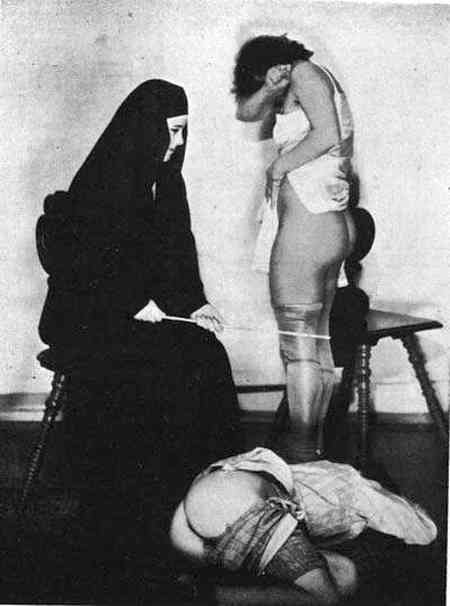
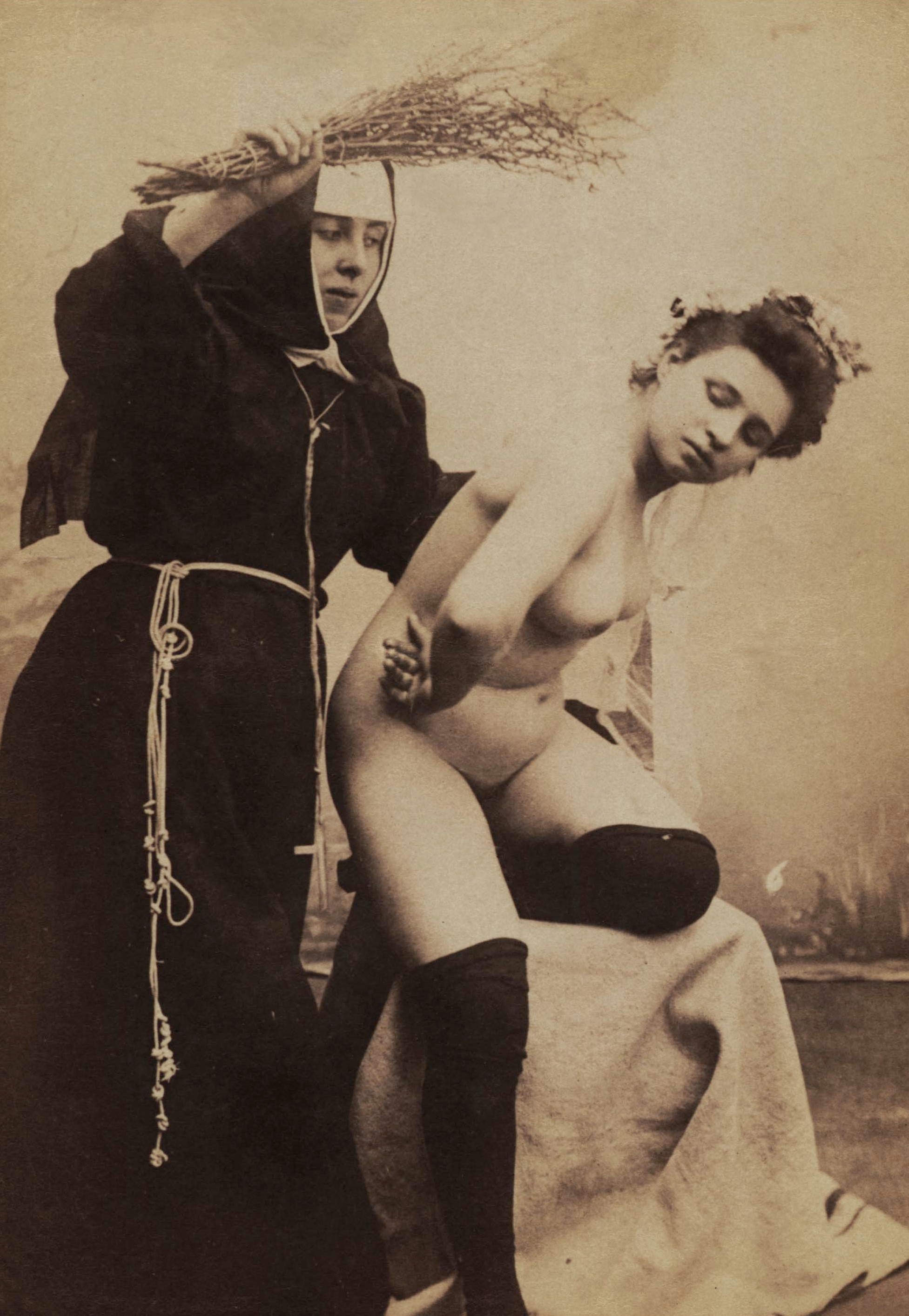
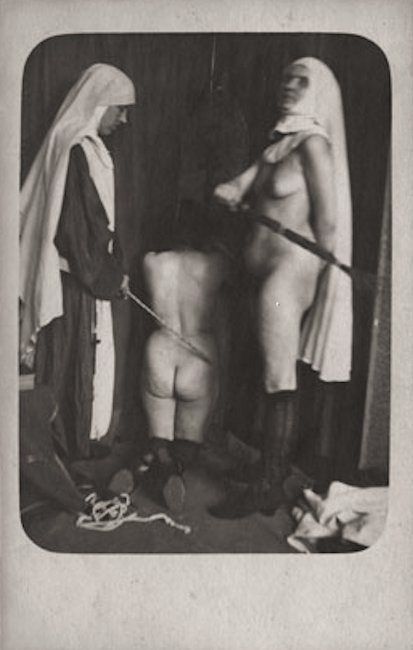
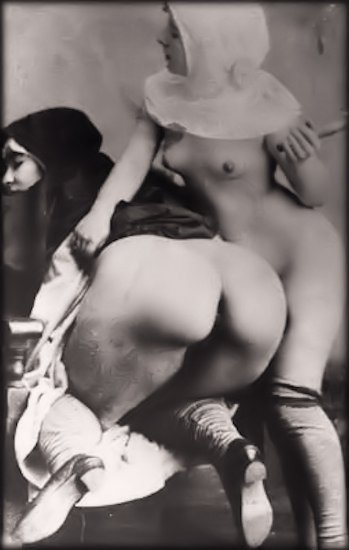
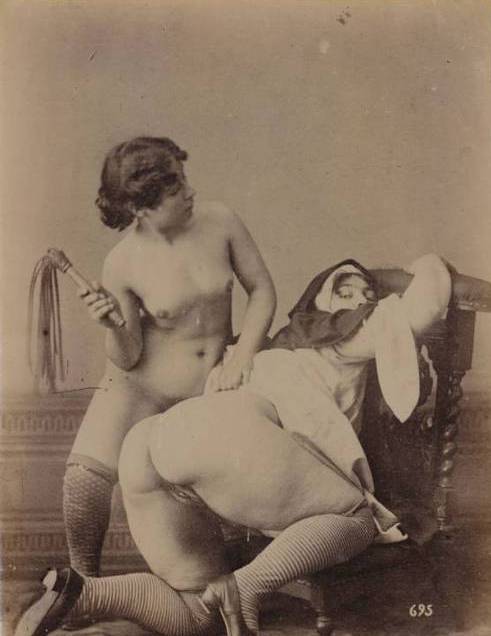
Authentic historical photographs of real spankings taken before the 1950s are exceedingly rare. What does survive is largely staged erotica or overt propaganda.
- 1930s French erotica prints – A risqué series titled “Naughty Monks and Nuns” presents faux‑historical scenes: a friar playfully swatting a sister’s habit‑clad rear. They aren’t photographs, but the prints are deliberately aged to look vintage.Collectorsprints.com
- “Affectionate” stagings – A cheeky publicity image from the late‑1920s to early‑1930s, captioned Monk Gives a Nun an Affectionate Spanking, was reproduced as vintage‑style prints. It’s clearly staged for titillation rather than depicting genuine penance.
- Post‑World War II realism – Grainy photographs from Irish Magdalene laundries (1940s–1960s) hint at corporal punishment, though none are explicitly graphic. For those seeking fetish‑style recreations, the 1970s–1980s adult magazines feature model‑nuns in over‑the‑knee (OTK) scenes—edgy, but not authentic historical documentation.Vintage Fetish & Fashion
These sources illustrate the blend of vintage fetish aesthetics and fashion‑driven eroticism that has surrounded the monk‑and‑nun spanking motif across the decades.
The Last Lash: Why This Fetish Endures
From Benedict’s birch to Braun’s brushstrokes, the nun‑and‑monk spanking motif endures because it fuses authority, taboo, and vulnerability into a single, charged tableau. It functions as an archetypal power exchange: the habit becomes both a shield and a tease.
Victorian novels such as The Convent School (1876) by Rosa Coote made the scenario explicit, paving the way for later works like Venus in Furs and the BDSM scenes we see today. In contemporary culture the trope appears in porn parodies and kink conventions, a reminder that some transgressive desires remain timeless.
Sources drawn from monastic rules, art histories, and erotica archives. All citations via scholarly and archival refs, because even fetishes deserve footnotes.
The Medieval Monk – Spanking Art Wiki – SM201 – Thesis by Christian D. Knudsen – Magistra et Mater – Collectors Weekly – Gamiani Spanking Scenes – Mainstream Spanking – Monastic Prisons and Torture Chambers: Crime and Punishment in Central European Monasteries – Wikipedia