William Seabrook (1884–1945) is a fascinating yet deeply unsettling figure lurking in the shadows of the Surrealist scene, an adventurer, journalist, occultist, and self-confessed “bondage-freak” whose life was a heady cocktail of exotic travels, cannibalism experiments, spiritual quests, and intense erotic explorations.
Long before the leather scene, long before SSC or RACK, Seabrook lived power exchange as ritual. The surrealists called him “Willie” and invited him to every party because he was the only one who actually did what the rest only painted or wrote about.
I believe that there is a mystic quality in sadism… a sort of religious ecstasy in the infliction of pain and in the endurance of it
William Seabrook, private manuscript, quoted in Marjorie Worthington, The Strange World of Willie Seabrook (1966)

Who was William Seabrook?
Seabrook, born William Buehler Seabrook in Maryland, was a quintessential “lost generation” figure: a journalist and author who roamed the world in search of the hidden and the forbidden. He wrote bestsellers such as Adventures in Arabia (1927) and The Magic Island (1929), in which he introduced Haitian voodoo rituals and the concept of zombies to the Western public, a heady mix of anthropology and sensationalism that made him both famous and notorious.
His occult obsession ran far deeper: he met Aleister Crowley in 1919, experimented with cannibalism (he consumed human flesh in West Africa, purely “for science”), and published Witchcraft: Its Power in the World Today (1940), a sweeping global survey of witchcraft and ritual practices.
Yet beneath the exotic façade lay a darker side: Seabrook was a chronic alcoholic with a profound, lifelong fascination with pain, degradation, and bondage. He did not regard S&M as deviance but as a “mystical quality”, a gateway to transcendence comparable to his occult rituals.
His second wife, Marjorie Worthington, portrayed him in her memoir The Strange World of Willie Seabrook (1966) as a charismatic sadist: charming in company, yet privately a man who bound women for “therapeutic” sessions inspired by Freudian theory and his own inner demons.
Bound for Transcendence
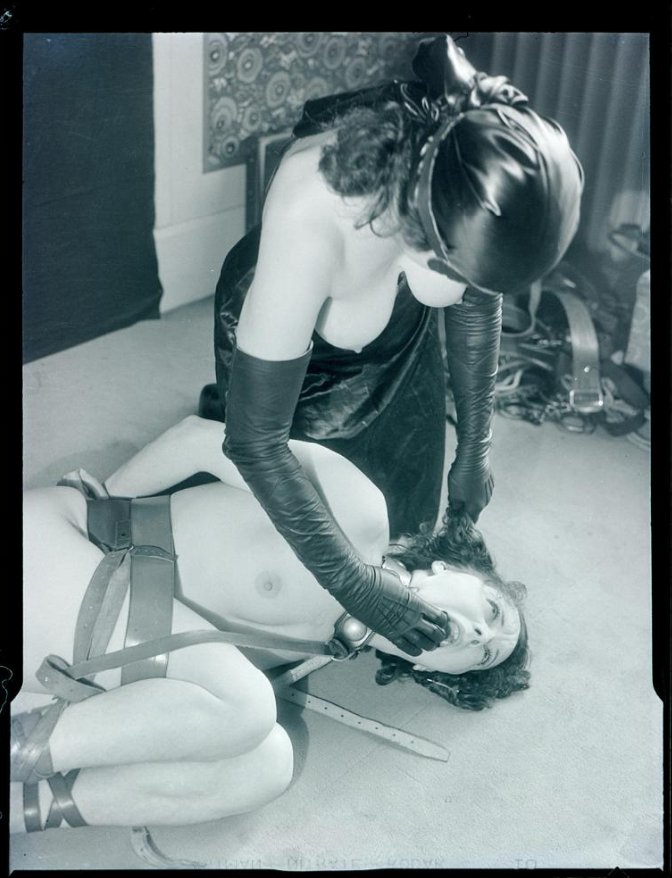
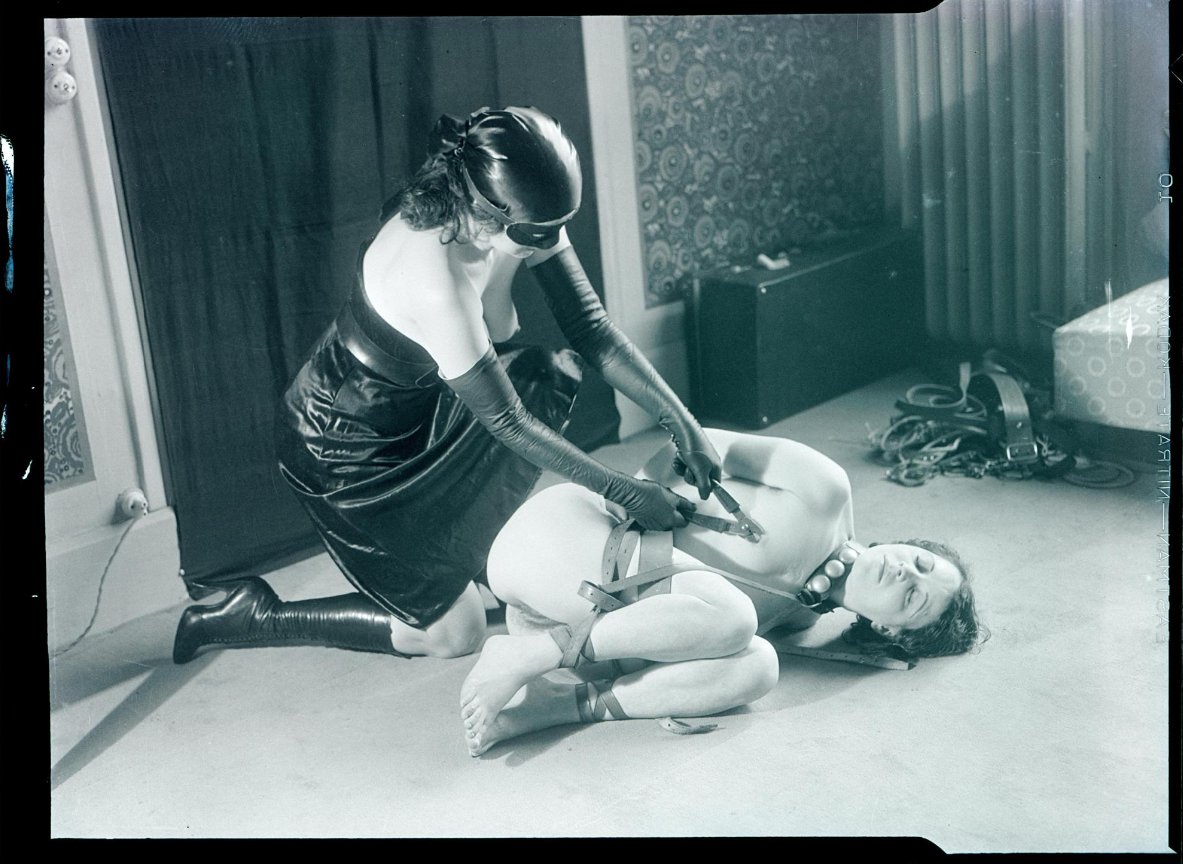
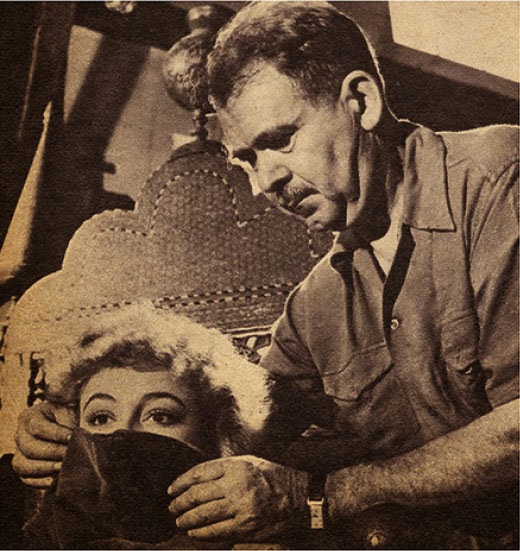
Immobile, seeing and hearing nothing for 48 hours, this girl seeks entrance into her mind’s world – behind the mask
William Seabrook, ca. 1934–1937
Seabrook wrote it as the caption for one of his own private bondage photographs (not the Man Ray series with Lee Miller, but a later, personal set he commissioned in New York during the 1930s, showing a woman he had kept completely immobilized and masked for 48 hours).
It is one of his most famous statements and is still widely quoted in books on the history of BDSM and sensory deprivation (among others in Screw the Roses, Send Me the Thorns, in academic papers on early immersion play, and in Marjorie Worthington’s biography).


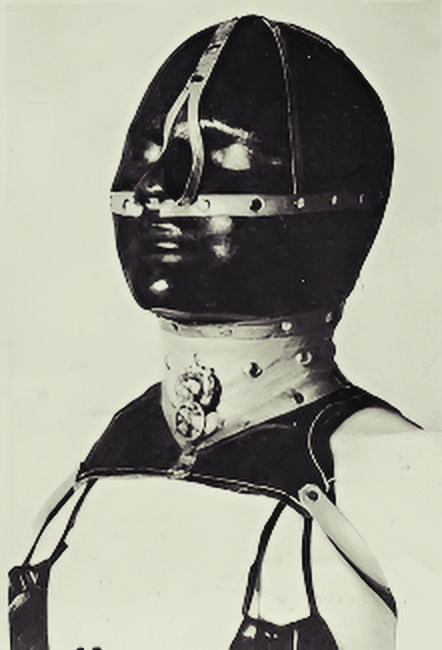
Special designed collar
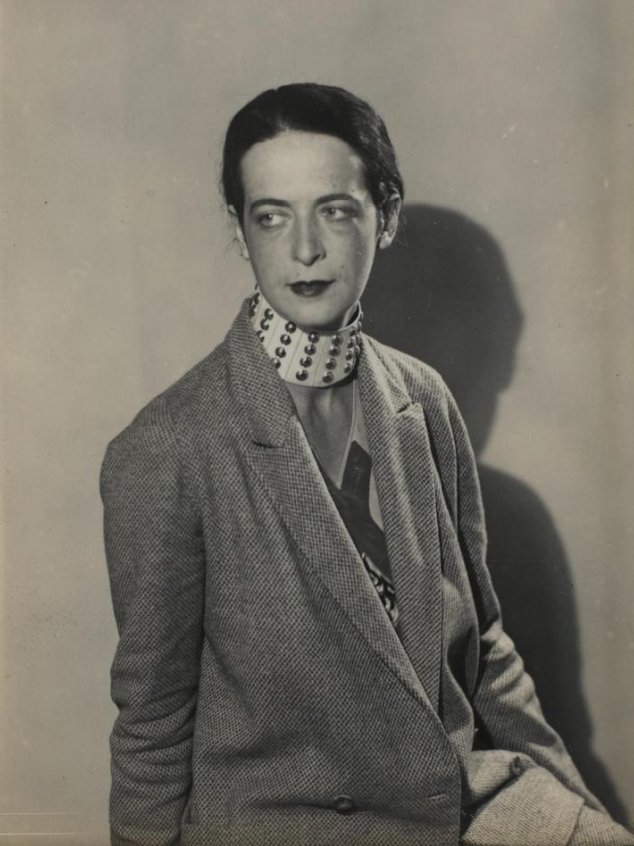
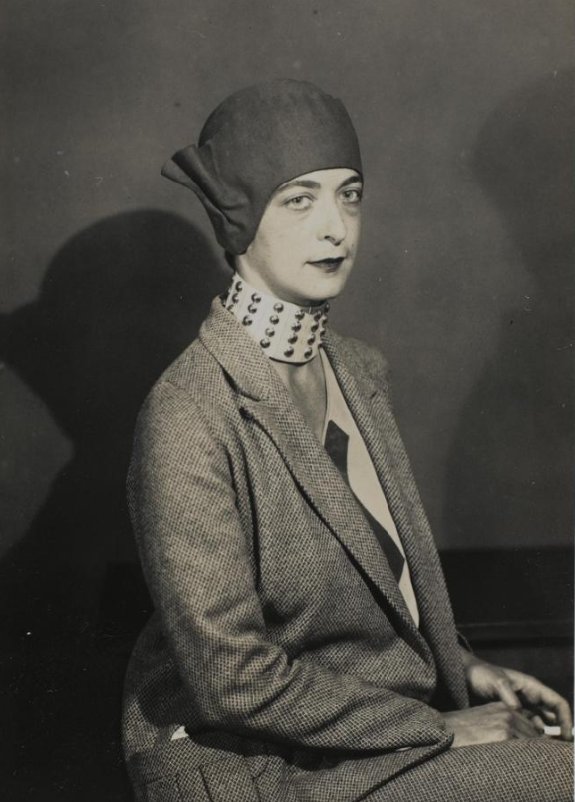
The collar from this photo was sttributed to Jean-Charles Worth (1886–1936), a French couturier and head of the renowned House of Worth (Maison Worth) in Paris during the 1920s and 1930s. In the series below Majorie is wearing the same collar.
The collar was conceived by Man Ray in collaboration with William Seabrook specifically for Marjorie Worthington.
Man Ray sketched the design: a rigid, two-part hinged structure in matte silver with three rows of gleaming knobs to symbolize “regal submission” while restricting head movement, as he described in his autobiography Self-Portrait (1963):
“It followed the line of the chin, impeding movement and forcing the head to be held up high.”
Seabrook, obsessed with fetish objects as extensions of his occult rituals, commissioned the fabrication around 1929–1930. Man Ray, leveraging his connections in Parisian fashion circles, had it crafted by the House of Worth’s metalwork and jewelry workshop.
Some sources (e.g., Audrey Warne’s 2020 essay “Staging Sadomasochism”) credit Man Ray as the primary “designer,” with Worth providing the technical execution.



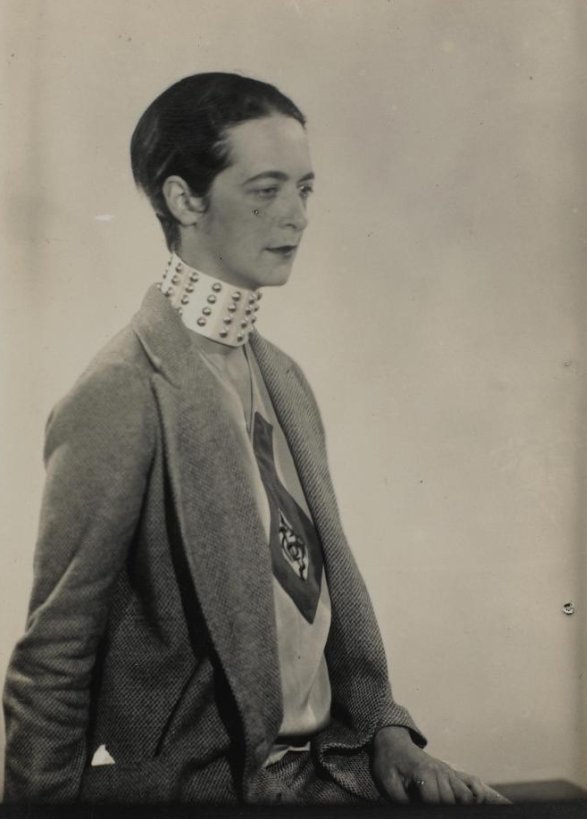
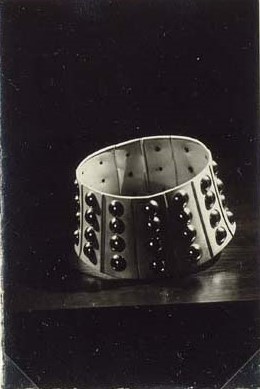
The Staircase Incident – Paris, 1929/1930
One evening Seabrook asked Man Ray and Lee Miller to housesit. When they opened the door they found a naked professional submissive chained to the staircase in the hallway.
Seabrook’s written instruction:
Do not release her. No matter what she says or does, she stays exactly as she is until we return.
Man Ray photographed the scene. Lee Miller later said the air felt “electrically charged and slightly terrifying.”
That single night is still one of the purest real-life examples of consensual non-consent ever recorded in the pre-war avant-garde.
The Fantasies of Mr. Seabrook – Man Ray, 1930
The masterpiece is the commissioned series Man Ray shot for Seabrook in 1930: three triptychs now known as The Fantasies of Mr. Seabrook.Lee Miller, twenty-three and fearless, wears a wide, padded leather collar designed by Seabrook himself. Arms bound or stretched crucifixion-style, she stares straight into the lens with that unmistakable look: defiance wrapped in total surrender.
Seabrook stands beside her – bearded, fully dressed, calm. In one frame he holds the leash attached to her collar. In another his hand rests gently but unmistakably on her throat.
No nudity is required. The D/s current between them is so strong the prints almost vibrate.
She was not acting. She was living it – and so was I.
William Seabrook on the session with Lee Miller (unpublished letter, c. 1931)


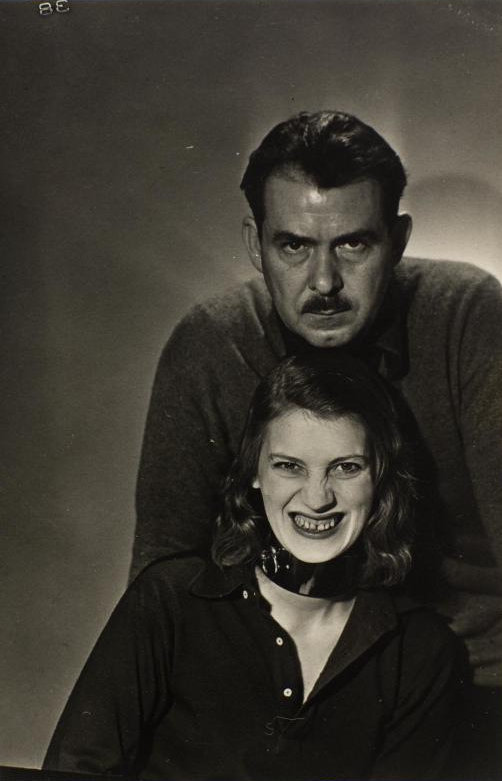
Legacy in Chains
Seabrook never used safewords. He used trust, ritual, and the cold certainty that some people need to be bound in order to feel truly free. Alcohol and his demons finally killed him in 1945 (he ultimately took his own life in 1945, after years of addiction and a failed stay in a psychiatric institution) but the photographs he commissioned from Man Ray remain some of the most powerful documents of lived Dominance and submission ever made.
Commisioned by Seabrook
From the Fantasies of Mr. Seabrook series, a triptych of erotic commissions Man Ray shot for Seabrook in 1929–1930 to illustrate his private obsessions.